Why a Tangerang Data Center Needs a Dedicated Blowdown Strategy
A 100 MW-class data center in Banten can use up to roughly 2 million liters of water per day, on the order of thousands of households' daily demand, drawing on the same Cipanas and Cisadane watershed network that already serves domestic users across Greater Jakarta (IDE Tech). Cooling tower blowdown is the largest continuous liquid stream leaving a data center, and at 4 cycles of concentration about 25–30% of makeup water is lost as blowdown (Genesis Water Tech, 2026).
In Greater Jakarta, the design problem is harder than a generic U.S. reference case: tropical humidity, sustained biological activity in cooling basins, and monsoon-season swings in Cisadane-fed municipal supply all push fouling and scaling risk upward. The blowdown itself is enriched in silica, calcium carbonate, and calcium sulfate, the same scaling chemistry that limits conventional brackish RO to 75–80% recovery (IDE Tech, 2026), and it shows up more aggressively in warm, high-alkalinity Indonesian source water. Treating that stream as ordinary industrial wastewater is the quickest way to fail a PROPER audit or a receiving-WWTP consent.
Local grid reliability matters just as much as water chemistry. Mechanical vapor compression and brine concentrators are thermally efficient, but they are also electrically intensive, so a Tangerang design that assumes U.S.-style electricity costs and uptime will misprice the OPEX line. Municipal tariff escalation and PROPER rating benefit are the correct economic anchors for the Indonesian case, not a notional U.S. dollar discharge fee.
The Two Wastewater Streams a Data Center Actually Produces
A 2026 data center in Tangerang must scope two distinct wastewater streams, and most EPC water briefs still treat only the first. Stream 1 is operational cooling tower blowdown: a continuous, brackish purge at 1,200–6,000 mg/L TDS, 4–8× the makeup water concentration, with 10–50 mg/L suspended solids and accumulated biocides, scale inhibitors, and corrosion inhibitors (Genesis Water Tech, 2026). Stream 2 is fill-and-flush wastewater from commissioning closed-loop pipework: intermittent, chemically and biologically unfamiliar, and exactly the kind of stream that has triggered permit actions in the U.S., as seen when the Cheyenne Board of Public Utilities revoked a developer's wastewater permit and the city council was told the utility "will not discharge to the public wastewater system, period, until we learn more" (E&E News, 2025).
Discharge targets differ between the two. CTBD is judged on TDS, hardness, silica, residual biocide, and metals; fill-and-flush is judged on whatever cleaning chemistries and biological loading were used to commission the loop. Both belong in the EPC water management plan from day one. Indonesian receiving plants are typically municipal WWTPs without specific data-center discharge protocols, so the engineering brief should treat the receiving plant as a constraint to verify, not a given.
| Parameter | Operational CTBD | Construction Fill-and-Flush |
|---|---|---|
| Flow profile | Continuous, sized to cooling-tower cycles of concentration | Intermittent, tied to commissioning milestones |
| Typical TDS | 1,200–6,000 mg/L (4–8× makeup) | Variable; depends on cleaning chemistry |
| Key contaminants | Silica, Ca/Mg hardness, biocides, corrosion inhibitors, suspended solids | Cleaning chemicals, corrosion inhibitors, biological residue, possible metals |
| Main permit risk | TDS, hardness, silica, biocide residuals | Unknown biological/chemical loading to receiving WWTP |
| Treatment default | Reuse train (UF + RO) with controlled discharge | Characterisation, then haul-off or on-site pretreatment before sewer |
Core Treatment Building Blocks for Blowdown Recovery
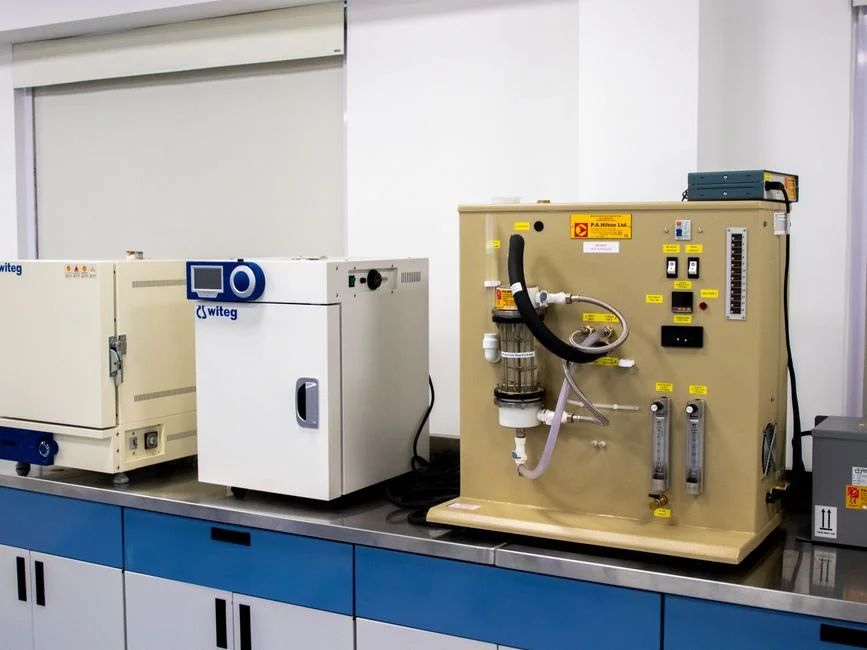
Any vendor proposal for a Tangerang site will draw from the same five building blocks, and the engineering team should be able to read each line item on equal terms. Side-stream mechanical filtration sits ahead of the cooling tower, treating 1–5% of circulation flow, dropping suspended solids, and protecting downstream membranes. Reference CAPEX for a typical U.S. data center installation is roughly $50,000–$200,000 (Genesis Water Tech, 2026). A multi-media filter for makeup and side-stream polishing is the conventional implementation, with self-cleaning spiral units as the modern alternative.
Ultrafiltration is the standard RO pretreatment: 0.01–0.1 micron pore size, low-pressure operation at 10–30 psi, 90–95% recovery, removing bacteria and colloids without removing dissolved salts (Genesis Water Tech, 2026). A hollow-fiber ultrafiltration system as RO pretreatment is the usual configuration. Brackish-water reverse osmosis then polishes the UF permeate: 95–99% rejection of dissolved solids, permeate at 10–50 mg/L TDS, recovery 50–85% on blowdown, operating pressure 150–400 psi; a 50,000 GPD system is reported in the $250,000–$500,000 CAPEX range with OPEX $1.50–3.00 per 1,000 gallons (Genesis Water Tech, 2026). An industrial reverse osmosis unit for blowdown recovery sized this way is the workhorse of the train.
Nanofiltration is the lower-pressure alternative where hardness and sulfate dominate the scaling risk: 75–150 psi operating pressure, 70–85% recovery, permeate typically 30–50% of feed TDS (Genesis Water Tech, 2026). MVC evaporation then handles the RO concentrate where reuse economics support it: 95–98% recovery of distillate with TDS below 10 mg/L, CAPEX $1–3M for 10,000–30,000 GPD systems, energy use 15–25 kWh per 1,000 gallons (Genesis Water Tech, 2026) — the figure that has to be re-priced against the local PLN industrial tariff rather than carried over from a U.S. reference. Antiscalant and biocide selection is the connective tissue across all four membrane and thermal steps, and a PLC-controlled antiscalant and biocide dosing package is what keeps the chemistry consistent.
| Building block | Role in train | Key operating envelope | Reference cost band |
|---|---|---|---|
| Side-stream mechanical filtration | Cuts SS, protects cooling loop and downstream membranes | 1–5% of circulation flow, 10–25 micron | $50,000–$200,000 CAPEX (Genesis Water Tech, 2026) |
| Ultrafiltration (UF) | RO pretreatment, removes bacteria and colloids | 0.01–0.1 micron, 10–30 psi, 90–95% recovery | Site-specific; budget under RO total |
| Brackish-water RO (BWRO) | Polishes permeate to cooling-tower makeup | 150–400 psi, 50–85% recovery, 10–50 mg/L TDS permeate | $250,000–$500,000 CAPEX for 50,000 GPD; OPEX $1.50–3.00/kgal (Genesis Water Tech, 2026) |
| Nanofiltration (NF) | Partial softening alternative to RO | 75–150 psi, 70–85% recovery, permeate 30–50% of feed TDS | Site-specific |
| MVC evaporation | Concentrate volume reduction, partial or full ZLD | 15–25 kWh/kgal distillate, distillate TDS <10 mg/L | $1–3M CAPEX for 10,000–30,000 GPD (Genesis Water Tech, 2026) |
Recommended 2026 Treatment Train for a Tangerang Hyperscale Site
The realistic 2026 answer for a hyperscale site in Greater Jakarta is a three-stage train that the engineering team can put on a P&ID without further vendor invention. Stage 1 is side-stream mechanical filtration and a clarifier on the cooling loop, sized at 1–5% of circulation flow, paired with antiscalant and biocide selection that is verified compatible with downstream membranes. Stage 2 is ultrafiltration polishing to a feed SDI below 10–15, feeding a brackish-water RO operated at a conservative local recovery below the silica scaling limit, with permeate returned to the cooling tower as high-quality makeup. Stage 3 routes the RO concentrate either to MVC evaporation where a partial ZLD business case exists, or to controlled precipitation and haul-off, with the higher-recovery IDE-style pattern (controlled silica and CaCO3 precipitation in a fluidised bed, dynamic RO flushing) as the upgrade path when cycles of concentration need to climb further (IDE Tech, 2026). RO and UF membrane replacement elements should be specified with operating envelopes that match Indonesian feedwater, not a temperate-climate default.
For most Indonesian sites the realistic 2026 target is partial reuse, cooling-tower makeup plus limited process reuse, with any residual sent to a licensed receiving WWTP. Full ZLD at the $3–8M CAPEX band and $5–15 per 1,000 gallons OPEX (Genesis Water Tech, 2026) is reserved for sites where the receiving capacity is genuinely absent or where the developer is underwriting a zero-discharge corporate target. That decision should be made on confirmed receiving-WWTP capacity, not on the assumption that a future permit will be granted.
Cost, Compliance and Local Reality Check
The reference cost bands carried through this article are U.S. project data, useful as benchmark ranges, not quotations. Side-stream filtration sits in the $50,000–$200,000 CAPEX range; a 50,000 GPD blowdown RO system is $250,000–$500,000 installed; full ZLD lands at $3–8M CAPEX with $5–15 per 1,000 gallons OPEX; MVC on RO concentrate is $1–3M for 10,000–30,000 GPD (Genesis Water Tech, 2026). The U.S. discharge-fee range of $5–15 per 1,000 gallons (Genesis Water Tech, 2026) is a U.S. figure, and the Indonesian economic case should instead be built on avoided CIPAT / Tangerang municipal tariff escalation and PROPER rating benefit. PROPER is the Indonesian Ministry of Environment and Forestry (Kementerian LHK) compliance rating programme; a higher PROPER colour (blue/gold) materially improves a hyperscale developer's permit posture and community licence to operate, which is the real OPEX lever.
Compliance variables that are not in the U.S. references and must be verified project by project: effluent TDS, hardness, silica, residual chlorine or biocide, pH, and temperature limits set by the receiving WWTP and the relevant Banten or Kementerian LHK authority. The engineering brief should request the latest site-specific discharge consent before finalising the design, and should plan for tighter limits on biocide residuals and on temperature than a U.S. sanitary sewer would normally apply.
Decision Framework: Which Train Fits Which Tangerang Site Profile
Map the site profile to the right treatment train before opening the RFQ. A colocation or edge site on municipal CIPAT with capacity headroom only needs side-stream filtration plus discharge-to-sewer pretreatment; reuse is optional and adds CAPEX without a clear OPEX case. A greenfield hyperscale on a private industrial estate with limited sewer capacity needs the full UF + RO reuse train with partial MVC on concentrate, targeting 60–85% reuse of blowdown (Genesis Water Tech, 2026). A site with a true zero-discharge constraint or in a water-stressed catchment must accept the IDE-style high-recovery RO with controlled precipitation at ~95% recovery (IDE Tech, 2026) or full ZLD at the $3–8M+ CAPEX range, with a candid OPEX conversation about grid energy intensity.
Two input-driven rules of thumb: a high-silica or high-TDS makeup source biases the design toward RO over NF, and requires stronger antiscalant and CIP regimes to stay within expected membrane life. A construction-phase fill-and-flush risk should drive the EPC to specify a temporary on-site pretreatment or haul-off contract before the closed-loop pipework is commissioned, not after.
| Site profile | Recommended train | Reuse target | CAPEX band (USD, benchmark) |
|---|---|---|---|
| Colocation / edge on municipal CIPAT with sewer headroom | Side-stream filtration + sewer pretreatment | Optional, low | $50,000–$200,000 (side-stream only) |
| Greenfield hyperscale, private estate, limited sewer | UF + BWRO + partial MVC on concentrate | 60–85% of blowdown | $250,000–$500,000 (50,000 GPD RO) plus MVC as justified |
| Zero-discharge / water-stressed catchment | High-recovery RO + controlled precipitation (IDE pattern) or full ZLD | ~95% (IDE) to 95–99% (ZLD) | $3–8M+ for full ZLD |
| High-silica / high-TDS makeup source | RO over NF, stronger antiscalant and CIP regime | Set below silica scaling limit | Higher than standard RO train |
Frequently Asked Questions
What is the realistic 2026 cost band for a hyperscale blowdown treatment train in Tangerang?
Benchmark CAPEX from U.S. project data runs $250,000–$500,000 for a 50,000 GPD blowdown RO system with UF pretreatment, $1–3M for a 10,000–30,000 GPD MVC unit on the concentrate, and $3–8M for a full ZLD line (Genesis Water Tech, 2026). These are reference ranges, not quotations; the buyer must request a site-specific budget price that includes Indonesian freight, PLN electrical interface, and PROPER-related monitoring, none of which are inside the U.S. reference.
How do we choose between RO and nanofiltration for a high-silica Indonesian source water?
If the limiting scalant is silica or total dissolved solids, RO is the safer choice because NF permeates 30–50% of feed TDS (Genesis Water Tech, 2026) and will not drop silica low enough on its own. NF is the lower-pressure option when hardness and sulfate are the dominant scaling drivers, operating at 75–150 psi versus 150–400 psi for RO. The final selection should be made on a feedwater analysis from the actual Cisadane-supplied makeup, not on a generic tropical default.
What compliance risks should the environmental team verify before the design is frozen?
Request the site-specific discharge consent from the receiving WWTP and the relevant Banten or Kementerian LHK authority, and confirm the limits on TDS, hardness, silica, residual chlorine or biocide, pH, and temperature. The PROPER rating trajectory is also a compliance input, not a marketing output, because it directly affects future permit renewals. The Loudoun Water precedent — independent verification of fill-and-flush water before sewer discharge (E&E News, 2025) — is the operating model Indonesian utilities are likely to adopt as data-center construction scales up.
What supplier and delivery questions should procurement ask before signing the blowdown train contract?
Confirm membrane lead time for the specific RO and UF elements against the project's mechanical completion date, since long-lead membrane supply is the most common schedule slip on Indonesian projects. Ask for a guaranteed local service footprint (or a named partner) for CIPAT-region commissioning and CIP support, and require documented compatibility statements between the proposed antiscalant/biocide chemistry and the RO membrane warranty. Without those three items in writing, the benchmark CAPEX figures are not yet a defensible budget.