Why a Khartoum Data Center Needs Its Own Water Blueprint
Khartoum sits at the confluence of the Blue and White Nile, which gives a 2026 hyperscale or colo facility a feed envelope comparable to other arid-river sites: TDS 350–700 mg/L, hardness 180–300 mg/L as CaCO₃, and silica 8–20 mg/L per HydropureWater 2025 Tashkent field benchmarks for a comparable arid-river source. The temptation is to import a generic Africa or Middle East template; both fail. Gulf designs assume hypersaline groundwater that needs far more aggressive desalination than Nile surface water, and a tropical African template assumes abundant low-TDS rain-fed supply that Khartoum does not have.
Summer wet-bulb temperatures in the 25–32 °C range and very high dust loading punish pure-wet evaporative cooling, accelerate drift losses, and foul fill and drift eliminators faster than a Baku or Tashkent envelope would, per the cooling-loop biocide framing in the HydropureWater Baku 2026 reuse standard applied to the Khartoum climate. At the same time, 20–40% of intake water leaves as cooling-tower blowdown in conventional systems (per Genesis Water Tech 2025), so the blowdown stream — not sanitary sewage — sets train size. Sudanese discharge is governed by the Ministry of Environment and the National Council for Meteorological and Pollution (NCMP) framework, and any on-site reuse must also clear Khartoum State Public Health Act criteria. The combination of cheap Nile water, a hostile wet-bulb envelope, and a compliance path outside the SanPiD framework used in Central Asia is the reason Khartoum needs its own blueprint.
Khartoum Feed-Water Envelope and 2026 Design Parameters
The design baseline for a greenfield 2026 facility should be anchored to the arid-river envelope and then stress-tested against the actual Khartoum Water Corporation or borehole test data for the specific intake. The comparable arid-river baseline carries TDS 350–700 mg/L, hardness 180–300 mg/L as CaCO₃, and silica 8–20 mg/L per HydropureWater 2025 Tashkent field benchmarks; local utility test data is the only acceptable substitute once a site is selected. Unsoftened feed at this envelope caps realistic cycles of concentration at 4–6 before silica or CaCO₃ scaling forces blowdown, per Genesis Water Tech 2025. Sanitary sewage at the same site is organic and pathogen-bearing — typical BOD₅ 200–300 mg/L for domestic sewage streams, as cited in the HydropureWater Baku 2026 reference — and cannot share a clarifier with mineralised cooling-tower blowdown. Khartoum's ambient swing drives a hybrid cooling-mode decision: pure wet cooling in summer carries a 30–40% blowdown penalty versus a hybrid reference because the dry mode carries most of the load below ~10 °C ambient, per the HydropureWater Baku 2026 hybrid-cooling logic applied to the Khartoum envelope. PLC-controlled chemical dosing and a side-stream multi-media filter sized to 1–5% of circulation flow protect the downstream train from chronic fouling.
| Parameter | Design baseline (arid-river analogue) | Source | Required confirmatory input |
|---|---|---|---|
| Feed TDS | 350–700 mg/L | HydropureWater 2025 Tashkent field benchmarks | Khartoum Water Corporation or borehole lab test |
| Feed hardness (as CaCO₃) | 180–300 mg/L | HydropureWater 2025 Tashkent field benchmarks | Seasonal lab test (Q2/Q3) |
| Silica (SiO₂) | 8–20 mg/L | HydropureWater 2025 Tashkent field benchmarks | Lab test; sets RO recovery ceiling |
| Sanitary BOD₅ | 200–300 mg/L | HydropureWater Baku 2026 | Site-specific domestic sewage characterisation |
| Summer wet-bulb | 25–32 °C | HydropureWater Baku 2026 hybrid-cooling framing | Site met station hourly data |
| CoC design ceiling (unsoftened) | 4–6 | Genesis Water Tech 2025 | Vendor pilot with feed silica |
Stream Separation: Sanitary, Cooling-Tower Blowdown, and Boiler Bleed

Stream separation in Khartoum is mechanical, not procedural: a single combined clarifier cannot hold the biology of sanitary sewage and the mineral chemistry of cooling-tower blowdown at the same time, so each stream runs on its own train and they meet only at the discharge or reuse point, per HydropureWater Tashkent 2026 stream-separation logic. The sanitary stream runs through an A/O package plant or an MBR to reach reuse criteria; fecal coliform ≤1,000 CFU/100 mL, BOD ≤50 mg/L, and turbidity <1 NTU are the typical on-site reuse targets where landscape irrigation or dust-suppression reuse applies, per the HydropureWater Baku 2026 reuse standard. Cooling-tower blowdown is the largest treatable volume on site — warm, mineralised, biocide-bearing, and the only stream with a real reuse revenue case. An MBR integrated wastewater treatment unit is the sanitary train workhorse; the cooling-tower blowdown train uses a DAF clarifier, side-stream filtration, and a BWRO unit sized for 50–85% recovery. Boiler blowdown and humidification bleed (Stream 4) are low-flow and high-TDS; route to the cooling-tower make-up if the silica envelope allows, otherwise to the CTBD train, per the HydropureWater Tashkent 2026 stream logic. Apply a side-stream filter on 1–5% of tower circulation flow to drop TSS to membrane-manageable levels and protect the downstream train from chronic fouling, per Genesis Water Tech 2025 field data.
Cycles of Concentration and the Blowdown-Ratio Math
Blowdown volume equals 1/(CoC−1) of make-up water; at 4 CoC blowdown is 25% of make-up, and at 6 CoC it drops to 20%, per Genesis Water Tech 2025. The 4→6 CoC step looks like a 50% improvement on paper, but the actual blowdown-volume reduction is 5 percentage points, or about 20% — not 50% — per Genesis Water Tech 2025 and confirmed in the HydropureWater Baku 2026 reference. Above 5–6 CoC, microbiologically influenced corrosion, Legionella risk, and biofilm fouling accelerate non-linearly, so 4–6 CoC is the realistic design ceiling for an unsoftened Nile feed, per Genesis Water Tech 2025 and HydropureWater Baku 2026. Unmeasured losses — leaks, drift, emergency dumps — still add 15–30% on top of theoretical blowdown, per Genesis Water Tech 2025, and the design baseline must carry that margin in the OPEX model.
| Cycles of concentration | Blowdown (% of make-up) | Relative blowdown volume vs 4 CoC | Operational ceiling |
|---|---|---|---|
| 3 | 50% | +100% (baseline risk: scale) | Softener failure recovery |
| 4 | 25% | Reference (100%) | Unsoftened feed, conservative |
| 5 | ~17% (1/4 of make-up) | ~68% | Softened feed; anti-scalant required |
| 6 | 20% | 80% | Softened feed; MIC and biofilm risk rise |
Four Realistic Treatment Trains for a 2026 Khartoum Facility
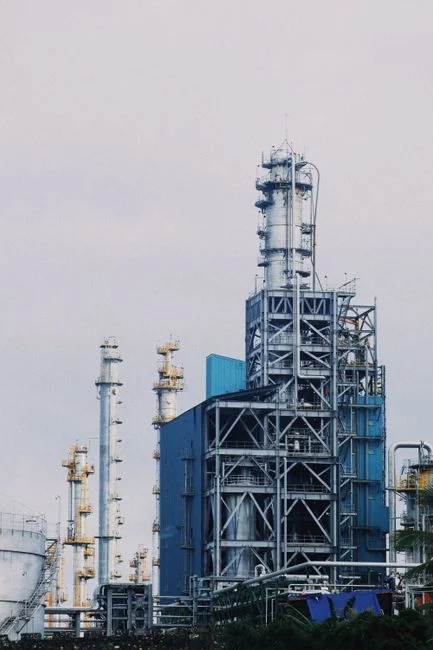
Four options cover the realistic envelope for a Khartoum data center in 2026, ranging from inlet-only conditioning to full ZLD. Option A is inlet softening plus side-stream filtration plus ClO₂ disinfection plus blowdown-to-makeup reuse: condition make-up with an industrial water softener, run 1–5% side-stream filtration, and use a ClO₂ generator for cooling-loop biocide control at 0.5–1.0 mg/L residual — preferred over chlorine because it does not form trihalomethanes and remains effective against Legionella at the 25–32 °C warm-water range, per HydropureWater Tashkent 2026. Option B is a DAF clarifier for the cooling-tower blowdown train plus an industrial water softener or anti-scalant plus a BWRO unit for blowdown-to-makeup reuse; the DAF section plus a PLC-controlled dosing skid lands in the $35K–$60K installed range per Genesis Water Tech 2025 BWRO economics cited in the HydropureWater Tashkent 2026 reference. Concentrate routes to a Sudanese-compliant disposal path. Option C is side-stream softener plus lamella clarifier plus ClO₂ plus partial RO on blowdown at 50–85% recovery — the right-sized choice for enterprise or colo facilities that want reuse but not full ZLD, per HydropureWater Tashkent 2026. Option D is Enhanced Water Recovery to MLD or ZLD via brine concentrator and crystallizer; the Saltworks 200 MW case study shows up to 40% cooling system water consumption reduction across successive EWR stages, per the Saltworks Technologies 2025 data center water reduction brochure. If treated effluent reuses on site for landscaping, dust suppression, or construction water, Sudanese reuse criteria apply — fecal coliform ≤1,000 CFU/100 mL, BOD ≤50 mg/L, turbidity <1 NTU per the HydropureWater Baku 2026 reuse standard applied to the Khartoum State Public Health Act overlay. For side-by-side cooling-tower blowdown economics, the 2026 cooling tower blowdown recycling and ZLD engineering specs provide a useful cost anchor.
| Option | Core train | Best-fit facility | Reuse ambition | CAPEX anchor |
|---|---|---|---|---|
| A | Inlet softener + side-stream filter + ClO₂ + blowdown-to-makeup reuse | Small/edge sites, no RO | Blowdown to tower only | Lowest (no membrane) |
| B | DAF + softener/anti-scalant + BWRO | Mid-size colo / enterprise | RO permeate to tower; concentrate disposal | DAF section $35K–$60K installed (Genesis Water Tech 2025) |
| C | Side-stream softener + lamella clarifier + ClO₂ + partial RO 50–85% recovery | Enterprise/colo with reuse target | Partial reuse without ZLD commitment | Mid; lamella saves footprint |
| D | Enhanced Water Recovery → MLD or ZLD (brine concentrator + crystallizer) | Hyperscale in water-stressed grid | Maximum reuse, near-zero liquid discharge | Highest; up to 40% cooling water reduction (Saltworks 2025) |
2026 Compliance, Sourcing, and Procurement Checklist
Convert the engineering blueprint into procurement action with this short list. First, confirm with the Sudanese Ministry of Environment and the NCMP, and with Khartoum State authorities, the discharge limits for TDS, chlorides, temperature, and any heavy metals before sizing the concentrate disposal path — request the actual consent letter template and not just a verbal confirmation. Second, require make-up and seasonal feed-water test data (TDS, hardness, silica, chloride, iron, manganese) from the local utility or borehole source before finalising CoC and RO recovery; do not rely on regional analogues alone. Third, for hybrid cooling, require the vendor to quote the wet/dry mode split at Khartoum design wet-bulb, with summer blowdown reduced by 30–40% versus a pure-wet reference, per the HydropureWater Baku 2026 hybrid-cooling logic. Fourth, build a leak, drift, and emergency-dump margin of 15–30% on top of theoretical blowdown, per Genesis Water Tech 2025, into the OPEX model. The Manaus 2026 data center cooling blowdown engineering guide is a useful cross-check for a tropical-arid hybrid envelope.
Frequently Asked Questions
What cycles of concentration should a 2026 Khartoum data center design its cooling tower to?
Run 4–6 CoC on softened or anti-scalant-conditioned make-up, per Genesis Water Tech 2025. Above 5–6 CoC, microbiologically influenced corrosion, Legionella risk, and biofilm fouling accelerate non-linearly, so 4–6 CoC is the realistic ceiling for an unsoftened Nile feed. Confirm the design ceiling with a vendor pilot on actual Khartoum feed silica before issuing the PO.
How much does a DAF plus BWRO cooling-tower blowdown train cost for a Khartoum facility in 2026?
A DAF clarifier plus a PLC-controlled chemical dosing skid lands in the $35K–$60K installed range for the DAF section per Genesis Water Tech 2025 BWRO economics cited in the HydropureWater Tashkent 2026 reference; the BWRO unit, softener, and ClO₂ skid are additional line items. The exact installed price depends on skid versus field-erected construction, containerisation, and Sudan import-duty exposure, so request a vendor budget quote with a stated scope boundary before issuing the RFQ.
Which Khartoum state and federal compliance hooks must a 2026 data center close before the blowdown train is approved?
Close the Sudanese Ministry of Environment and NCMP discharge consent (TDS, chlorides, temperature, heavy metals), and the Khartoum State Public Health Act criteria for any on-site reuse of treated effluent. For reuse, fecal coliform ≤1,000 CFU/100 mL, BOD ≤50 mg/L, and turbidity <1 NTU apply per the HydropureWater Baku 2026 reuse standard, applied to the Khartoum State overlay.
Which supplier selection checks should a buyer run before picking a blowdown treatment vendor for Sudan?
Request documented experience on arid-river feed envelopes with TDS 350–700 mg/L and silica 8–20 mg/L, references on at least one Nile-basin or comparable project, and a Sudan-specific delivery and lead-time commitment given the import-duty and port-clearance exposure at Port Sudan. Confirm the vendor can supply an integrated MBR sanitary train, a DAF clarifier, a BWRO unit, and a ClO₂ generator from a single warranty envelope, and ask for the lead-time split between equipment ex-works and on-site commissioning.
Related Equipment
- BWRO unit for blowdown-to-makeup reuse — specifications, capacity range, and technical data