What Changes When SMIC Acquires an Arizona Plant?
Wastewater requirements for an SMIC acquisition in Arizona depend on the acquired plant’s permits, wastewater streams, discharge destinations, sewer agreements and compliance history—not the acquisition alone. The buyer must obtain the complete ADEQ and municipal authorization files and ask each issuing authority whether the existing permit remains valid, requires transfer, notification or modification, or requires a new authorization. Assess process wastewater, stormwater, sewage, pretreatment, groundwater, closure and treatment capacity separately. If an onsite wastewater system is involved, Maricopa County requires a qualified inspection within six months before transfer and a buyer Notice of Transfer within 15 calendar days after transfer.
Do not assume that SMIC’s acquisition automatically changes permit status. Arizona counsel and the responsible ADEQ program must determine, for each authorization, whether it remains transferable, requires notice, or must be modified because the permittee, operator, facility description, discharge source or ownership has changed. That authorization-specific determination follows the approach in SMIC plant-acquisition wastewater due diligence, but the controlling evidence must come from the Arizona site.
Keep two questions separate. First, determine what ADEQ, the receiving municipal authority or another regulator must approve. Second, allocate capital, monitoring, remediation, permit-transfer and closure costs through the purchase agreement, escrow, reserve, indemnity or post-closing covenant. An indemnity does not replace a permit or corrective work, and a regulator—not the buyer’s contract—decides whether the plant can continue operating and discharging as authorized.
The supplied Arizona research does not identify the SMIC target, its permit number, wastewater flow, discharge point or effluent limits. The transaction team should therefore answer three site-specific questions: which authorizations exist; whether each remains available after the change in responsible party or operations; and what capital or liability follows from each answer. The analytical structure in SMIC plant-acquisition wastewater due diligence in Hungary is useful only as a comparative workflow, not as evidence of Arizona requirements.
Build a Stream-by-Stream Authorization Map
A wastewater authorization must be tested against the actual route of each stream, not against a generic description of a semiconductor plant. The Arizona acquisition research calls for separating process water, contact water, stormwater, sewage, contaminated runoff and wastewater imported from another organization. The buyer should then connect each stream to its permit, monitoring point, destination and responsible operator.
| Stream | Evidence to obtain | Authorization route to verify |
|---|---|---|
| Process rinse, wash and equipment-cleaning wastewater | Source, flow variability, seasonality, chemistry, sampling point and destination | ADEQ industrial wastewater, direct-discharge, groundwater or aquifer-protection requirements, as applicable |
| Laboratory drains and cooling-tower blowdown | Segregation, sampling records, reuse or discharge point and operating record | Applicable ADEQ authorization and any reuse or discharge controls |
| Non-contact and once-through cooling water | Routing, flow, chemicals used and outfall or sewer connection | Direct-discharge permit or municipal industrial-user authorization |
| Contaminated stormwater and runoff | Site drainage, rainfall exposure, outfalls, bypass history and pollution-prevention plan | ADEQ stormwater discharge authorization and site-specific controls |
| Domestic sewage | Source, collection system, treatment and disposal route | ADEQ or local onsite-system requirements; municipal sewer requirements where applicable |
| Imported wastewater | Supply contract, quality, quantity and continuity | Supplier authorization, contract and site treatment implications |
For each entry, record the authorization holder, responsible operator, permitted stream, outfall or sewer connection, sampling point, permit limits, reporting requirements and proposed transfer consequence. A physical sewer connection is not authorization to discharge. Conversely, a permit does not establish that the installed piping, treatment or discharge point matches the authorized configuration.
Request every candidate ADEQ industrial wastewater, discharge, pretreatment, groundwater and aquifer-protection permit, together with municipal sewer-use or industrial-user agreements, stormwater records, discharge monitoring reports, notices of violation, consent orders and agency correspondence. The Arizona plant-acquisition research also directs buyers to obtain at least one year of influent and effluent analytical data, operating-flow records, storm-event records, bypass and spill logs, pond-level data and chain-of-custody records.
Reconcile those files with site plans and physical piping before evaluating treatment. This protects against overlooking an unpermitted connection, treating a permitted stream at the wrong unit or assuming that a zero-discharge plant has no authorized outfall. A broader review of how industrial plants meet sewer limits supports the same stream-by-stream method.
Confirm the Arizona Permit Path with ADEQ
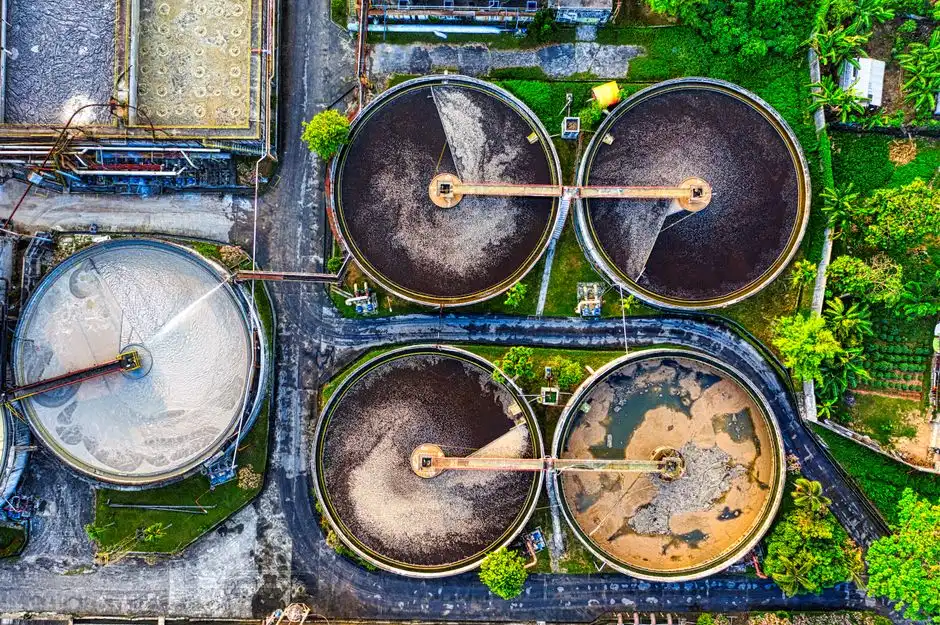
Each ADEQ authorization must have a written post-transaction path because ownership, operator, facility description, permitted discharge or operating conditions may affect its status. The responsible ADEQ program—not a generic assumption about semiconductor acquisitions—must determine whether the authorization may continue, requires notification or transfer, must be modified, or requires a new permit or revised certification.
Request the original permit and every attachment, modification, renewal and agency communication rather than relying only on the seller’s compliance summary. Extract the permittee, responsible party, operator, facility description, permitted discharge, effective date, limits, monitoring requirements, reporting deadlines, corrective-action deadlines and financial-assurance obligations. Check whether the acquisition changes the facts on which the authorization was issued, including permitted flow, outfalls, production configuration or treatment operation.
Ask ADEQ to identify the required action and its timing. Specifically, obtain a written position stating whether approval must occur before closing or may follow it, what application or notice is required, and whether the agency expects revised monitoring, financial assurance or facility documentation. Attach that position to the closing checklist. If approval is delayed, conditioned or denied, define the operational consequence and transaction remedy rather than assuming the existing permit remains available.
Do not import an air-quality obligation into the wastewater workstream. The Arizona research explains that the Title V program requires monitoring, recordkeeping and reporting, but it is an air-quality program and does not establish the wastewater requirements for the acquisition target. This is the same evidence discipline required in Arizona plant-acquisition wastewater due diligence.
The permit review should also test closure. Obtain closure estimates, financial-assurance instruments and pending correspondence, then determine who must carry the obligation after closing. A valid discharge authorization does not eliminate closure exposure; likewise, a closure allocation does not settle whether the buyer may continue operating under the current permit.
Evaluate Sewer, Pretreatment, Stormwater and Onsite Systems
Indirect sewer discharge, stormwater, domestic sewage and regulated onsite treatment are separate legal routes. Combining them into a single “industrial wastewater permit” review creates a category error and can leave an unauthorized discharge route undiscovered.
| Route | Required authority evidence | Key transaction question |
|---|---|---|
| Municipal industrial-user discharge | Industrial-user rules, sewer agreement, local limits, monitoring obligations, surcharge triggers, connection approvals, reserved-capacity position and each non-domestic connection | Will the sewer authority continue the existing authorization, require an amendment or terminate service? |
| Industrial stormwater | ADEQ stormwater authorization, pollution-prevention plan, drainage map, outfalls, rainfall exposure, bypass history and contaminated-runoff controls | Do the permitted facilities, drainage areas and monitoring points match site conditions? |
| Onsite sewage treatment | Wastewater-treatment authorization, inspection records, operating records and onsite ownership-transfer documents | Is the system permitted, inspected and transferable, and is it domestic sewage rather than industrial process wastewater? |
| Onsite treatment with reuse or zero discharge | Source characterization, treatment basis, monitoring, storage, residuals, emergency controls and the legal basis for the reuse or no-discharge route | Does continued operation depend on permits, contracts or equipment that survive the transaction? |
For indirect discharge, the buyer needs the receiving authority’s industrial-user rules, sewer agreement, local limits, monitoring obligations, surcharge triggers, connection requirements, reserved-capacity position and every non-domestic connection. The municipal authority—not the plant owner—decides whether the sewer connection remains authorized. Residual capacity, pretreatment requirements and surcharge exposure should be evaluated alongside any process expansion.
For stormwater, reconcile the ADEQ industrial stormwater authorization and pollution-prevention plan with site drainage, outfalls, rainfall exposure, bypass history and any contaminated runoff. A stormwater permit should not be treated as permission to discharge process wastewater through a storm outfall.
For onsite sewage treatment, distinguish the wastewater-treatment authorization from property-transfer rules. Maricopa County states that a qualified inspector must inspect the facility within six months before transfer under A.A.C. R18-9-A316. The seller must provide the completed inspection report and related permitting or operating documents before the transfer date. The county also states that a person shall not use a cesspool for sewage disposal under A.A.C. R18-9-A309(A)(4), and that significant waste must be pumped from each tank.
Maricopa County requires the buyer to submit a completed Notice of Transfer within 15 calendar days after transfer. Its stated fee is $60 for each individual parcel, and a Notice of Transfer is required for each parcel. The transfer process does not authorize industrial process wastewater. It is separate from ADEQ discharge permitting and municipal industrial-user requirements. Sewer and pretreatment diligence should be treated as a distinct regulatory path, as discussed in how industrial plants near Fletcher meet sewer limits in 2026.
Translate Permit Findings into a Closing-Risk Matrix

A wastewater finding should become a specific transaction decision with an identified owner and funded corrective action. “Permit-transfer risk” is not sufficient; the matrix must connect the finding to its legal basis, evidence, agency action, capital exposure and proposed remedy.
| Finding classification | Decision consequence | Potential transaction response |
|---|---|---|
| Compliance blocker | The plant may not operate or discharge as represented | Closing condition, seller cure, permit commitment or price adjustment |
| Permit-modification requirement | ADEQ or the municipal authority must approve the post-closing path | Condition precedent, schedule and cost allocation |
| Near-term capital need | Installed treatment cannot support the acquired operating envelope | Escrow, reserve, seller credit or post-closing covenant supported by an engineering estimate |
| Operating-cost exposure | Monitoring, surcharges, consumables, labor or residuals increase operating cost | Price adjustment, operating model and cost-allocation term |
| Historical liability | Violations, contamination or unclosed corrective actions predate closing | Indemnity, insurance review or separate settlement supported by the compliance history |
| Routine improvement | Operations are lawful but inefficient or difficult to monitor | Post-closing capital plan, subject to normal engineering review |
Use closing conditions where an authorization cannot support continued operation. Use escrows, reserves, seller credits, indemnities or post-closing covenants only for risks identified in the site record. Unresolved permit-transfer uncertainty, unremediated contamination, inadequate treatment capacity and missing monitoring records each require a named owner and documented closure before closing.
Connect each finding to its authorization, supporting evidence, required agency action, cost owner, milestone and proposed remedy. If ADEQ or the sewer authority has issued a written position, attach it and define the consequence of delay, conditions or denial. If no written position exists, make obtaining one a closing task.
Do not let negotiated liability blur into regulatory compliance. An indemnity may allocate financial responsibility for historical contamination, but it does not authorize a discharge, eliminate monitoring or replace required treatment. The approach follows Arizona acquisition permit-risk and transaction-allocation guidance.
Select Treatment Only After the Legal Route Is Defined
Treatment capacity cannot be selected from the description “semiconductor plant.” The supplied Arizona research provides no target-specific flow, chemistry, discharge point or effluent limit, so the buyer must derive the design basis from measured data and the authorization governing each stream.
| Design input | Evidence required before sizing | Decision affected |
|---|---|---|
| Average, peak and storm flows | Operating records, storm-event records, production allocation and current flow measurement | Hydraulic capacity, storage and redundancy |
| Wastewater chemistry | Representative influent and effluent sampling with chain of custody | Treatment train and residual handling |
| Permitted performance | Current ADEQ limits, municipal local limits or reuse requirements | Compliance basis and monitoring |
| Legal destination | Direct discharge, municipal sewer, onsite reuse or zero-discharge route | Applicable treatment objectives |
| Acquired operating envelope | Current and planned production, downtime and expansion assumptions | Installed capacity and contingency storage |
Evaluate clarification, biological treatment, MBR, filtration, disinfection, reverse osmosis, chemical dosing, sludge dewatering and zero-discharge systems only against the selected route. An industrial DAF system for pretreatment may fit a stream with relevant oil or solids characteristics, but suitability cannot be established without analytical data and permit criteria. Similarly, MBR wastewater treatment for Arizona industrial reuse cannot be treated as a default answer merely because reuse is being considered.
Model power loss, equipment failure, contamination events, sudden production increases and loss of reuse or zero-discharge operation. Test storage, redundancy, bypass controls, emergency-discharge risk and the consequences of a failed treatment step. Installed capacity must be checked against the acquired operating envelope, including peak flow, storm flow, production changes and downtime.
Require a scoped, site-specific proposal showing the design basis, treatment train, monitoring, redundancy, capital scope, operating assumptions, residual handling and unresolved buyer-side approvals. If the legal route remains unsettled, the proposal must state the assumptions rather than present equipment selection as regulatory approval.
Complete the Wastewater Diligence Before Signing

The wastewater workstream should close in a defined sequence: authorization review, source characterization, field verification, agency consultation, risk allocation and treatment scope. Begin by requesting the complete ADEQ and municipal files, amendments, sewer agreements, closure estimates, financial-assurance instruments, pending correspondence, capital plans, monitoring records and enforcement notices.
- Create the stream and authorization map, then reconcile every permitted stream with installed piping, treatment units, outfalls and sewer connections.
- Request written ADEQ and municipal positions on continuation, notification, transfer, modification or replacement of each relevant authorization.
- Conduct a physical inspection and pre-closing baseline sampling covering installed capacity, piping, controls, sludge handling, bypasses, alarms and operator records.
- Model operating scenarios, including production changes, storm events, power loss, equipment failure, loss of reuse and emergency-discharge conditions.
- Reconcile the legal review, baseline record and engineering inspection before closing, assigning an owner and funded corrective action to every disagreement.
- Use the agreed risk allocation to prepare a scoped treatment estimate and final equipment requirements.
Do not leave regulator consultations until after the purchase agreement or equipment order. The closing sequence should reflect the issuing authority’s stated approval path, and the capital estimate should reflect the route and operating assumptions confirmed during diligence. This sequence follows the evidence-first approach in cross-border SMIC acquisition wastewater requirements, while remaining anchored to Arizona authority and site evidence.
Frequently Asked Questions
What change-of-ownership action does ADEQ require after SMIC acquires the plant?
It depends on the site and authorization. ADEQ may determine that the permit can continue, requires notification or transfer, must be modified, or requires a new permit or revised certification. Obtain a written, authorization-specific response before relying on continued authority to operate or discharge, and do not assume that a filing guarantees approval.
What wastewater cost should the buyer budget for an Arizona SMIC plant acquisition?
The supplied research contains no defensible plant-specific wastewater cost for this acquisition. A site-specific estimate requires verified average, peak and storm flows; wastewater chemistry; current permit or sewer limits; installed treatment condition; compliance history; residuals; monitoring requirements; labor; utilities; and capital scope. Request a scoped engineering estimate and vendor proposal based on those inputs rather than using unrelated project costs or generic equipment prices.
How should treatment capacity be sized?
Base sizing on measured flow, verified wastewater chemistry, applicable permit conditions, discharge destination, reuse objectives and the acquired production envelope. Average steady-state flow alone is insufficient. Include storm flow, production increases, downtime, storage, redundancy and failure scenarios before selecting a treatment train.
Which supplier qualifications should the buyer require?
Require a route-specific proposal tied to the governing ADEQ permit or municipal sewer requirements. It should state the analytical basis, design flows, treatment train, monitoring, redundancy, residual handling, capital scope, operating assumptions, regulatory approvals and unresolved buyer responsibilities. A generic treatment proposal or named process without site data is not a basis for selection.
What must the buyer do for an onsite wastewater system in Maricopa County?
Maricopa County states that a qualified inspector must inspect the facility within six months before transfer under A.A.C. R18-9-A316. The seller must provide the completed inspection report and related documents before the transfer date. The buyer must submit a completed Notice of Transfer within 15 calendar days after transfer, with a stated $60 fee for each individual parcel. The requirement applies to each onsite system serving the parcel. This transfer process does not authorize industrial process wastewater.