What changes when SMIC acquires a German plant?
SMIC’s acquisition of a German plant does not establish a new German wastewater standard. The buyer must verify the site’s existing authorisations, sewer arrangements, contamination liabilities and operating history, then determine whether a change of control, transfer of operations or production change requires notification, consent or permit review. The transaction creates a separate export-control workstream: exports, reexports and in-country transfers of items subject to the EAR to SMIC and designated affiliates require a specific BIS licence under Cooley’s 2020-12 analysis. Wastewater permitting does not authorise an otherwise prohibited transfer. See also wastewater requirements for an acquired industrial plant and plant-acquisition wastewater due-diligence guidance.
Run two parallel screens. The first is German site compliance: permits, sewer terms, monitoring, treatment performance, sludge routes and remediation. The second is transaction-related export control covering treatment equipment, software, technology, installation services, remote support and training.
Do not merge these into one approval. A German regulator may require notification or review of a corporate change, while the sewer operator may require contractual consent, and BIS may need to be consulted before technical information moves. Each has a different decision-maker, evidence set and remedy.
Sweco’s 2026 acquisition announcement provides market context rather than plant-specific authority. It identifies modernisation, climate resilience, ageing infrastructure and stricter EU requirements as drivers for German water-sector investment, illustrating why inherited infrastructure and future compliance should be tested rather than assumed. The acquired facility’s documents must remain the factual starting point.
Confirm the German permits and sewer obligations
A German plant’s legal wastewater position is established by the instrument governing each discharge route and the contracts attaching to it, not by the buyer’s corporate identity. No supplied research identifies a SMIC German facility, its permit limits or a numerical allocation between direct, indirect and other discharge routes; those details must come from the authority, sewer operator and site records.
- Request every current and historic direct-discharge authorisation, indirect-discharge permit, sewer pretreatment agreement, water-abstraction approval, groundwater authorisation and waste-management consent, together with amendments, reporting conditions and regulator correspondence.
- Identify the competent authority, sewer operator and actual receiving point for each stream. Confirm whether each discharge goes to surface water, groundwater or a public sewer; do not infer the route from the facility’s general description.
- Check the permit holder, operator, corporate structure and production assumptions. Ask German counsel and the authority whether the transaction constitutes notification, permit transfer, permit modification or consent.
- Obtain sewer-use contracts, discharge-rights agreements, trade-waste acceptance conditions, sampling protocols, reporting duties, liability allocation and termination rights.
- Review monitoring-equipment inventories, calibration records, laboratory data, chain-of-custody procedures and corrective-action records against the proposed operating structure.
| Evidence item | What to verify | Decision owner |
|---|---|---|
| Discharge authorisations | Route, status, conditions, amendments, reporting and change-of-control language | Environmental and legal teams |
| Sewer arrangements | Acceptance criteria, sampling, charges, liability, suspension and termination rights | Facilities and procurement |
| Authority correspondence | Open findings, exceedances, enforcement status and required remediation | Legal and technical manager |
| Monitoring records | Representative results, calibration, laboratory qualifications and chain of custody | Process engineer |
| Water and waste approvals | Abstraction, groundwater, sludge, spent media and hazardous-waste routes | Environmental team |
Flag any expired approval, unresolved exceedance, missing renewal correspondence or inconsistency between the permit and sewer contract. Those are closing risks, not administrative housekeeping.
Build the wastewater due-diligence data room

Wastewater treatment due diligence links each stream to a verified flow, pollutant profile, destination and operating constraint. The supplied research contains no SMIC German plant flow data or numerical discharge limits, so the data room must close that gap before equipment is selected.
- Collect available representative flow data and sampling records for segregated process, laboratory, cooling, blowdown, sanitation, storm-water and domestic streams.
- Obtain analytical records for relevant semiconductor contaminants, including acidity or alkalinity, suspended solids, chemical oxygen demand, nutrients, metals, fluoride, solvents and cleaning chemicals. Apply numerical acceptance criteria only after the permit and sewer contract are reviewed.
- Reconcile the chemical inventory and cleaning recipes with the analytical data, production forecasts, product mix, yield targets and expansion plans.
- Review sludge and spent-media handling, waste-transfer records, residual-liquid testing, disposal contracts and contamination or remediation reports.
- Inspect the existing treatment train, maintenance history, bypass records, alarm response, redundancy and available capacity.
| Data-room package | Required content | Diligence output |
|---|---|---|
| Stream register | Source, destination, flow record, sampling point and operating condition | Hydraulic and segregation basis |
| Analytical profile | Concentrations, mass loads, variability, methods and dates | Pollutant loading model |
| Forward plan | Production, chemistry, reuse and expansion assumptions | Capacity forecast |
| Treatment records | Maintenance, bypasses, alarms, redundancy and performance data | Gap and condition assessment |
| Waste and liability records | Sludge, media, residual liquids, disposal and remediation | Environmental liability register |
Require representative data, not selected compliance samples alone. The engineer needs both concentration and mass load, variability and upstream batch interactions. For equipment selection, compare DAF and clarifiers for semiconductor wastewater only after that profile is complete.
Match treatment requirements to each discharge route
One treatment train should not be assumed to fit every semiconductor stream. Equalisation and segregation should prevent dilute or high-strength batches from upsetting biological treatment, coagulation, membrane systems or sewer mass-loading conditions. The route and final unit depend on the verified permit, sewer terms, stream chemistry and reuse objective.
| Treatment need | Potential route | Selection basis |
|---|---|---|
| Oil, grease, FOG, colloids or suspended-solids removal | DAF system for semiconductor wastewater | Verified flow, contaminant profile, separation objective and site integration |
| Biological treatment, solids separation and membrane filtration | integrated MBR wastewater treatment system | Biodegradability, solids loading, filtrate requirements and membrane operating conditions |
| Sludge dewatering | Plate-and-frame filtration | Sludge volume, solids characteristics, cake handling and destination |
| Disinfection, water reuse or ZLD | Separate treatment and validation workstream | Reuse specification, residual treatment, energy demand and applicable German requirements |
HydropureWater’s DAF range spans 4–300 m³/h across 13 standard models, while its integrated MBR range covers 10–2,000 m³/day and provides near-reuse-quality effluent with filtration below 1 μm. These are equipment-selection boundaries, not evidence of fit for the acquired plant. Plate-and-frame filtration areas range from 1 m² to 500 m². Verified flow, contaminant, footprint, operating and waste-handling data remain prerequisites.
Do not promise water reuse or zero-liquid-discharge performance until the site’s reuse target, residual-liquid destinations and applicable German requirements have been confirmed. Those questions require plant-specific data and approval; they cannot be inferred from a product route.
Screen equipment and technical support for export-control risk
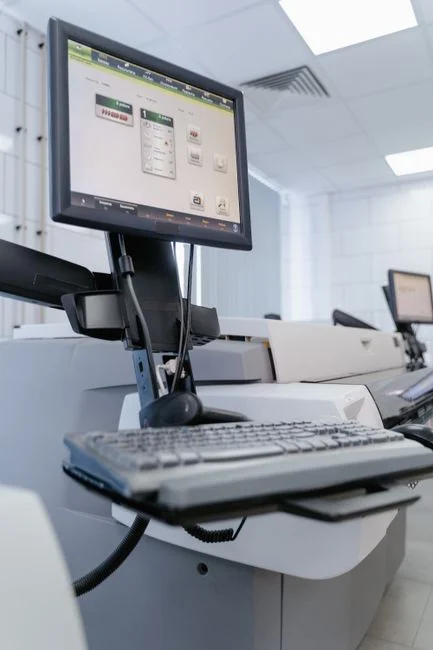
The wastewater package must be screened as a complete acquisition and support chain, not only as a shipment of tanks and pumps. Map treatment equipment, control software, membrane elements, chemicals, spare parts, drawings, installation, commissioning, remote support, training and any technical assistance.
Cooley’s 2020-12 analysis states that exports, reexports and in-country transfers of items subject to the EAR to SMIC and designated affiliates require a specific BIS licence. For items uniquely required for production of semiconductors at advanced technology nodes of 10 nanometers or below, the rule establishes a presumption of denial; other EAR items are reviewed case by case under the rule described by Cooley.
Before quotations become purchase orders and before installation or technical discussions begin, determine:
- EAR jurisdiction, classification and licence requirements for each item and service;
- end-user, end-use, destination and screening status for SMIC and relevant affiliates;
- origin and controlled content of equipment, software and membrane elements;
- whether installation, training, remote diagnostics or engineering documents constitute a technical transfer; and
- whether pre-shipment, post-shipment or transactional documentation is required.
Route unresolved classifications or licence questions through qualified export-control counsel. A German wastewater permit does not override EAR restrictions, and a supplier’s general export-control statement is not a transaction-specific classification. This review remains separate from the German permit and sewer workstream.
Compare the commercial treatment routes
The commercial choice should follow verified performance gaps, not a preferred equipment format. The research supplies no SMIC German plant flow, capital cost, operating cost, price or delivery lead time. The buyer therefore needs site-specific quotations and written schedule commitments.
| Route | Indicative use | Key commercial checks |
|---|---|---|
| Upgrade existing treatment | Address a defined bottleneck or compliance gap | Downtime, compatibility, permits, residual capacity and long-term maintenance |
| Modular system | Add staged or packaged treatment capacity | Delivery scope, utility connections, footprint, controls, acceptance and spares |
| Third-party treatment | Use an external operator or receiving facility | Acceptance criteria, chain of custody, capacity, liability, transport and long-term availability |
| Dedicated train | Separate a stream requiring distinct treatment | Capital, energy, chemicals, labour, sludge handling, schedule and permit impact |
Compare labour, energy, chemicals, sludge handling, footprint, schedule and performance guarantees. Bids should state demonstration tests, FAT or SAT requirements, commissioning samples, documentation, calibration, training and support for permit evidence.
Evaluate service and spare-parts terms for membranes, pumps, blowers, controls and dosing equipment, including response times and consumables. Sweco’s 2026 market commentary supports resilience as a design criterion because German water infrastructure faces modernisation, climate-resilience, ageing-asset and stricter-EU pressures. It does not establish a German requirement for the acquired plant; the permit, sewer contract and authority remain controlling.
Complete the pre-closing wastewater decision gate
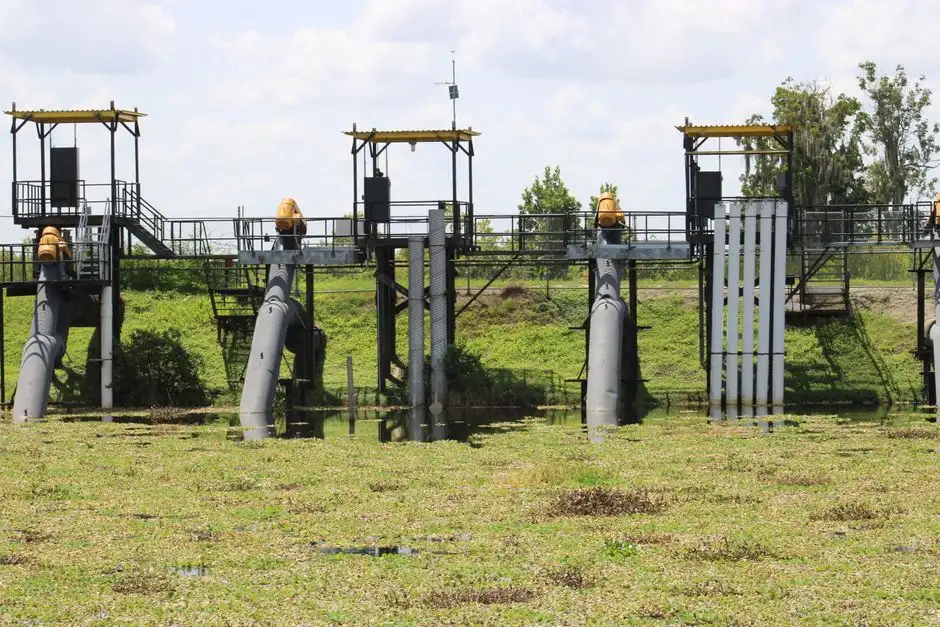
The deal should close only when mandatory legal checks and engineering decisions have been assigned. Treat material permit gaps, expired approvals, unresolved exceedances, unknown contamination, incompatible sewer terms and unresolved EAR classifications as closing conditions where the risk is material.
Before final investment approval, require:
- A baseline mass and concentration profile for every relevant stream.
- A permit-compliance model linked to the applicable direct-discharge or indirect-discharge conditions and sewer terms.
- A capacity forecast tied to the acquired plant’s production and chemistry plans.
- A treatment-route comparison with site-specific cost, schedule and performance commitments.
- An environmental baseline that distinguishes pre-existing contamination from post-acquisition performance.
Assign every remediation, upgrade, monitoring or permit action an owner, cost and deadline. Reserve price and schedule contingencies for unresolved conditions, then record which findings are legal conditions precedent, which require post-closing covenants and which are engineering recommendations.
Frequently Asked Questions
Does SMIC’s acquisition automatically create a new German wastewater permit?
No automatic permit is established by the transaction alone. The buyer must check each existing authorisation, sewer contract and change-of-control provision with the competent authority and German counsel. Notification, consent, permit transfer or modification depends on the specific instrument and transaction.
What data should be used to size treatment equipment?
Use representative flow, concentration and mass-load data for each segregated stream, together with production forecasts, chemical recipes, discharge destinations, permit conditions and sewer acceptance criteria. No SMIC German plant flow or permit limit is supplied in the research, so sizing should follow site data and a documented design basis rather than a generic flow range.