What a Krasnodar data center must decide first
A Krasnodar data center needs a site-specific train that removes suspended solids and biological contaminants from cooling blowdown, controls hardness, silica, alkalinity, and treatment-chemical residuals, and then reuses or treats the resulting stream. At 4 cycles of concentration, blowdown is typically 25–30% of makeup water and may contain 1,200–6,000 mg/L TDS and 10–50 mg/L suspended solids. A practical train is side-stream filtration, ultrafiltration, and reverse osmosis, with recovery typically 50–85%. The final system depends on current local discharge limits, makeup-water chemistry, freshwater cost, winter design temperature, and waste-heat availability—none of which should be assumed before local verification.
No responsible equipment proposal should be frozen before the site defines its receiving basin, legal discharge route, and actual water balance. The nearby Krasnoyarsk research describes oversight by Roshydromet, regional Yenisei-basin authorities, and Rosprirodnadzor; Krasnodar is a different basin and requires its own verification. Yenisei-basin compliance information must not be presented as Krasnodar compliance information.
Request a current makeup-water analysis covering TDS, conductivity, silica, calcium, magnesium, alkalinity, suspended solids, turbidity, and treatment-chemical residues. Also require the measured blowdown flow, target cycles of concentration, winter ambient design temperature, freshwater price, permitted discharge route, available waste heat, and current site-specific discharge limits. The wastewater treatment system sizing guide explains how these inputs should feed the hydraulic design.
The supplied research contains no verified Krasnodar-specific numeric discharge limits. A separate research note says some jurisdictions use TDS limits below 1,500 mg/L, but that observation must not be converted into a Krasnodar requirement.
| Design-basis input | Required evidence | Why it changes the train |
|---|---|---|
| Receiving basin and discharge route | Current permit or written confirmation from the applicable basin authority and Rosprirodnadzor | Determines whether concentrate can be discharged, blended, or must be evaporated or solidified |
| Makeup and blowdown chemistry | Sampling record with analysis scope | Controls filtration, UF pretreatment, antiscalant demand, RO recovery, and polishing |
| Flow and concentration cycle | Measured makeup, evaporation, blowdown, and operating target | Sets pretreatment and membrane capacity |
| Winter and thermal basis | Site design temperature, building plan, and waste-heat inventory | Sets enclosure, heat tracing, and thermal-process feasibility |
| Commercial inputs | Freshwater tariff and regional EPC quotation | Determines the viable endpoint and recovery target |
Quantify the blowdown that can be recovered
At 4 cycles of concentration, cooling-tower blowdown equals 25–30% of makeup water; at 6 cycles, it falls to 20%, according to Genesis Water Technologies’ cooling-tower analysis. The increase from 4 to 6 cycles therefore reduces blowdown by five percentage points, not the 50% sometimes claimed in procurement discussions. It also concentrates scaling ions, treatment chemicals, and biological risk, so a higher cycle target cannot be adopted without evaluating membrane fouling, scaling, corrosion, and biological control.
Genesis Water Technologies reports that blowdown TDS is typically 1,200–6,000 mg/L, or 4–8 times makeup-water TDS, while suspended solids commonly range from 10–50 mg/L. Calcium, magnesium, silica, and alkalinity concentrate along with biocides, corrosion inhibitors, scale inhibitors, and dispersants. The supplied HydropureWater Krasnoyarsk research, published in the supplied research set for 2026, identifies these constituents as the central design envelope. Full reuse quality therefore depends on more than conductivity.
| Calculation or parameter | Research-supported value | Engineering interpretation |
|---|---|---|
| Blowdown at 4 CoC | 25–30% of makeup water | Primary sizing flow for filtration, UF, and RO |
| Blowdown at 6 CoC | 20% of makeup water | Lower purge flow, but higher concentration and fouling risk |
| Blowdown TDS | 1,200–6,000 mg/L | RO feed salinity requiring chemistry-specific scaling assessment |
| Suspended solids | 10–50 mg/L | Filtration and UF duty, including biological material and corrosion products |
| RO recovery on blowdown | 50–85%, depending on scaling potential | Final recovery must follow measured feed chemistry |
Water Usage Effectiveness, or WUE, should remain context rather than the sole business-case metric. Genesis Water Technologies defines WUE as annual site water usage divided by IT equipment energy and explains that it does not distinguish consumed water from water returned to the watershed after treatment. A financial model should therefore value avoided freshwater purchases, avoided discharge costs, and recovered-water uses separately. The supplied cooling-blowdown process specifications and cost comparison provides a useful arithmetic structure, but Krasnodar inputs must replace its local assumptions.
Build the treatment train from the contaminants backward
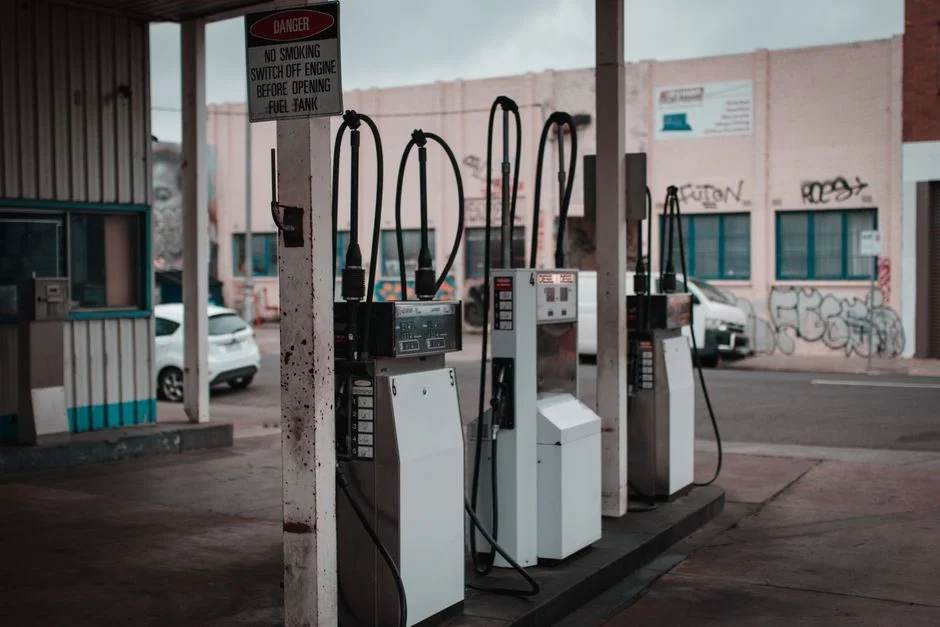
A defensible treatment train starts by segregating streams and ends by protecting the cooling loop from fouling and biological regrowth. Softener-regeneration brine, RO reject, humidification bleed, and chiller-side water should not enter the main membrane train with steady cooling blowdown: a regeneration slug can change feed chemistry abruptly and upset pretreatment or RO.
- Remove suspended solids. Install self-cleaning side-stream filtration at 10–25 micron, treating 1–5% of circulation flow, or multi-media filtration where the feed is less variable. The filtration stage controls corrosion products, biofilm fragments, and airborne particles before they reach UF.
- Protect the membranes. Use hollow-fiber ultrafiltration pretreatment at 0.01–0.1 micron. The supplied HydropureWater research reports 10–30 psi operating pressure, 90–95% recovery, and removal of suspended solids, bacteria, viruses, and high-molecular-weight organics. UF concentrate should return to the segregated blowdown stream.
- Control scaling chemistry. Keep feed filtration below 10–15 microns, match antiscalant dosing to the measured calcium, magnesium, silica, and alkalinity profile, and adjust pH for membrane compatibility. A PLC-controlled chemical dosing skid should meter from measured flow rather than remain on a fixed time cycle.
- Separate dissolved solids. Apply an industrial reverse osmosis system for cooling-tower makeup reuse. The supplied research reports 95–99% dissolved-solids removal, permeate at 10–50 mg/L TDS, and 50–85% blowdown recovery depending on scaling potential.
- Match the separator to the endpoint. Consider nanofiltration when hardness, rather than total TDS, controls the requirement. The supplied research gives 75–150 psi operating pressure, 70–85% recovery, and permeate at approximately 30–50% of feed TDS.
- Control the recycled loop biologically. Add final disinfection or biological control before returning water to the cooling system, and confirm compatibility with the existing chemical program.
Where high silica constrains conventional RO, the supplied MAXH2O case reports controlled salt precipitation followed by dynamic-flush RO, achieving about 95% recovery and approximately 1 mg/L permeate silica. That is a project-specific architecture, not a presumption that Krasnodar makeup requires it; silica measurement must determine whether it is relevant.
| Stage | Research-supported basis | Principal failure controlled |
|---|---|---|
| Side-stream or multi-media filtration | 10–25 micron; 1–5% of circulation flow | Suspended solids and membrane fouling |
| UF pretreatment | 0.01–0.1 micron; 10–30 psi; 90–95% recovery | Particles, bacteria, viruses, and high-molecular-weight organics |
| RO | 95–99% dissolved-solids removal; 10–50 mg/L permeate TDS | Dissolved solids for reuse |
| NF alternative | 75–150 psi; 70–85% recovery; 30–50% of feed TDS | Hardness-led reduction |
| High-silica hybrid | About 95% recovery; approximately 1 mg/L permeate silica in MAXH2O case | Silica-limited RO recovery |
Choose between reuse, compliant discharge, and ZLD
The endpoint decision follows from three conditions: whether a smaller residual concentrate stream can be permitted, whether an authorized receiver can accept it, and whether the site has sufficient freshwater savings or waste heat to support thermal treatment. High membrane recovery does not remove the residual-brine obligation.
| Endpoint | Core unit operations | Recovery | Residual obligation | Winter and evidence requirement | Cost driver |
|---|---|---|---|---|---|
| Cooling-tower makeup reuse | Filtration, UF, RO, biological control | 60–85% for the reuse route | Concentrate still requires an approved route | Enclosed skids and winter-operability evidence | Membranes, energy, antiscalant, and brine management |
| Compliant discharge | NF or RO plus polishing, then authorized discharge | Depends on the required TDS reduction | Concentrate or treated effluent must be accepted | Current receiving-basin limits and discharge permit | Treatment plus discharge charges |
| Partial ZLD | RO followed by a brine concentrator | Higher than conventional RO; project-specific | Reduced but still present liquid concentrate | Waste-heat availability and freeze protection | Thermal energy and capital equipment |
| Full ZLD | RO, MVC, and crystallization | 95–99% overall; 1–3% solid waste | Solid-waste handling remains | Building integration and local solid-waste route | Energy, crystallizer, maintenance, and solids disposal |
Cooling-tower makeup reuse is the preferred endpoint when freshwater is scarce or expensive and the concentrate can be permitted. For compliant discharge, an authorized receiving system must accept the residual stream, and NF or RO plus polishing must meet its limits. Partial or full ZLD becomes credible when liquid discharge is effectively prohibited, freshwater is unavailable, or avoided freshwater and discharge costs justify the thermal load.
The supplied research reports 95–99% overall recovery and 1–3% solid waste for full ZLD. MVC can recover 95–98% and produce distillate below 10 mg/L TDS, but Saltworks Technologies’ August 2025 data-center paper warns that high-salinity, low-volume brine still requires discharge, blending at a receiving plant, or another approved route. District-heating return lines and generator waste heat must therefore be assessed before selecting MVC. A RO and UF membrane replacement program belongs in the operating-cost model, while final biological control may require a chlorine-dioxide generator after compatibility checks.
Design for Krasnodar heat, water, and permit conditions
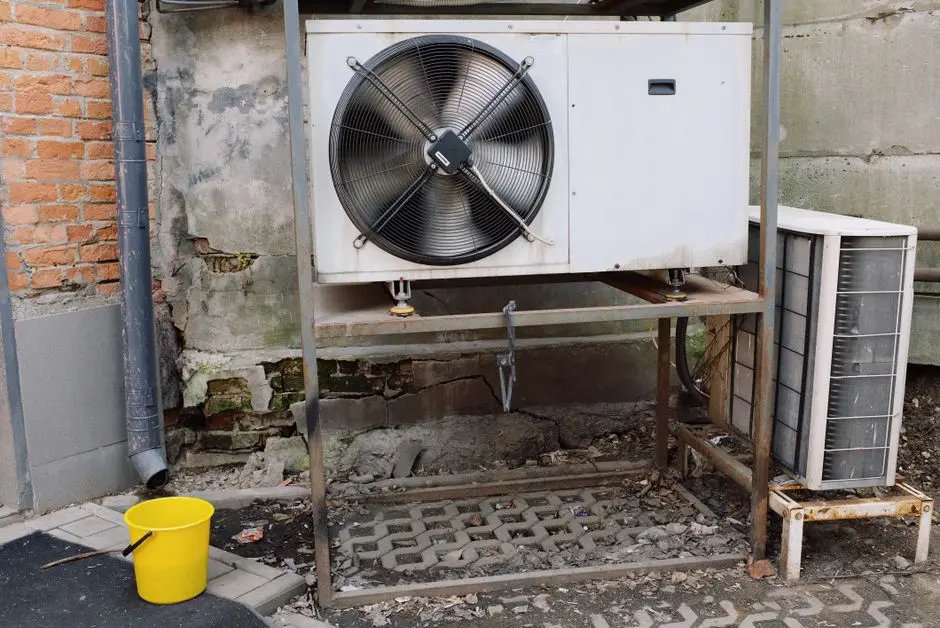
Krasnodar equipment must be designed around the site’s own winter ambient temperature and available building space, not a generic outdoor skid specification. Enclose outdoor membrane skids and RO vessels; provide heat tracing, freeze-protected chemical dosing lines, and climate-rated instruments. Where critical thermal equipment would otherwise be exposed to freezing conditions, integrate it inside a building and use external supply only where the winter design basis supports that arrangement.
Evaluate Kuban River water, municipal surface-water treatment, and local groundwater only after sampling. Each source can change baseline TDS, silica, hardness, turbidity, and scaling risk. The supplied research provides no verified Krasnodar values for makeup-water TDS, silica, hardness, winter design temperature, freshwater cost, permitted discharge route, or waste-heat availability. These are explicit design-brief gaps, not items for an equipment vendor to fill with generic assumptions.
The permit path must be coordinated with Roshydromet, the applicable regional basin authority, and Rosprirodnadzor. Ask bidders for Russian installation references, Russian-language controls and documentation, a winter-operability narrative tied to the site design temperature, and evidence addressing local certification requirements. The required equipment and replacement parts should also be documented through the treatment-valves and filter-media specification rather than left as unspecified allowances.
Build the capital and operating-cost case
The available capital figures are U.S. screening benchmarks, not Krasnodar EPC quotations. Genesis Water Technologies reports $50,000–$200,000 for typical side-stream filtration, $250,000–$500,000 for a 50,000 GPD RO skid, $1–3 million for an MVC system serving 10,000–30,000 GPD, and $3–8 million for full data-center ZLD. Full-ZLD operating cost is reported at $5–15 per thousand gallons treated. Currency, capacity basis, taxes, duties, and scope must be confirmed in a regional quotation.
| System | Research-supported benchmark | Scope limitation | Required Krasnodar quote item |
|---|---|---|---|
| Side-stream filtration | $50,000–$200,000 | Typical U.S. installation cited by Genesis Water Technologies | Freight, duties, skids, controls, commissioning |
| 50,000 GPD RO skid | $250,000–$500,000 | U.S. benchmark; capacity unit and installation scope differ from local bids | Membranes, pretreatment, building integration, winterization |
| MVC, 10,000–30,000 GPD | $1–3 million | U.S. screening estimate | Heat source, compressor, crystallizer, controls |
| Full data-center ZLD | $3–8 million | U.S. screening estimate | RO, thermal stages, solids handling, local certification |
| Full-ZLD operating cost | $5–15 per thousand gallons treated | Reported operating-cost range | Local power, maintenance, chemicals, waste, labor |
Saltworks Technologies’ August 2025 case for a 200 MW data center reports up to 40% reduction in cooling-system water consumption from an effective treatment and recycling program. This is a case result, not a guaranteed Krasnodar saving. Require an EPC quotation covering freight, import duties, winterization, foundations, building integration, membranes, commissioning, and local certification before approving the budget.
Turn the design brief into a supplier-selection checklist
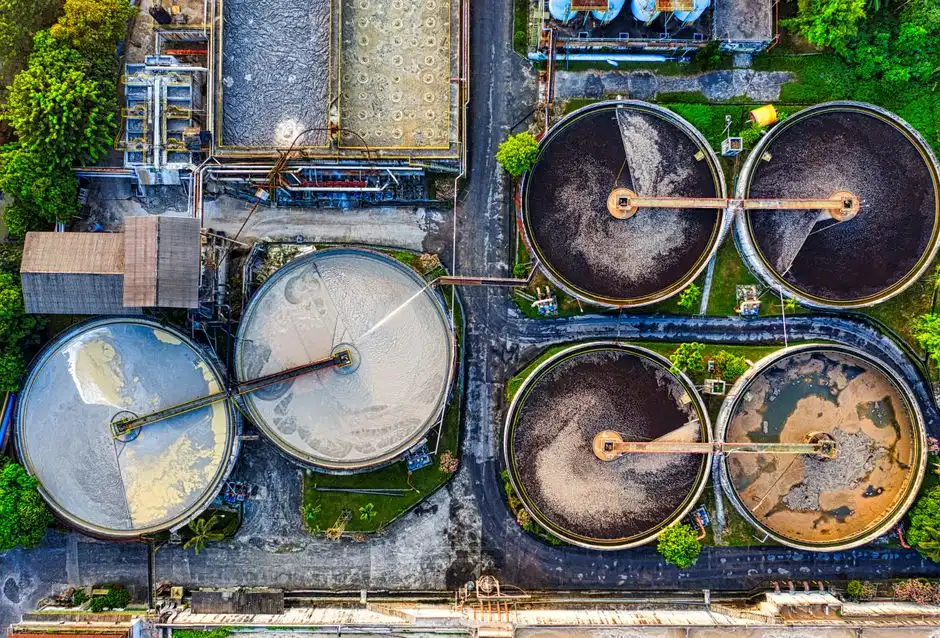
Comparable bids require the same chemistry, endpoint, winter basis, and commercial boundary. Require a documented cold-climate reference list covering skid enclosure, heat tracing, freeze-protected chemical dosing, and operation at the specified winter design temperature. A generic statement that equipment is suitable for cold climates is not sufficient.
Require a process guarantee naming permeate TDS, silica where relevant, recovery at the operator’s target cycles, and the antiscalant dose matched to the makeup-water analysis. Make the guarantee contingent on measured feed chemistry, a current mass balance, and written confirmation of the permitted endpoint. Reject performance guarantees based only on generic feed assumptions.
Price segregated streams, membrane replacement, cleaning chemicals, energy, operator labor, residual-brine handling, and winterization as separate line items. Compare modular UF and RO skids, including a multi-media filtration option, against full ZLD. Where softening is part of the train, identify any industrial softening requirements and regeneration-waste impacts separately.
Evaluate recovered-water value against avoided freshwater purchases and permitted-discharge costs. The bid should also state delivery milestones, commissioning acceptance tests, membrane-cleaning procedures, spare-parts strategy, controls language, local certification support, and the party responsible for residual-brine compliance. These checks convert an equipment proposal into a comparable engineering offer.
Frequently Asked Questions
How much does a Krasnodar data center need to spend on cooling-blowdown treatment?
No Krasnodar-specific quotation is available in the supplied research. Use $50,000–$200,000 for typical side-stream filtration, $250,000–$500,000 for a 50,000 GPD RO skid, $1–3 million for 10,000–30,000 GPD MVC, and $3–8 million for full data-center ZLD only as U.S. screening benchmarks from Genesis Water Technologies. Request a regional EPC quotation that separately prices freight, duties, winterization, foundations, building integration, membranes, commissioning, and local certification.
What treatment capacity should an EPC size for a Krasnodar data center?
Size from measured blowdown, not total makeup-water flow. Genesis Water Technologies reports blowdown at 25–30% of makeup water at 4 cycles and 20% at 6 cycles. Require the measured flow, operating-cycle target, chemical residuals, and makeup-water analysis; the supplied research does not establish the Krasnodar facility’s blowdown flow or target cycle. Use the wastewater treatment system sizing guide as a calculation framework rather than a substitute for site data.
Should a Krasnodar data center choose RO reuse or zero-liquid discharge?
Choose RO reuse when the current permit accepts the smaller concentrate stream and freshwater savings justify the membrane train. Choose partial or full ZLD when residual liquid discharge is effectively prohibited, freshwater is unavailable, or the operating case can support thermal treatment. The data center wastewater and cooling blowdown guide provides a broader endpoint framework, but Krasnodar discharge limits and waste-heat availability must be verified before either route is frozen.
Which winterization requirements should be included in a supplier request?
Require the bidder to state the site winter design temperature, enclosure arrangement, heat-tracing and trace-heating philosophy, freeze-protected chemical dosing lines, climate-rated instruments, shutdown strategy, and building-integration plan. Also request an operating narrative tied to the stated temperature rather than a generic cold-weather reference. Membrane elements and critical controls should be identified separately.
What documents are needed before the wastewater treatment train is approved?
Require a current makeup-water analysis, blowdown characterization, measured flow and cycles-of-concentration target, freshwater cost, waste-heat inventory, site winter design temperature, current receiving-basin limits, confirmed discharge route, and the selected endpoint. The permit record should identify the responsible regional basin authority and Rosprirodnadzor coordination. Without those documents, membrane area, recovery, brine route, capital cost, and winterization remain provisional.
Related Equipment
- hollow-fiber ultrafiltration pretreatment — specifications, capacity range, and technical data