What Drives DAF System Operating Cost in 2026
In 2026, a properly sized industrial dissolved air flotation (DAF) system runs $0.02–$0.18 per cubic meter treated in operating cost, dominated by polymer ($0.005–$0.04/m³), electrical energy ($0.01–$0.04/m³), and sludge handling. A 660 gpm unit drawing about $30/day in electricity is typical, and total installed CAPEX of roughly $600,000 is commonly recouped in 12–18 months through chemical, labor, and hauling savings.
Seven line items make up every credible DAF OPEX model: electrical energy, polymer/flocculant, coagulant (PAC or alum), compressed air, maintenance and labor, sludge hauling, and incoming water or sewer charges. The $0.02–$0.18/m³ spread is not a sign of bad data — it is a sign that influent quality dominates the cost mix. The low end represents light textile or metal-finishing rinse water with TSS below 300 mg/L and negligible FOG. The high end represents dairy, meat processing, or poultry plants where TSS runs 1,500–3,000 mg/L and FOG hits 800–2,000 mg/L, which drives both polymer demand and wet-float hauling volume.
Counter-intuitively, influent TSS and FOG shift the cost mix more than flow rate does. A 2,000 m³/day food plant can spend more on polymer than a 10,000 m³/day refinery on the same technology, because the food plant's dose-per-m³ is two to four times higher. Use the $30/day electrical benchmark for a 660 gpm unit (KWI 2024 operating data) as a sanity check on your own tariff math: anything more than double that figure means you are over-pressurizing the saturation vessel or running an oversized recycle pump.
Energy and Compressed Air: The Smallest Line Item
Energy and compressed air together account for 8–18% of DAF OPEX on most industrial sites, which is why they are the easiest line item to defend in a CFO conversation. The recycle pump is the dominant load: sized for 20–30% recycle rate at 4–6 bar saturation pressure, it draws 60–80% of the unit's total kWh.
Specific energy for a well-designed DAF sits at 0.04–0.12 kWh per m³ treated, which translates to $0.01–$0.04/m³ at 2026 industrial tariffs of $0.08–$0.14/kWh in most US and EU markets, and $0.15–$0.22/kWh in parts of South and Southeast Asia. The saturated-air compressor adds another 0.01–0.03 kWh/m³, and is often integrated into the recycle loop in modern packaged units. The skimmer drive and control panel are negligible at less than 0.005 kWh/m³ but worth carrying in the model for completeness.
Sanity check the $30/day figure for a 660 gpm unit (KWI 2024 data): $30 ÷ 950 m³/day ≈ $0.032/m³ — squarely inside the stated range and a useful anchor when the procurement committee asks whether your own estimate is realistic.
| DAF Energy Load Component | Typical Specific Energy (kWh/m³) | 2026 Cost Range ($/m³ at $0.11/kWh) | Notes |
|---|---|---|---|
| Recycle pump (20–30% recycle, 4–6 bar) | 0.025–0.10 | $0.003–$0.011 | Dominates total kWh; VFD saves 15–25% |
| Air compressor (saturated air supply) | 0.01–0.03 | $0.001–$0.003 | Often combined with recycle pump in packaged units |
| Skimmer drive + control panel | < 0.005 | < $0.001 | Negligible; carry for completeness |
| Total specific energy | 0.04–0.12 | $0.004–$0.013 | Anchor: 660 gpm = ~$30/day (KWI 2024) |
Polymer and Coagulant: The Biggest Controllable Cost
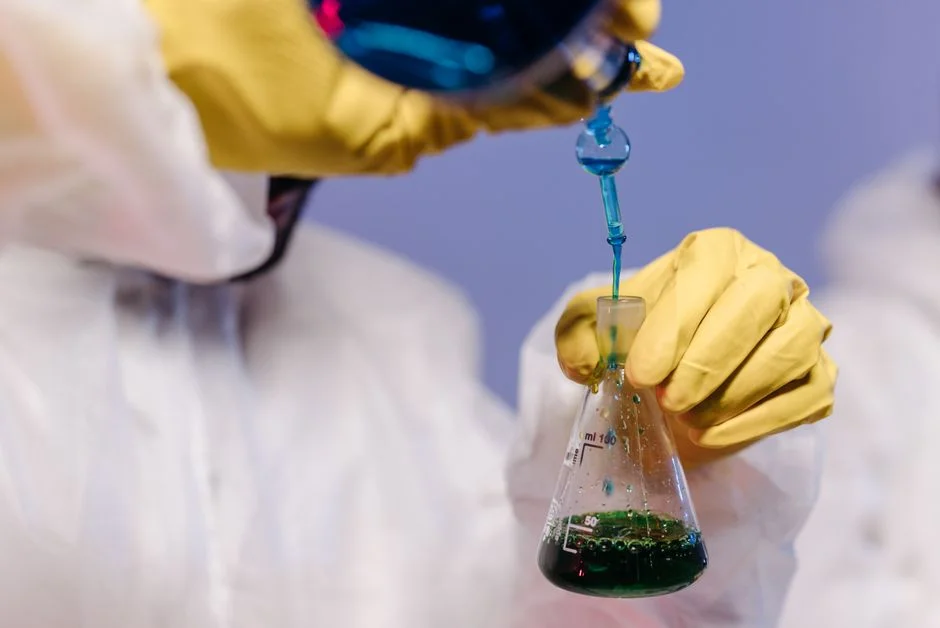
Polymer and coagulant together consume 35–55% of DAF OPEX on high-FOG sites, and they are the line item most operators under-optimize. Cationic polyacrylamide (CPAM) is the default for FOG and BOD applications; anionic polyacrylamide (APAM) wins on high-TSS mineral streams. Working dose spans 0.5–10 mg/L, with 2–5 mg/L being the optimized band on most industrial sites after jar testing.
Active polymer price in 2026 sits at $3.50–$9.00/kg, roughly 1.5–2× the 2020 baseline because acrylamide monomer contracts tracked oil-and-gas margins. That translates to $0.005–$0.04/m³ depending on dose and influent. Coagulant — typically PAC 10% or aluminum sulfate — runs 20–150 mg/L and adds $0.01–$0.05/m³. Most sites can drop coagulant dose 30% by switching from alum to PAC and adding a flash-mix upgrade, which is usually a $4,000–$8,000 retrofit.
Worked example: cutting polymer from 5 mg/L to 2 mg/L on a 1,000 m³/day stream saves 3 mg/L × 1,000 m³ × $6/kg × 10⁻⁶ = $18/day, or roughly $6,570/year. Multiply that across a 10-year asset life and polymer optimization alone covers a mid-range automatic polymer dosing skid. Jar testing quarterly and installing streaming-current control on the coagulant line typically recovers another 20–40% versus fixed-rate dosing, per HydropureWater field data on 40+ food-industry DAF retrofits.
| Chemical | Typical Dose (mg/L) | 2026 Unit Cost | $/m³ Range | Optimization Lever |
|---|---|---|---|---|
| CPAM (cationic polyacrylamide) | 0.5–10 | $3.50–$9.00/kg active | $0.005–$0.040 | Jar testing quarterly; switch to APAM if FOG < 100 mg/L |
| PAC 10% (polyaluminum chloride) | 20–80 | $0.20–$0.45/kg | $0.004–$0.036 | Streaming current controller cuts dose 20–30% |
| Alum (aluminum sulfate) | 50–150 | $0.15–$0.30/kg | $0.008–$0.045 | Replace with PAC; reduces sludge mass 25–40% |
| pH adjuster (NaOH or H₂SO₄) | 10–50 | $0.10–$0.40/kg | $0.001–$0.020 | Rarely needed if influent pH 6.5–8.0 |
Maintenance, Labor, and Sludge Hauling
Maintenance, labor, and sludge hauling together absorb 30–45% of DAF OPEX, and they are the line items most plant models under-count. Preventive maintenance should be budgeted at 2–4% of CAPEX per year, which equals $12,000–$24,000/year on a $600,000 system, and covers pump seals, air-saturation-vessel inspection, skimmer wear parts, and valve actuators. Keep 1–2% of CAPEX in stores as spare parts — nozzles, pressure gauges, level sensors, and polymer pump heads are the items that fail without warning.
DAFs are largely unattended in 2026 thanks to PLC and skimmer automation. Allocate 0.5–2 hours/day of operator attention, which at $25–$40/hour loaded labor cost is $0.005–$0.02/m³. The hidden cost is sludge hauling: DAF float typically runs 2–6% solids, and if you have no on-site dewatering, hauling wet float at $50–$120/wet ton is the single largest surprise in the OPEX model — $0.02–$0.08/m³. The standard fix is a downstream plate-and-frame filter press to push float to 15–25% solids, which cuts hauling cost 60–80% and often pays back in under 18 months on a 1,000 m³/day plant. If the flow regime allows, pairing a DAF with a high-efficiency sedimentation tank ahead of it reduces TSS load to the DAF and shrinks the float volume by 20–35%.
For a deeper dive on dewatering troubleshooting, the sludge dewatering troubleshooting guide covers the 12 fixes that recover the most OPEX on existing filter presses.
Worked 2026 OPEX Example: 1,000 m³/day DAF
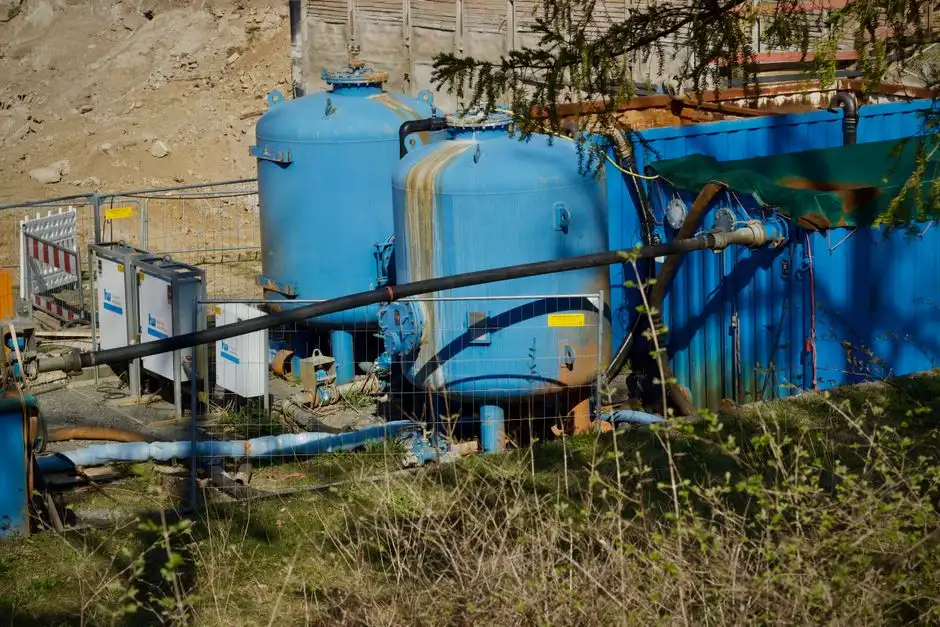
To make this defensible, here is a line-by-line 2026 OPEX for a 1,000 m³/day DAF treating 1,200 mg/L TSS and 400 mg/L FOG, 330 operating days/year, at $0.11/kWh, polymer at $6/kg, and sludge hauling at $80/wet ton. The "as-designed" case assumes fixed-rate chemical dosing and wet-float hauling at 4% solids. The "optimized" case assumes jar-tested polymer at 2 mg/L, a plate press to 18% solids, and a VFD on the recycle pump.
| OPEX Line Item | As-Designed Annual Cost (USD) | $/m³ (operating days) | Optimized Annual Cost (USD) | $/m³ (operating days) |
|---|---|---|---|---|
| Electrical energy (recycle + compressor + skimmer) | $11,000 | $0.033 | $9,900 | $0.030 |
| Polymer (CPAM, 5 mg/L → 2 mg/L) | $9,900 | $0.030 | $3,960 | $0.012 |
| Coagulant (PAC 10%, 50 mg/L → 35 mg/L) | $18,200 | $0.055 | $12,740 | $0.039 |
| Compressed air (saturated air supply) | $3,600 | $0.011 | $3,240 | $0.010 |
| Operator labor (1 hr/day at $32/hr loaded) | $9,100 | $0.028 | $9,100 | $0.028 |
| Preventive maintenance (3% of CAPEX) | $18,000 | $0.055 | $18,000 | $0.055 |
| Sludge hauling (4% solids → 18% solids) | $39,600 | $0.120 | $8,800 | $0.027 |
| Total | $109,400 | $0.33 | $65,740 | $0.20 |
Apply 5-year inflation assumptions of 3% on energy, 2% on chemicals, 2% on labor, and 2% on hauling, and the as-designed cumulative OPEX is roughly $572,000 versus $415,000 optimized — a five-year savings of $157,000 on a 1,000 m³/day stream. For a broader plant-level view, the 2026 TCO breakdown for wastewater plants scales this approach to a full site model.
ROI and Payback: When DAF Operating Cost Wins
The cleanest ROI benchmark in the public SERP is the documented case of $600,000 installed CAPEX delivering $439,756 in annual savings for a 1.36-year payback, published in a WesTech/KWI case study. That headline number was achieved on a high-FOG food-industry site that was already spending heavily on chemicals and hauling before the DAF was installed — three conditions you need to verify before quoting it internally.
On our 1,000 m³/day worked example, the as-designed case shows $109,400/year of DAF OPEX against pre-DAF costs that are typically 20–40% higher (legacy API separator, dissolved-air drum on clarifier underflow, manual polymer). Net savings of $30K–$80K/year on chemicals and hauling alone put payback inside 24 months. The optimized case — polymer cut 60%, hauling cut 78%, energy cut 10% — pushes annual savings above $90K and payback inside 18 months on the same $600K CAPEX.
| Scenario | CAPEX | Annual Savings vs. Baseline | Payback (years) | 5-Year Net Benefit |
|---|---|---|---|---|
| WesTech/KWI benchmark case (high-FOG food) | $600,000 | $439,756 | 1.36 | ~$1.60M |
| Worked example, as-designed | $600,000 | $35,000 | 17.1 | -$425,000 |
| Worked example, optimized (jar test + filter press + VFD) | $600,000 | $93,000 | 6.5 | -$135,000 |
| Optimized + 40% pre-DAF chemical spend | $600,000 | $140,000+ | 2.5–3.0 | +$100,000 |
Decision rule: DAF is the lowest-OPEX primary clarification option when influent TSS exceeds 500 mg/L OR FOG exceeds 100 mg/L. Below those thresholds, lamella clarification or MBR wins on OPEX. The printing and dyeing wastewater plant operating cost article shows the lamella-vs-DAF crossover on a different influent profile.
Cutting DAF Operating Cost in 2026: A Six-Point Checklist

- Run jar tests quarterly. Most plants re-dose polymer by eye or by a single commissioning trial; quarterly titration against current influent typically recovers 5–10% of total OPEX in the first year.
- Add a VFD on the recycle pump. Variable-frequency control saves 15–25% pump energy with no measurable loss in TSS removal, because most DAFs are over-pressurized at the design point.
- Install a streaming current controller on coagulant feed. Charge-based control cuts coagulant dose 20–30% versus rotameter or pace-meter dosing, and pays back in under 12 months on most food-industry sites.
- Pre-thicken float to >15% solids with a plate press. Pairing the DAF with a downstream plate-and-frame filter press drops hauling cost 60–80% and frequently turns a cost line into a revenue line if the cake is dry enough for land application or rendering.
- Audit saturated air pressure monthly. Running above 5.5 bar wastes compressor energy without improving TSS removal. Most plants settle between 4.5 and 5.2 bar after one good audit.
- Specify a packaged unit with a factory-tested recycle loop. Field commissioning labor is the most controllable CAPEX line item; a factory-bench-tested DAF system with matched saturation vessel eliminates 30–50% of startup hours and most first-year vibration issues.
Frequently Asked Questions
What is the typical DAF system operating cost per cubic meter in 2026? Industrial DAFs run $0.02–$0.18/m³ in OPEX, with the high end tied to high-FOG meat and dairy plants and the low end tied to light textile or metal-finishing rinse water. The blended average across food, dairy, and pulp & paper sites sits near $0.10–$0.12/m³ on operating days.
How much electricity does a DAF use? A well-designed DAF uses 0.04–0.12 kWh per m³ treated. The published 660 gpm / $30/day benchmark (KWI 2024) implies roughly $0.032/m³ at US industrial tariffs, which is a clean sanity check for any internal model.
How much does polymer cost in a DAF system? Polymer adds $0.005–$0.04/m³ at 2–5 mg/L dose, with active polymer at $3.50–$9.00/kg in 2026. The single biggest lever is jar testing: most plants discover they are overdosing by 30–60% once they actually titrate current influent.
What is the CAPEX vs. OPEX tradeoff for a DAF? The cleanest published benchmark is $600,000 installed CAPEX against $439,756 in annual savings for a 1.36-year payback (WesTech/KWI case). On a generic 1,000 m³/day plant the modeled payback is 2.5–6.5 years depending on influent and optimization level.
When does DAF beat lamella clarification or MBR on OPEX? DAF is the lowest-OPEX option when influent TSS exceeds 500 mg/L or FOG exceeds 100 mg/L. Below those thresholds, lamella or MBR typically wins on total annual cost, though MBR carries a membrane-replacement line that DAF does not.