Is IFAS the Right Treatment for Food Processing Wastewater?
IFAS is most suitable when a food-processing plant needs more biological treatment capacity, has an activated-sludge basin that can be modified, or has sufficient space for a new reactor, and can control FOG, solids and shock loads upstream. It combines suspended activated sludge with biomass attached to carrier media, allowing biological capacity to increase without relying only on suspended solids.
Data Intel’s IFAS Wastewater Systems for Food Industry Market, published for 2025, reports effective mixed-liquor suspended solids of 4,000–8,000 mg/L and identifies IFAS mainly as a retrofit option for existing activated-sludge plants or for large greenfield facilities processing more than 5,000 m³/day. Smaller facilities should compare IFAS with MBBR under site-specific flow, footprint and operating-resource constraints rather than assume IFAS is the default.
Application fit also varies. Data Intel reports that meat processing accounted for 28.6% of 2025 IFAS-system revenue, approximately $800 million. Dairy wastewater is particularly compatible with biofilm-based oxidation because its BOD:COD ratio typically exceeds 0.65, although high-strength dairy streams still require controlled pretreatment and hydraulic loading.
| Screening question | Engineering interpretation | Decision consequence |
|---|---|---|
| Is additional biological capacity needed? | Compare current organic loading and peak production conditions with the existing activated-sludge inventory. | Proceed with IFAS comparison if biological capacity, footprint or effluent performance is constrained. |
| Can FOG and solids be controlled upstream? | Screening, equalization and FOG removal must protect the biological reactor and carrier media. | Add pretreatment before selecting the biological process. |
| Can the reactor retain media and distribute it? | Mixing, submerged screens, foam control and access must fit the existing basin geometry. | Reject the retrofit if hydraulic or mechanical requirements cannot be met. |
| Are the discharge obligations defined? | Confirm permit limits, receiving-water sensitivity and whether discharge goes directly or to a municipal system. | Resolve permit and polishing requirements before final sizing. |
Excessive FOG, uncontrolled suspended solids, unsuitable mixing, inadequate screen retention or unresolved receiving-water constraints can make another treatment train more appropriate. For a solids-handling comparison, see decanter centrifuge design for poultry-processing solids. Where FOG removal is the unresolved unit operation, compare DAF versus clarifier for food and beverage wastewater.
Why Food Processing Wastewater Is Demanding
Food-processing wastewater can contain high BOD and COD, fats, oils and grease, suspended food solids, nitrogen, phosphorus and variable pH, so biological capacity cannot be evaluated from flow and BOD₅ alone.
KETOS’s Effective Industrial Wastewater Management in Food Processing identifies high and variable organic loads, seasonal production peaks, FOG fouling, strict BOD and TSS limits, and increasing nutrient-removal requirements as defining challenges. Production and washdown schedules can create short-duration load peaks and hydraulic surges. The design basis must therefore include peak flow and peak loading, not merely an daily average.
Data Intel’s 2025 market report gives meat-processing BOD₅ as typically 1,200–5,000 mg/L. At the upper end, a suspended-growth system sized only around its average load may lack enough biological inventory or oxygen-transfer capacity. For dairy, Data Intel reports a BOD:COD ratio typically exceeding 0.65 and influent loads exceeding 3,000 mg/L. That ratio supports biological treatment, but it does not eliminate the need for equalization, pH control, FOG removal and control of hydraulic loading.
| Wastewater characteristic | Documented evidence | Design consequence |
|---|---|---|
| Organic load | Meat-processing BOD₅ typically ranges from 1,200 to 5,000 mg/L, according to Data Intel’s 2025 report. | Size the biological reactor and aeration against peak load. |
| Biodegradability | Dairy BOD:COD typically exceeds 0.65, according to Data Intel’s 2025 report. | Dairy can suit biofilm oxidation, subject to pretreatment and hydraulic controls. |
| FOG and food solids | KETOS identifies FOG, suspended food solids and variable pH as common food-processing contaminants. | Protect media and downstream equipment before biological treatment. |
| Production variability | KETOS identifies seasonal peaks and production-driven organic-load fluctuations as key challenges. | Use hourly and seasonal data for equalization and reactor design. |
IFAS does not remove free oil, grease, grit, fibrous material or readily settleable solids in place of upstream pretreatment. A rotary mechanical bar screen for wastewater pretreatment addresses debris and fibrous material, while an industrial DAF system for FOG removal can remove floatable material before it reaches the reactor. The choice between DAF and clarification should follow the waste stream and solids characteristics rather than a standard equipment list.
How the IFAS Treatment Process Works

IFAS combines suspended activated sludge and attached biofilm in the same reactor, increasing the biomass inventory used for treatment without relying only on suspended solids.
- Screen and remove debris. Remove fibrous materials and solids that could foul the reactor, screens or aeration system.
- Equalize flow and control pH. Damp production and washdown peaks before biological treatment.
- Remove FOG. Use DAF or another suitable pretreatment process where floatable oil and grease threaten media or sludge handling.
- Run the IFAS reactor. Maintain suspended sludge and attached biofilm together while distributing carrier media throughout the aeration basin.
- Separate solids. Remove excess sludge and retain the carrier media with screens where free-floating media are used.
- Polish and monitor. Provide nutrient removal or other polishing required by the permit, then monitor performance before discharge.
Data Intel’s 2025 report gives an effective MLSS range of 4,000–8,000 mg/L for IFAS and attributes improved shock-load resilience to the combined biomass inventory. That is a reported design characteristic, not a field value to insert without site design and pilot verification. Hazen and Sawyer’s full-scale Greensboro demonstration achieved consistent nitrification using approximately 50% of the volume required by a conventional system and at higher loading rates; it demonstrates the value of added fixed-film capacity, but it is not a universal sizing ratio.
Conventional IFAS generally uses mixed suspended and attached growth within one treatment train. Hybrid IFAS adds dedicated anoxic or anaerobic selectors and may incorporate downstream membrane or tertiary polishing. Data Intel reports 2025 market shares of 42.3% for conventional IFAS, 31.5% for hybrid IFAS and 26.2% for MBBR. These figures describe market position, not technical superiority.
Chemical dosing may be required for pH, nutrients or other controlled additions; an automatic chemical dosing system should therefore be integrated with the treatment-control strategy rather than treated as an accessory. If the treatment objective requires membrane separation, evaluate an integrated MBR treatment system as a distinct process alternative.
IFAS Design Parameters for Food Processing Plants
A defensible IFAS proposal requires hourly flow and loading data, wastewater characterization, permit targets and reactor geometry; no single flow or BOD₅ value can size the system.
| Design input | Information the designer needs | Why it affects the design |
|---|---|---|
| Design flow and peak factor | Hourly flow, production schedule, washdown periods and recycling streams | Defines equalization, reactor hydraulics, mixing and solids separation. |
| BOD₅ and COD | Representative and peak laboratory data, including production variability | Sets biological loading and aeration demand. |
| Suspended solids and FOG | Concentrations, settling or floatability characteristics and removal performance | Determines pretreatment and media-fouling risk. |
| pH and temperature | Operating ranges and alkalinity information | Affects biological activity and chemical demand. |
| Nitrogen and phosphorus | Influent concentrations and required removal fractions | May require anoxic selectors, nutrient dosing or polishing. |
| Existing reactor | Tank geometry, depth, volume, diffuser layout, access, wiring and controls | Establishes retrofit feasibility and civil or mechanical changes. |
| MLSS and HRT | Measured operating inventory, current wasting and required retention time | Links biomass inventory to organic loading. |
| Carrier media | Type, density, active area, fill fraction, mixing requirements and retention method | Controls biomass support, hydraulics and screen loading. |
| Aeration | Profile, diffuser arrangement, air demand, turndown and redundancy | Sets oxygen-transfer capacity, energy use and basin performance. |
| Effluent and receiving water | Permit limits, nutrient targets and sensitivity of the receiving water | Defines whether additional treatment or polishing is mandatory. |
Data Intel’s 2025 report states that appropriately designed IFAS and MBBR systems in food-processing applications can achieve effluent BOD₅ below 30 mg/L and total nitrogen below 15 mg/L. It also reports BOD₅ removal efficiencies exceeding 97% in food-industry applications and effluent BOD₅ below 20 mg/L for suitable dairy applications. These are performance claims conditional on influent characteristics and process design; they are not substitutes for site-specific acceptance criteria.
Media fill fraction must be derived from the selected carrier, mixing regime, loading and basin geometry. Hazen and Sawyer used AnoxKaldnes K3 media at a 35% fill fraction in the Greensboro full-scale demonstration. That value documents one installation and is not a default to copy into every food plant.
Clarification and solids handling remain part of the design. A high-efficiency sedimentation tank may be relevant where the existing clarifier has insufficient capacity or performance, while a plate-frame filter press addresses dewatering after biological solids are separated. Neither should be selected without sludge-volume and cake-handling data.
Mechanical Design Issues That Prevent Common IFAS Failures
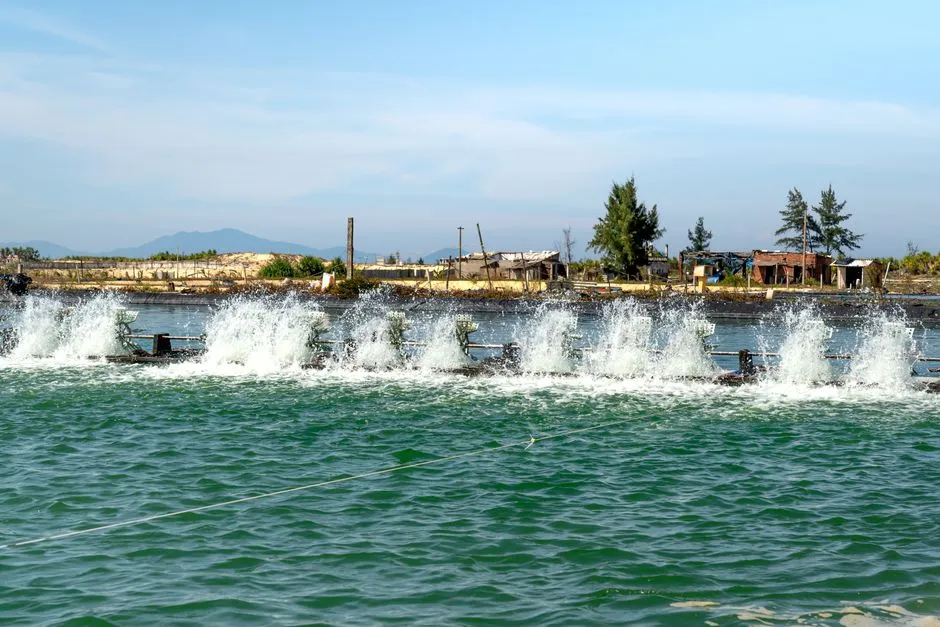
Hazen and Sawyer identifies four physical requirements for IFAS: adequate mixing, submerged effluent screens for free-floating media, foam removal and accumulation control, and media-retention hydraulics.
Mixing must keep carrier media uniformly distributed and prevent accumulation in inactive zones. For free-floating systems, submerged screens must retain media while passing treated water and sludge. Screen openings, approach velocity, structural support and maintenance access must be coordinated with the activated-sludge tank; a screen selected only by nominal opening may create excessive head loss or permit media loss.
Foam is not merely an appearance problem. Hazen and Sawyer reports that natural foam traps commonly develop in IFAS cells because free-floating media must be retained. Foam can interfere with surface equipment, clarifyer performance and screen operation, so the design needs an identified removal and response strategy.
Aeration should be evaluated for both capital cost and long-term operating cost, as Hazen and Sawyer specifically notes. Existing diffusers, basin turnover, airflow limits and control logic can determine whether adding media without revising aeration produces the expected treatment capacity.
Upstream DAF performance matters to media condition. Data Intel’s 2025 report describes carrier developments intended to improve hydrodynamics and biofilm sloughing in high-fat effluent, but it also frames these as recent product developments rather than universal remedies. For FOG-prone streams, ask for site-specific pilot verification, media-fouling observations and an operating response plan.
- Commissioning: Verify installed media quantity and distribution, screen installation, mixing patterns, aeration response, dissolved oxygen, biomass attachment and sludge-wasting settings.
- Stable operation: Record foam extent, media inventory, head loss across screens, attached biomass, solids capture and clarifier performance.
- Troubleshooting: Connect changes in production or washdown operations to equalization, mixing, dissolved oxygen, pH and wasting adjustments.
The pretreatment scope should be coordinated with mechanical requirements from the start. An industrial DAF system for FOG removal and a rotary mechanical bar screen for wastewater pretreatment address different upstream loads, but neither replaces a site-specific hydraulic and solids assessment.
IFAS, MBBR, MBR and Anaerobic Treatment Compared
The appropriate process depends on retrofit compatibility, footprint, pretreatment needs, nutrient removal, polishing requirements, operating complexity and reuse objectives.
| Process | Best-supported role | Key limitation | Selection signal |
|---|---|---|---|
| Conventional IFAS | Expand biological capacity in an activated-sludge basin or provide a biofilm-supported biological stage. | Requires media mixing, retention, screens and foam control. | Existing basin plus a need for more biological inventory. |
| Hybrid IFAS | Combine carrier-based treatment with dedicated anoxic or anaerobic selectors and, where needed, polishing. | More process integration and equipment to design and operate. | Nutrient removal or staged treatment is central to the project. |
| MBBR | Provide a biofilm biological process with simpler suspended-sludge inventory management. | Site hydraulics, media retention and pretreatment still require design. | Smaller facilities, municipal-sewer pretreatment or greenfield simplicity are priorities, according to Data Intel’s 2025 report. |
| MBR | Provide membrane-based solids separation and an effluent suitable for demanding polishing or reuse objectives. | Adds membrane operation, fouling control and associated energy demand. | Near-reuse quality or membrane filtration is required. |
| Anaerobic treatment | Reduce high organic loads while enabling biogas production. | Requires a suitable waste stream and process integration for gas handling and polishing. | Energy recovery and organic-load reduction justify a separate anaerobic stage. |
Data Intel’s 2025 market shares—42.3% conventional IFAS, 31.5% hybrid IFAS and 26.2% MBBR—provide commercial context only. They do not establish process superiority. MBBR may be favored for smaller facilities and pretreatment ahead of municipal sewer connections, while MBR is appropriate when membrane filtration or near-reuse-quality effluent is required.
The supplied HydropureWater product specification describes its MBR system as delivering effluent below 1-micrometer filtration in a footprint 60% smaller than conventional systems. Treat that as a stated product specification, not an independently verified performance result or a site guarantee.
Anaerobic treatment should be evaluated when organic-load reduction and energy recovery are priorities. KETOS identifies anaerobic treatment as a food-processing strategy and also discusses DAF, wastewater minimization and reuse. If the application is coffee processing, see the MABR design guide for coffee-processing wastewater for a related fixed-film evaluation. For membrane-based alternatives, compare the integrated MBR treatment system against IFAS on the required effluent specification, not simply on reactor volume.
What IFAS Retrofit Costs and Operating Economics?
Data Intel estimates that retrofit IFAS installations for medium-sized food-processing facilities treating 1,000–5,000 m³/day cost $400,000–$3 million, representing a reported 40–65% capital-cost saving against equivalent greenfield biological treatment.
These figures are market benchmarks, not universal budgets. Retrofit cost can change substantially with basin geometry, peak loading, FOG pretreatment, aeration, screens, media, electrical work, controls and solids handling. A supplier that quotes only media and screens has not presented a complete installed comparison.
| Cost or operating category | Information needed for a defensible estimate | Common pricing risk |
|---|---|---|
| Pretreatment | Influent solids and FOG data, required removal performance and existing equipment condition | Omitting DAF, screening, equalization or chemical dosing. |
| Reactor modifications | Basin drawings, mixing assessment, aeration capacity and access requirements | Assuming the existing reactor can be used without modification. |
| Media and screens | Carrier selection, quantity, fill fraction, screen specification and installation method | Comparing media prices without including retention hardware. |
| Electrical and controls | Power availability, blower scope, control philosophy, instruments and wiring | Excluding site electrical upgrades. |
| Solids handling and polishing | Sludge production, wasting route, nutrient targets and permit limits | Leaving downstream treatment outside the bid comparison. |
| Energy | Existing aeration efficiency, new blower requirements and operating schedule | Comparing capital cost without long-term air demand. |
Data Intel reports biological-treatment energy consumption of 0.4–0.8 kWh/m³ under optimal aeration management. The comparison should separately price aeration, pumping, screen cleaning and media maintenance. Existing basin reuse may reduce civil construction, but mixing, aeration, foam and media-retention changes can still be substantial.
For pretreatment alternatives, use the DAF versus clarifier for food and beverage wastewater assessment, and apply the same mass-balance discipline described in the DAF process design and sizing guide for winery wastewater. A defensible estimate requires site drawings, wastewater characterization, treatment targets and clearly separated supplier scopes.
How to Select an IFAS Supplier and Validate the Proposal?
A supplier proposal should expose the reactor-sizing basis and installed scope so that engineering and procurement teams can compare alternatives consistently.
- Require the sizing basis. Ask for design flow, peak-loading basis, HRT, current biological loading, expected MLSS, carrier type and quantity, fill fraction, mixing method and aeration design.
- Require the retention design. The proposal should identify screen type, openings, hydraulic approach, media-loss controls, cleaning method, access and replacement assumptions.
- Require the performance basis. Specify the wastewater characterization used, applicable permit limits, testing method, seasonal operating conditions and commissioning acceptance criteria.
- Require the complete installed scope. Include pretreatment, reactor modifications, media, screens, electricals, controls, civil work, commissioning, training, sludge handling and any polishing equipment.
- Require operating documentation. It should cover start-up, biomass establishment, seasonal load management, foaming response, media loss, aeration tuning and solids-wasting adjustments.
For high-strength or FOG-prone wastewater, require pilot or bench verification rather than accepting generic performance language. Data Intel’s reported BOD₅ and nutrient results remain conditional on appropriate design and influent characteristics; they should not be copied into a purchase order without site-specific acceptance criteria.
Supplier due diligence should also examine biological-sloughing management, spare-parts availability and long-term media support. A complete technical proposal should explain how the supplier will respond when media inventory falls outside the design condition or when seasonal production changes the load.
Acquisition reviews deserve the same discipline. The food plant wastewater due diligence for an acquisition provides one plant-level diligence framework, while the Mexico plant acquisition wastewater requirements review illustrates why treatment claims must be checked against actual equipment, permits and operating data.
Frequently Asked Questions
How much should an IFAS retrofit for food-processing wastewater cost?
Data Intel’s 2025 market estimate is $400,000–$3 million for a medium-sized facility treating 1,000–5,000 m³/day. That range is not a site budget. Request a quote based on hourly flow, peak loading, FOG pretreatment, reactor drawings, media quantity, screens, aeration, controls, electrical work, solids handling and permit-related polishing. Compare bids on installed scope and operating cost rather than equipment price alone.
How can an engineer qualify an IFAS supplier before ordering equipment?
Require the supplier to identify the design flow, peak-loading basis, reactor volume, carrier type and quantity, fill fraction, mixing arrangement, aeration calculations, screen specification and performance basis. For FOG-prone or high-strength waste, require pilot or bench evidence and acceptance criteria tied to the applicable permit. Also verify media-loss controls, maintenance access, spare-parts support and complete commissioning documentation.
What wastewater data is required before sizing IFAS?
Obtain hourly flow, production and washdown schedules, recycling streams, BOD₅, COD, suspended solids, FOG, pH, temperature, nitrogen, phosphorus, permit limits and existing tank geometry. Data Intel’s 2025 meat-processing BOD₅ range of 1,200–5,000 mg/L illustrates the need for representative and peak data, but a published range cannot size a reactor. Pilot testing may be necessary where the wastewater is unusually strong or FOG-prone.
Does IFAS compliance guarantee the plant can discharge?
No. A supplier’s treatment claim is not the site’s permit obligation. KETOS states that food processors discharging directly are subject to Clean Water Act NPDES permits, while discharge to municipal systems is governed by local pretreatment ordinances. The treatment train must be designed and verified against the applicable limits, monitoring requirements and receiving-water constraints before discharge is authorized.