Why Hickory Food and Beverage Factories Are Re-evaluating Primary Treatment in 2026
A snack-cereal line in Conover discharging 180 m³/h of wash-down water, or a dairy in Newton sending high-strength whey-bearing effluent to the Hickory POTW, can no longer rely on a 1990s-era clarifier as the sole primary step. Hickory-Catawba sub-sectors in scope — snack/cereal, baked goods, dairy, beverage bottling, and meat processing further south in the basin — generate FOG loads that have grown alongside production volumes, while the regulatory bar has tightened. Discharges to the Hickory POTW, which ultimately releases to the Catawba River basin, are governed by NC pretreatment under 15A NCAC 02H .0900, the framework NC DENR uses to set local limits and surcharge triggers for industrial users. In 2026, Hickory-area surcharge schedules bracket FOG and TSS exceedances into escalating per-pound penalties once a plant crosses typical daily mass thresholds in the tens of kilograms per day, so even small overruns compound into six-figure annual surcharges for a mid-sized plant. The 2026 Ecologix update quantifies the core problem: a DAF system achieved 95% oil and grease removal on a food-processing stream versus 70% for a clarifier on the same wastewater — a 25-percentage-point gap that determines whether a plant sits above or below those surcharge brackets. Most Hickory clarifiers were specified when influent FOG was lower, the receiving POTW's local limits were looser, and product mix was different. Re-evaluating the primary step in 2026 is a surcharge-control and compliance exercise.
How a DAF and a Clarifier Actually Work in a Food Plant
A dissolved air flotation unit works by pressurizing a recycle stream with air, then releasing that stream into a flotation cell at atmospheric pressure. The dissolved air comes out of solution as a cloud of fine bubbles (typically 10–100 µm) that attach to chemically conditioned FOG, emulsified oil, fine fiber, and low-density colloidal solids, carrying them to the surface where a skimmer removes the floated layer (Spectrum Water, 2026). A clarifier, by contrast, is a gravity sedimentation tank in which settleable solids fall to the bottom under quiescent conditions and are raked to a central sludge hopper. Lamella or inclined-plate designs compress the footprint by stacking parallel plates at a 55–60° angle, achieving surface loading rates of 20–40 m/h versus the ~1–2 m/h typical of a conventional circular clarifier. Understanding the density of your waste stream is critical, as FOG, emulsified oil, and fine fiber are buoyant or near-neutral in water and will not settle in a gravity-fed unit. DAF floats exactly that material, which is why a 2023 Elsevier SSRN study on DAF combined with Modified Moving Bed Biofilm Reactors (MMBBR) treats DAF as the standard primary oil-removal step ahead of any biological polish. A clarifier is the right tool only when the suspended solids are dense enough to overcome drag, and it remains useful either upstream of a DAF as a grit/sludge step or downstream as a polish on a low-FOG stream.
Hickory 2026 Comparison: DAF vs Clarifier on the Metrics That Matter
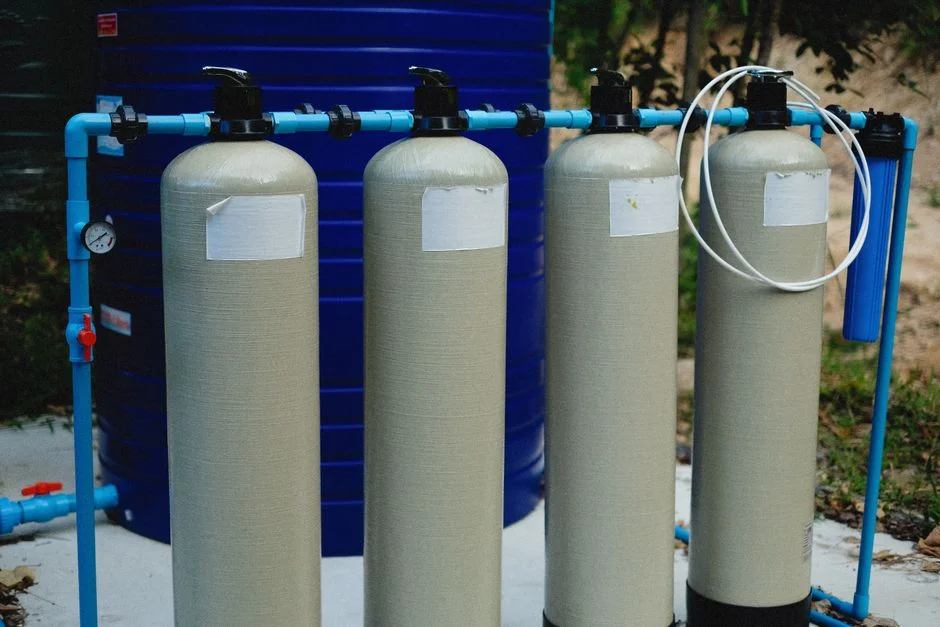
The matrix below is built from Ecologix's 2026 update, HydropureWater's DAF and lamella clarifier specifications, and Spectrum Water's DAF duty range. CAPEX and OPEX are presented as ranges because point costs depend on tankage material, automation scope, and site civil work.
| Metric | DAF (e.g., HydropureWater) | Gravity Clarifier (Lamella) |
|---|---|---|
| FOG removal % | ~95% on food-processing wastewater (Ecologix 2026) | ~70% on the same stream (Ecologix 2026) |
| TSS removal % | 80–95% across food streams with chemical conditioning | 70–90% on settleable solids; poor on colloids and FOG |
| Footprint per 50 m³/h | Compact skid; ~6–10 m² for a DAF unit | Compact with lamella plates; ~15–25 m² at 20–40 m/h loading |
| CAPEX range | Higher upfront; stainless/carbon skid, recycle pump, saturator, skimmer | Lower upfront; concrete or steel tank with plate pack |
| OPEX ($/kgal treated) | Higher energy draw (recycle pump, air compressor); moderate chemistry | Lower energy; up to 30% lower polymer/coagulant use on low-FOG streams |
| Polymer/coagulant use | Required for FOG and colloidal capture | Reduced when FOG is low; can be 30% below DAF doses |
| Oil-in-water risk downstream | Low; floated oil removed at the surface | Higher; emulsified oil passes through to biological step |
| NC compliance posture (Hickory POTW) | Typically meets BOD/TSS/FOG local limits with margin | Often marginal on high-FOG streams; surcharge risk |
The decisive row for most Hickory plants is FOG removal. A clarifier's 70% efficiency on a stream that starts at, say, 800 mg/L FOG leaves 240 mg/L heading to the Hickory POTW — well above the surcharge bracket. A DAF at 95% leaves 40 mg/L, comfortably below the trigger.
Which Hickory Food and Beverage Stream Should Pick DAF, Clarifier, or Both
The matrix above is mapped onto the four most common Hickory food and beverage wastewater profiles to determine the appropriate treatment technology. The decision tree below assumes the 2026 Ecologix removal numbers, HydropureWater's DAF coverage of 4–300 m³/h across its 13-model range, and Spectrum Water's 50–1,000 gpm packaged DAF duty window.
| Hickory Sub-sector | Wastewater Character | Recommended Primary | Recommended Polish | Typical Flow |
|---|---|---|---|---|
| Snack / cereal / baked goods (Conover, Hickory) | High FOG, starch, fine fiber | DAF (mandatory) | MBBR or activated sludge | 50–250 m³/h |
| Dairy (Newton, Catawba County) | High FOG, lactose-driven BOD, casein | DAF | MBBR or anaerobic + aerobic | 10–80 m³/h |
| Beverage bottling (Hickory, Long View) | Low FOG, sugar BOD, high clean-water fraction | Lamella clarifier (sufficient) | Optional DAF polish if BOD spikes | 20–300 m³/h |
| Meat / poultry (further south in Catawba basin) | Highest FOG, blood, paunch, suspended solids | DAF (mandatory) with coagulant | DAF-as-polish ahead of MBBR or SBR | 20–150 m³/h |
For plants that already own a clarifier, the 2026 hybrid path is to keep the clarifier as a primary grit/solids step and install a HydropureWater dissolved air flotation system as polish ahead of the biological step, mirroring the Elsevier SSRN DAF + MMBR configuration. Where CAPEX is tight and FOG is genuinely low — beverage bottling with no cook process, for example — a HydropureWater lamella clarifier alone remains the right 2026 call, with a DAF retrofit left as a future option once production volumes grow.
2026 NC Pretreatment and Hickory POTW Compliance Checklist
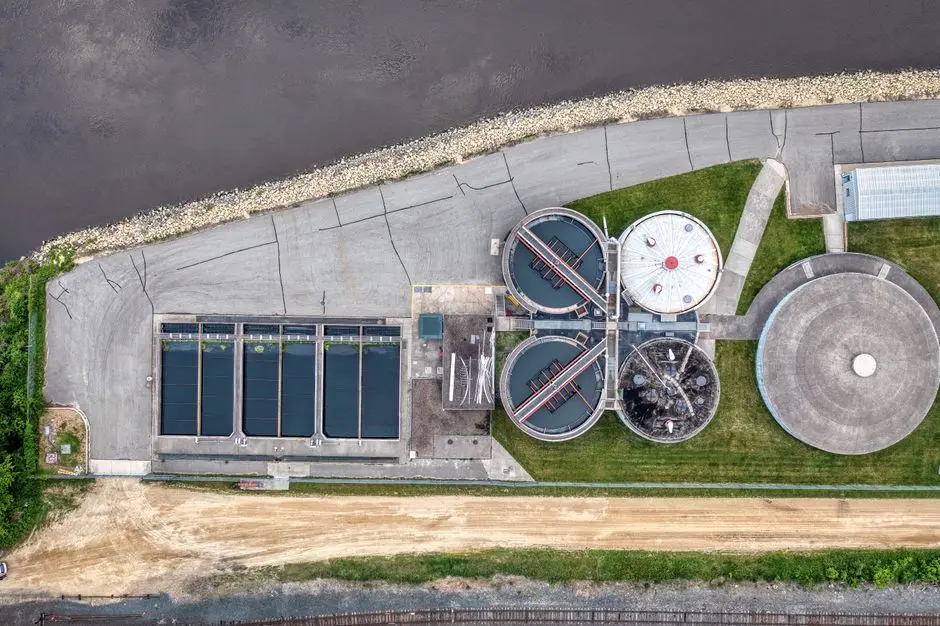
NC pretreatment under 15A NCAC 02H .0900 governs industrial discharges to Hickory-area POTWs and defines the local limits Hickory's wastewater plant applies to food and beverage users. The Hickory POTW's 2026 surcharge schedule brackets FOG and TSS exceedances into escalating per-pound penalties once a discharger crosses typical daily mass thresholds, so the compliance posture of the primary step is what protects the plant from those penalties. DAF sits in the EPA's "Adaptive Use" category under EPA 832-R-12-011, meaning it is an accepted, well-understood technology that does not trigger permitting pushback. To pass a 2026 audit, Hickory plants should prepare the following:
- Jar-test results on the actual process stream, identifying coagulant, flocculant, and dose — the same workflow ChemREADY uses to right-size chemistry for headworks, DAF, and clarifier feeds.
- 24-hour composite sampling for FOG, TSS, BOD, and COD, with trend data covering at least one production campaign.
- Demonstrated dosing control: pairing the DAF with a HydropureWater automatic chemical dosing system under PLC control is the cleanest way to show consistent compliance during NC DENR or POTW inspections.
- Mass-balance calculation showing that daily FOG and TSS loadings to the Hickory POTW stay below the local surcharge thresholds even at peak production.
- Sludge-handling plan documenting floated DAF sludge or clarifier underflow disposal routes.
Plants that have already completed a Pacific-region DAF versus clarifier evaluation can apply much of the same framework locally; see the parallel DAF vs clarifier for Pacific food and beverage wastewater guide for a comparable matrix, or the Mocksville-specific DAF or clarifier for Mocksville food and beverage wastewater decision framework. The micro-bubble flotation engineering guide provides technical data on the bubble-formation mechanism that makes DAF effective on FOG.
Frequently Asked Questions
What FOG removal can a Hickory food plant expect from a DAF in 2026?
On a typical food-processing stream, a properly sized and chemically conditioned DAF achieves approximately 95% oil and grease removal, per the Ecologix 2026 update. That level of removal is what allows most Hickory plants to stay below the Hickory POTW's 2026 FOG surcharge bracket.
Can a clarifier handle FOG from a snack or dairy plant?
A lamella or conventional clarifier typically reaches about 70% FOG removal on the same food-processing wastewater, per the Ecologix 2026 update. On snack, cereal, or dairy streams that begin above several hundred mg/L FOG, that 70% efficiency usually leaves the effluent above the Hickory POTW surcharge trigger, which is why DAF is preferred for those sub-sectors.
Is DAF or a clarifier cheaper to operate long term?
Clarifiers generally have lower day-to-day OPEX because they do not need a pressurized recycle pump or air compressor, and they can use up to 30% less polymer on low-FOG streams. DAF carries higher energy and chemistry costs but is frequently the lower total cost of compliance once surcharge exposure and biological-step protection are factored in, as noted in the Ecologix 2026 FAQ.
Can a DAF and a clarifier be used together in a Hickory food plant?
Yes. The most common 2026 hybrid configurations are a clarifier as primary with a DAF polish upstream of biological treatment, and a DAF as primary with a clarifier as polish on low-