Why Mocksville Food and Beverage Plants Are Re-Evaluating Pretreatment in 2026
NC pretreatment permits in the Yadkin River basin are issued under 15A NCAC 02H .0900, and the 2026 local limits on FOG, TSS, and BOD are the practical reason Davie County plant engineers are opening new equipment evaluations this capex cycle. For a Mocksville food and beverage facility discharging to the Yadkin, falling FOG or TSS on a daily-max sample triggers NC DEQ notice of violation (NOV) and surcharges that compound across a quarter.
The Mocksville/Davie County corridor runs a specific mix of food and beverage sub-sectors, and each one shifts the FOG-vs-TSS balance. Sauce and dressing plants emit high free and emulsified oil, with BOD in the 2,000–8,000 mg/L range and FOG that can exceed 1,000 mg/L on a peak-shift basis. Dairy and ice cream plants carry high protein and cleaning-chemistry load (caustic, nitric-phosphate), with intermittent FOG surges from milk fat. Meat and poultry processors push high FOG and blood solids, plus chlorinated CIP. Snack and bakery plants run heavy on suspended solids — flour, starch, dough — with FOG as a secondary concern from fryers or oil sprays.
That sub-sector split is why one technology rarely fits every Davie County F&B plant. The selection question depends on wastewater composition, treatment goals, and operational constraints; the dominant contaminant in the stream dictates the choice.
How a DAF and a Clarifier Actually Work in an F&B Plant
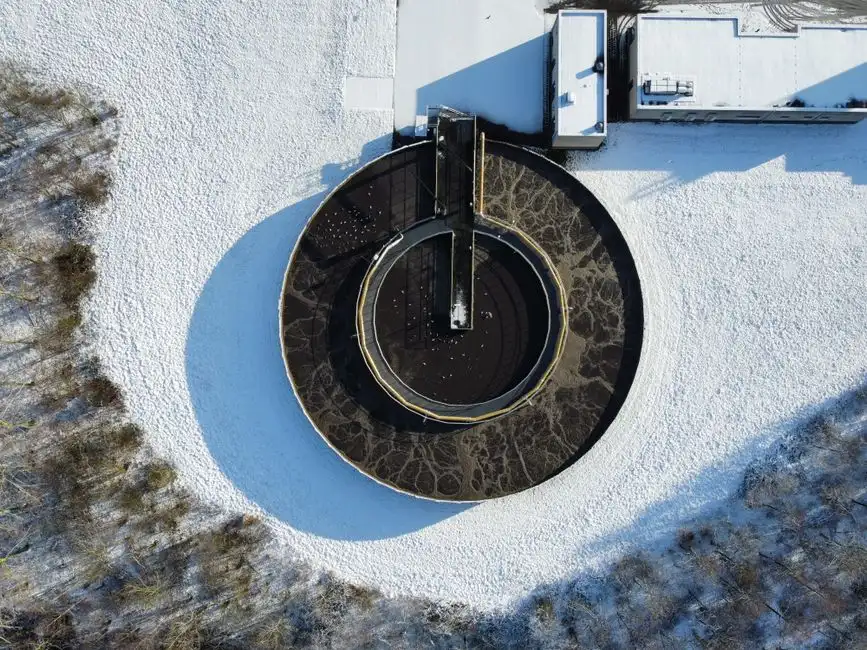
DAF systems and clarifiers treat particles using different physical principles. In a dissolved air flotation unit, a recycle stream is pressurized and saturated with air, then released at atmospheric pressure into the flotation cell. The pressure drop nucleates 20–80 micron micro-bubbles that attach to FOG droplets, light solids, and floc particles, lifting them to the surface as a float blanket that a rotating skimmer scrapes off (per H2Flow's DAF process flow description). Clarifiers do the reverse: feed enters a quiescent tank, heavier settleable solids drop to the bottom under gravity, and clarified water overflows a peripheral weir. Settled sludge is collected by a slowly rotating rake and pumped to dewatering.
DAF systems use air bubbles to float light particles, oils, and greases to the surface of a treatment tank, while clarifiers rely on gravity sedimentation to settle heavier solids to the bottom. FOG at sauce, dairy, and meat plants has a specific gravity close to water (0.86–0.95) and resists settling, making it a flotation job. Starch and grit, by contrast, settle readily and are a clarifier job.
This mechanism difference guides the decision. A stream dominated by floating material goes to a DAF; a stream dominated by heavy settleable solids goes to a clarifier. Most Davie County F&B plants face both at different points in the day, which is where the hybrid DAF-then-clarifier pattern comes from.
DAF vs Clarifier for Mocksville F&B Wastewater: Side-by-Side Comparison
Plant engineers weighing a HydropureWater DAF system against a conventional or lamella clarifier should review published case data and vendor specifications. Ecologix documented a case where a DAF removed 95% of FOG versus 70% for a clarifier on the same food-processing stream; in heavy-sediment streams, the same source shows a clarifier at 90% TSS reduction. H2Flow's published spec for modern DAF units supports the 95% TSS/FOG removal band, and a downstream dewatering step can cut float sludge volume by ~70%.
| Parameter | Dissolved Air Flotation (DAF) | Clarifier (conventional or lamella) |
|---|---|---|
| FOG removal | ~95% on F&B streams (Ecologix case data; H2Flow spec) | ~70% on the same F&B stream (Ecologix case data) |
| TSS removal | Up to 95% (H2Flow spec); strong on light, colloidal, and flocculated solids | ~90% in heavy-sediment streams (Ecologix case data); weak on FOG and colloidal fractions |
| Footprint | Compact (H2Flow: "less space compared to traditional sedimentation systems") | Larger for the same flow; lamella plates reduce footprint ~50–70% vs conventional |
| Hydraulic residence time (HRT) | ~20–30 minutes typical planning value | ~1.5–2 hours typical for F&B at 50–500 gpm |
| Polymer/coagulant demand | Higher — chemistry is normal practice for FOG and TSS capture | Lower or none on grit/starch streams; chemistry helpful for fine TSS |
| Typical OPEX profile | Higher — air compressor, saturation pump, polymer, float handling | Lower — no compressed air, minimal chemistry, gravity-driven |
| Best-fit F&B sub-sector (Mocksville) | Sauce/dressing, dairy, meat, snack fryer lines | Bakery washwater, snack starch streams, produce wash, grit-heavy pre-treatment |
WesTech's mobile DAF clarifier can be delivered and brought online within a single day, which helps if a Mocksville facility needs temporary capacity during a CIP upgrade or peak-season surge without committing to a permanent install.
Sizing a DAF or Clarifier for a 50–500 gpm Mocksville F&B Plant
DAF hydraulic residence time runs about 20–30 minutes for a 50–500 gpm F&B stream, while a clarifier requires 1.5–2 hours at design flow. The DAF footprint is smaller at equivalent flow because the cell holds roughly one quarter to one sixth the working volume. These are engineering planning values and should be confirmed against your specific influent during a jar test.
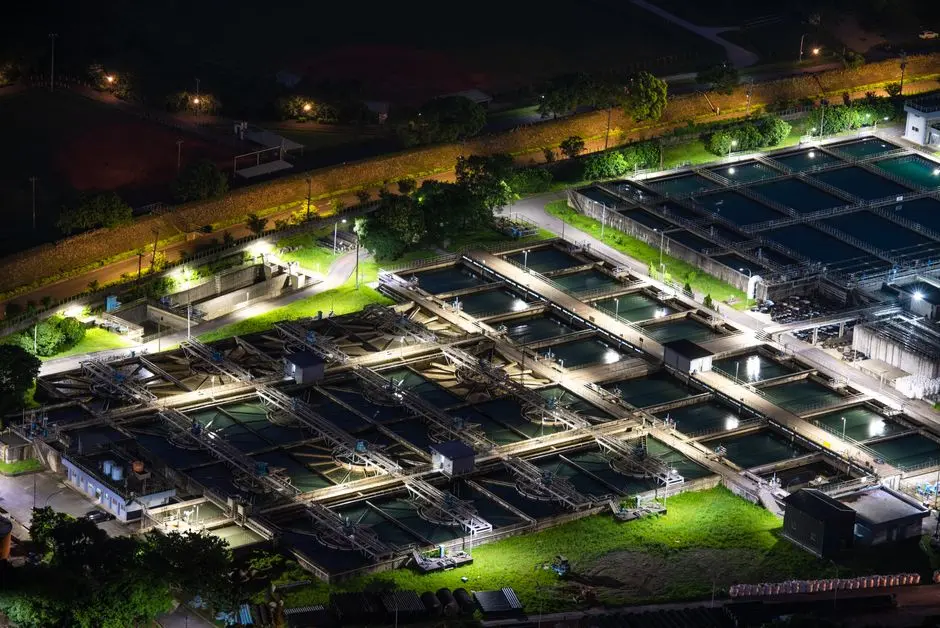
DAF hydraulic loading commonly lands in the 2,000–4,000 gpd/ft² band at design flow, depending on the air-to-solids ratio and the specific design of the manufacturer. Conventional clarifier surface overflow rates for F&B settleable solids are usually 20–40 m/h in the lamella/Inclined-Plate Sedimentation tank design range. A lamella or high-efficiency sedimentation tank can cut the clarifier footprint significantly because the effective settling area is the projected horizontal area of the plates, which is why the HydropureWater lamella clarifier is a common polish step behind a DAF in higher-flow F&B plants.
Ecologix and WesTech recommend wastewater analysis and pilot or jar testing before final selection. The right HRT, surface loading, and polymer dose for a sauce line differ from those of a snack line, and jar-test data on your actual stream is the only way to defend a sizing decision to NC DEQ.
Compliance, OPEX, and Risk: How the Two Options Land Under 2026 NC Pretreatment
The compliance case for DAF in a high-FOG stream is arithmetic. A clarifier's ~70% FOG removal poses an exposure for sauce, dairy, and meat plants that must hit NC daily-max FOG limits under 15A NCAC 02H .0900; a single shift over the daily max can trigger surcharge and NOV escalation. DAF at ~95% provides the safety margin a Davie County EHS lead needs to navigate permit renewals.
Clarifiers generally have lower operational costs because they do not require an air compressor, use less polymer, and consume less energy per gallon treated. However, DAF systems may be more cost-effective for specific oil and FOG contaminants (Ecologix). The pairing pattern in field data is DAF for FOG plus a small lamella or conventional clarifier downstream as a polish step; the DAF takes the FOG load, and the clarifier catches any carry-over float, TSS, and sloughed floc.
Chemical conditioning is normal practice for FOG and TSS capture, and the HydropureWater automatic chemical dosing system is the standard pairing. On the back end, float or settled sludge requires dewatering before haul-off, and a HydropureWater plate-frame filter press is the typical choice for F&B plants targeting cake dryness above 25–30% DS.
When a Mocksville F&B Factory Should Still Pick a Clarifier First
A clarifier-first decision is the right call when the dominant stream is grit, starch, or settleable suspended solids. Bakery washwater, snack processing, produce wash, and cereal cook lines fit this pattern, and FOG is often secondary or removed upstream. In those streams, a lamella or conventional clarifier at 90% TSS reduction (per Ecologix case data) is cost-effective.
Clarifier-first also makes sense for small plants — typically under ~50 gpm — where the OPEX gap between DAF and clarifier outweighs the FOG removal uplift. Sites constrained on compressed air or operating under a no-chemistry policy are not good DAF candidates, as DAF units require an air compressor, a saturation pump, and usually a coagulant or flocculant feed to hit performance targets.
When in doubt, the documented hybrid pattern — DAF for FOG and light solids, small HydropureWater lamella clarifier for settleables — is the safer default, covering days when the stream composition swings between CIP wash and production shifts. For a deeper cross-industry comparison, our Crossett pulp & paper DAF vs clarifier guide and the Metcalfe County mining DAF vs clarifier guide walk through the same trade-offs, and the 2026 wastewater treatment chemicals engineering guide covers the polymer side of the decision in detail.
Frequently Asked Questions
Is DAF or a clarifier better for food and beverage wastewater?
For FOG-dominated streams, a DAF typically delivers around 95% FOG removal versus 70% for a clarifier on the same stream (Ecologix case data). For TSS- or grit-dominated streams, a clarifier is often the better first choice at ~90% solids reduction and lower OPEX.
Can a DAF and a clarifier be used together?
Yes. Hybrid systems are a documented pattern: DAF upstream for FOG and light-solids capture, clarifier or lamella downstream as a polish step for carry-over float and settleable solids (Ecologix). This is the most common configuration in higher-flow Mocksville F&B plants.
How much does a DAF system cost vs a clarifier for a small F&B plant?
A DAF carries higher CAPEX (pressurization skid, air saturation system, skimmer, controls) and higher OPEX (compressor power, polymer, float handling). A clarifier has lower CAPEX and lower OPEX but does not match DAF on FOG removal. A hybrid DAF + small lamella clarifier is the common compromise in the 100–500 gpm F&B range.
How long does it take to install a DAF in a Mocksville plant?
A mobile DAF clarifier can be delivered and brought online within a single day on a prepared site (WesTech). A permanent skid-mounted DAF install is typically 2–6 weeks depending on civil, utility, and integration scope; a green-field clarifier is similar once excavation and concrete are scheduled.
Does a DAF need chemicals?
A DAF can operate without chemicals, but coagulants or flocculants are typically recommended to improve float separation and float-solids concentration (WesTech). Polymer dose is the main tuning lever, and a jar test on your actual stream is the only reliable way to set