Micro bubble flotation is an industrial wastewater treatment process that removes 95%+ total suspended solids (TSS) and 90%+ fats, oils, and grease (FOG) by generating microbubbles (10–100 μm) that attach to contaminants, forming lighter aggregates that rise to the surface for skimming. Dissolved air flotation (DAF) systems, the most common implementation, pressurize water to 4–6 bar, saturate it with air, and release it into a flotation tank via nozzles, creating a dense cloud of microbubbles. This method is widely used in food processing, pulp and paper, and petrochemical industries due to its high efficiency and compact footprint.
Why Micro Bubble Flotation Outperforms Traditional Clarification for Industrial Wastewater
Micro bubble flotation achieves 95%+ TSS removal efficiencies in industrial settings, significantly outperforming the 60–80% benchmarks typical of gravity-based sedimentation systems. In a real-world scenario, a meat processing plant struggling to meet an effluent TSS limit of 30 mg/L often finds that traditional clarifiers cannot handle the low density of fats and oils, which tend to remain suspended or settle too slowly. By introducing microbubbles, these buoyant contaminants are actively driven to the surface, ensuring compliance even under high-load conditions (per EPA 2024 benchmarks).
The space efficiency of these systems is a primary driver for industrial adoption. A standard DAF system for industrial wastewater treatment processing 50 m³/h requires a footprint of approximately 15–20 m², whereas a secondary clarifier for the same flow rate would require a 150 m³ tank and a footprint exceeding 60 m². This 3:1 ratio in space savings allows facilities to expand production capacity without requiring additional land for wastewater infrastructure. You can learn more about how secondary clarifiers compare to micro bubble flotation in terms of hydraulic loading and sludge density.
micro bubble flotation facilitates a 20–30% reduction in coagulant and flocculant dosage compared to sedimentation. This is due to the enhanced particle collision efficiency provided by the high density of microbubbles, which act as a carrier phase that bridges small flocs. In high-FOG industries like dairy or snack food production, this reduction in chemical consumption directly impacts the bottom line, while the resulting sludge often has a higher solids content (3–6%) than clarifier underflow (1–2%), reducing downstream dewatering costs.
Micro Bubble Flotation Mechanics: How Bubbles Attach to Contaminants and Rise to the Surface
Microbubbles are defined by a diameter range of 10–100 μm, which provides a surface area-to-volume ratio 100 to 1,000 times greater than the 1–3 mm bubbles produced by coarse bubble diffusers. This massive surface area is critical for industrial wastewater treatment because flotation efficiency is a direct function of the probability of bubble-particle collision and subsequent attachment. According to HydropureWater field data (2025), a dense cloud of microbubbles creates a "white water" effect, maximizing the likelihood that every suspended particle encounters a bubble carrier.
The attachment of microbubbles to contaminants occurs through three primary mechanisms:
- Hydrophobic Interaction: Non-polar contaminants like oil droplets and grease are naturally repelled by water and attracted to the air-water interface of the bubble.
- Electrostatic Attraction: In many industrial streams, particles and bubbles carry opposing surface charges (zeta potential). By adjusting the pH or adding coagulants, engineers can optimize these attractive forces.
- Physical Entrapment: As microbubbles rise through a flocculated suspension, they become trapped within the lattice structure of the chemical flocs, effectively lowering the aggregate's overall density.
The physics of the ascent is governed by Stokes’ Law, which dictates that smaller bubbles have significantly slower rise velocities. While this may seem counterintuitive, a slower rise velocity increases the hydraulic residence time of the bubble in the contact zone, providing more opportunities for collision with contaminants. Once the bubble-particle aggregate is formed, its combined density is less than that of water, causing it to rise to the surface at a rate much faster than the settling velocity of the same particle in a clarifier. This resulting froth layer, or "float," is then mechanically skimmed into a sludge hopper.
3 Methods for Generating Microbubbles: Dissolved Air, Electrolysis, and Mechanical Shear Compared
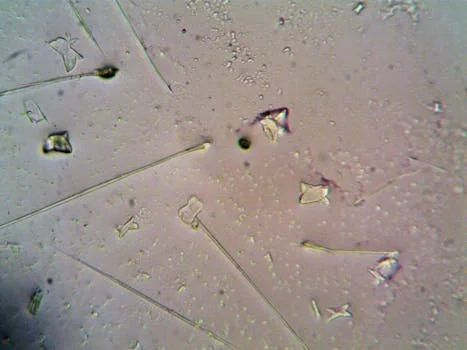
Selecting the correct generation method is vital for balancing capital expenditure (CAPEX) with long-term operational costs (OPEX). While Dissolved Air Flotation (DAF) remains the industrial standard, specific applications may benefit from alternative technologies like electrolysis or mechanical shear.
| Feature | Dissolved Air (DAF) | Electrolysis (EDAF) | Mechanical Shear |
|---|---|---|---|
| Bubble Size | 30–100 μm | 10–50 μm | 50–200 μm |
| Generation Method | Pressure release (4–6 bar) | DC current (H2/O2 gas) | High-speed impeller/venturi |
| Energy Use | Moderate (0.2–0.5 kWh/m³) | High (>1.0 kWh/m³) | Low to Moderate |
| Best For | General industrial TSS/FOG | Ultrafine particle recovery | Pre-treatment/Coarse oil |
| Maintenance | Pump/Nozzle cleaning | Electrode scaling/replacement | Mechanical wear on impellers |
Dissolved Air Flotation (DAF) works by dissolving air into a recycle stream of treated water at high pressure. When this water is reintroduced to the main flotation tank at atmospheric pressure, the air comes out of solution as a dense cloud of microbubbles. Electrolysis, or electro-flotation, uses sacrificial or permanent electrodes to split water molecules into hydrogen and oxygen gas. While energy-intensive, it produces the smallest possible bubbles, making it ideal for mining and specialized chemical processes involving ultrafine particles. Mechanical shear uses high-speed cavitation or venturi injectors to "tear" air into bubbles. While simpler to maintain, the bubble size distribution is wider and less consistent, often leading to lower removal rates for fine suspended solids.
Engineering Parameters for Micro Bubble Flotation: Pressure, Retention Time, and Influent Quality
Designing an effective micro bubble flotation system requires precise control over hydraulic and pneumatic parameters. If the pressure is too low, air solubility decreases, leading to insufficient bubble density. If the retention time is too short, the aggregates do not have enough time to reach the surface before the water exits the tank.
| Parameter | Standard Industrial Range | Impact of Deviation |
|---|---|---|
| Saturation Pressure | 4.0 – 6.0 bar | <4 bar: Poor bubble density; >6 bar: High energy cost |
| Hydraulic Retention Time (HRT) | 10 – 30 minutes | Too short: Particle carryover; Too long: Oversized tanks |
| Air-to-Solids (A/S) Ratio | 0.01 – 0.05 (lb air / lb solids) | Low ratio: Incomplete flotation; High ratio: Turbulence |
| Surface Loading Rate | 5 – 15 m³/m²/h | Determines the required surface area of the tank |
| Recycle Ratio | 10% – 30% of total flow | Controls the volume of microbubbles introduced |
Influent quality also dictates the necessity of chemical pre-treatment. Micro bubble flotation is most effective for influent TSS concentrations between 50 and 5,000 mg/L. For high-strength wastewater, a PLC-controlled chemical dosing for flotation systems is required to stabilize pH and introduce coagulants (such as PAC) and flocculants (PAM). These chemicals increase the particle size and hydrophobicity, significantly improving the "attachability" of the microbubbles to the contaminants.
Micro Bubble Flotation Efficiency: Removal Rates, Energy Use, and Cost per m³ Treated
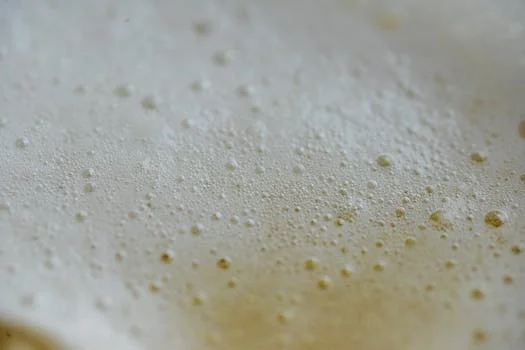
The economic viability of micro bubble flotation is defined by its ability to achieve high removal rates with manageable operational costs. In 2025, the industry average for DAF operational costs ranges from $0.10 to $0.30 per cubic meter treated, depending heavily on chemical requirements and local energy prices. While energy consumption (0.2–0.5 kWh/m³) is higher than that of simple gravity clarifiers, the savings in sludge disposal and regulatory fines typically result in a rapid return on investment (ROI).
Removal efficiency benchmarks (HydropureWater field data, 2025):
- Total Suspended Solids (TSS): 92–97%
- Fats, Oils, and Grease (FOG): 90–98%
- Chemical Oxygen Demand (COD): 60–85% (insoluble portion)
- Biochemical Oxygen Demand (BOD): 50–70%
To calculate the ROI for a flotation system, engineers should use the following framework: ROI = (Annual Compliance Savings + Sludge Disposal Savings + Byproduct Revenue - Annual OPEX) / CAPEX. In industries like meat processing or rendering, the skimmed FOG layer can often be sold as a feedstock for biodiesel production, turning a waste stream into a revenue source. When combined with the reduction in surcharges from municipal utilities for high-strength discharge, many industrial DAF systems achieve a payback period of 12 to 24 months.
How to Select a Micro Bubble Flotation System: A 5-Step Decision Framework for Industrial Buyers
Choosing the right equipment involves more than just matching flow rates. Procurement teams must evaluate the specific chemistry of their wastewater and the long-term reliability of the generation hardware.
- Define Influent Characteristics: Conduct a comprehensive lab analysis of TSS, FOG, COD, and pH. Perform "jar testing" to determine the optimal chemical dosages required for effective flocculation.
- Select the Generation Method: For 90% of industrial applications, a DAF system is the most cost-effective. If your process involves extremely fine mineral particles or rare metal recovery, consider electrolysis. For simple oil-water separation where 80% efficiency is acceptable, mechanical shear may suffice.
- Evaluate Footprint and Modularity: If site space is limited, look for skid-mounted DAF systems for space-constrained sites. These systems are pre-wired and pre-plumbed, reducing installation time and cost.
- Audit Automation Capabilities: Modern systems should feature PLC integration with turbidity and flow sensors. Automated sludge removal and chemical dosing prevent process upsets caused by variable influent loads, reducing the need for manual oversight.
- Analyze Total Cost of Ownership (TCO): Compare vendors based on energy efficiency (kWh/m³) and the durability of the saturation system. High-quality stainless steel construction (SS304 or SS316) is essential for longevity in corrosive industrial environments.
Frequently Asked Questions
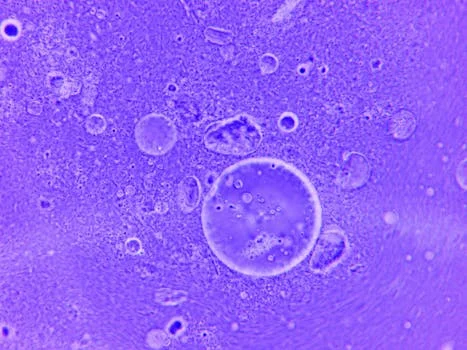
What is the ideal bubble size for industrial flotation?
The ideal range is 30–70 μm. Bubbles smaller than 20 μm may lack the buoyancy to rise quickly, while bubbles larger than 100 μm have reduced surface area and can create turbulence that breaks apart fragile chemical flocs.
Can micro bubble flotation remove dissolved contaminants?
No, flotation is a physical separation process for suspended solids and emulsified oils. However, by using chemical precipitants, dissolved metals or phosphorus can be converted into solid flocs and then removed via flotation.
How often do DAF nozzles need cleaning?
In a well-designed system with a filtered recycle stream, nozzles typically require inspection every 3–6 months. HydropureWater systems utilize self-cleaning or non-clogging nozzle designs to minimize this maintenance requirement.
Is chemical dosing always necessary for micro bubble flotation?
Not always, but it is highly recommended for industrial streams. While "plain" flotation can remove free-floating oils, coagulants and flocculants are necessary to aggregate fine particles and neutralize surface charges, ensuring removal rates above 90%.