Where IFAS Fits in a Fish Processing Treatment Train
IFAS belongs after the physical pretreatment that removes fish residues, suspended solids, fats, oils and blood components. It does not replace screening, DAF, secondary clarification or any polishing required by the discharge or reuse route. In practical terms, IFAS for fish processing wastewater is one biological step within a treatment train, not a complete treatment system.
- Use coarse screening to remove bones, scales, heads, fins and innards.
- Manage flow through equalization or another flow-control arrangement.
- Apply DAF or an equivalent process to remove FOG and floatable solids before biological loading.
- Use IFAS for the biological treatment objectives, including BOD removal and nitrification where required.
- Separate biological solids, then apply filtration, nutrient control, disinfection or other polishing as the final route requires.
ClearFox’s fish-processing wastewater description identifies screening followed by DAF for suspended solids, fats, oils and blood components; it also identifies fixed-bed biological treatment, optional phosphorus precipitation and reverse osmosis for more advanced discharge or reuse applications (ClearFox, Fish Processing Wastewater Treatment). The exact sequence remains site-specific. A mechanical bar screen for coarse-material removal and a DAF system for fish-processing wastewater pretreatment should therefore be evaluated as upstream parts of the biological design, not as accessories added after sizing.
Fish Processing Wastewater Characteristics That Drive IFAS Design
Fish-processing wastewater cannot be represented by one average COD or BOD₅ value because product mix, production method and cleaning regimes change both flow and contaminant composition. ClearFox identifies fish waste, nutrients, blood, oils and fats as typical constituents, together with smaller quantities of microorganisms, heavy metals and cleaning chemicals; it associates these streams with high COD and BOD₅ and elevated TSS. The same source states that fresh, frozen, canned, smoked and fish-meal operations produce different wastewater volumes and pollutant loads (ClearFox, Fish Processing Wastewater Treatment).
Build the wastewater inventory around each discharge-generating activity: product processing, CIP, refrigeration-unit cleaning, transport-container cleaning and washdown. Attach the production schedule, campaign duration and clean-in-place sequence to the flow record. Hydraulic peaks, organic shock loads and cleaning-chemical slugs then become visible to the designer instead of being hidden inside an annual average.
| Plant-data requirement | Why it affects IFAS design |
|---|---|
| 24-hour and campaign-based flow records | Establishes average flow, peak hydraulic load, equalization duty and production-related imbalance. |
| COD and BOD₅ | Defines organic loading and the biological treatment objective after upstream removal. |
| TSS and FOG or oil and grease | Sets pretreatment requirements and prevents biological loading with recoverable floatable material. |
| Total nitrogen and ammonia | Determines whether nitrification, denitrification or additional nutrient removal is required. |
| pH, temperature and salinity | Influences biological activity, mixing, precipitation and chemical dosing. |
| Phosphorus | Supports the decision between biological uptake and chemical precipitation. |
| Cleaning-chemical characterization | Identifies toxicity, dosing demand and the need for segregation or equalization. |
At least 24-hour sampling is a minimum planning exercise, not proof of worst-case conditions; campaign-based sampling should capture the selected product route. The food-processing wastewater design and cost guide illustrates why project definitions and discharge objectives must be fixed before equipment pricing begins.
How IFAS Works and Why Media Changes Biological Treatment
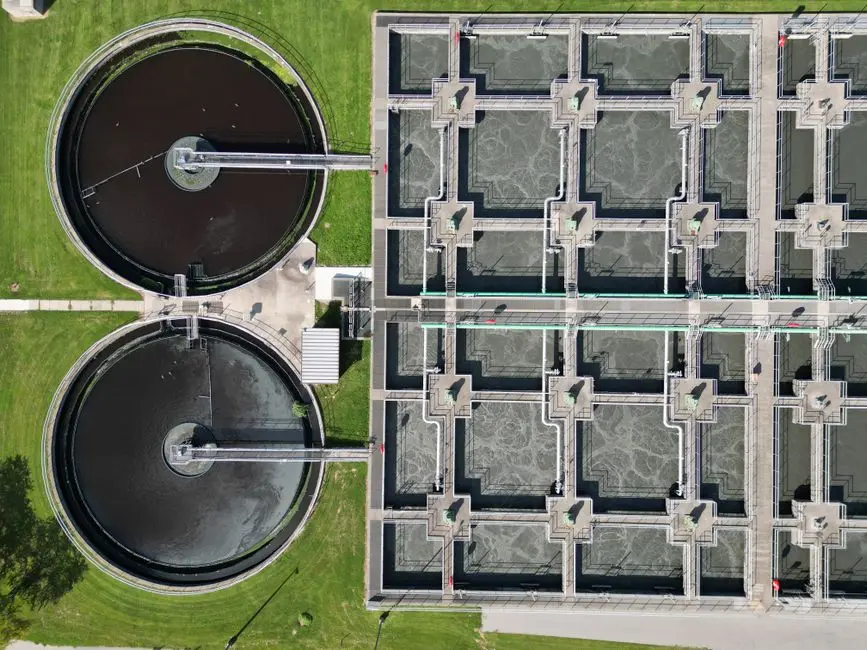
IFAS combines suspended-growth activated sludge with biomass attached to media in an aerobic reactor, creating a hybrid suspended and attached-growth biological process. Suspended biomass performs bulk mixed-liquor reactions, while attached biomass adds retention within the aerobic zone. The media therefore changes biomass inventory and process resilience; it does not remove the need to control solids, oxygen, sludge wasting and downstream separation.
World Water Works explains that specialized IFAS media can support slower-growing AOB/NOB bacteria that assist ammonia removal. Suspended solids still perform key functions in pre-denitrification and BOD removal, while an anaerobic selector may be added to promote biological phosphorus uptake and release (World Water Works, WWW IFAS Integrated Fixed-film Activated Sludge). These are process capabilities, not fish-processing guarantees. The applicable nutrient-removal configuration still depends on influent chemistry, temperature, redox zoning and the permit or reuse specification.
The strongest resilience evidence supplied is also outside fish processing. In a 2026 municipal-wastewater study, the aerobic IFAS reactor was the main contributor to contaminant degradation and maintained performance after a biomass loss greater than 90% (Bulletin of Environmental Contamination and Toxicology, 15 March 2026). That result supports the biological rationale for attached biomass, but it does not establish how a fish plant should fill the reactor, handle FOG shocks or meet its own effluent limits.
Design review must cover media type, fill fraction, aeration distribution, mixing, shear, sludge return, wasting, biofilm control, solids separation, odor management and media access. A proposed MBR wastewater treatment alternative should be compared as a different solids-separation architecture, not as evidence that IFAS needs no clarification.
Evidence Review: What IFAS Results Do and Do Not Prove
The current evidence supports IFAS as a credible biological platform, but the strongest supplied study used municipal wastewater rather than fish-processing effluent. The 2026 pilot-scale MS-IFAS system contained five sequential reactors: anaerobic, Anoxic-1, aerobic IFAS, Anoxic-2 and re-aeration. It operated on real municipal wastewater (Bulletin of Environmental Contamination and Toxicology, 15 March 2026).
| 2026 municipal MS-IFAS study | Reported result | Transferability to fish processing |
|---|---|---|
| Bisphenol A removal | 99.8 ± 0.1%, from influent concentrations averaging 112.6 ± 49.5 µg L−1 | Demonstrates xenoestrogen removal under that municipal configuration; it is not a fish-wastewater COD removal guarantee. |
| Bisphenol S removal | 97.7 ± 1.0%, from influent concentrations averaging 6.6 ± 3.0 µg L−1 | Supports treatment potential for the tested contaminant and reactor sequence only. |
| Estrogenicity | 83.2% decrease, from 0.031 to 0.005 ng L−1 E2-EQ | Applies to the study’s xenoestrogenic contaminants and municipal wastewater, not to all fish-processing effluent constituents. |
| Biomass-loss condition | Aerobic IFAS performance was maintained after more than 90% biomass loss | Supports resilience under the tested conditions; fish-plant shock loading still requires validation. |
Separately, Water Science & Technology reported an industrial-effluent IFAS study using a total working volume of 560.7 L and examined both suspended- and attached-growth microbial communities (Performance and microbial characteristics of integrated fixed-film activated sludge system treating industrial wastewater). The reactor volume establishes research scale only; it is not a recommended fish-plant reactor size. The practical conclusion is to conduct a wastewater-specific treatability assessment or representative pilot before committing to media loading, reactor volume or performance guarantees.
Sizing and Design Parameters for IFAS in Fish Processing

No defensible universal reactor size or loading rate for IFAS in fish processing can be derived from the supplied research. Size from measured average, peak and campaign flows and representative COD, BOD₅, TSS, FOG, ammonia and total-nitrogen data, then perform a mass balance across pretreatment, biological treatment, clarification and disposal.
DAF should remove the recoverable FOG and solids fraction before the biological stage. Apply the residual COD and BOD₅ entering IFAS—not the untreated plant COD—to the biological loading calculation. Confirm the upstream and downstream mass balance with the same sampling basis; otherwise, a bidder can hide excess FOG or solids loading inside an assumed removal efficiency.
| Design input or subsystem | Information the engineer must obtain or verify |
|---|---|
| Hydraulic basis | Average, peak and campaign flows; equalization volume; bypass provisions; production and cleaning sequence. |
| Organic and nutrient basis | Representative COD, BOD₅, TSS, FOG, ammonia, total nitrogen and phosphorus after pretreatment. |
| Fixed-film media | Manufacturer surface area, specific fill characteristics, void fraction, density, mechanical strength and replacement procedure. |
| Redox zones | Aerobic, anoxic and re-aeration duties tied to the required removal objectives. |
| Aeration and mixing | Design dissolved-oxygen basis, airflow, distribution, mixing, biofilm shear, odor control and access. |
| Sludge handling | Sludge return, wasting, solids separation, thickening or dewatering, and the interface between suspended and attached growth. |
| Monitoring and resilience | Online monitoring points, media inspection, replacement access, peak-cycle operating envelope and redundancy. |
Media surface area and fill characteristics must be evaluated from manufacturer data and the reactor-specific calculation; generic values should not be inserted into the specification without supporting documentation. Likewise, chemical use should follow measured stream characteristics and treatment objectives. A chemical dosing system may support coagulation or nutrient control, but its demand cannot be established without the relevant water analysis.
The downstream solids-removal decision is mandatory. Evaluate a sedimentation tank for biological solids separation and a plate-and-frame filter press for sludge dewatering against the available handling route. Neither device is automatically the correct choice; solids characteristics, waste handling and reuse requirements determine the configuration.
IFAS, MBR and Conventional Biological Treatment Compared
IFAS is most relevant when the project needs hybrid biological capacity, attached-biomass retention and retrofit flexibility; MBR becomes more compelling when membrane solids separation or near-reuse-quality effluent is the primary requirement. Conventional activated sludge remains relevant where process familiarity, simpler media-free operation and established sludge-handling practice outweigh the potential benefits of adding fixed-film media.
| Decision factor | IFAS | MBR | Conventional activated sludge |
|---|---|---|---|
| Biological approach | Suspended biomass plus attached growth on media | Activated sludge coupled with membrane solids separation | Suspended-growth activated sludge |
| Key advantage | Additional retained biomass in aerobic zones and retrofit potential | Fine solids separation within the treatment package | Established operating practice |
| Main design burden | Media selection, aeration, biofilm control, solids separation and replacement access | Membrane fouling, cleaning, integrity monitoring and reject handling | Biomass inventory, settling, sludge return and wasting |
| Best fit when | The project prioritizes biological flexibility and added retention | Stringent solids separation or reuse is central | A conventional, familiar process is adequate |
HydropureWater’s MBR product context gives a capacity range of 10–2,000 m³/day and filtration below 1 µm. These are catalog specifications, not fish-processing performance guarantees; the MBR wastewater treatment alternative must still be evaluated against representative wastewater and the required final quality.
The reuse route changes the decision. ClearFox identifies partial reuse for cooling and cleaning, while direct environmental discharge may require a more advanced treatment train (ClearFox, Fish Processing Wastewater Treatment). If ultrafiltration or another barrier is needed for reuse, the ultrafiltration design for food-processing reuse provides a relevant design context. Compare options using final effluent requirements, footprint, staffing, sludge capacity, reuse economics and retrofit constraints—not a generic technology ranking.
How to Select an IFAS Supplier and Validate the Proposal
A defensible supplier proposal must expose its assumptions and show how the selected media, reactor and solids-handling train work together. Request the proposed flow path, hydraulic profile, complete mass balance, media specification, aeration design, sludge-return arrangement, solids separation, control philosophy and operating envelope. The proposal should identify which results are calculated, which are based on analogous installations and which require confirmation by pilot testing.
Require a wastewater-specific treatability study or representative pilot plan. Specify sampling points and frequency, analytical methods, startup sequence, loading progression, shock-load tests, media behavior, sludge production, effluent stability and acceptance criteria. A vendor that cannot identify a representative test condition or tie acceptance to measurable outcomes has not supplied an engineering basis for performance.
Make commercial exclusions explicit. Compare media replacement availability, spare-part strategy, PLC/SCADA scope, blower requirements, sludge-system interface, installation schedule and local service support. Price the whole-life operating envelope: energy, chemicals, media replacement, sludge handling, operator labor, odor control and downtime exposure. Equipment price alone can conceal the cost of the attached-growth and solids-management systems.
Require compliance language tied to the actual discharge permit, sewer authority or reuse specification. A statement that IFAS alone guarantees a specified effluent is not acceptable when the train also depends on upstream DAF, downstream clarification and final polishing. The industrial DAF system specifications and costs guide supports asking for equipment-specific scope and commercial assumptions, while the comparison of MBR and conventional activated sludge reinforces the need to evaluate competing process architectures against a defined objective.
Frequently Asked Questions
Is IFAS suitable for fish processing wastewater?
Yes, as the biological stage of a treatment train after screening and FOG and solids removal. IFAS does not replace those pretreatment duties or the downstream clarification and polishing required for discharge or reuse. Suitability must be confirmed with representative fish-processing wastewater.
What data are needed to size an IFAS reactor?
Request average, peak and campaign flows; COD, BOD₅, TSS, FOG, ammonia, total nitrogen and phosphorus; pH, temperature and salinity; and cleaning-chemical data. No universal fish-processing reactor size can be given without these inputs. The 560.7 L reactor reported by Water Science & Technology was an industrial-effluent research installation, not a commercial sizing template.
How should DAF capacity be checked before IFAS sizing?
Measure the FOG, oil and grease, TSS and associated COD entering DAF across production and cleaning cycles. Confirm how much floatable material is recovered and use the residual biological load for IFAS sizing. The DAF proposal should include the required hydraulic flow, chemical demand, sludge or float removal and bypass provisions.
What should a buyer require from an IFAS supplier?
Require a train-specific proposal with the mass balance, media data, aeration and mixing design, solids separation, sludge interface, operating envelope and control scope. Request representative pilot evidence and acceptance criteria tied to the actual wastewater and final-use specification. Compare media replacement, maintenance, energy, chemicals, downtime and service support as well as equipment price.
Does IFAS support wastewater reuse or environmental discharge?
IFAS can form part of either route, but it does not determine the final quality by itself. Partial reuse for cooling or cleaning may require less demanding treatment than direct environmental discharge, depending on the applicable reuse or permit specification. Confirm the required water quality and add filtration, nutrient control, disinfection or other barriers as necessary.