Senegal’s Food Processing Wastewater Challenge: Effluent Characteristics and Regulatory Pressures
Food processing plants in Senegal generate 3–10 m³ of high-strength wastewater per ton of product, with COD levels reaching 5,000–15,000 mg/L and TSS up to 3,000 mg/L (per Senegalese Ministry of Environment 2024 standards). Advanced treatment systems like DAF (95% TSS removal) and MBR (99% pathogen reduction) are required to meet discharge limits of <125 mg/L COD and <35 mg/L TSS. This guide provides 2025 engineering specs, cost data, and a zero-liquid-discharge blueprint tailored to Senegal’s regulatory and economic conditions.
Senegalese food processing facilities must adhere to Decree 2015-1458, which mandates a Chemical Oxygen Demand (COD) discharge limit of less than 125 mg/L for industrial effluents entering the public sewage system or natural water bodies. For the booming fish processing sector in Dakar and Saint-Louis, the challenge is compounded by high salinity and protein-heavy loads. In these facilities, effluent often exceeds 15,000 mg/L COD during peak production cycles. Failure to meet these standards results in aggressive enforcement; for example, a Dakar-based fish processing plant recently faced a $50,000 fine for exceeding Total Suspended Solids (TSS) limits by 400%. This financial loss could have been entirely avoided through the installation of a primary DAF system selection guide for food industry effluents, which specializes in capturing Fats, Oils, and Grease (FOG) before they overwhelm biological stages.
The regulatory landscape in Senegal is increasingly aligning with international WHO and EU benchmarks, specifically regarding Biological Oxygen Demand (BOD) and pathogen counts. While the local limit for BOD is <25 mg/L, many food exporters aiming for European markets must achieve even stricter internal standards to maintain ESG certifications. Common violations in the region include FOG levels exceeding 15 mg/L and ammonia concentrations above 10 mg/L, particularly in poultry and meat processing. The following table outlines the typical raw effluent profiles seen across Senegalese food sectors compared to the 2025 discharge mandates.
| Parameter | Fish Processing | Dairy/Milk | Meat/Poultry | Fruit/Veg | Senegal Limit (2015-1458) |
|---|---|---|---|---|---|
| COD (mg/L) | 8,000 – 15,000 | 3,000 – 6,000 | 5,000 – 10,000 | 2,000 – 5,000 | < 125 |
| BOD5 (mg/L) | 3,000 – 7,000 | 1,500 – 3,500 | 2,500 – 5,000 | 1,000 – 3,000 | < 25 |
| TSS (mg/L) | 2,000 – 4,000 | 500 – 1,500 | 1,000 – 3,000 | 800 – 2,000 | < 35 |
| FOG (mg/L) | 500 – 1,200 | 200 – 800 | 400 – 1,500 | < 50 | < 15 |
| pH Range | 5.5 – 7.5 | 4.5 – 9.0 | 6.0 – 8.0 | 4.0 – 11.0 | 6.5 – 8.5 |
Treatment Process Selection: Matching Technology to Senegal’s Food Processing Wastewater
Selecting a treatment train for Senegalese food processing requires balancing high organic loading with the 95% removal efficiency required to avoid environmental penalties. The process must begin with robust pretreatment to protect downstream sensitive components. A GX Series Rotary Bar Screen is essential for removing large solids (scales, bones, vegetable peels) greater than 5 mm. Without this, downstream pumps and membranes face immediate mechanical failure. Following screening, equalization tanks are critical in the West African context to balance the "slug loads" common in batch processing plants, ensuring a steady pH and organic load for the biological system.
Primary treatment in food processing is dominated by the high-efficiency DAF system for FOG and TSS removal. This technology utilizes micro-bubble flotation to lift emulsified oils and suspended solids to the surface for mechanical skimming. In fish processing applications, DAF systems consistently achieve 95% TSS removal, which is vital because high TSS concentrations can inhibit the oxygen transfer efficiency of secondary biological stages. For secondary treatment, the choice between Conventional Activated Sludge (CAS) and Membrane Bioreactors (MBR) is usually determined by footprint and reuse goals. The DF Series compact MBR system for near-reuse-quality effluent is preferred for Senegalese plants with limited land or those pursuing water recycling. MBRs utilize <1 μm ultrafiltration membranes, providing 99% pathogen removal and ensuring the effluent meets MBR effluent quality benchmarks for food processing without the need for large secondary clarifiers.
Tertiary treatment is becoming a standard requirement for Senegalese facilities aiming for Zero Liquid Discharge (ZLD). The JY Series RO system for water reuse in food processing can achieve 95% water recovery rates, turning treated effluent into high-purity water suitable for boilers or cooling towers. Finally, sludge management cannot be overlooked. A plate and frame filter press is the most effective tool for dewatering the resulting sludge to a 30% dry solids content, significantly reducing disposal costs and ensuring compliance with Senegal’s sludge disposal regulations which restrict liquid waste dumping.
| Technology | Primary Target | Typical Removal Rate | Space Requirement | Complexity |
|---|---|---|---|---|
| Rotary Screen | Large Solids (>5mm) | 80-90% (Coarse) | Minimal | Low |
| DAF | FOG, TSS, Colloids | 90-95% (TSS/FOG) | Moderate | Medium |
| DF MBR | BOD, COD, Bacteria | 98-99% (BOD) | Low (Compact) | High |
| JY RO | Dissolved Solids (TDS) | 95-99% (TDS) | Moderate | High |
| Filter Press | Sludge Dewatering | 30% Dry Solids | Moderate | Low |
Engineering Specifications for Food Processing Wastewater Systems in Senegal
Hydraulic loading rates for Dissolved Air Flotation (DAF) systems in West African fish processing environments are typically designed between 4 and 6 m/h to manage fluctuating protein and lipid concentrations. Precision engineering is required to size these systems correctly; for instance, a dairy plant in Dakar producing 200 m³/day would require a DAF unit with a surface area of at least 2 m² to maintain effective rise velocities for fat globules. Organic loading is another critical metric. In the Senegalese context, fish processing effluent often exhibits a COD/BOD ratio of 2.5:1, whereas dairy effluent is closer to 1.8:1. These ratios dictate the sludge age and aeration requirements for MBR systems, which should be designed for a flux of 0.5–1.0 m³/m²/day.
Chemical dosing optimization is the primary driver of operational efficiency in DAF systems. Engineering specs for Senegalese plants typically involve an automatic chemical dosing system delivering Polyaluminum Chloride (PAC) at dosages of 50–200 mg/L as a coagulant, followed by an anionic polymer at 1–5 mg/L to facilitate flocculation. Without precise dosing, the DAF system's TSS removal efficiency can drop from 95% to below 60%, leading to rapid fouling of secondary MBR membranes. Energy consumption is a significant concern given Senegal's electricity costs; therefore, MBR systems are engineered to operate at 0.8–1.2 kWh/m³, while RO systems range from 2.5–4.0 kWh/m³. Hybrid solar configurations are increasingly specified for plants in remote regions like Matam to offset these costs.
| Design Parameter | DAF | MBR (DF Series) | RO (JY Series) |
|---|---|---|---|
| Hydraulic Loading Rate | 4 – 6 m/h | 0.5 – 1.0 m³/m²/d | 15 – 25 L/m²/h |
| Air-to-Solids Ratio | 0.02 – 0.05 | N/A (Air Scour) | N/A |
| Energy Demand | 0.2 – 0.4 kWh/m³ | 0.8 – 1.2 kWh/m³ | 2.5 – 4.0 kWh/m³ |
| Membrane Pore Size | N/A | 0.03 – 0.1 μm | < 0.001 μm |
| Chemical Dosing (PAC) | 50 – 200 mg/L | N/A | Scale Inhibitor |
Cost Breakdown and ROI Framework for Senegalese Food Processors
Capital expenditure for a 500 m³/day MBR-based treatment system in Senegal ranges from $400,000 to $1,000,000, excluding the 18% import duties applied to industrial machinery. For smaller operations, a DAF-only pretreatment system can be commissioned for $50,000 to $150,000. While these initial costs are significant, procurement officers must weigh them against the operational realities of Senegal. Electricity prices in the region fluctuate between $0.12 and $0.18 per kWh, making energy-efficient equipment selection paramount. A typical OPEX breakdown for a high-tech plant in Dakar shows that energy accounts for 40% of monthly costs, followed by chemicals at 25%, and membrane replacement at 15%.
The Return on Investment (ROI) for advanced treatment is driven by two factors: the avoidance of regulatory fines and the reduction in fresh water procurement costs. Many food processors in Senegal pay high municipal rates for water, which can be mitigated by recycling treated effluent for non-contact applications. A combined DAF and MBR system typically achieves a payback period of 3 to 5 years. For example, a facility saving $20,000 annually in fines and $15,000 in water costs can recoup the investment in a mid-sized DAF unit in under 36 months. To assist with these capital requirements, Senegalese government grants through agencies like ANPEJ or FONSIS are available for environmental compliance projects that demonstrate a clear reduction in industrial pollution.
| Cost Category | DAF System (Primary) | MBR System (Secondary) | RO System (Tertiary) |
|---|---|---|---|
| CAPEX (50-500 m³/d) | $50,000 – $200,000 | $200,000 – $1,000,000 | $100,000 – $500,000 |
| Energy Cost (OPEX) | 10% | 45% | 40% |
| Chemical Cost (OPEX) | 60% | 10% | 15% |
| Maintenance/Parts | 15% | 30% (Membranes) | 35% (Membranes) |
| Labor (OPEX) | 15% | 15% | 10% |
Zero-Liquid-Discharge Blueprint: Designing a Closed-Loop System for Senegal’s Food Industry
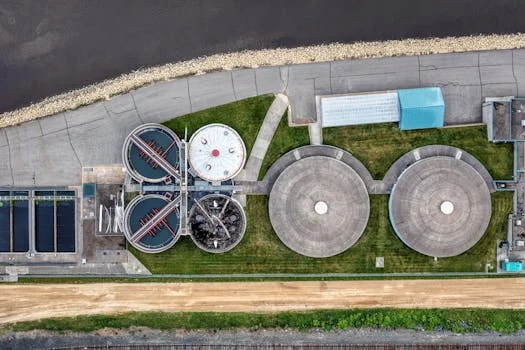
Zero-Liquid-Discharge (ZLD) systems in Senegal leverage high solar evaporation rates, which average 10–15 L/m²/day in the Dakar and Thiès regions, to manage brine disposal cost-effectively. A standard ZLD blueprint for a food processing plant follows a strict sequence: DAF for FOG removal, MBR for biological degradation and ultrafiltration, RO for desalination, and finally a brine concentrator or solar evaporation pond. By integrating these stages, a facility can achieve water recovery targets of 95%, virtually eliminating the need for environmental discharge permits and significantly reducing the plant's water footprint.
In a ZLD configuration, the management of concentrated waste streams is the most technical challenge. The RO reject (brine) is typically sent to solar evaporation ponds, where Senegal's arid climate facilitates rapid volume reduction. The remaining solids and the biological sludge from the MBR are processed through a heavy-duty plate and frame filter press. For non-hazardous food waste, the resulting dry cake can often be used for land application or composting, provided the FOG content is kept below 1%. A real-world case study of a 200 m³/day ZLD system at a dairy plant in Dakar demonstrated a 92% water recovery rate, saving the company over $80,000 per year in water utility fees and ensuring 100% compliance with Decree 2015-1458.
"The transition to ZLD is not merely a compliance strategy; in water-stressed regions like Dakar, it is a business continuity necessity. By reclaiming 90% of process water, plants insulate themselves against rising utility costs and seasonal water shortages." — HydropureWater Field Engineer, 2025.
Frequently Asked Questions
What are Senegal’s specific discharge limits for food processing wastewater?
Per Decree 2015-1458, the limits are COD <125 mg/L, BOD <25 mg/L, TSS <35 mg/L, and FOG <15 mg/L. pH must be maintained between 6.5 and 8.5.
Can MBR systems handle the high salinity found in fish processing wastewater?
Yes, but the biological culture must be acclimated to saline conditions. For high-salinity streams (TDS > 5,000 mg/L), specialized salt-tolerant microbes are used, and RO is typically required if the water is to be reused in the process.
What is the typical lifespan of MBR membranes in a food processing environment?
With proper pretreatment (DAF and screening) and regular Clean-In-Place (CIP) cycles, high-quality PVDF membranes typically last 5 to 7 years in food processing applications.
How does Senegal's climate affect wastewater treatment design?
The high ambient temperature accelerates biological activity in MBR systems but also increases the rate of evaporation in open tanks. This makes solar-assisted brine management highly effective for ZLD systems compared to cooler climates.
Are there financing options for wastewater equipment in Senegal?
Yes, several government initiatives like FONSIS (Fonds Souverain d’Investissements Souverains) and international green funds provide low-interest financing or grants for industrial upgrades that improve environmental sustainability.