Why Hydrofluoric Acid Wastewater Treatment Fails: The Hidden Costs of Non-Compliance
Inadequate hydrofluoric acid (HF) wastewater treatment systems impose substantial financial penalties, operational disruptions, and environmental liabilities on industrial facilities. A Southwest U.S. semiconductor fab, for instance, faced a $2.1 million EPA fine in 2023 for repeatedly exceeding its 17 ppm fluoride discharge limit, underscoring the severe consequences of compliance failures (EPA enforcement data, 2023). Beyond regulatory fines, operational inefficiencies are pervasive in conventional treatment approaches; glass etching plants often report up to 40% downtime due to persistent scaling in precipitation tanks, where CaF₂ precipitates directly onto reactor walls and piping, narrowing cross-sections and fouling pumps. This scaling necessitates frequent chemical cleaning and mechanical descaling, leading to significant labor and material costs. Chemical precipitation generates 3–5 times more sludge volume compared to fluidized bed crystallization (FBC), with landfill disposal fees in the U.S. averaging $120 per ton (EPA 2024 data). This exacerbates disposal challenges and costs. The growing global concern over water scarcity also elevates non-compliance risks; TSMC's 2021 commitment to Zero Liquid Discharge (ZLD) for its facilities in drought-prone regions like Arizona and Taiwan highlights water management as a critical operational imperative for manufacturers.
Fluidized Bed Crystallization for HF Wastewater: Process Mechanics and Engineering Specs
Fluidized bed crystallization (FBC) offers a robust solution for treating hydrofluoric acid wastewater by leveraging controlled crystal growth. The core mechanism involves a fluidized bed reactor (FBR) where fine silica sand particles are suspended and agitated by an upward flow of wastewater. These sand particles act as seed sites for calcium fluoride (CaF₂) to precipitate and grow, forming well-defined crystals. This process differs fundamentally from chemical precipitation, where CaF₂ often forms as amorphous sludge that adheres to surfaces, causing scaling. In FBC, the continuous fluidization and controlled dosing of calcium chloride (CaCl₂) maintain an optimal Ca²⁺/F⁻ ratio, promoting the formation of pure, spherical CaF₂ crystals. This results in superior fluoride removal efficiency and minimizes the problematic scaling associated with precipitation methods.
Optimizing FBC performance requires careful control of several critical parameters, which vary based on influent fluoride concentration. For wastewater with fluoride levels ranging from 500 to 5,000 ppm, the following specifications are recommended:
| Parameter | Influent Fluoride (ppm) | Typical Range | Notes |
|---|---|---|---|
| Hydraulic Retention Time (HRT) | 500 - 1,500 | 3 - 5 hours | Sufficient for nucleation and growth |
| 1,500 - 3,000 | 5 - 6 hours | Increased HRT for higher supersaturation | |
| 3,000 - 5,000 | 6 - 7 hours | Maximizes crystal formation and minimizes residual fluoride | |
| pH | 500 - 1,500 | 5.5 - 6.0 | Optimal for CaF₂ precipitation, minimizes other mineral precipitation |
| 1,500 - 3,000 | 6.0 - 6.2 | Slightly higher pH to manage increased acidity | |
| 3,000 - 5,000 | 6.2 - 6.5 | Precise control is critical to avoid scaling or incomplete reaction | |
| Ca²⁺/F⁻ Molar Ratio | 500 - 1,500 | 0.5 - 0.6 | Stoichiometric ratio for CaF₂ formation |
| 1,500 - 3,000 | 0.6 - 0.65 | Slight excess of Ca²⁺ to drive reaction to completion | |
| 3,000 - 5,000 | 0.65 - 0.7 | Ensures minimal residual fluoride; monitor for potential scaling | |
| Upflow Velocity | 500 - 1,500 | 40 - 60 m/h | Sufficient to fluidize seeds, insufficient to carry them out |
| 1,500 - 3,000 | 50 - 70 m/h | Higher velocity for denser seed beds | |
| 3,000 - 5,000 | 60 - 70 m/h | Maintains stable fluidization with higher solids loading |
Under optimal conditions, FBC systems can achieve greater than 95% crystallization efficiency, yielding high-purity CaF₂ crystals with purity exceeding 98%. This approach inherently prevents the scaling issues common in precipitation systems, as crystal growth occurs on suspended seeds rather than on reactor walls or piping. For precise pH adjustment and CaCl₂ injection in HF wastewater treatment, integrated PLC-controlled chemical dosing systems are essential for maintaining these delicate balances.
PLC-controlled chemical dosing for precise pH adjustment and CaCl₂ injection in HF wastewater treatment are crucial for maintaining these delicate balances.
Fluidized Bed Crystallization vs. Chemical Precipitation vs. Adsorption: Head-to-Head Comparison
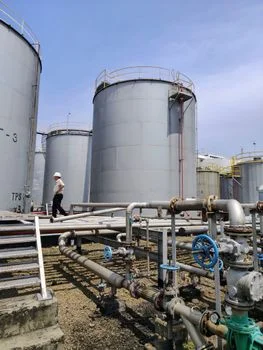
Selecting the most effective treatment technology for hydrofluoric acid wastewater requires a thorough understanding of the trade-offs between Fluidized Bed Crystallization (FBC), chemical precipitation, and adsorption. The three technologies have different advantages and disadvantages.
| Parameter | Fluidized Bed Crystallization (FBC) | Chemical Precipitation | Adsorption |
|---|---|---|---|
| Fluoride Removal Efficiency (%) | 95 - 99% | 85 - 95% | 90 - 99% (media dependent) |
| Sludge Volume (L/kg F⁻ removed) | 5 - 15 L | 25 - 75 L (3-5x more than FBC) | Minimal (if any, from spent media regeneration) |
| CapEx ($/m³/h) | $15,000 - $30,000 | $10,000 - $20,000 | $5,000 - $15,000 (excluding regeneration) |
| Opex ($/m³) | $0.50 - $0.80 (includes crystal resale value) | $0.80 - $1.20 (chemicals, sludge disposal) | $0.70 - $1.50 (media replacement, regeneration) |
| Crystal Recovery (%) | >95% (High-purity CaF₂) | Low (Amorphous sludge) | N/A |
| Compliance Risk | Low (consistent removal, predictable operation) | Medium (scaling, sludge disposal issues can cause downtime) | Medium (media saturation, breakthrough risk) |
| Industry Suitability | Semiconductor, Metal Etching (for high volume and recovery) | General industrial, low-volume streams | Low-volume, high-purity requirements, or polishing step |
For semiconductor fabs, FBC is often the preferred technology due to its high efficiency, ability to recover valuable by-products, and its suitability for achieving Zero Liquid Discharge (ZLD) goals. Metal etching facilities benefit from FBC's capacity to recover high-purity calcium fluoride (CaF₂) crystals, which can be resold, offsetting operational costs. In contrast, chemical precipitation, while less capital-intensive, suffers from significant sludge generation and scaling issues, leading to higher operational expenditures and increased compliance risk. Adsorption can be effective, particularly for polishing effluent to meet stringent limits or for treating low-volume, high-concentration streams, but it involves ongoing costs for media replacement or regeneration, and carries a risk of breakthrough if not meticulously monitored. Understanding these differences is crucial for making informed decisions, especially when comparing chemical precipitation vs. fluidized bed crystallization for fluoride removal.
Real-World Case Study: FBC for Semiconductor HF Wastewater Treatment
A leading 300mm wafer fabrication plant in Taiwan, grappling with stringent local fluoride discharge regulations (as low as 2 ppm), successfully implemented a Fluidized Bed Crystallization (FBC) system to treat its hydrofluoric acid wastewater.The facility processed approximately 50 m³/h of wastewater containing an average of 920 ppm of fluoride. Prior to FBC, the plant relied on conventional chemical precipitation, which resulted in frequent operational disruptions due to scaling and excessive sludge production, leading to elevated disposal costs and near-miss compliance incidents.
Upon installation of the FBC system, the plant achieved remarkable results. Fluoride concentrations in the treated effluent were consistently reduced from 920 ppm to below 4 ppm, well within the EPA's 40 CFR Part 469 limits and local Taiwanese regulations. The FBC system demonstrated a crystallization efficiency of 95%, producing high-purity CaF₂ crystals that were successfully resold, generating approximately $50,000 in annual revenue. Critically, the FBC system resulted in an 80% reduction in sludge volume compared to the previous precipitation method, significantly lowering disposal expenses. Over a 24-month period, the facility recorded zero EPA violations related to fluoride discharge, a testament to the system's reliability and compliance assurance. The operational expenditure (Opex) savings, driven by reduced chemical dosing, lower sludge disposal fees, and revenue from crystal resale, amounted to an estimated $0.60 per cubic meter of treated water, as reported by the plant's EHS management team.
This case study underscores the tangible benefits of FBC for high-volume, high-concentration HF wastewater streams, offering a pathway to both environmental compliance and economic advantage, mirroring the success seen in advanced wastewater treatment strategies for semiconductor fabs.
How to Select the Right Fluidized Bed Crystallization System: A Zero-Risk Decision Framework
Selecting the optimal Fluidized Bed Crystallization (FBC) system is a multi-faceted decision that requires a systematic approach to ensure compliance, operational efficiency, and financial viability. This framework guides procurement teams and engineers through the critical steps for making an informed choice.
- Wastewater Characterization: The foundational step involves accurately measuring the fluoride concentration, pH, and flow rate of the influent wastewater. This data is essential for correctly sizing the FBC reactor. For example, a facility with a consistent flow of 50 m³/h and high fluoride concentrations will require a different reactor configuration than one with variable flow rates up to 500 m³/h.
- Compliance Requirements: Thoroughly research and document local, regional, and national discharge limits for fluoride. This includes understanding regulations like the EPA's 17 ppm limit under 40 CFR Part 469, the EU's 15 ppm standard, or stricter local mandates that may require fluoride levels as low as 2 ppm. FBC's removal efficiency (typically 95-99%) must consistently meet or exceed these thresholds.
- Crystal Recovery Goals: Evaluate the economic potential of recovering high-purity CaF₂ crystals. If the crystal purity exceeds 98%, resale opportunities can significantly offset the system's Capital Expenditure (CapEx) and Operational