How MBR Effluent Quality Works: Engineering Specs, Removal Rates & Real-World Performance Data
MBR (Membrane Bioreactor) effluent quality achieves near-reuse standards by combining activated sludge treatment with 0.1 μm membrane filtration, removing 95-98% of BOD, 90-95% of COD, and 99.99% of pathogens. Unlike conventional systems, MBRs maintain consistent effluent quality regardless of influent fluctuations, with TSS levels typically below 5 mg/L (per EPA 2024 benchmarks). This performance is driven by longer solid retention times (>20 days) and physical barrier separation, making MBRs ideal for strict discharge limits or water reuse applications.
Why Effluent Quality Matters in Wastewater Treatment
Effluent quality dictates the economic viability of industrial operations by determining whether treated water can be legally discharged or recycled back into production processes. For environmental engineers and plant operators, effluent quality is defined by a suite of parameters: Total Suspended Solids (TSS), Chemical Oxygen Demand (COD), Biochemical Oxygen Demand (BOD), pathogens, nutrients (Nitrogen and Phosphorus), and emerging contaminants like microplastics and PFAS. As global regulations tighten, the margin for error in these parameters has narrowed significantly.
Regulatory frameworks such as the EU Urban Waste Water Directive (91/271/EEC) and China’s GB 18918-2002 Class A standards set stringent limits that conventional secondary treatment often struggles to meet without tertiary polishing. In the United States, EPA-mandated National Pollutant Discharge Elimination System (NPDES) permits have seen a trend toward lower nutrient and solids limits. The cost of non-compliance is substantial; industrial facilities have faced fines exceeding $1 million for consistent TSS and nutrient exceedances, often leading to permit revocation and forced operational shutdowns.
Beyond compliance, water scarcity is driving the adoption of "circular economy" policies. High-quality effluent allows industries to reduce freshwater intake by 30-50%, providing a hedge against rising utility costs and local water shortages. For sectors like food processing or semiconductor manufacturing, where water quality is critical to product integrity, MBR effluent serves as an ideal feed for Reverse Osmosis (RO) systems, extending membrane life and reducing the total cost of ownership for high-purity water loops.
How MBR Technology Delivers Superior Effluent Quality
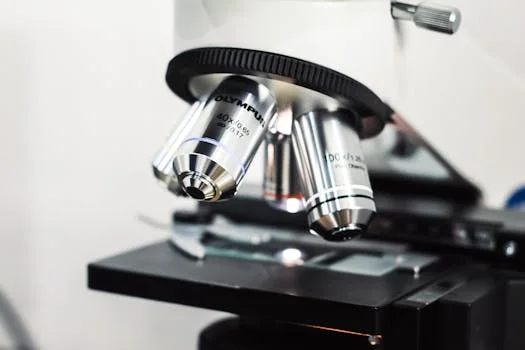
The integration of a physical membrane barrier with a biological reactor eliminates the need for secondary clarifiers, which are the primary source of effluent variability in conventional systems. HydropureWater’s integrated MBR system with submerged PVDF membranes operates on a dual mechanism: biological degradation of organic matter by activated sludge and absolute physical separation via microfiltration or ultrafiltration membranes.
The most critical component is the membrane pore size, typically 0.1 μm. In comparison, conventional sand filtration or 0.45 μm microfiltration allows smaller colloidal particles and certain bacteria to pass through. The 0.1 μm barrier effectively blocks suspended solids, protozoa, and most bacteria, ensuring that effluent turbidity remains consistently low, often below 0.2 NTU. This physical barrier also decoupling the Solid Retention Time (SRT) from the Hydraulic Retention Time (HRT).
In an MBR, SRT can be maintained between 20 and 50 days, compared to the 5–15 days typical in Conventional Activated Sludge (CAS). This extended SRT allows for the development of slow-growing nitrifying bacteria and specialized microbes capable of breaking down complex organic compounds that would otherwise pass through a CAS system. Conversely, the HRT can be shortened to 4–12 hours because the high biomass concentration (MLSS of 8,000–12,000 mg/L) accelerates the reaction kinetics. This results in a system that is not only more efficient but significantly more compact.
| Parameter | MBR Specification (0.1 μm) | CAS Specification (Clarifier) | Impact on Effluent Quality |
|---|---|---|---|
| Pore Size / Separation | 0.1 μm Physical Barrier | Gravity Sedimentation | MBR blocks all flocs; CAS relies on settling velocity. |
| MLSS Concentration | 8,000 – 15,000 mg/L | 2,000 – 4,000 mg/L | Higher microbial density improves COD/BOD removal. |
| SRT (Solids Retention) | 20 – 50 Days | 5 – 15 Days | Longer SRT allows for specialized contaminant degradation. |
| Turbidity | < 0.2 NTU | 2.0 – 10.0 NTU | MBR effluent is suitable for direct RO feed. |
MBR Effluent Quality: Removal Rates for Key Contaminants
MBR systems consistently achieve turbidity levels below 0.2 NTU, a performance benchmark that exceeds the requirements for most industrial reuse applications. Real-world performance data from EPA 2024 benchmarks and WaterRF studies demonstrate that MBRs provide a level of treatment that is largely independent of the influent quality, provided the biological health of the system is maintained.
For TSS, MBRs achieve removal rates of 92-97%, with effluent concentrations frequently falling below the detection limit (typically <1 mg/L, though officially benchmarked at <5 mg/L). COD removal is equally robust, typically ranging from 90-95%. In industrial settings with high-strength influent (500–2000 mg/L COD), MBRs can reduce effluent levels to 20–100 mg/L, depending on the biodegradability of the waste. BOD removal rates are even higher, often exceeding 98%, resulting in effluent BOD levels below 10 mg/L (per PCI Membranes data).
Pathogen removal is one of the MBR’s most significant advantages. According to WHO 2022 guidelines, MBRs provide a 4-6 log reduction in E. coli and enteroviruses. This 99.99% to 99.9999% removal rate often eliminates the need for heavy chemical disinfection, reducing the formation of disinfection by-products (DBPs). recent pilot studies in semiconductor wastewater treatment have shown that MBRs can remove 60-90% of microplastics and certain PFAS compounds, which are increasingly targeted by environmental regulators.
| Contaminant | Typical Influent | MBR Effluent | Removal Rate (%) | Source Benchmark |
|---|---|---|---|---|
| TSS | 200 – 400 mg/L | < 1 – 5 mg/L | 99%+ | EPA 2024 |
| BOD₅ | 200 – 500 mg/L | < 5 – 10 mg/L | 95 – 98% | PCI Membranes |
| COD | 500 – 2,000 mg/L | 20 – 100 mg/L | 90 – 95% | WaterRF 2023 |
| Total Nitrogen | 30 – 60 mg/L | < 10 mg/L | 70 – 85%* | ScienceDirect 2021 |
| Pathogens | 10⁶ – 10⁸ CFU | 4 – 6 log reduction | 99.99%+ | WHO 2022 |
*Requires integrated anoxic/oxic (A/O) zones for denitrification.
MBR vs Conventional Systems: Effluent Quality Comparison

MBR systems require 60% less physical footprint than Conventional Activated Sludge (CAS) systems while producing effluent with 90% lower Total Suspended Solids (TSS). When comparing MBR to other advanced methods like Moving Bed Biofilm Reactors (MBBR) or Sequencing Batch Reactors (SBR), the primary differentiator is the consistency of the effluent. While MBBR and SBR are effective at carbon and nutrient removal, they still rely on secondary clarification or cloth filters, which are susceptible to "sludge bulking" and "pinpoint floc" carryover during hydraulic surges.
MBR effluent consistency is documented in AUC Group data, showing that even when influent loads spike by 300%, the effluent TSS remains below 5 mg/L because the membrane provides an absolute barrier. In contrast, a CAS system would likely experience solids washout under such conditions. This reliability makes MBR the preferred choice for decentralized plants or industrial sites where operator oversight is limited and discharge violations are costly.
However, this quality comes with a trade-off in energy consumption. MBRs typically consume 0.6–1.2 kWh/m³ of treated water, compared to 0.3–0.6 kWh/m³ for CAS. This higher energy demand is driven by the need for membrane scouring (aeration to prevent fouling) and permeate pumping. Despite the higher energy cost, learning more about MBR system costs and selection criteria reveals that the reduction in sludge production (0.1–0.3 kg TSS/kg BOD removed vs. 0.4–0.6 kg for CAS) and the elimination of tertiary treatment stages often balance the Total Cost of Ownership (TCO).
| Feature | MBR | CAS | MBBR | SBR |
|---|---|---|---|---|
| Effluent TSS | < 1 mg/L | 15 – 30 mg/L | 10 – 20 mg/L | 10 – 25 mg/L |
| Pathogen Removal | High (4-6 log) | Low (requires Cl₂) | Low | Moderate |
| Footprint | Smallest | Large | Medium | Medium |
| Energy Use | High | Low | Moderate | Moderate |
| Sludge Yield | Very Low | High | Moderate | Moderate |
Factors That Degrade MBR Effluent Quality (and How to Mitigate Them)
Extracellular Polymeric Substances (EPS) are the primary biological drivers of membrane fouling, directly increasing transmembrane pressure (TMP) and potentially compromising effluent consistency. While MBRs are robust, certain operational failures can lead to a degradation in performance. Membrane fouling—whether organic, inorganic, or biofouling—is the most common issue. While fouling primarily affects the flux (the rate of water passing through), severe biofouling can lead to "cake layer" breakthroughs or membrane damage, which eventually increases effluent TSS.
Aeration rates are another critical factor. Aeration in an MBR serves two purposes: providing oxygen for the biomass and scouring the membranes to prevent solids accumulation. If the Standard Oxygen Transfer Efficiency (SOTE) falls below 10-20% due to poor diffuser maintenance, anaerobic zones can form. This leads to the production of H₂S and other metabolites that can inhibit nitrifying bacteria, causing a spike in effluent ammonia and COD. To prevent this, PLC-controlled chemical dosing for MBR fouling prevention is essential for maintaining the balance between scouring and biological health.
Managing the SRT is a delicate balancing act. While a long SRT improves contaminant removal, an overly long SRT (exceeding 50 days) can lead to the accumulation of inert solids and "pinpoint floc." These tiny particles are more likely to clog membrane pores, requiring more frequent chemical cleaning. Operators should implement a structured cleaning cycle (typically every 1–3 months) using sodium hypochlorite (NaOCl) for organic fouling and citric acid for inorganic scaling. Failure to maintain this cycle can lead to irreversible membrane "blinding," where the effluent quality remains high but the system capacity drops below operational requirements.
When to Choose MBR for Effluent Quality: Decision Framework
Selecting an MBR system is financially justified when the cost of freshwater or the penalties for non-compliance exceed the 20-30% higher operational energy costs of membrane filtration. Engineers should evaluate their needs based on a multi-criteria framework that considers effluent standards, space, and long-term scalability. MBR is the logical choice when the target effluent TSS is <10 mg/L or when the treated water is destined for sensitive receiving bodies like drinking water reservoirs.
Space constraints are often the deciding factor for urban retrofits or industrial sites where land is at a premium. Because MBRs operate at much higher MLSS concentrations, they can process the same volume of water in 40% of the space required for a CAS plant. the modular nature of MBR systems—where membrane cassettes can be added to existing tanks—provides a future-proofing advantage for facilities expecting capacity increases without the possibility of physical expansion.
From a budgetary perspective, while the initial CAPEX for an MBR is 2–3 times higher than for a CAS system, the 5-year TCO often favors MBR in specific scenarios. These include regions with high sludge disposal costs and industries that can monetize the high-quality effluent for cooling towers, boiler feed, or irrigation. A typical 5-year TCO analysis shows that the savings in chemical use for tertiary treatment and reduced sludge handling can offset the higher initial investment and energy consumption.
| Requirement | Choose MBR If... | Choose CAS If... |
|---|---|---|
| Effluent Quality | Reuse or <5 mg/L TSS needed | Standard discharge (>20 mg/L) |
| Site Footprint | Very limited or retrofit | Ample land available |
| Influent Variability | High spikes/Industrial waste | Steady municipal flow |
| Operational Budget | Focus on TCO and Reuse | Focus on low initial CAPEX |
| Future Expansion | Modular growth needed | Fixed capacity is sufficient |
Frequently Asked Questions
How does MBR achieve such low TSS compared to clarifiers? MBR uses a physical 0.1 μm membrane barrier that mechanically blocks all suspended solids and biomass. Conventional clarifiers rely on gravity settling, which is easily disrupted by hydraulic surges, temperature changes, or "bulking" sludge, leading to solids carryover that MBRs physically prevent.
Can MBR effluent be used for drinking water? While MBR effluent is extremely high quality and meets many non-potable reuse standards, it is generally considered "Type A" recycled water. For potable reuse, MBR effluent typically serves as the ideal pretreatment for a multi-barrier approach involving Reverse Osmosis (RO) and Advanced Oxidation Processes (AOP).
Does membrane fouling affect the quality of the treated water? Primarily, fouling affects the quantity (flux) of water the system can process by increasing resistance. However, if fouling leads to membrane damage or "breach," TSS and pathogen removal will degrade. Regular maintenance and automated cleaning are required to ensure consistent quality.
What is the typical lifespan of membranes in an MBR system? With proper pretreatment (fine screening <2mm) and regular chemical cleaning, modern PVDF membranes used in industrial MBRs typically last 8 to 10 years. Factors like pH extremes, high grease content, or abrasive particles can significantly shorten this lifespan.