A DAF system for Colorado Springs industrial wastewater typically costs $250,000–$1,200,000 installed and removes 95% of FOG, while MBR reuse plants run $1,000,000–$5,000,000. Article 5 limits, permitting, and PFAS monitoring shape the 2026 budget.
Why Industrial Wastewater Treatment in Colorado Springs Is a $10K/Day Risk
Industrial wastewater treatment in Colorado Springs must meet Article 5 discharge limits of TSS at or below 30 mg/L, COD at or below 250 mg/L, and pH 6.0–9.0 before discharge to the municipal system. On-site systems cost $250K–$5M. Permitting runs 6–12 months, and violations carry fines up to $10,000 per day.
In 2023, a food processing plant in the Colorado Springs area faced a $250,000 fine from the Colorado Department of Public Health & Environment (CDPHE) after repeated violations of Total Suspended Solids (TSS) limits. The facility's aging pretreatment system could not keep pace with production increases, and the resulting effluent overwhelmed the municipal collection system. The case shows the arithmetic facility managers live with: compliance costs a fraction of failure. Under 33 U.S. Code § 1319 and the Colorado Water Quality Control Act, agencies can levy fines reaching $10,000 per day per violation, alongside potential mandatory shutdowns.
Federal penalty caps are now easy to pin down. Under 33 U.S.C. § 1319(g), a class II administrative penalty may not exceed $10,000 per day for each day a violation continues, with a $125,000 maximum per administrative action. The Article 5 Wastewater Treatment Code adds the local layer, mandating strict adherence to discharge parameters. For industrial contributors, that means maintaining TSS at or below 30 mg/L, Chemical Oxygen Demand (COD) at or below 250 mg/L, and pH strictly between 6.0 and 9.0.
As Colorado Springs manages ongoing water scarcity, pressure on industrial facilities to pre-treat or reuse water keeps intensifying. A compliant system is no longer just a utility requirement. It is a core risk management strategy for any manufacturing operation in the Pikes Peak region, and the sections below give the specs, limits, and budgets that strategy needs.
Article 5 Wastewater Treatment Code in Colorado Springs: Local Limits for Industrial Discharge
The Colorado Springs Utilities (CSU) industrial pretreatment program enforces federally mandated standards alongside local limits defined in the Article 5 Wastewater Treatment Code to protect the city's secondary treatment processes. Facilities are classified as either direct or indirect contributors, with Significant Industrial Users (SIUs) facing the most rigorous monitoring requirements, including 24-hour composite sampling for COD and TSS. Failure to provide accurate sampling data can result in immediate permit revocation.
Local discharge limits in Colorado Springs are often more stringent than federal baselines to account for the specific biological capacity of local treatment plants. While federal guidelines might allow higher concentrations for certain metals, CSU mandates copper limits at or below 1.3 mg/L to prevent interference with sludge digestion. Fats, Oils, and Grease (FOG) must stay below 100 mg/L, a major hurdle for the region's expanding food and beverage sector. Engineers must also cross-reference EPA Effluent Guidelines (40 CFR Parts 405-471) for industry-specific Categorical Pretreatment Standards, because the stricter of the federal or local limit takes precedence.
| Parameter | Colorado Springs Limit (Article 5) | Monitoring Frequency | Sampling Method |
|---|---|---|---|
| Total Suspended Solids (TSS) | ≤ 30 mg/L | Weekly/Monthly | 24-Hour Composite |
| Chemical Oxygen Demand (COD) | ≤ 250 mg/L | Weekly/Monthly | 24-Hour Composite |
| pH Range | 6.0 – 9.0 | Continuous | In-line Probe |
| Fats, Oils, and Grease (FOG) | ≤ 100 mg/L | Monthly | Grab Sample |
| Copper (Cu) | ≤ 1.3 mg/L | Quarterly | Composite |
| Arsenic (As) | ≤ 0.01 mg/L | Quarterly | Composite |
This dual-layered compliance landscape requires robust engineering reports and spill prevention protocols submitted 6 to 12 months before any new discharge or significant process change. Suppliers that also build for European export markets work to the EU Urban Wastewater Treatment Directive: Compliance, Deadlines & Tech framework, and their dual-compliance package plants usually clear Article 5 parameters with margin. Buying to the stricter of the two specs costs little extra at design stage.
Choosing a DAF System for Colorado Springs Industrial Wastewater

Technology selection depends on waste-stream characterization. Dissolved Air Flotation (DAF) is the primary choice for high-FOG industries, while Membrane Bioreactors (MBR) serve facilities focused on high-strength organic removal and water reuse. DAF excels at physical separation of buoyant solids; MBR provides a biological solution that produces effluent suitable for non-potable applications like cooling tower makeup or irrigation.
For many industrial applications in Colorado Springs, DAF systems for Colorado Springs industrial wastewater provide the most efficient path to meeting TSS and FOG limits. These systems use micro-bubbles that attach to particles and float them to the surface for mechanical skimming. In contrast, MBR systems for water reuse in Colorado Springs combine activated sludge treatment with membrane filtration, replacing secondary clarifiers and tertiary filtration in a single compact footprint. That matters for facilities with limited real estate or extremely high COD surcharges.
| Technology | Primary Target Pollutants | Removal Efficiency | Best Fit Industry |
|---|---|---|---|
| DAF | FOG, TSS, Insoluble COD | 95% FOG, 97% TSS | Food Processing, Oil & Gas |
| MBR Integrated System | Soluble COD, BOD, Bacteria | 98% COD, 99% BOD | Pharma, Textiles, Reuse |
| Chemical Dosing | Heavy Metals, pH, Phosphorus | 99% Metals (w/ Precipitation) | Metal Finishing, Mining |
| Electrocoagulation | Emulsified Oils, Heavy Metals | 99% Cr, 98% Ni | Electroplating, Aerospace |
For facilities dealing with heavy metals or fluctuating pH, an automatic chemical dosing system for pH adjustment and heavy metal removal is often integrated as a primary or polishing step. Automated dosing injects coagulants like ferric chloride or polymers at precise rates, typically 50–200 mg/L, to facilitate flocculation. In specialized cases such as aerospace component manufacturing common in the Pikes Peak region, electrocoagulation for metal finishing wastewater can break emulsions that traditional chemical methods cannot handle, though the trade-off involves higher electrode replacement costs.
PFAS Monitoring and EPA Method 1633 for Industrial Discharge
PFAS monitoring is the newest line on a Colorado Springs compliance budget. Looking toward 2026, facilities must prepare for EPA Method 1633, which introduces PFAS monitoring with proposed limits as low as 4 ng/L for PFOA and PFOS. According to US EPA, Method 1633 tests for 40 PFAS compounds in wastewater, surface water, groundwater, soil, biosolids, sediment, landfill leachate, and fish tissue. The December 2024 revision, Method 1633A, is the current version.
The method's legal status matters for procurement timing. While the method is not nationally required for CWA compliance monitoring until EPA has promulgated it through rulemaking, the agency recommends it now for use in individual NPDES permits. Metal finishers, platers, and any facility with fluorinated chemistry in its process stream should budget for 1633A sampling now rather than wait for a permit condition to force it.
Engineering Specs for Colorado Springs Industrial Wastewater Systems
DAF systems engineered for industrial pretreatment achieve hydraulic loading rates between 4 and 8 m/h while maintaining a footprint under 20 square meters for high-flow applications. For an engineer sizing a system, the air-to-solids (A/S) ratio is the critical design parameter, typically maintained between 0.02 and 0.05 to ensure maximum buoyancy. The DAF units handle flow rates from 4 to 300 m³/h, making them scalable for both small boutique processors and large-scale manufacturing plants.
Automation is the final pillar of the engineering spec. Modern systems must include PLC-controlled dosing and monitoring to handle slug loads — sudden spikes in pollutant concentration common during wash-down cycles. Integrated sensors for turbidity, pH, and conductivity let the system divert non-compliant water to an equalization tank rather than discharge it and risk a fine. This fail-safe engineering is what keeps a plant in a compliance-ready operating state through the 2026 regulatory environment.
| System Component | Engineering Parameter | Technical Specification |
|---|---|---|
| DAF | Hydraulic Loading Rate | 4 – 8 m/h |
| DAF | TSS Removal Rate | 92% – 97% |
| MBR System | Membrane Flux | 15 – 25 LMH |
| MBR System | Membrane Lifespan | 5 – 8 Years |
| Chemical Dosing | Injection Rate Accuracy | ±1% of set point |
| Chemical Dosing | pH Adjustment Range | 2.0 – 12.0 SU |
| Electrocoagulation | Current Density | 10 – 100 A/m² |
MBR Membrane Bioreactor for Colorado Springs Water Reuse
MBR systems offer a significant design advantage in space, with footprints often 60% smaller than conventional activated sludge plants. Membrane flux — the rate at which water passes through the membrane — is typically designed at 15–25 Liters per Square Meter per Hour (LMH). These systems use PVDF membranes with a nominal pore size of 0.03 to 0.1 microns, removing virtually all suspended solids and most pathogens. For Colorado Springs facilities, effluent of that quality can significantly offset the cost of municipal water procurement.
Reuse planning still runs through the permit. Non-potable reuse generally requires effluent COD at or below 50 mg/L plus a separate reuse permit from Colorado Springs Utilities, so the membrane spec and the permit application should move together. Most reuse projects we size for the Front Range pencil out first at cooling tower and irrigation loads, where makeup water demand is steady year-round.
Industrial Wastewater CAPEX in Colorado Springs: 2026 Budget Ranges
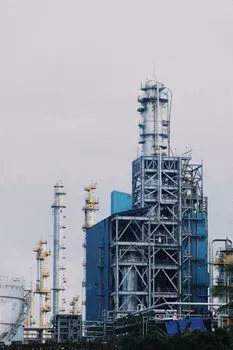
Capital expenditure for on-site industrial wastewater treatment in Colorado Springs ranges from $250,000 for standard DAF units to over $5 million for high-capacity MBR systems. These figures move with flow volume, influent chemistry complexity, and the level of automation required. DAF systems carry the lower initial price point, but their operating expenditure depends heavily on chemical coagulants and polymers, which run $0.50 to $1.50 per cubic meter of treated water.
MBR systems represent a higher CAPEX but offer a compelling Return on Investment (ROI) through water reuse. In the semi-arid Front Range climate, cutting municipal water intake by 30–50% can save a facility hundreds of thousands of dollars annually. MBR systems also reduce the volume of biological sludge produced, lowering disposal fees that have risen sharply in Colorado over the last three years. Against national wastewater treatment cost benchmarks, Colorado Springs facilities often face slightly higher permitting and engineering costs due to local geological and environmental impact study requirements.
| Technology | CAPEX Range (50–500 m³/h) | OPEX (per m³) | Primary ROI Driver |
|---|---|---|---|
| DAF System | $250,000 – $1,200,000 | $0.50 – $1.50 | Surcharge Reduction |
| MBR System | $1,000,000 – $5,000,000 | $1.00 – $3.00 | Water Reuse Savings |
| Chemical Dosing | $50,000 – $300,000 | $0.20 – $0.80 | Compliance Safety |
| Electrocoagulation | $300,000 – $1,500,000 | $0.10 – $0.30 | Low Sludge Volume |
Permitting costs themselves are a non-negligible part of the budget. Facilities should allocate $10,000 to $50,000 for professional engineering reports, 30-day baseline sampling, and Spill Prevention, Control, and Countermeasure (SPCC) plans. Those upfront costs prevent the $10,000/day penalties that follow when a system is installed without proper CSU approval. For broader context, facility managers can also review wastewater compliance strategies for neighboring states to understand regional trends in discharge enforcement.
Step-by-Step Permitting and Compliance in Colorado Springs
Navigating the Colorado Springs Utilities (CSU) and CDPHE permitting process requires a structured approach so the treatment system is approved before the first gallon is discharged. The steps below outline the typical 6-to-12-month journey from design to operation:
- Engineering Report Submission: Submit a comprehensive report to CSU that includes influent/effluent projections, process flow diagrams (PFDs), and a detailed description of the chosen technology (e.g., DAF or MBR). This review typically takes 6–8 weeks.
- Baseline Sampling and Monitoring: Install certified monitoring equipment, including electromagnetic flow meters and pH probes. Conduct a 30-day baseline sampling period to characterize the wastewater under normal operating conditions, testing for TSS, COD, FOG, and heavy metals.
- Discharge Permit Application: Formally apply for the Industrial User (IU) permit. This package must include the sampling data, treatment system specifications, and an emergency response plan for potential system failures or spills. Processing times vary but generally range from 6 to 12 months.
- Post-Permit Compliance: Once the permit is issued, the facility must submit Monthly Self-Monitoring Reports (SMRs) to the CDPHE. Additionally, CSU will perform annual unannounced inspections to verify equipment calibration and logbook accuracy.
The practical next step is a characterization dataset and a shortlist matched to the tables above. Send your flow rate, effluent targets, and five-year growth plan to suppliers who document CSU approval experience. For sizing support and a budgetary quotation against these ranges, use the inquiry form for Colorado Springs projects.
Frequently Asked Questions
What are the discharge limits for industrial wastewater in Colorado Springs?
Standard limits under the Article 5 Wastewater Treatment Code include TSS ≤ 30 mg/L, COD ≤ 250 mg/L, and pH between 6.0 and 9.0. Specific industries face additional limits for FOG (≤ 100 mg/L) and metals like copper (≤ 1.3 mg/L). Federal categorical standards under 40 CFR Parts 405-471 apply wherever they are stricter.
How long does it take to get a wastewater discharge permit in Colorado Springs?
The process typically takes 6 to 12 months. Delays often stem from incomplete engineering reports or insufficient baseline sampling data, which can push timelines back by an additional 3 to 6 months. Starting the engineering report before equipment selection protects the schedule.
What are the penalties for violating Colorado Springs wastewater regulations?
Under the Colorado Water Quality Control Act, facilities can be fined up to $10,000 per day per violation. At the federal level, 33 U.S.C. § 1319(g) caps a class II administrative penalty at $10,000 per day with a $125,000 ceiling per action. Repeat offenders also risk mandatory shutdowns and costly Corrective Action Plans (CAPs).
Can I reuse treated wastewater in Colorado Springs?
Yes, water reuse is encouraged but requires effluent to meet non-potable standards (e.g., COD ≤ 50 mg/L). This typically requires an MBR system and a separate reuse permit from Colorado Springs Utilities for applications like cooling towers or irrigation. Reuse cuts municipal water intake by 30–50% at many Front Range facilities.
What is the most cost-effective wastewater treatment system for a small food processing plant in Colorado Springs?
A DAF system is usually the most cost-effective solution for food processors, with a CAPEX of $250K–$500K. It specifically targets FOG and TSS, the primary concerns for food-grade effluent, and has a smaller footprint than biological alternatives. Chemical dosing can be added later if metals or pH limits tighten.
How does EPA Method 1633 affect industrial discharge monitoring in Colorado Springs?
EPA Method 1633A, revised in December 2024, measures 40 PFAS compounds in wastewater and is the method EPA recommends for individual NPDES permits. According to US EPA, it is not nationally required for CWA compliance monitoring until promulgated through rulemaking. Facilities with PFAS-bearing streams should budget for it now, since proposed PFOA and PFOS limits sit near 4 ng/L.