Why Karachi’s Water Crisis Forces Industrial Wastewater Upgrades in 2026
Karachi’s persistent water deficit, with a daily supply of 550 million imperial gallons (MIGD) falling drastically short of the 1,100 MIGD demand (WWF 2017), is compelling industries to re-evaluate their wastewater treatment strategies. This severe water stress is driving a push towards stricter regulatory enforcement and zero-discharge mandates, directly impacting operational continuity and financial stability for manufacturers. In 2024 alone, the Sindh Environmental Protection Agency (EPA) levied fines ranging from PKR 1 million to PKR 5 million on approximately 30% of Karachi’s textile mills for non-compliance with COD/BOD discharge limits. These violations often trigger 7-day shutdown notices, leading to significant production losses. For instance, a hypothetical Karachi food processing plant, previously operating with an A/O system that struggled to keep COD below 200 mg/L, faced potential annual fines of PKR 4 million. By upgrading to an MBR system that consistently achieves COD levels below 45 mg/L, this plant not only secured its operational license but also achieved significant water savings. Beyond operational equipment, indirect costs such as Karachi Water and Sewerage Board (KWSB) connection fees (PKR 5 million–10 million) and annual land leasing expenses (PKR 2 million–5 million) can add an additional 10–20% to overall project budgets, underscoring the comprehensive financial planning required for wastewater treatment investments.
Karachi-Specific Compliance Benchmarks: COD, BOD, and Heavy Metals by Industry
Navigating Karachi's industrial wastewater landscape requires a granular understanding of the Sindh EPA's discharge limits, which vary by industry sector. For textile manufacturers, the permissible limits are typically a Chemical Oxygen Demand (COD) of 150 mg/L and a Biochemical Oxygen Demand (BOD) of 30 mg/L. Food processing facilities face slightly higher COD allowances, up to 250 mg/L, but with a critical limit on Fats, Oils, and Grease (FOG) at 10 mg/L. Chemical manufacturing operations are subject to stricter controls, with a COD limit of 200 mg/L and stringent regulations on heavy metals, often requiring concentrations below 0.1–1 mg/L. Non-compliance with these benchmarks can result in substantial financial penalties, ranging from PKR 1 million to PKR 5 million per violation, with escalating fines for repeat offenses. For industries involving metalworking or battery production, specific heavy metal limits are paramount: Chromium at 0.1 mg/L, Lead at 0.5 mg/L, and Cadmium at 0.01 mg/L. Accurate influent and effluent monitoring is crucial; this involves a combination of grab samples for immediate analysis and composite sampling for representative long-term data, supported by either laboratory testing or real-time online sensors like COD analyzers.
| Industry | Parameter | Sindh EPA Limit (mg/L) | Typical Influent Range (mg/L) | Significance |
|---|---|---|---|---|
| Textile | COD | 150 | 300-1000+ | Dye, sizing agents, finishing chemicals |
| BOD | 30 | 100-400+ | Organic matter from dyes and auxiliaries | |
| Food Processing | COD | 250 | 500-2000+ | Organic waste, sugars, starches, proteins |
| FOG | 10 | 50-500+ | Oils and fats from processing | |
| Chemical Manufacturing | COD | 200 | 400-5000+ | Complex organic compounds, solvents, by-products |
| Chromium (Cr) | 0.1 | Trace-5+ | Plating, tanning, pigments | |
| Lead (Pb) | 0.5 | Trace-2+ | Batteries, pigments, alloys | |
| Cadmium (Cd) | 0.01 | Trace-0.5+ | Plating, pigments, batteries |
MBR vs. DAF vs. A/O: Karachi-Specific Technology Comparison for Industrial Wastewater
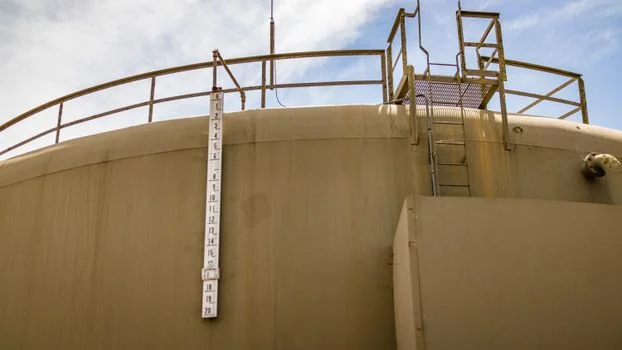
Selecting the optimal wastewater treatment technology for Karachi’s industrial sector hinges on a careful evaluation of effluent quality requirements, influent characteristics, land availability, and budgetary constraints. Membrane Bioreactor (MBR) systems offer superior effluent quality, consistently achieving COD levels below 50 mg/L and Total Suspended Solids (TSS) below 5 mg/L, making them ideal for industries like textiles requiring high-purity water for reuse or for meeting stringent discharge standards. While MBR plants for a 500 m³/day capacity command a higher CAPEX of PKR 120 million and OPEX of PKR 20 million per year, their compact footprint (approximately 60% smaller than conventional A/O systems) can offset land acquisition costs in expensive Karachi industrial zones. Dissolved Air Flotation (DAF) systems are particularly effective for food processing facilities, achieving 92–97% removal of TSS and over 95% removal of FOG, with a CAPEX of PKR 60 million and OPEX of PKR 15 million per year for a 500 m³/day unit. Conventional Activated Sludge (A/O) plants, while offering a lower CAPEX of PKR 80 million and OPEX of PKR 12 million per year, typically meet basic limits with COD around 150 mg/L and BOD around 30 mg/L, making them a cost-effective choice for less demanding applications. For chemical industry wastewater, specialized MBR systems, such as those designed for solvent wastewater treatment, can achieve up to 99% COD removal, as detailed in our analysis of MBR’s effectiveness for Karachi’s chemical industry wastewater. Chemical dosing is a significant OPEX factor; DAF systems require coagulants and flocculants (estimated PKR 15 million/year for a 500 m³/day plant), while MBR systems incur costs for membrane cleaning (estimated PKR 5 million/year). For land-constrained sites, underground WSZ plants offer capacities from 1–80 m³/h, and mobile MBR trailers provide flexible, rapidly deployable solutions.
| Technology | Typical Effluent Quality (COD mg/L) | Typical Effluent Quality (TSS mg/L) | Key Application Fit (Karachi) | Estimated CAPEX (500 m³/day, PKR) | Estimated OPEX (500 m³/day, PKR/year) | Land Footprint (Relative) | Chemical Dosing Needs (Estimate, PKR/year) |
|---|---|---|---|---|---|---|---|
| MBR | < 50 | < 5 | Textile reuse, high-purity effluent, chemical industry | 120,000,000 | 20,000,000 | Smallest | 5,000,000 (Membrane Cleaning) |
| DAF | Varies (effective for FOG/TSS) | < 20-30 | Food processing (FOG removal), pre-treatment | 60,000,000 | 15,000,000 | Medium | 15,000,000 (Coagulants/Flocculants) |
| A/O | 150 | 30 | Basic compliance, lower budget applications | 80,000,000 | 12,000,000 | Largest | Variable (Nutrients, pH adjustment) |
Karachi’s Land Constraints: Underground, Modular, and Mobile Wastewater Solutions
The escalating cost and limited availability of industrial land in Karachi (PKR 2 million–5 million per year for leasing, and an estimated PKR 10 million–20 million for outright purchase in prime industrial zones) necessitate innovative, space-saving wastewater treatment solutions. Underground package sewage treatment plants, such as the WSZ series, offer a compelling option with capacities ranging from 1 to 80 m³/h. These systems are fully buried, allowing for landscaping over the treatment area, thus maximizing land utilization and minimizing visual impact, and often require minimal on-site operator intervention once commissioned. For growing facilities or those requiring phased expansion, modular MBR systems are ideal. These pre-fabricated skid-mounted units, available in capacities from 10 to 500 m³/day, can be installed and commissioned rapidly, allowing textile mills or food processing plants to scale their treatment capacity in alignment with production growth without significant upfront civil works. In situations demanding immediate compliance or during unexpected operational disruptions, mobile MBR trailers provide a critical solution. With capacities typically ranging from 50 to 200 m³/day, these units can be deployed and made operational within 48 hours, offering a temporary yet compliant wastewater treatment facility, crucial for navigating stringent EPA enforcement actions or during planned maintenance shutdowns of permanent ETPs. These compact and adaptable MBR systems for Karachi’s textile and food processing industries are particularly well-suited to the city's spatial challenges.
Cost Breakdown: CAPEX, OPEX, and Hidden Expenses for Karachi Wastewater Plants
A comprehensive financial assessment of industrial wastewater treatment in Karachi must encompass not only the upfront capital expenditure (CAPEX) and ongoing operational expenditure (OPEX) but also a range of often-overlooked hidden costs. For a 500 m³/day plant, MBR systems represent the highest CAPEX at an estimated PKR 120 million, compared to DAF at PKR 60 million and A/O at PKR 80 million. Correspondingly, MBR systems incur the highest annual OPEX at approximately PKR 20 million, followed by DAF at PKR 15 million and A/O at PKR 12 million. However, a simple CAPEX/OPEX comparison fails to capture the full picture. Hidden costs in Karachi can significantly inflate the total project budget. These include KWSB connection fees, which can range from PKR 5 million to PKR 10 million, and annual land leasing costs of PKR 2 million to PKR 5 million. Sindh EPA permit fees, typically ranging from PKR 500,000 to PKR 1 million, must also be factored in. A crucial element for ROI calculation is the avoidance of fines: an MBR plant, with its higher OPEX, can save up to PKR 40 million annually in potential fines compared to an A/O plant that might incur PKR 12 million in annual operational costs plus the risk of significant penalties. Over a 5-year Total Cost of Ownership (TCO) model, the long-term financial benefits of advanced treatment technologies like MBR, despite higher initial and operational costs, often become apparent through compliance assurance and potential water reuse savings.
| Cost Component | MBR (500 m³/day) | DAF (500 m³/day) | A/O (500 m³/day) | Notes |
|---|---|---|---|---|
| CAPEX (PKR) | 120,000,000 | 60,000,000 | 80,000,000 | Includes equipment, installation, civil works |
| OPEX (PKR/year) | 20,000,000 | 15,000,000 | 12,000,000 | Energy, labor, consumables, maintenance |
| Chemicals (PKR/year) | 5,000,000 | 15,000,000 | Variable | Membrane cleaning vs. coagulants/flocculants |
| KWSB Connection Fees (PKR) | 5,000,000 - 10,000,000 | 5,000,000 - 10,000,000 | 5,000,000 - 10,000,000 | One-time charge |
| Land Leasing (PKR/year) | 2,000,000 - 5,000,000 | 2,000,000 - 5,000,000 | 2,000,000 - 5,000,000 | Annual cost |
| EPA Permit Fees (PKR/year) | 500,000 - 1,000,000 | 500,000 - 1,000,000 | 500,000 - 1,000,000 | Annual renewal |
| Potential Fine Avoidance (PKR/year) | Up to 5,000,000+ | Up to 5,000,000+ | Up to 5,000,000+ | Per violation, cumulative potential |
Zero-Risk Equipment Selection: A Karachi Buyer’s Checklist
Mitigating project risk in industrial wastewater treatment equipment procurement in Karachi requires a rigorous supplier qualification process, tailored to the local service ecosystem. Prospective buyers should verify that the supplier maintains a robust, Karachi-based service network, ensuring rapid response times for maintenance and repairs. Crucially, confirm the availability of local spare parts inventory, particularly for critical components like MBR membranes or DAF pumps, as lead times for imported parts can extend for weeks, leading to prolonged downtime. Suppliers should demonstrate verifiable expertise in Sindh EPA regulations, providing designs that are not only technically sound but also pre-approved for local compliance, such as MBR systems for Karachi’s textile and food processing industries that meet specific discharge parameters. Scrutinize warranty terms, aiming for a minimum of a 2-year warranty on core equipment and at least 1 year on sensitive components like membranes, paying close attention to common exclusions. Requesting Karachi-specific case studies from similar industrial facilities—textile mills, food processing plants, or chemical manufacturers—provides tangible proof of the supplier's capabilities and product performance in the local context. Finally, explore available financing options, as many local banks offer project financing for wastewater treatment solutions, ranging from PKR 10 million to PKR 50 million, which can ease the upfront financial burden.
Frequently Asked Questions

What are the primary drivers for industrial wastewater treatment upgrades in Karachi?
The primary drivers are Karachi's severe water scarcity, which necessitates water conservation and reuse, and the Sindh EPA's increasingly strict enforcement of discharge regulations, aimed at preventing water pollution and protecting public health. Failure to comply results in significant fines and potential operational shutdowns.
How do Karachi's land costs impact the choice of wastewater treatment technology?
High land acquisition and leasing costs in Karachi make space-efficient technologies like MBR systems or underground WSZ plants more economically viable in the long run, despite potentially higher initial CAPEX, as they reduce the overall land footprint required for the ETP.
Can MBR systems be used for Zero Liquid Discharge (ZLD) in Karachi?
Yes, MBR systems can be a crucial component of a ZLD system by producing high-quality effluent suitable for further treatment (e.g., reverse osmosis) and recycling, minimizing or eliminating liquid discharge. This is increasingly important given Karachi's water stress and potential future ZLD mandates.
What is the typical payback period for investing in advanced wastewater treatment in Karachi?
The payback period varies based on the technology chosen, the cost of non-compliance (fines, shutdowns), and potential savings from water reuse. For systems that avoid significant fines or enable valuable water recycling, payback can range from 3 to 7 years.
How can a factory in Karachi ensure its wastewater treatment equipment supplier is reliable?
Reliability is ensured by verifying local service and spare parts availability, checking for Sindh EPA compliance expertise, reviewing past performance through Karachi-specific case studies, and securing comprehensive warranty terms. A supplier with a proven track record in Pakistan's industrial sector is essential.
Related Equipment
- DAF systems for Karachi’s FOG-heavy food processing wastewater — view specifications, capacity range, and technical data
- underground WSZ plants for Karachi’s land-constrained industrial sites — view specifications, capacity range, and technical data
Need a customized solution? Request a free quote with your specific flow rate and pollutant parameters.