What Changes When AB InBev Takes Over a Hungarian Brewery
When AB InBev acquires a brewery in Hungary, the wastewater obligations continue through the site’s Hungarian permits, water-authority approvals and any sewer-discharge or pretreatment conditions; acquisition does not itself establish a new compliance basis. The buyer must verify permit transferability, discharge limits, monitoring records, sludge handling and water-abstraction obligations before closing, then address historical non-compliance. AB InBev’s Voyager Plant Optimization (VPO) system adds a second control layer: a newly acquired plant may not enter VPO until it passes the required qualification and monitoring process. The acquisition therefore has two tracks: Hungarian legal compliance must continue throughout the transaction, while corporate environmental controls are integrated after acquisition.
Treat the acquired site as a permitted industrial wastewater facility with an inherited compliance history. Before closing, identify the current operator, permit holder, wastewater destinations and approving authorities. Confirm with the relevant authority whether the ownership change or transfer of operational control requires notification, amendment or reissuance of the Hungarian industrial wastewater permit, sewer discharge permit or related approval.
Keep three questions separate: whether the permits remain valid, whether the site complied historically, and whether current production and wastewater flows remain within the permitted design basis. A permit can remain valid without proving historical compliance, and a compliant historical record does not establish capacity for future production.
AB InBev’s 2021 CDP response states that data from a new or recently acquired facility may not be included in VPO until the site complies with the full VPO process and monitoring system. That is a corporate transition control, not a substitute for Hungarian regulatory approval. The acquisition team should therefore preserve the seller’s monitoring controls at closing, while the environmental team prepares the plant for VPO qualification. The same document-by-document approach used in Arizona acquisition wastewater due diligence and Indian plant acquisition due diligence can be adapted, but every Hungarian legal conclusion must come from site-specific approvals and authority correspondence.
Build the Hungarian Permit and Liability Register
The acquisition file must identify every legal instrument, discharge route and unresolved liability affecting the Hungarian industrial wastewater permit transfer. The supplied AB InBev research does not establish Hungary-specific numerical discharge limits, so the buyer should obtain the site-specific environmental permit and sewer conditions rather than infer a universal limit.
Request the current environmental permit and supporting drawings, discharge points, process description, flow calculations, wastewater monitoring plan, sampling records, inspection reports, authority correspondence and corrective-action files. Include direct surface-water or groundwater discharge permissions, municipal sewer connection and pretreatment approvals, sludge-disposal records, hazardous-waste records, and any abstraction or water-protection approvals applicable to the site.
Compile every unresolved notice, exceedance, unauthorized discharge, monitoring gap, inspection finding and remediation obligation. Do not collapse them into a generic compliance statement. Identify who incurred the obligation, whether it arose before or after closing, the evidence supporting liability, and whether it affects price, closing conditions, insurance, indemnity or future operating controls.
Map each discharge route to its receiving authority and contractual requirements. For sewer discharge, obtain the acceptance conditions, prohibited constituents, sampling points, reporting frequency, analytical methods, control rights and consequences of non-compliance. For direct discharge, record the point, receiving water, authority and permit conditions.
| Working field | Information to establish | Acquisition treatment |
|---|---|---|
| Instrument or approval | Environmental permit, sewer agreement, abstraction approval and other site instruments | Identify legal holder, scope and current status |
| Issuing authority | Authority or sewer operator with jurisdiction | Prepare written confirmation plan |
| Expiry or review date | Validity and any required modification | Make unresolved status a closing condition |
| Discharge route | Direct surface water, groundwater or municipal sewer | Link to relevant permit and contract |
| Monitoring requirement | Parameter, point, frequency and method | Test permit to laboratory records |
| Compliance status | Exceedances, gaps, findings and corrective actions | Separate historical from post-closing exposure |
| Transfer action | Notification, amendment, reissuance or confirmation required | Assign evidence and responsible authority contact |
| Financial liability | Remediation, penalties, third-party claims and contract exposure | Allocate through closing protections |
The register should also preserve version control. Keep the issued approval, current operating procedure, latest sampling results and authority correspondence together. A missing document is a diligence gap, not evidence that no obligation exists.
Test the Existing Brewery Wastewater Treatment Train
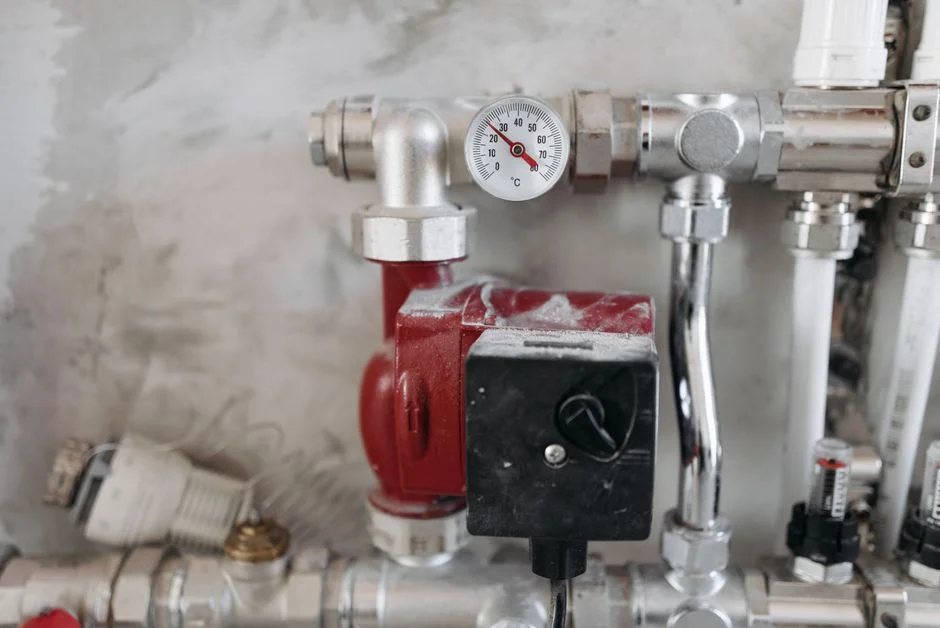
The installed treatment train must be tested against measured wastewater characteristics and the permitted discharge route, not brewery output alone. Obtain a process mass balance covering clean water, product-contact losses, wash water, floor drainage, cooling and other sanitary wastewater, storm water, laboratory wastewater, sludge and final discharge.
Compare actual and design hydraulic and organic loads with permitted conditions, available treatment capacity, redundancy and planned production changes. AB InBev’s 2021 CDP response reports that more than 97% of effluent was treated through biological treatment systems and 3% by municipalities under agreements with relevant authorities. It also reports primary solids separation, anaerobic reactors treating 80% of organic load, aerobic treatment for the remaining 20%, and tertiary treatment such as reverse osmosis at some operations. These are corporate practice benchmarks, not Hungarian permit requirements; establish the actual Hungarian configuration.
| Assessment area | Evidence required | Decision question |
|---|---|---|
| Hydraulic performance | Flow profile, peak batches, equalization and downtime records | Does the train remain within its permitted and design basis? |
| Organic loading | Characterization, production records and treatment-stage data | Can biological capacity absorb variability? |
| Solids handling | Sludge generation, storage and dewatering records | Can residuals be managed lawfully and reliably? |
| Monitoring reliability | Meter checks, laboratory records and chain-of-custody documentation | Can compliance be demonstrated? |
| Reuse feasibility | Water balance, demand profile and quality requirements | Does reuse create value without creating a new compliance risk? |
Evaluate screening, equalization, solids separation, biological treatment, clarification, nutrient management, disinfection where required, tertiary polishing, flow metering and sludge dewatering as separate asset and performance issues. A dissolved air flotation machine, for example, should be justified by wastewater solids and flow characterization rather than selected because a treatment stage appears incomplete.
Request at least one representative 12-month operating dataset covering flow, pH, phosphorus and nitrogen, organic load, settleable solids, discharge results, uptime, sludge production and chemical use. Reconcile that dataset with invoices, laboratory reports, maintenance records and authority submissions. Where solids dewatering is deficient, assess the feed characteristics and cake-handling route before specifying a plate and frame sludge filter press.
Reconcile Monitoring, Reporting and AB InBev VPO Integration
AB InBev’s 2021 CDP response reports 100% monitoring of water withdrawals, withdrawal quality and discharge volumes across its beverage operations, with most measurements performed daily and many plants monitored in three eight-hour shifts. It identifies pH, phosphorus and nitrogen, organic load and settleable solids among its water-quality indicators, measured at least daily. These are corporate data categories, not substitutes for the parameters, points and frequencies stated in the Hungarian permit.
Compare each permit condition with the site’s sampling points, frequencies, calibration records, laboratory accreditation, chain of custody and data-validation process. Check that laboratory methods are suitable for the discharge route and that the site can reproduce results if challenged. A permit-compliant laboratory report is still inadequate as corporate control evidence if flow-meter data, alarms, shift records or corrective actions are missing.
AB InBev’s 2021 CDP response describes a VPO qualification process taking approximately six to nine months. Use that disclosed internal timeline as the integration reference point, not a Hungarian statutory deadline. The qualification should test the management system as operated, including responsible ownership and the ability to identify and correct anomalies.
Create a joint commissioning plan before plant entry into VPO. It should cover flow meters, analyzers, sampling equipment, alarms, reporting interfaces, operator training, laboratory coordination and data ownership. Where chemical dosing is part of the control strategy, verify reagent inventory, calibration, fail-safe behaviour and operator competency before accepting an automatic chemical dosing system as the control point.
Do not defer statutory monitoring while corporate qualification proceeds. The pre-closing operating-control plan should continue all permit sampling, notification, record retention and reporting duties until the authority confirms the relevant transfer position and the buyer can demonstrate uninterrupted legal compliance.
Decide Whether to Upgrade, Retain or Replace the Treatment System
The treatment decision should follow the compliance evidence: retain and document an adequate system, upgrade a defined process deficit, or replace assets whose condition, capacity, automation or compliance record cannot support safe operation.
| Outcome | Evidence threshold | Transaction treatment |
|---|---|---|
| Retain | Permitted, hydraulically and biologically adequate, with reliable monitoring and maintainable assets | Document baseline, conditions and capital plan |
| Upgrade | Identified pretreatment, nutrient, solids, automation or reuse deficit | Define performance duty, acceptance tests and contingency |
| Replace | Asset condition, capacity, automation or compliance record cannot support operation | Price, schedule, permit and temporary-discharge risk |
Do not select equipment from generic flow data alone. Require wastewater characterization, operating-hour profiles, peak and batch loads, discharge route, permit conditions, land availability and reuse objectives. AB InBev’s 2022 CDP response states that many breweries recycle treated wastewater through anaerobic treatment and may use the resulting biogas in production processes. Assess biogas recovery only where the mass balance, local energy use and safety case support it.
The 2025 Samlesbury project associated a £7.8 million expansion investment with an on-site wastewater treatment facility and reported 5–8% lower gas consumption. Treat these as a documented AB InBev case example, not a Hungary cost or savings benchmark.
Compare the lowest-risk compliance solution with advanced treatment or reuse using whole-life cost, permit risk, operating labour, energy, chemicals, sludge volume and commissioning constraints. Where reuse or a tighter internal specification is being evaluated, an integrated MBR wastewater treatment system can combine biological treatment with membrane solids separation, but influent characterization and permit review must establish the required effluent quality first.
Structure the Pre-Closing and Post-Closing Action Plan
The transaction needs one auditable action register with priority, dependency, responsible party, evidence required, completion date, residual risk and post-closing verification method. Assign environmental, legal, operations, finance and the seller distinct responsibilities rather than leaving permit-transfer work with a generic project team.
- Before closing: Complete the permit register, sampling verification, process mass balance, site inspection, liabilities review, authority-confirmation plan and equipment condition assessment. The team should also use a food-sector plant acquisition wastewater diligence workflow and food-plant acquisition compliance checklist as structural references, not as substitutes for Hungarian legal review.
- At closing: Establish who holds each approval, allocate pre-closing liability, preserve records and issue an operating-control plan that maintains all permits, monitoring and discharge controls. Do not release closing protections while the permit holder or transfer mechanism remains uncertain.
- After closing: Complete corrective actions, integrate the site into VPO, reconcile baseline data, train operators, validate the monitoring system and review performance against both legal and corporate requirements.
Make unresolved permit-transfer questions, expired approvals, serious historical exceedances and unavailable baseline records explicit closing conditions, purchase-price adjustments, escrow, indemnity or insurance protections. The exact remedy depends on the transaction and legal advice.
Maintain one evidence trail from each obligation to its governing document, current status, responsible owner and closure evidence. At the final pre-closing review, ask whether AB InBev could explain every permit, exceedance, sampling gap and capital decision using retained records. If it could not, the residual issue is not closed merely because the transaction has completed.
Frequently Asked Questions
Can AB InBev operate the acquired brewery under the seller’s existing wastewater permit?
Do not assume that it can. Confirm the permit holder, legal scope and transfer requirements with the issuing authority and identify whether notification, amendment or reissuance is required. The acquisition is not automatic approval, and the seller’s historical obligations must be separately allocated.
How much wastewater-treatment capacity should be purchased for the Hungarian brewery?
Size from actual and forecast wastewater flows, batch peaks, load characterization, permit conditions, redundancy and planned production changes—not production volume alone. Before requesting a budget or quotation, require the site-specific wastewater characterization, operating-hour profile, discharge route and treatment objectives.
What is the lowest-risk way to bring an acquired brewery into AB InBev’s environmental system?
Preserve legal compliance first: keep required sampling, reporting, discharge controls and authority communications active through closing. Then correct data and process gaps through VPO qualification and monitoring integration. The 2021 CDP response describes this corporate qualification as taking approximately six to nine months.
Should the buyer choose an MBR or conventional biological treatment for a Hungarian brewery?
Select according to required effluent quality, load variability, footprint, sludge characteristics, operator capability, energy use and reuse objectives. Do not compare technologies until the permit route, wastewater characteristics and recovery or reuse needs are defined.
How should wastewater equipment suppliers be screened during an acquisition?
Require site-specific design data, permit references, FAT and SAT protocols, installed-base service evidence, spare-parts support and a documented commissioning and compliance-validation plan. Ask each supplier to identify which performance guarantees can be tested after installation and which remain dependent on operating conditions.