What Changes When Coca-Cola Acquires a German Bottling Plant
Wastewater compliance after a Coca-Cola acquisition depends first on the plant’s actual discharge route and current permit, not on the buyer’s corporate policy or an existing ETP’s appearance. An indirect discharge to a municipal sewer is governed by the sewer agreement and German pretreatment requirements; a direct discharge to surface water is governed by the applicable environmental permit and its technical conditions. The buyer should then test German legal duties, Coca-Cola’s internal water requirements and legacy-liability controls separately. An acquisition does not validate the existing ETP: permit scope, discharge route, hydraulic capacity, equipment condition and monitoring history remain deal-critical. For process selection, measured sugar- and CIP-driven loads should establish the design basis, not vendor assumptions or an undated corporate policy.
This framework follows the acquisition-control structure in a comparable beverage acquisition wastewater checklist, but it must be applied to the German plant’s current documents and discharge route.
Three layers must remain distinct in the transaction file:
- German legal requirements: the current permit, applicable discharge conditions, sewer arrangements, monitoring duties and any approval needed after the change in control.
- Coca-Cola requirements: internal wastewater-treatment and reporting rules adopted by the acquirer or its bottling system.
- Buyer controls: due diligence, price protection, indemnities, escrow, retrofit commitments and post-close verification of legacy exposure.
The corporate disclosure is dated and bounded: Coca-Cola’s Water Security 2022 response states that all approximately 900 facilities in its reporting system must report discharge volumes, treatment methods and effluent-quality records. It also describes an internal requirement for full wastewater treatment where no municipal system is available or municipal treatment is only partial. These are corporate reporting and stewardship requirements disclosed in 2022, not German permit limits or a 2026 statutory deadline.
The acquisition team therefore needs a document-based conclusion, not a policy-based assumption. Current permits, sewer agreements, regulator correspondence and monitoring records determine the enforceable position. A qualified German environmental engineer and counsel should verify classification and transfer requirements before the team commits to equipment scope.
Confirm the Discharge Route Before Choosing Equipment
The legal route changes the approval and treatment regime, so the discharge classification must be settled before equipment quotations or retrofit assumptions are developed. “Indirect industrial discharge” means the plant sends wastewater to a municipal sewer or another receiving treatment system; “direct environmental discharge” means the plant discharges to surface water under an environmental authorization. A mixed or delegated route requires stream-by-stream analysis rather than one site-wide label.
For an indirect discharge, obtain the sewer-use agreement, applicable pretreatment rules, discharge permit and any local annex or supplementary conditions. Ask for evidence that the plant’s current flow and pollutant concentrations are authorized. For a direct discharge, obtain the current German environmental permit, attached technical conditions, monitoring programme, designated receiving water, outfall details and permit-transfer or amendment status. Confirm with qualified German counsel and the competent authority whether ownership change requires notification, transfer, reapplication or amendment.
Map each waste stream to its destination. CIP cleaners, alkaline or acidic wash water, sugar-bearing process water, tank washings, cooling water, sanitary wastewater and stormwater may have different controls. A discrepancy between the permit, flow diagram and laboratory reports is a closing issue: do not assume the ETP treats every stream or that the site’s historical operation remained within the current authorization.
Use German wastewater treatment and compliance guides as navigational material, not as a substitute for the plant-specific authorization or written confirmation from the relevant authority.
| Classification | Documents to obtain | Key diligence question |
|---|---|---|
| Indirect discharge through municipal sewer | Sewer-use agreement, pretreatment rules, discharge permit, local annexes and supplementary conditions | Are the present flow, concentrations and waste streams expressly authorized? |
| Direct discharge to surface water | Current environmental permit, technical conditions, monitoring programme, receiving-water identification and outfall details | What change-of-control action does the permit and competent authority require? |
| Mixed or third-party route | Stream-by-stream flow diagram, receiving-system agreements and treatment contracts | Which stream enters which system, under whose limits, and with what monitoring responsibility? |
| Unclear or undocumented route | Physical outfall trace, flow records, invoices, correspondence and regulator confirmation | Is the site’s actual discharge route consistent with its permits and operating records? |
Do not derive permissible COD, BOD or TSS values from corporate disclosures or vendor references. Binding limits must come from the current permit, sewer authority or applicable German rules verified for this site and transaction.
Build the German Permit and Compliance File
A transaction-ready compliance file must show both present authorization and historical performance, because an active permit does not erase past exceedances or incomplete remediation. Request the current permit and all valid amendments, regulator correspondence, inspection reports, notices of violation, self-monitoring reports, discharge-monitoring records, sewer agreements and operating procedures. The file should identify every constraint attached to the actual discharge route.
HydropureWater’s 2026 Coca-Cola factory ETP due-diligence checklist recommends tracing notices and violations for the prior five years and unit-operation compliance for the prior 24 months. Use that as a buyer diligence control—not as a German statutory look-back period—and document any shorter or longer period required by the permit, sewer rules or counsel’s review.
Validate the evidence chain:
- Locate every sampling point and confirm that it represents the permitted discharge.
- Check flow-meter calibration and reconcile reported discharge with production, water-withdrawal and treatment-plant records.
- Review laboratory accreditation, chain-of-custody procedures and analyte methods.
- Compare permits and sewer conditions with operating procedures, bypasses, alarms and corrective actions.
- Trace each notice of violation to documented closure and evidence that the corrective action remained effective.
Confirm the change-of-control path with the competent authority or qualified German counsel. Do not assume that a transaction automatically transfers an authorization, nor that notification alone is sufficient. The required route depends on the permit and applicable German requirements.
Coca-Cola’s 2022 CDP response is also a useful corporate data test. It states that approximately 900 system facilities must report discharge volumes by treatment method and maintain discharge-quality records, with periodic testing where wastewater is treated on site. The buyer should test whether the acquired plant can populate those fields consistently after closing; that corporate requirement does not replace German monitoring or self-monitoring duties.
Create an action register for expired permits, missing analytical records, unreported bypasses, inconsistent flow data, incomplete sludge records and corrective actions without closure evidence. Assign an owner and deadline to each item. Any unresolved permit validity or transfer issue should be evaluated as a condition precedent, purchase-price adjustment, indemnity or pre-close remediation—not absorbed into an equipment contingency.
Characterize the Wastewater Before Sizing the ETP
An ETP cannot be sized responsibly from production volume or a single composite sample. HydropureWater’s 2026 field-data screening range for beverage-bottling influent is BOD of 1,500–4,000 mg/L and COD of 3,000–8,000 mg/L, attributed to residual sugars and CIP chemicals. These are supplier reference values, not German discharge limits or site measurements. The buyer needs a source-separated sampling plan covering production wastewater, batch CIP discharges, cleaning chemicals, floor washings, laboratory drains, cooling water, sanitary flows and stormwater.
Obtain diurnal and seasonal flow records, maximum-day and instantaneous peak flow, production shifts, campaign changes, clean-in-place frequency and expected post-acquisition growth. Do not average incompatible streams into one generic wastewater sample: dilution may conceal batch sugar or chemical loads, while combined sampling may obscure the source of an exceedance.
HydropureWater’s 2026 reference recommendation sizes equalization at 1.5–2× average diurnal flow to dampen batch CIP surges. Treat this as a supplier design recommendation, not a German statutory requirement. Verify it against actual batch discharge timing, available footprint and downstream hydraulics.
Test pH, temperature, COD, BOD, TSS, oils and grease, nutrients, conductivity, metals and substances relevant to the plant’s products and cleaning chemicals. The permit or sewer agreement determines which analytes and sampling frequencies control; the analytical list should also support the selected biological process and any reuse assessment.
Use at least one representative campaign before a major redesign. A short campaign can miss seasonal sugar loads, holidays, production changes or atypical cleaning cycles, so define the campaign duration and operating conditions in advance. Cross-check laboratory results against operating logs and mass-balance calculations rather than treating the laboratory report as the sole design record.
| Design input | Evidence status | Why it changes the decision |
|---|---|---|
| Flow: average, maximum day, instantaneous peak | Site records and representative campaign required | Controls equalization, pumping, reactor and secondary-treatment hydraulics |
| COD and BOD | HydropureWater 2026 supplier screening range; site testing required | Controls organic-load removal and biological loading |
| Batch CIP sequence and rejected loads | Production and cleaning records required | Determines peak equalization and chemical control |
| pH and temperature | Source-separated influent testing required | Influences biological stability, neutralization and reactor conditions |
| TSS, oils and grease, nutrients and product-specific substances | Site-specific testing and permit/sewer criteria required | Defines pretreatment, biological design and discharge compliance |
| Equalization and biological loading | HydropureWater 2026 supplier reference values | Provides a comparison baseline, not final procurement guarantees |
HydropureWater’s 2026 biological comparison baseline uses anaerobic digestion at 6–10 kg COD/m³·day with 20–30 day HRT, followed by aerobic polishing at 0.3–0.6 kg BOD/m³·day with 4–8 hour HRT. These are reference parameters. Final sizing must use the plant’s measured mass load, reactor configuration, temperature, equalization performance, nutrient conditions and enforceable effluent limits.
Select a Treatment Train That Fits the Permit and Reuse Strategy
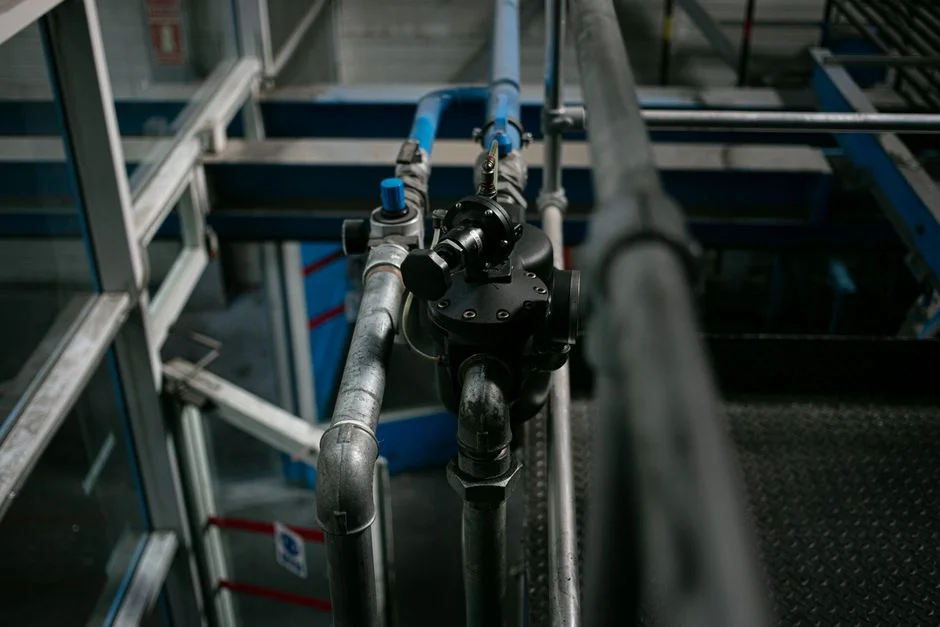
The selected train must connect the permit objective to the plant’s actual mass load, available footprint, energy balance and reuse plan. Start with source control and equalization. A rotary mechanical bar screen can protect downstream equipment, while equalization controls batch surges and improves biological stability. HydropureWater’s 2026 supplier reference places pH correction at 6.5–7.5 before biological treatment; that is a design recommendation, not a German limit.
For sugar- and soluble-organic-dominated beverage wastewater, compare an anaerobic-first train with aerobic polishing against a fully aerobic route. Paques states that soft-drink wastewater is “extremely well suited” to anaerobic treatment and that this can support discharge compliance, reduce discharge costs and generate green energy. Its Coca-Cola case also reports that bottling plants in Germany have selected Paques technology. That supports technical relevance, but it does not establish the acquired plant’s installed process or permit compatibility.
Evaluate each route against the actual authorization and commercial constraints:
| Decision factor | Anaerobic first, then aerobic polishing | Fully aerobic route |
|---|---|---|
| Organic-load fit | Paques identifies soft-drink wastewater as highly suited to anaerobic treatment | Requires site-specific reactor and aeration sizing for the measured COD and BOD load |
| Energy and biogas | Creates a potential biogas-use workstream; validate yield, quality and off-take | Higher aeration demand; evaluate energy price and process resilience |
| Permit fit | Must demonstrate final aerobic effluent compliance | Must demonstrate compliance at the permitted discharge point |
| Site constraints | Requires reactor volume, gas handling and downstream polishing capacity | Depends on aeration, basin volume, power and sludge-handling requirements |
| Reuse objective | Potential for further polishing or MBR integration | May be simpler where no water reuse is required |
Where compact biological treatment or reuse is required, assess an integrated MBR wastewater treatment system. HydropureWater describes its MBR as activated sludge combined with submerged PVDF membrane filtration for industrial process-water and reuse applications from 10 to 2,000 m³/day. Treat that range as supplier-described application capacity, not confirmation that MBR is suitable or required at the target plant.
Paques states that its CIRCOX carrier-based aerobic system can simultaneously remove BOD, nitrify ammonium and remove nitrogen, and that the treated effluent can be discharged directly to surface-water bodies. Direct-discharge suitability still requires project-specific design and confirmation under the plant’s current permit.
Do not add disinfection or tertiary treatment without a defined permit or reuse trigger. HydropureWater’s 2026 framework recommends disinfection only where the consent or water-reuse target requires it. Assess biological sludge, chemical sludge, storage, dewatering and disposal separately. A plate and frame sludge filter press may form part of a dewatering train, but equipment selection must follow sludge characteristics, storage access, destination and manifest requirements rather than the biological process alone.
Convert Environmental Findings Into the Deal Terms
Wastewater findings should be translated into enforceable transaction terms, not a vague environmental exception. Classify each issue by compliance status, physical condition, hydraulic capacity, historical performance and consequence of failure. HydropureWater’s 2026 framework uses Pass, Marginal and Fail ratings, which can provide a consistent internal classification, but the buyer must define the underlying unit-operation criteria and avoid importing US legal labels into a German transaction.
HydropureWater’s 2026 field-data estimate places an all-in retrofit at $1.5M–$6M for a 1,000–2,500 m³/day plant, with sludge-lagoon remediation and clarifier or aerobic-basin replacement identified as major cost components. This is a supplier field-data benchmark, not a German acquisition budget or binding quotation. Actual cost depends on the permit, site condition, treatment objectives, scope and 2026 supplier pricing.
Use a quantified model with separate lines for ETP rehabilitation, equalization, biological capacity, secondary treatment, sludge handling, monitoring, permits, commissioning and contingency. Tie each item to a documented failure and the proposed contractual remedy.
| Finding and rating | Preferred transaction response | Required support |
|---|---|---|
| Pass: compliant performance, adequate capacity and acceptable condition | Normal warranty plus monitored post-close obligations | Permit, monitoring history, calibration records and physical audit |
| Marginal: limited headroom, aging equipment or incomplete evidence | Price adjustment, funded remediation plan, enhanced covenant or escrow | Costed repair model, capacity calculation and enforceable milestone |
| Fail: expired authorization, material exceedance, bypass, critical capacity deficit or legacy contamination concern | Pre-close remediation, condition precedent, environmental indemnity or combination | Regulator position, consultant report, quantified exposure and remedy timetable |
Use pre-close remediation, a purchase-price adjustment, a dedicated environmental indemnity, escrow or milestone-based remediation according to the modelled exposure. HydropureWater’s 2026 framework recommends a separate environmental cap reflecting the modelled reserve rather than relying on the general warranty cap. It also recommends contractual representations covering current compliance, five years of notices of violation, sludge disposal and manifests, and groundwater conditions at the plant boundary. Those are buyer-control proposals, not terms required by German law.
Make regulator acknowledgement of any required consent-transfer application a condition precedent where German counsel and the authority support that approach. Define the environmental indemnity’s subject matter, duration, cap, exclusions, claim procedure and interaction with the escrow. Avoid a generic promise to “remediate all environmental conditions”; define the identified condition, scope, evidence standard and completion test.
HydropureWater’s acquisition article presents a 12-month post-close deadline as a Coca-Cola-policy-aligned buyer milestone. It is not a German statutory deadline. Use it only if the buyer adopts it expressly and ties it to funded retrofit milestones, sampling, regulator acceptance where relevant and escrow release.
Pre-Close and Post-Close Delivery Plan
A defensible delivery plan links technical evidence to regulatory action, financial modelling and contract drafting before closing. HydropureWater’s 2026 recommended sequence is: desktop permit review; Phase I and Phase II environmental site assessment; physical ETP audit; representative influent and effluent sampling; sludge inventory; successor-liability review; and a three-scenario CAPEX, OPEX and reserve model. For a German transaction, local counsel must review the legal transfer route and regulatory deliverables rather than treating this sequence as a procedural substitute.
HydropureWater gives 35–55 days for end-to-end confirmatory diligence and a separate 14-day pre-close work plan. These are supplier timing benchmarks, not confirmed German regulator timetables. Confirm the actual authority process and permit-holder readiness before entering them into the transaction schedule.
- Complete the desktop permit, sewer-agreement and monitoring review.
- Complete the physical ETP, outfall, sludge-storage and drainage walk-down.
- Lock the unit-operation scorecard before interpreting sampling results.
- Complete representative sampling and reconcile it with production and flow records.
- Receive the Phase II report and successor-liability analysis.
- Build the CAPEX, OPEX and reserve scenarios.
- File the required consent-transfer or amendment documents.
- Finalize SPA schedules, indemnities, escrow and remediation milestones.
| Stage | Core deliverable | Decision gate |
|---|---|---|
| Desktop review | Permit and sewer compliance file | Route, permit validity and transfer path identified |
| Physical and environmental assessment | ETP walk-down, Phase I/II findings and sludge inventory | Legacy conditions and critical units identified |
| Confirmatory sampling | Representative influent and effluent data | Laboratory and operating records reconciled |
| Financial modelling | CAPEX, OPEX and reserve scenarios | Exposure linked to a contractual remedy |
| Regulatory and deal documentation | Transfer filing, SPA schedules, indemnity and escrow | Conditions precedent and milestones signed |
| Post-close control | Discharge, hydraulic, condition, sludge and corrective-action tracking | Missed interim requirements escalated immediately |
Reconcile final sampling, the Phase II environmental report, the ETP walk-down, consent-transfer filing and sale-and-purchase-agreement schedules before closing. After closing, track discharge quality, hydraulic loading, equipment condition, sludge records and corrective actions against the negotiated milestones. Missing data should trigger escalation; it should not be treated as evidence of compliance.
Frequently Asked Questions
What wastewater requirements apply when Coca-Cola acquires a plant in Germany?
Determine first whether the plant has an indirect industrial discharge, a direct environmental discharge, a mixed route or another treatment arrangement. For indirect discharge, verify the sewer agreement, German pretreatment rules and permitted flow and concentrations; for direct discharge, verify the current environmental permit, technical conditions, monitoring programme, receiving water and change-of-control requirements. Then assess Coca-Cola’s internal treatment and reporting rules separately from German law and the buyer’s legacy-liability controls.
How much should the buyer budget for a beverage-bottling ETP retrofit?
HydropureWater’s 2026 field-data benchmark is $1.5M–$6M for a 1,000–2,500 m³/day plant. It is not a quotation or German acquisition budget. Request a site-specific model that separates equalization, reactor rehabilitation, aerobic capacity, clarification or MBR, sludge handling, monitoring, permits, commissioning and contingency; permit conditions, physical condition and measured loads can move the result outside the benchmark.
Which measurements determine treatment-plant sizing?
Measured average, maximum-day and instantaneous flow determine hydraulic adequacy, while COD and BOD determine organic loading. TSS, pH, temperature, batch CIP behavior, oils and grease, nutrients and relevant product-specific substances affect pretreatment, biological stability and permit compliance. The article’s equalization and biological loading values are HydropureWater 2026 supplier references, not final procurement guarantees or German limits.
How should the buyer select and contract an ETP supplier?
Require a site-specific mass balance, defined guarantee conditions, treatment-performance evidence for comparable wastewater, a sludge-management plan, explicit controls and instrumentation scope, commissioning tests, and a lifecycle-cost comparison. Also require the supplier to state which design values are statutory, permit-derived, measured or vendor assumptions. A high-efficiency sedimentation tank or other proposed unit should therefore be selected only after the permit route, measured load and downstream process are defined.