What MABR Can and Cannot Do in a Canning Plant
MABR can be suitable for canned-food wastewater when it is one biological stage in a controlled treatment train, not a stand-alone solution. Gas-permeable membranes supply oxygen to an attached biofilm, which can support nitrification and denitrification, but equalization, screening, FOG and solids removal, pH control, downstream solids separation and disinfection may still be required. Selection must use production-based flow and load data, event sampling for washdown and cleaning periods, and the applicable discharge or reuse criteria. No supplied source establishes a universal MABR loading rate or guarantees for canned-food plants.
A membrane aerated biofilm reactor, or MABR, transfers oxygen through gas-permeable membranes to an attached biofilm rather than introducing air at a conventional bubble-aeration interface. Oxygen supports aerobic organisms at the membrane surface, while outer biofilm layers can remain anoxic or anaerobic. Under suitable feed composition, alkalinity, pH and temperature conditions, that stratification can support simultaneous nitrification and denitrification within the reactor.
That biological advantage does not convert MABR into a solids filter. Biological solids and residual suspended material still require separation when the discharge permit or reuse specification includes TSS or filtration requirements. The treatment train may also require disinfection, filtration or other polishing before reuse.
Commercial claims must be kept in their original context. Mejec reports nitrification rates exceeding 2 g N/m²/day and biofilm densities reaching three times those of conventional plastic media, according to HydropureWater’s broader MABR food-processing design guide (2026). These are not universal design constants. They do not remove upstream FOG, protect the attached biological community from sanitizer shocks or guarantee reuse quality.
The practical distinction is straightforward: MABR can improve biological oxygen transfer and support nitrogen management, but it cannot remove problematic FOG, capture upstream food solids, or compensate for chemical excursions. Those constraints must be resolved before reactor selection. The MABR design guide therefore treats the reactor as one stage in an auditable treatment train.
Build a Production-Based Canning Wastewater Profile
Canning wastewater must be characterized by production condition and waste stream because washdown, product changes and sanitizing events can alter flow and composition independently. A single composite average cannot establish reactor capacity, pretreatment duty or an acceptance-test boundary.
- Map process water, product washdown, equipment washdown, floor washdown, laboratory drains and cleaning or sanitizing discharges separately.
- Sample normal production, peak production, product changes, washdown, cleaning and sanitizing events.
- Measure flow and organic, nitrogen, solids, FOG, pH, temperature, alkalinity, conductivity and toxicity.
- Record production shifts, chemical inventory and future line-expansion plans.
- Define the sewer-pretreatment limit, discharge permit or reuse target before selecting equipment.
Event sampling is essential. A reactor selected for the average biodegradable load may still fail when a concentrated food-oil release, suspended-solids dump or sanitizer discharge reaches the biological stage. The data request should cover flow, BOD, COD, ammonia, total nitrogen, phosphorus, TSS, FOG, pH, temperature, alkalinity, conductivity and evidence of toxicity, consistent with the MABR food-processing design guide (2026).
| Design-basis input | Information required | Reason it affects MABR selection |
|---|---|---|
| Production schedule | Shifts, product changes, washdown periods, cleaning events and planned line expansion | Defines hydraulic and load peaks, including events that may require segregation or storage |
| Stream mapping | Flow and composition for each wastewater source before combination | Identifies concentrated FOG, solids, sanitizer or laboratory streams |
| Organic and nitrogen load | BOD, COD, ammonia, total nitrogen and phosphorus | Establishes biological demand, nitrogen objectives and air requirements |
| Physical and chemical condition | TSS, FOG, pH, temperature, alkalinity, conductivity and toxicity | Defines pretreatment, inhibition risk and seasonal operating limits |
| Service objective | Permit, sewer-pretreatment limits or reuse criteria | Determines required solids separation, polishing and disinfection |
Equalization should be evaluated as controlled storage, not as permission to mix incompatible discharges. Identify effective storage time, mixing behavior, event capacity, bypass provisions and access. Contaminated streams may need segregation so a cleaning dump or high-strength washdown cannot destabilize the biological reactor.
The receiving sewer and intended reuse can lead to different treatment scopes for the same wastewater. Food and beverage plants near Marietta must address local sewer limits as discussed in this food-plant sewer-limit guide. A permit condition is an acceptance requirement, while a sewer-pretreatment limit may protect downstream assets; neither should be inferred from generic food-processing data.
Control FOG, Food Solids and Cleaning Chemicals Before MABR
FOG, floating food solids and cleaning-chemical excursions must be controlled before the biological stage because a membrane aerated biofilm reactor cannot reliably correct an unstable influent. The normal treatment sequence is screening, equalization, FOG and solids control, pH or chemical adjustment where required, MABR biological treatment, solids separation, polishing if required, and disinfection or reuse.
- Screening: Remove coarse material before it reaches pumps, equalization equipment or membranes.
- Equalization: Buffer production washdown and batch dumps without hiding incompatible chemical events.
- FOG and solids control: Remove floating oils, grease, settleable food material and colloidal solids.
- pH or chemical adjustment: Keep biological feed within the supplier’s operating envelope and manage chemical interlocks.
- MABR: Apply biological treatment only after the feed has been stabilized.
- Separation and polishing: Remove biological solids and residual contaminants required by the service objective.
- Disinfection: Address microbiological requirements before discharge or reuse.
Where suspended solids, FOG or floating material are present, DAF pretreatment should be evaluated using waste-specific performance evidence. Equipment name and clean-water capacity are insufficient. The bidder should demonstrate removal of the actual contaminants of concern under representative loading.
| Stage | Required submittal | Acceptance focus |
|---|---|---|
| Screening | Screen type, opening, duty, solids handling and access | Coarse material removal without loss of hydraulic capacity |
| Equalization | Effective volume, mixing arrangement, event response and bypass provisions | Documented response to washdown and cleaning discharges |
| DAF and solids control | Actual-waste test data, chemical demand and sludge generation | FOG and suspended-solids removal ahead of MABR |
| Chemical adjustment | Reagents, dosing range, interlocks, containment and discharge response | Protection of biology and compliance during excursions |
| Downstream solids handling | Sludge route, dewatering basis and disposal method | A defined route for DAF and biological solids |
The industrial DAF pretreatment system is one option for this boundary. HydropureWater’s DAF catalog covers 4–300 m³/h across 13 standard models and identifies food-processing applications, according to the company’s product information (2026). That range does not determine MABR sizing or demonstrate performance on canning wastewater.
Cleaning chemicals require particular attention. Sodium hypochlorite and citric acid may be common cleaning agents, but neither is universally suitable for every membrane material or wastewater condition; the selected membrane manufacturer’s protocol governs compatibility. Specify chemical feed, interlocks, dosing range, containment and the consequences of an accidental discharge.
DAF and other solids-removal stages also generate sludge. Select downstream equipment from the characteristics and volume of that waste. HydropureWater identifies a plate-frame filter press, while a rotary mechanical bar screen can address upstream screening; neither selection substitutes for waste-specific solids characterization.
Size the MABR from Site Data, Not Generic Food-Processing Rules
MABR sizing must begin with measured hydraulic and organic conditions because the supplied research provides no generic food-processing MABR loading rule. Average flow alone is not a sufficient basis: the calculation must address production schedules, equalization response, cleaning-event storage and bypass or off-line storage availability.
Organic removal should be based on the measured biodegradable fraction rather than total COD alone. Ammonia load, nitrogen-removal objectives, air demand and mixing requirements should be calculated separately. Supplier calculations should identify every loading rate, oxygen-transfer assumption, temperature basis, fouling allowance and safety factor.
Nitrification remains conditional on available ammonia, sufficient alkalinity, suitable pH and temperature, and non-inhibitory influent conditions. Biofilm stratification may support simultaneous nitrification and denitrification, but the proposed anoxic function also requires adequate biodegradable carbon and mixing. A reactor zoning diagram without mass balances is not a design.
| Supplier calculation | Information to disclose | Buyer review question |
|---|---|---|
| Hydraulic basis | Average and peak flow, production schedule, equalization behavior and bypass provisions | Does the calculation include cleaning and washdown events? |
| Organic capacity | Measured biodegradable organic load, reactor zoning and air demand | Is total COD being used as a substitute for biodegradable demand? |
| Nitrogen management | Ammonia load, alkalinity, carbon availability, mixing and recyculation | Is simultaneous nitrification and denitrification supported by the feed? |
| Membrane system | Membrane area, configuration, solids inventory, fouling allowance and temperature basis | Are assumptions project-specific and inspectable? |
| Operations | Excess-sludge withdrawal, redundancy, inspection access and cleaning method | Can membranes be serviced without dismantling unrelated infrastructure? |
The design should also address membrane fouling, biofilm sloughing, uneven air distribution, inadequate mixing, odor, low-temperature performance and inspection access. The automatic chemical dosing system may support pH or chemical control, but its selection must follow the confirmed process chemistry, required flow, materials, controls and maintenance strategy.
For a retrofit, verify basin geometry, depth, airflow arrangement, hydraulic profile, controls and maintenance access. Fluence’s SUBRE product is described as suitable for installations at basin depths of 1.5–6 m, with a design range of 2,000–100,000 m³/d (0.5–25 MGD), according to Fluence’s MABR product information (2026). Those values belong to SUBRE; they are not universal MABR operating limits.
Retrofit feasibility also requires an airflow and mixing review. Insufficient mixing can restrict mass transfer or denitrification, while poor access can turn routine membrane cleaning into a major outage. The seller should show where untreated bypasses could occur and how power loss, unequal air distribution and excess sludge are managed.
Choose MABR, MBR or SBR by the Effluent Objective
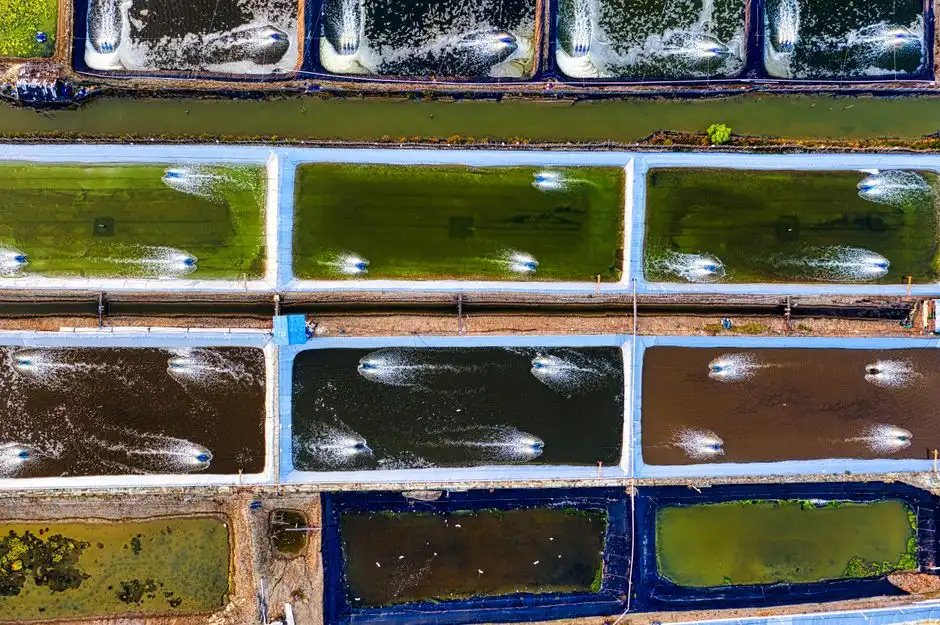
MABR should be selected only after the pretreatment risks are controlled and the final effluent objective is defined. The biological mechanism may favor MABR for compact treatment, passive oxygen transfer, retrofit potential and nitrogen management, but the downstream solids requirement can change the preferred technology.
| Technology | Process characteristic | Evaluate when | Principal review issue |
|---|---|---|---|
| MABR | Oxygen passes through gas-permeable membranes to an attached biofilm | Compact biological treatment, retrofit potential or nitrogen management is important | Downstream solids separation and polishing are still required |
| MBR | Biological treatment is combined with submerged membrane filtration | Stringent solids separation or near-reuse-quality treatment is central | FOG control, equalization and site validation remain necessary |
| SBR | Fill, react, settle and discharge occur on a time-based cycle | The production schedule, discharge route and staffing model support cycle-based operation | Cycle timing, equalization and solids handling must match the plant load |
| Activated sludge | Suspended biomass is aerated in a continuous basin | Reliable existing infrastructure, hydraulic capacity and operators are available | A like-for-like retrofit may be more defensible than changing technology |
The integrated MBR wastewater treatment system offers a distinct separation proposition. HydropureWater’s 2026 product information specifies submerged PVDF filtration below 1 μm, a footprint stated as 60% smaller than conventional systems, and package availability from 10–2,000 m³/day. These are catalog attributes, not project guarantees; the comparison is detailed in this 2025 data-driven comparison.
For canning applications, review complete installed scopes rather than reactor prices alone. Pretreatment, biological capacity, solids handling, aeration, controls, redundancy, footprint, labor, maintenance, downtime exposure and waste disposal can change the ranking. MBR treatment options for canned-food wastewater remain worth evaluating where solids separation is central.
The decision sequence is therefore conditional. Choose MABR when compact biology and nitrogen management justify a downstream separation stage. Choose MBR when integrated solids separation is essential. Choose SBR when cycle-based settling fits the operating model. Retain activated sludge when the existing system is reliable and a technology switch cannot be justified. None of these decisions should precede FOG, solids, shock-load, pH and toxicity control.
Require Evidence That Can Be Audited
An MABR bid becomes auditable when its design basis, operating boundary and acceptance tests can be traced to the actual canning wastewater. Supplier claims should be converted into calculations and measurable conditions rather than accepted as general statements about reactor performance.
Require each bidder to submit its design basis, process flow diagram, preliminary sizing calculation, membrane configuration, aeration calculation, control narrative, operating limits, commissioning plan and proposed acceptance tests. The guarantee should identify influent limits, production schedules, exclusions, correction rules, analytical methods and sampling points for flow, BOD, COD, ammonia, total nitrogen, TSS, energy, sludge production, odor, membrane condition and availability.
| Bid component | Required evidence | Audit test |
|---|---|---|
| Design basis | Production-based flow and load data, event sampling and service objective | Every capacity calculation traces to project data |
| Process guarantee | Defined influent envelope, operating schedule, analytical methods and correction rules | No guarantee relies on an undefined average wastewater |
| Energy claim | Existing blower power, aeration strategy, flow, loads, ambient conditions and treatment objective | Baseline and measurement method are stated |
| Membrane and fouling plan | Inspection access, cleaning protocol, fouling allowance and replacement method | Maintenance is feasible under site access and safety constraints |
| Operability | Instrumentation, alarms, standby capacity, spares, training, remote monitoring and power-loss response | Acceptance covers normal operation and defined failure modes |
| Installed cost | Separate line items for the complete treatment scope | Quotes are comparable and include excluded or provisional costs |
Energy claims require a recorded baseline. Fluence reports up-to-90% reductions in aeration energy, up-to-50% reductions in overall energy and up-to-30% reductions in total energy for a SUBRE retrofit, according to Fluence’s MABR product information (2026). These are manufacturer claims, not guaranteed food-plant results, and should not be transferred into a bid without site-specific verification.
Pilot or side-stream testing should be required when variability, FOG risk, toxicity, seasonal production or unusual cleaning events could materially affect the biology. The pilot must expose the proposed feed to fouling, biofilm establishment and cleaning-cycle behavior; a short test with averaged wastewater cannot establish those conditions.
Operability is part of acceptance. Verify membrane inspection and cleaning access, instrumentation, alarms, standby capacity, spare parts, operator training, remote monitoring, power-loss response and safe removal or replacement procedures.
Separate quotations for pretreatment, biological equipment, membranes, air systems, equalization, controls, sludge handling, utilities, labor, maintenance, downtime and disposal. The supplied research contains no canned-food MABR CAPEX or OPEX figures. A defensible budget therefore requires bids against the approved design basis and a clear list of exclusions; the food-processing DAF equipment selection guide supports the same need to define pretreatment performance before assigning cost.
Frequently Asked Questions
Is MABR suitable for canning wastewater?
MABR can be suitable when the wastewater is biologically amenable and upstream FOG, solids, pH and cleaning-chemical events are controlled. It is not a stand-alone treatment train: confirm the need for equalization, solids separation, polishing and disinfection against the applicable permit or reuse target.
What data should be used to size an MABR reactor?
Require average and peak flow, production shifts, washdown and cleaning events, BOD, COD, ammonia, total nitrogen, phosphorus, TSS, FOG, pH, temperature, alkalinity, conductivity and toxicity. Ask the supplier to show how those inputs determine membrane area, air demand, reactor zoning, equalization response and fouling allowance; no supplied source establishes a universal canning-wastewater MABR loading rate.
How much does an MABR system for canned-food wastewater cost?
The research provides no defensible price for a canned-food MABR installation. Request comparable installed quotations covering pretreatment, equalization, biological equipment, membranes, aeration, controls, sludge handling, utilities, commissioning, maintenance and disposal, and require each bidder to identify exclusions, provisional sums, warranty terms and correction factors.
Which supplier and compliance evidence should a buyer require?
Select against a complete submittal: project-specific calculations, process flow diagram, membrane configuration, operating envelope, control narrative, pilot rationale where variability or toxicity is material, and performance tests tied to the permit, sewer or reuse criteria. Ask how the supplier will demonstrate the result with actual wastewater, defined sampling points and analytical methods; if pilot or site-specific validation is necessary, make it an explicit commercial and acceptance condition.