
When MBR Is the Right Fit for Canning Wastewater
An MBR can be used for canned food processing wastewater, but it should not be treated as a stand-alone clarifier. Canning wastewater usually requires a complete treatment train: equalization, removal of suspended solids and oil and grease where present, fine screening, biological treatment for biodegradable organics, membrane separation, and any required disinfection. The membrane retains microorganisms and separates solids; it does not independently remove all dissolved contaminants. For final equipment selection, obtain a production-based wastewater profile, reuse or discharge criteria, average and peak flows, and membrane-fouling data. EPA guidance notes that MBR peak design flow should generally not exceed 1.5–2 times average flow without added capacity or equalization, and that fine screening immediately before the membrane is essential.
Canning plants need to characterize wash water and process residuals across normal production, peak production, washdown, cleaning, and sanitizing cycles. These flows can change with the product schedule, and the wastewater can contain suspended solids, oil and grease where present, biodegradable organics, and cleaning or sanitizing compounds. The design basis should therefore be a process-based sampling plan rather than one composite sample.
An MBR combines a suspended-growth biological reactor with membrane filtration. EPA states that the membrane filtration system can replace the secondary clarifier and sand filters used in a typical activated-sludge system, while allowing a higher biomass concentration and a smaller bioreactor. The resulting high-quality effluent, low suspended solids and bacteria, compact installation, and automation potential make MBRs relevant to industrial effluent reuse, provided that the reuse criteria are defined before equipment selection.
The limitation is equally important. EPA explains that MBRs are effective for retaining microorganisms and removing solid material, but removal of dissolved wastewater components must be facilitated by additional treatment steps. A candidate application is therefore not a guaranteed solution: final suitability depends on wastewater characterization, the discharge or reuse target, the production schedule, and verified pretreatment performance. A supplier’s process proposal should address all four items rather than rely on a generic food-processing duty.
The Wastewater Variables That Change the MBR Design
Canning wastewater design begins with a production-based sampling plan covering normal production, peak production, washdown, cleaning, and sanitizing periods, rather than relying only on a single composite sample. The resulting profile should be tied to the operating schedule so that wash-water surges, cleaning events, and production-driven load changes remain visible in the design basis.
Request average flow, peak flow, organic load, suspended solids, oil and grease where present, pH, temperature, conductivity, and the applicable discharge or reuse requirements. These are not interchangeable parameters: hydraulic demand affects membrane area and equalization, while organic and solids loading affect biological treatment, fouling control, and sludge production. EPA identifies influent characteristics, effluent requirements, and flow data as basic inputs for MBR design.
Do not infer removal performance for a canning plant from EPA municipal examples. Require each supplier to tie the proposed process to the actual wastewater characterization and permit or reuse basis. A municipal installation may demonstrate the general separation principle, but it does not establish the performance of a food-processing wastewater train.
The principal screening risks are suspended solids, fibrous debris, grease or oil carryover, and chemically conditioned solids that are not adequately removed upstream. These materials can foul or damage membranes, obstruct the fine screen, and increase cleaning demand. For projects where oil, grease, or floating material is present, DAF versus clarifier selection for food-processing wastewater should be resolved with waste-specific testing rather than by equipment name alone.
| Design input | Why it matters to the MBR | Information to request |
|---|---|---|
| Average and peak flow | Sets hydraulic capacity and reveals whether equalization or added membrane capacity is required. | Production-based hydrograph and cleaning-event flows. |
| Organic load | Affects biological reactor design, oxygen demand, and fouling conditions. | Load range tied to production and washdown periods. |
| Suspended solids, oil and grease, and fibrous debris | Defines the pretreatment required to protect the membrane. | Characterization by sampling period and, where relevant, waste-specific DAF testing. |
| pH, temperature, and conductivity | Influence biological activity, membrane operation, and chemical-use conditions. | Operating range and any abrupt change during production or sanitizing. |
| Discharge or reuse criteria | Determines whether polishing or disinfection is required after the MBR. | Applicable limits and intended reuse standard. |
EPA’s preliminary peak-flow check is that peak design flow should generally be no more than 1.5–2 times average design flow; beyond that range, additional membranes or equalization are needed (EPA, 2021). Equalization should be assessed as both a hydraulic and process-control measure because it can reduce shock loading and peak membrane demand. Its required volume and operating strategy still depend on the measured production and cleaning profile.
Build the Treatment Train From Wastewater to Reuse
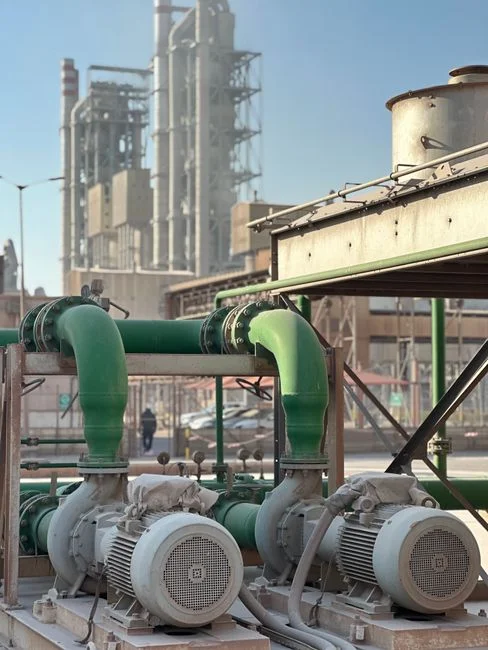
The recommended decision sequence is to characterize the wastewater and define the reuse or discharge target; equalize flow and load; remove settleable and floating material; screen fibrous debris; provide biological treatment; apply membrane separation; and then disinfect or polish as required. This sequence establishes why the MBR is only one part of the canning plant’s treatment strategy.
- Define the final water use and applicable discharge or reuse requirements.
- Establish average flow, peak flow, and the production-linked wastewater profile.
- Evaluate equalization for hydraulic peaks and load shocks.
- Select solids, oil and grease, and floating-material removal where required.
- Install fine screening immediately before the membrane system.
- Provide biological treatment for biodegradable organics and appropriate nutrient removal.
- Separate solids with the MBR, recycle retained solids, and control sludge accumulation by wasting.
- Apply disinfection or polishing only where the final use requires it.
For wastewater containing suspended solids, oil and grease, or floating material, dissolved air flotation pretreatment is an option to evaluate. Its duty should not be assigned from a generic description: require waste-specific performance data for the canning wastewater, including the contaminants that must be removed before the membrane.
Fine screening immediately before the membranes is required. EPA’s 2021 fact sheet states that all MBRs need a 1–3 mm cutoff screen, depending on the manufacturer; hollow-fiber systems typically require 1–2 mm screening, while plate systems require 2–3 mm. The screen must be maintainable because it requires frequent cleaning, and larger debris should be removed upstream where practical.
| Process stage | Primary function | Procurement question |
|---|---|---|
| Characterization and target definition | Establishes the wastewater and final-use basis. | Which production and cleaning periods define the design? |
| Equalization | Reduces hydraulic peaks and process shocks. | What working volume and mixing strategy are required? |
| DAF or solids removal | Removes relevant suspended solids, oil and grease, or floating material. | What performance has been demonstrated on the actual waste? |
| Fine screen | Protects the membrane from fibers and debris. | What cutoff does the selected membrane manufacturer require? |
| Biological reactor | Removes biodegradable organics and supports biomass retention. | How are reactor volume and oxygen transfer determined? |
| Membrane separation | Retains microorganisms and most suspended solids while producing permeate. | What membrane area, design flux, cleaning method, and redundancy are proposed? |
| Disinfection or polishing | Addresses site-specific reuse or permit requirements. | Is this step required by the agreed effluent specification? |
| Sludge handling | Controls accumulated solids and prepares waste for disposal. | How will wasting, thickening, and dewatering be performed? |
During membrane separation, permeate passes through the membrane while microorganisms and most suspended solids are retained. The retained solids are recycled to the biological reactor, and periodic sludge wasting controls accumulation and the solids retention time. EPA notes that MBR permeate normally has low suspended solids, but dissolved contaminants and permit-specific disinfection requirements still determine whether additional treatment is necessary. MBR sludge can use conventional solids-handling technologies, although its settling behavior may differ and may require chemical conditioning.
Select the Membrane Configuration for Your Operating Model
EPA distinguishes hollow-fiber bundles from flat plates, and their screening requirements are not interchangeable: hollow-fiber systems typically require 1–2 mm screening, while plate systems require 2–3 mm (EPA, 2021). The selection should therefore compare site layout, access, cleaning, fouling control, operator capability, and redundancy—not pore size alone.
Submerged modules integrate membrane separation within the biological process. External systems circulate mixed liquor through a separate membrane vessel. A submerged arrangement can simplify the process configuration, but the buyer must still evaluate membrane-area arrangement, access for element replacement, air scour distribution, cleaning access, and the consequences of taking a unit out of service.
The DF submerged flat-sheet MBR module is one option in the comparison. Its specified configuration uses a 0.1 μm pore size, an integrated aeration box for continuous scouring, individually replaceable membrane elements, and a stainless-steel frame. The verified product catalog gives configurations of 80–225 m² and outputs of 32–135 m³/day; these are equipment bounds, not guaranteed treatment capacities for a canning project.
The DF catalog states that its modules use 10–20 times less energy than external cross-flow systems. For procurement, require the operating basis behind that statement: average and peak flow, mixed-liquor conditions, design flux, aeration duty, permeate-production period, electrical loads, and the system boundary used for comparison. The comparison is not transferable to another site without a project-specific calculation.
| Decision point | Flat-plate option | Hollow-fiber option | Evidence required from bidder |
|---|---|---|---|
| Screening | EPA identifies 2–3 mm screening for plate systems. | EPA identifies 1–2 mm screening for hollow-fiber systems. | Manufacturer-required screen cutoff and debris-control strategy. |
| Installation model | May support individually replaceable elements, depending on design. | Bundles are connected to manifolds and designed for servicing. | Replacement method, access envelope, and outage duration. |
| Fouling control | Evaluate scouring, chemical cleaning, and extractability. | Evaluate air scour and bundle-level fouling behavior. | Cleaning protocol, chemical compatibility, and monitoring plan. |
| Operating staffing | Match procedure and instrumentation to operator capability. | Match procedure and instrumentation to operator capability. | Training scope, maintenance access, and remote monitoring. |
| Redundancy | Define how capacity is maintained during element replacement. | Define how capacity is maintained during bundle replacement. | Standby configuration and firm treatment capacity. |
EPA identifies air scour, fouling control, membrane cleaning, and eventual replacement as core O&M considerations. Cleaning chemicals should follow the selected manufacturer’s protocol; EPA notes that sodium hypochlorite and citric acid are commonly used, but that does not make either chemical appropriate for every membrane material or wastewater condition. A configuration should not be selected until peak demand, redundancy, replacement strategy, and operator capability have been evaluated. The MBR wastewater cost per m3 in 2026 is useful only when the membrane configuration and operating boundary are stated.
Size the System for Variability, Redundancy, and Maintenance
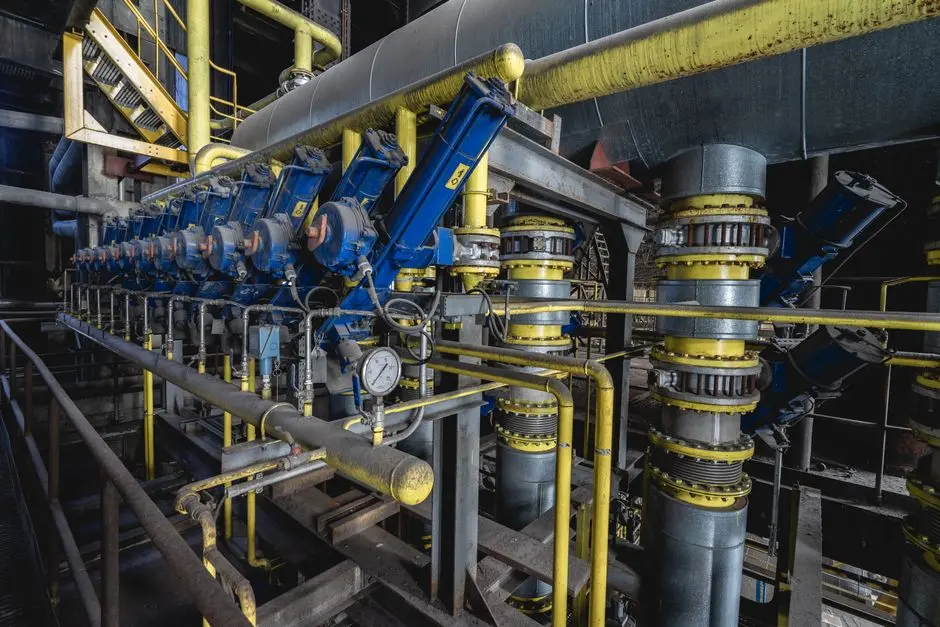
Measured average flow and the expected peak profile are the starting points for sizing. EPA’s 1.5–2 times average-flow guidance is a preliminary capacity constraint, not a complete membrane-area calculation. A supplier must still establish the design flux, temperature basis, mixed-liquor characteristics, recovery behavior, cleaning allowance, and treatment objective before finalizing membrane area (EPA, 2021).
Evaluate equalization when peak flow exceeds the selected design range or when production, washing, and cleaning create severe hydraulic and load fluctuations. Equalization can reduce the membrane capacity required for short peaks, but it also introduces tank, mixing, pumping, odor-control, and residual-sludge-management requirements. Its value should be demonstrated through the measured flow profile rather than a generic peak-flow factor.
Apply EPA’s N+1 concept. The 2021 fact sheet recommends including one additional membrane tank or unit beyond nominal design duty to maintain treatment during cleaning or maintenance and provide operating flexibility. Specify whether that extra capacity is firm, how it is operated during a train outage, and which performance obligations apply to the standby unit.
Bioreactor sizing may be constrained by oxygen transfer rather than only by biological volume or solids retention time, according to EPA. Request the aeration calculation, blower duty, diffuser arrangement, and operating basis. This prevents a membrane-area selection from creating an undersized biological or aeration system.
| Sizing element | Minimum project basis to request | Decision output |
|---|---|---|
| Hydraulic capacity | Measured average flow and production-linked peak profile. | Equalization requirement and preliminary peak-capacity check. |
| Membrane area | Design flux, temperature, mixed-liquor characteristics, recovery, and cleaning strategy. | Installed area and firm available area. |
| Biological reactor | Organic load, treatment objectives, solids retention time, and oxygen-transfer calculation. | Reactor volume, aeration demand, and tank arrangement. |
| Redundancy | Cleaning and maintenance philosophy. | N+1 configuration and treatment continuity during service. |
| Sludge handling | Solids generation, wasting frequency, and settling or dewatering expectations. | Wasting, thickening, and dewatering scope. |
The verified catalog for the integrated MBR wastewater treatment system gives a preliminary equipment-selection boundary of 10–2,000 m³/day. That range does not establish suitability for every wastewater within it. A canning project still requires a wastewater-specific process proposal and an engineering calculation for the selected duty.
Compare MBR With Conventional Treatment for a Canning Plant
MBR is generally the stronger option when high-quality permeate, a compact installation, reuse readiness, and automation are central priorities. EPA identifies better effluent quality, smaller space requirements, and ease of automation as MBR advantages. The membrane system can replace the secondary clarifier and sand filters in a conventional biological treatment train, so the comparison must include avoided equipment and the associated footprint, foundations, and operating arrangements—not purchase price alone.
Conventional activated sludge may be a practical alternative when a lower-capital approach, a familiar operating model, or simpler membrane-related O&M outweigh the MBR’s solids-separation and reuse benefits. The project decision depends on available space, reuse objectives, operator capability, sludge handling, and the full site scope. A broader technical review is available in the guide to MBR versus conventional activated sludge for food wastewater.
Do not assume the MBR is always cheaper. EPA reports typically higher capital and operating costs for the same throughput, with operating costs that include membrane cleaning, fouling control, and eventual replacement. Energy use also increases because air scour is required to control membrane fouling. These statements come from EPA’s 2021 fact sheet and establish a comparison principle, not a quote for a canning plant.
| Evaluation area | MBR decision question | Conventional-treatment decision question |
|---|---|---|
| Effluent and reuse | Does the membrane-based permeate meet the intended reuse or discharge criteria without extensive downstream polishing? | Can the conventional process reliably meet the same criteria? |
| Installed scope | Which secondary clarifier, sand filter, or tertiary filtration functions are avoided? | What clarifier, filter, and transfer equipment must remain? |
| Land and civil works | What footprint, tankage, and membrane-room arrangement are required? | What larger footprint and civil scope are required? |
| Operating cost | What are the air scour, cleaning, chemical, and eventual replacement costs? | What are the aeration, chemical, sludge, and solids-handling costs? |
| Operational risk | Can the plant maintain treatment during membrane cleaning or replacement? | Can the conventional system meet the required flow and quality with the proposed redundancy? |
| Sludge | How will the MBR waste sludge be conditioned, dewatered, and disposed of? | How will the conventional activated-sludge solids be handled? |
Include energy, chemical-cleaning demand, membrane life, replacement exposure, sludge dewatering, and operator availability in the lifecycle comparison. An MBR purchase price that excludes membranes, cleaning chemicals, blowers, equalization, solids handling, or major maintenance is not a complete commercial comparison. A 2025 technical MBR and activated-sludge comparison should be treated as background because it predates the current 2026 evaluation.
Build the Supplier Scope and Total-Cost Checklist
Each bidder should state the design flow, peak-flow treatment, process stages, pretreatment criteria, membrane type, membrane area, design flux, cleaning method, expected chemical demand, and standby configuration. Require the proposal to identify which items are supplied, which are excluded, and which site utilities or civil works are required. This prevents a quote based on headline flow capacity from concealing an incomplete treatment train.
Request membrane warranty and replacement terms. EPA notes that guarantee length and conditions vary by project and manufacturer, and that longer guarantees can improve cost-effectiveness where they are available. The agreement should define covered failures, normal wear, cleaning damage, membrane age, replacement pricing, and the conditions that could limit a claim.
Require an O&M price breakdown covering membrane cleaning, air scour, sludge wasting, dewatering, inspection, replacement, and major overhaul. Also request site-specific energy costs, blower demand, electrical load, chemical use, labor assumptions, and the operating basis used in the estimate. Generic energy claims are not a budget basis.
Confirm that MBR waste sludge can be handled by the plant’s solids-processing operations. EPA reports that conventional activated-sludge solids-handling technologies are applicable to MBR waste sludge, while noting that differences in settleability can affect conditioning and dewatering. A plate-and-frame filter press should be evaluated against actual sludge properties rather than assumed moisture content.
| Bid package | Required content | Buyer check |
|---|---|---|
| Process basis | Actual wastewater characterization, flow profile, treatment objectives, and process flow diagram. | Does the proposal use project data or generic food-processing assumptions? |
| Membrane design | Configuration, area, flux basis, materials, screening requirement, cleaning method, and redundancy. | Is firm capacity available during cleaning and maintenance? |
| Commercial scope | Supply boundary, civil works, utilities, controls, installation, commissioning, and training. | Are exclusions identified in the commercial response? |
| Warranty | Coverage, exclusions, service life, replacement terms, and conditions. | Are the obligations measurable and project-specific? |
| O&M and lifecycle cost | Energy, chemicals, cleaning, labor, sludge handling, inspection, and membrane replacement. | Is the estimate tied to the proposed operating basis? |
| Performance test | Actual wastewater, acceptance criteria, sampling protocol, and correction factors. | Is compliance tied to agreed site-specific criteria? |
Require a performance test using the actual wastewater and agreed acceptance criteria. A generic food-processing performance claim should not be accepted without a defined duty and sampling protocol. The same principle applies to food and beverage wastewater pretreatment requirements: upstream performance must be demonstrated against the membrane’s protection criteria.
Frequently Asked Questions
How much does an MBR system for a canning plant cost?
There is no defensible project price without a wastewater-specific quotation. Request a cost breakdown that separates the membrane system and biological reactor from equalization, solids or oil-and-grease removal, fine screening, controls, civil works, disinfection, sludge handling, electrical service, commissioning, and operator training. Also require lifecycle inputs for blower energy, cleaning chemicals, membrane replacement, maintenance labor, and residual-sludge treatment. Do not use a generic cost per cubic metre as a budget allowance.
How should a buyer select and size an MBR supplier?
Select bidders on a wastewater-specific process proposal rather than headline flow capacity. Require average and peak flow, production and cleaning schedules, wastewater characterization, reuse or discharge criteria, membrane data, pretreatment criteria, N+1 philosophy, cleaning plan, warranty terms, and a performance-test protocol. These inputs allow technical teams to check whether the proposed system fits the actual duty and whether the commercial offer includes the required treatment train.
Can an MBR handle peak flows from washdown and cleaning cycles?
It can when the design explicitly accommodates them. EPA’s 2021 fact sheet says peak design flow should generally be no more than 1.5–2 times average design flow; if it exceeds that range, additional membranes or equalization are required. The final decision depends on the measured production-linked hydrograph, working equalization volume, membrane design flux, recovery, cleaning allowances, and available redundancy. Equalization may reduce peak membrane demand, but it must be sized and operated as part of the process.
Does an MBR guarantee compliance with the plant’s discharge or reuse requirements?
No generic configuration guarantees a site’s permit outcome. Low suspended solids and bacteria do not establish that every dissolved contaminant or site-specific reuse condition is satisfied. The final train must be verified against the actual discharge or reuse criteria, with defined sampling, acceptance tests, and any required disinfection or polishing. That verification should include the full treatment train, not the membrane alone.