
What Food and Beverage Plants Must Remove Before Sewer Discharge
Food and beverage plants near Solon meet pretreatment requirements by controlling organic loading, suspended material, fats, oils and grease, and pH before discharge to a publicly owned treatment works (POTW), then documenting the performance of their pretreatment system. Crystal Clean reports that a dairy operation or brewery can generate wastewater with BOD 10 to 20 times higher than domestic sewage (Crystal Clean, undated).
The wastewater profile changes with the product and the operating condition. Separate and characterize washdown, production, cooling, floor-washing, equipment-sanitation, and clean-in-place (CIP) streams. Production water may contain sugars, starches, proteins, pulp, seeds, or grains; CIP wastewater may contain acidic cleaners, caustic chemicals, detergents, or disinfectants; cooling water may pick up lubricants from process equipment. A sample representing only one production period will not describe the plant reliably.
Oxmaint identifies biochemical oxygen demand (BOD), total suspended solids (TSS), fats, oils and grease (FOG), pH, temperature, and increasingly phosphorus and nitrogen as typical pretreatment parameters. These are not Solon discharge limits. The enforceable values must come from the applicable industrial discharge permit issued by the controlling authority.
Untreated or poorly treated discharge can overload the POTW’s biological process, contribute to solids accumulation in the sewer, damage infrastructure, trigger surcharges or permit violations, and interrupt production. Crystal Clean identifies sewer surcharges and production slowdowns as consequences of wastewater-treatment failures. Food-safety controls remain separate: a wastewater system may protect the sewer without satisfying sanitation, HACCP, or other food-safety requirements.
Confirm the Solon-Area Permit Before Choosing Equipment
EPA’s National Pretreatment Program under 40 CFR Part 403 provides the federal framework, while the applicable industrial discharge permit and local sewer rules establish site-specific obligations. Do not treat generic BOD, TSS, FOG, or pH values as Solon limits; Crystal Clean states that requirements differ by jurisdiction and control authority.
Before finalizing equipment, ask the applicable POTW for the current permit, discharge limits, monitoring frequency, designated sampling point, representative-production requirements, reporting schedule, compliance history, applicable local forms, fees, and any additional reporting obligations. Oxmaint also states that manufacturers classified as Significant Industrial Users (SIUs) must obtain pretreatment permits, conduct self-monitoring and sampling, and submit periodic compliance reports. Determine whether that classification applies to the facility; do not infer it solely from the food-sector description.
If a new production line, seasonal campaign, or CIP chemical change alters wastewater characteristics, obtain written clarification from the POTW before committing to a treatment train. The 2026 U.S. wastewater permit and compliance guide provides federal context, but the permit and written authority responses control the site decision.
| Permit item to confirm | Evidence to request | Why it affects design |
|---|---|---|
| Controlling authority | Current industrial discharge permit and referenced sewer rules | Identifies the legally applicable limits and reporting authority. |
| Discharge parameters | Permit limits for BOD, TSS, FOG, pH, temperature, and any applicable nutrients | Defines the required treatment performance. |
| Sampling program | Monitoring frequency, sampling point, sample type, and representative-production rules | Determines when and where treatment performance must be demonstrated. |
| Reporting | Report forms, deadlines, record-retention requirements, and local fees | Creates the compliance and administrative workload. |
| Regulatory status | Written SIU determination and any additional local obligations | Prevents assumptions about permit status and documentation. |
Build a Treatment Train That Handles Each Waste Stream
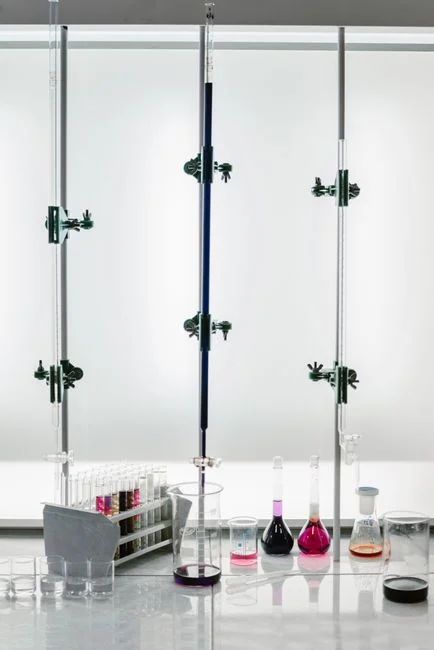
A compliant treatment train is a sequence of assigned jobs, not a list of mandatory technologies. Equalization controls flow and concentration variability; physical treatment removes floatable or settleable material; chemical treatment captures solids and stabilizes pH; biological treatment reduces residual biodegradable organics; sludge handling controls the waste stream left by the process.
- Equalize the incoming wastewater. Use an equalization tank to blend acidic and alkaline flows, moderate washdown peaks, and reduce short-term loading before downstream units. Crystal Clean identifies equalization basins and active neutralization as pH-control options. Verify mixing performance and ensure that no untreated flow can short-circuit the treatment train.
- Remove floatable material where required. Use dissolved air flotation (DAF) when FOG, oil and grease, colloids, fine solids, or floatable material must be captured rapidly. ALAR describes flotation as removing fats, oils, fine solids, and floatable contaminants. A food-processing DAF system in the supplied product data covers 4–300 m³/h across 13 standard models and includes automatic skimming (HydropureWater, undated).
- Remove settleable solids where they dominate. Clarification is appropriate for pulp, seeds, grains, protein solids, and other material that settles. The supplied lamella clarifier specification is 20–40 m/h surface loading rates with up to 30% lower chemical consumption (HydropureWater, undated).
- Stabilize pH and capture fine solids. Coagulation, flocculation, filtration, and pH adjustment can be used where stable pH or improved solids capture is required. An automatic chemical dosing and pH control system uses PLC-controlled injection of coagulants, flocculants, pH adjusters, and specialty chemicals (HydropureWater, undated).
- Reduce remaining BOD biologically when necessary. MBBR and IFAS are identified by ALAR as biological options for high-strength food and beverage wastewater. Add biological treatment when the permit requires additional BOD or nutrient reduction.
- Route residual sludge to a defined destination. ALAR identifies rotary vacuum drum filters and filter presses for reducing sludge volume before disposal. A plate-frame filter press should be evaluated together with the selected sludge-disposal route, expected moisture removal, and operating labor.
| Unit | Primary job | Best fit | Required operating evidence |
|---|---|---|---|
| Equalization tank | Buffer flow and concentration | Washdown and shift-change surges | Level, mixing, pump balance, and no-bypass verification |
| DAF | Remove FOG and floatable solids | Meat, poultry, and high-FOG streams | Skimming performance, solids capture, and sludge removal |
| Clarifier | Remove settleable solids | Pulp, seeds, grains, and protein solids | Sludge depth, solids profile, and carryover |
| Chemical dosing and pH control | Stabilize pH and improve capture | Acidic product streams and caustic CIP | Calibration, feed rate, and chemical inventory |
| Biological treatment | Reduce residual BOD and nutrients | Permit requires additional biological reduction | Process condition, organic removal, and settled-solids condition |
| Sludge dewatering | Reduce residual sludge volume | Any unit producing settled or floated solids | Cycle records, cake condition, and disposal traceability |
Select Equipment by the Failure You Need to Prevent
Choose each treatment unit against a defined failure mode, permit parameter, and waste characteristic. ALAR states that flotation removes fats, oils, fine solids, and floatable contaminants, making DAF a logical front-end choice where rapid floatable-solids capture is needed. Use clarification or lamella separation when settleable material—pulp, seeds, grains, or protein solids—dominates the solids load.
Choose automatic pH adjustment when acidic product flows and caustic CIP discharges create unstable pH. Crystal Clean reports that food-processing wastewater can be acidic during one period and alkaline during the next because fruit-processing acids and caustic cleaners enter at different stages. Extreme pH can damage pipes, disrupt treatment biology, and create toxic-gas risks in confined spaces (Crystal Clean, undated). The control objective is a stable discharge stream without an unsafe chemical-handling or storage arrangement.
Choose biological treatment when residual biodegradable organics remain above the permit target or when the POTW requires BOD and nutrient reduction. ALAR identifies MBBR and IFAS for that role. Biological treatment should receive a controlled substrate: excessive FOG, suspended solids, or pH excursions can impair performance.
Size against peak production and sanitation conditions rather than average flow alone. Crystal Clean notes that washdowns and shift changes can overwhelm systems designed around averages. When influent variability or a new production line makes performance uncertain, use pilot testing, as recommended by ALAR.
| If the primary risk is… | First technical choice to evaluate | Key check before purchase |
|---|---|---|
| FOG or floatable solids overload | DAF | Peak flow, skimming capacity, and upstream equalization |
| Settleable solids in the effluent | Clarifier or lamella separator | Solids characteristics, settling behavior, and sludge withdrawal |
| pH swings from production or CIP | Equalization plus automatic pH control | Chemical demand, probe placement, and safe dosing response |
| Residual biodegradable organics | MBBR or IFAS | Influent variability, pH stabilization, and solids separation ahead of biology |
| Residual sludge volume | Filter press or rotary vacuum drum filter | Sludge properties, disposal destination, and operating labor |
Control Performance During Washdowns and CIP Cycles
The operating risk is concentrated in the transition between production, washdown, and sanitation. Equalization should buffer these surges, while the pump and mixing sequence must prevent short-circuiting or untreated bypass. Check the tank’s usable working range, solids accumulation, mixing performance, and transfer-pump balance as parts of one system.
Treat DAF skimming, clarifier sludge depth, chemical feed, biological activity, and flow balance as coupled variables. A pH excursion can impair biology and change flotation performance; inadequate solids withdrawal can increase sludge depth and interfere with clarification; poor flow balance can concentrate FOG or solids in one portion of the plant. Monitor the operating sequence around product changeovers, cleaning-chemical deliveries, and CIP discharge.
Oxmaint provides an example maintenance rhythm: daily operational checks, weekly skimmer inspection, monthly chamber cleanout, and monthly or as-needed probe calibration. The permit may require different frequencies, and the plant should set its own schedule around the actual equipment condition and permit obligations.
When a result is nonconforming, do not simply repeat the sample and move on. Open a corrective-action record immediately, document the root cause, complete the repair, schedule verification sampling, and obtain closure approval. Preserve the original result, the production and CIP context, instrument calibration status, and any flow or bypass event. This record shows the POTW that the event was investigated.
Operating expense review should cover more than purchased chemical. Include sludge removal, laboratory sampling, instrument calibration, preventive maintenance, and production loss during service. A generic operating-cost framework can help organize those categories, but the 2026 process operating-cost analysis does not establish a Solon-area price or guarantee savings for a food plant.
Create an Audit-Ready Monitoring and Reporting System
Audit-ready compliance begins with linking each permit requirement to a sampling event, result, responsible person, and response record. Oxmaint recommends placing required sample dates in a shared calendar and retaining results and chain-of-custody information by event. That structure helps a plant detect a missing sample before the compliance report is prepared.
Maintain linked records for sampling, maintenance, calibration, permit submittals, equipment changes, and corrective actions. Calibrate critical instruments and retain the results in the associated asset record so drift can be investigated before it becomes a permit exceedance. Preserve the sample location, production condition, flow condition, and any relevant CIP event with the result.
For each nonconforming result, preserve a complete sequence: the original result, notification, root-cause investigation, repair or operating change, verification sample, and closure approval. Apply the same sequence to bypasses, sampler failures, instrument drift, and missed monitoring events.
Oxmaint states that distributed records can take 3–6 weeks to retrieve and that its centralized system can reduce preparation to hours. The practical test is whether the control authority can be given a complete, searchable record without reconstructing the history from separate logs, email threads, paper files, and personal notebooks.
Minimum defensible record set: permit requirement, sample event, chain of custody, result, calibration status, operating context, work order, corrective action, verification sample, and closure approval.
Frequently Asked Questions
What does a Solon-area food plant need to request before budgeting for pretreatment equipment?
Request the current industrial discharge permit, all applicable discharge limits, monitoring frequency, sampling point
Frequently Asked Questions
What pretreatment limits do food and beverage plants near Solon have to meet before sewer discharge?
Facilities discharging to the Northeast Ohio Regional Sewer District (NEORSD) system must adhere to local limits typically defined by the Industrial User Permit. Standard parameters for food and beverage plants usually include a pH range of 5.0 to 12.0 standard units, and strict mass-based or concentration-based limits for Biochemical Oxygen Demand (BOD) and Total Suspended Solids (TSS), often capped at 300 mg/L before surcharges apply. Fats, Oils, and Grease (FOG) are strictly regulated, with many local ordinances limiting discharge to 100 mg/L to prevent sewer blockages.
How much does a DAF and pH-adjustment pretreatment system cost for a food processing plant?
For a small-to-mid-sized food processing facility, a turnkey Dissolved Air Flotation (DAF) and automated pH-adjustment system generally ranges from $250,000 to $600,000. This estimate covers the stainless steel DAF tank, chemical dosing pumps, acid/caustic storage, programmable logic controller (PLC) integration, and basic piping. Total capital expenditure varies significantly based on flow capacity, stainless steel grade, sludge dewatering requirements, and the complexity of the instrumentation needed to meet specific permit reporting requirements.
Should a food plant near Solon use DAF, a clarifier, or both?
The choice depends on the density and particle size of the wastewater contaminants. A DAF unit is superior for food plants where pollutants are fats, oils, and light suspended solids that naturally float; it can achieve 80-90% removal of FOG and TSS. A clarifier (sedimentation tank) is better suited for heavy, inorganic solids that settle. Most food plants near Solon utilize a DAF because food waste is typically lighter than water; a clarifier is usually only recommended as a secondary stage if the influent contains high amounts of grit, sand, or heavy mineral-based solids.
How do I size pretreatment equipment for washdown and CIP peak flows?
Pretreatment equipment must be sized based on peak hydraulic loading, not average daily flow. Calculate the maximum volume of Clean-in-Place (CIP) discharge and the simultaneous washdown hose flow, typically using a peaking factor of 2.5 to 4.0 times the average hourly flow rate. An equalization tank is essential to buffer these surges; the tank should be sized to hold at least 150% of the largest single CIP slug load to ensure the downstream DAF or biological treatment system is not overwhelmed and that chemical dosing remains accurate.
What supplier and commissioning questions reduce the risk of a pretreatment permit violation?
To minimize compliance risk, ask suppliers for documented performance data on similar food waste profiles, specifically requesting evidence of BOD/TSS removal efficiency at your projected peak flow rates. During commissioning, mandate a "stress test" where the system is challenged with maximum chemical demand and peak flow simultaneously to verify that the PLC correctly adjusts dosing in real-time. Finally, ensure the supplier provides a comprehensive spare parts list for critical sensors (pH probes and flow meters) and a certified training plan for operators on how to recalibrate instruments to meet NEORSD reporting accuracy standards.