Start with the Marietta permit, not an assumed limit
Food and beverage plants near Marietta generally meet sewer pretreatment requirements through a staged treatment train that controls suspended solids, fats, oils and grease, pH and alkalinity, dissolved organics, and any permit-required nutrients or disinfection. Marietta states that each industrial facility connected to its sanitary sewer system receives a wastewater discharge permit with reporting requirements and parameter limitations. The issued permit therefore controls plant design; generic federal thresholds do not replace site-specific local limits. Hixson describes food-processing effluent as potentially 10 to 100 times stronger than domestic wastewater by BOD₅ and COD, so treatment capacity must reflect production and cleaning conditions rather than an average flow alone.
Marietta identifies four industrial categories: Major Significant Industrial User, Minor Significant Industrial User, Non-significant Industrial User and Dry Discharger. The city says discharge type, production equipment, pretreatment units and water use determine the applicable category. An industrial facility must complete the Service Waste Questionnaire and submit it with its wastewater discharge permit application.
For an indirect discharger, federal pretreatment requirements are summarized under 40 CFR Part 403 by Hixson. The controlling Marietta permit may impose additional local limitations, monitoring duties and discharge conditions. Before sizing equipment, request the current permit, sewer-use ordinance, monitoring schedule, surcharge rules and sampling instructions. Hixson notes that 250 mg/L thresholds are commonly cited for BOD and suspended solids, but those values must not be substituted for the site’s permit conditions.
| Document or classification | Why it affects engineering decisions | Action before design |
|---|---|---|
| Current wastewater discharge permit | Establishes applicable parameter limitations, reporting duties and monitoring conditions. | Obtain the issued permit and all attachments or modifications. |
| Industrial user category | Marietta uses discharge type, production equipment, pretreatment units and water use to assign the category. | Confirm classification with the city rather than assuming it from production volume. |
| Service Waste Questionnaire | Marietta requires industrial facilities to submit it with the permit application. | Complete the questionnaire using production, equipment and water-use information. |
| Local rules and surcharge schedule | Local limits and fees can change both the treatment objective and operating economics. | Request current rules from the authority before comparing equipment proposals. |
| Federal pretreatment framework | Hixson identifies 40 CFR Part 403 as the federal framework for indirect dischargers. | Use it as context; verify actual requirements in the Marietta permit. |
If the facility is acquiring an operating site, wastewater obligations can affect the transaction and permitting schedule; the wastewater requirements reviewed during plant acquisition illustrate why permitting should be included in that diligence.
Characterize wastewater across production and cleaning cycles
Hourly variability is a defining design constraint because food-processing wastewater can change in flow, organic load, pH and temperature as batch schedules change. Hixson identifies production changes, clean-in-place cycles and seasonal peaks as central engineering challenges. Sampling only a steady production period can conceal the chemical excursions and load spikes that determine equalization volume, chemical dosing needs and biological resilience.
Build a sampling plan around separate operating states: normal production, peak production and cleaning. Include product-loss, washdown and CIP streams so the measured flow represents what the collection system actually receives. Keep acidic or caustic cleaning streams segregated during characterization if they could upset biological treatment. The objective is not merely an average concentration; it is a defensible description of flow and load ranges for equipment selection and operating controls.
Request the parameters required by the permit and those needed to assign treatment stages. At minimum, the characterization package should address flow, BOD₅, COD, TSS, pH, FOG or oil and grease, total nitrogen, total phosphorus and temperature. Add production-specific constituents when the permit or process review identifies them.
| Operating condition | What to sample | Engineering use | Decision it supports |
|---|---|---|---|
| Normal production | Representative flow, BOD₅, COD, TSS, pH, FOG or oil and grease, total nitrogen, total phosphorus and temperature. | Establish baseline organic load, solids load and water quality. | Defines biological loading and primary-treatment duties. |
| Peak production | The same required parameters under the highest representative production condition. | Test whether equalization and downstream stages can absorb peak demand. | Sets hydraulic and process sizing inputs. |
| CIP and cleaning | pH, alkalinity, flow, COD and any permit-listed chemical constituents; segregate acid and caustic streams where relevant. | Identify chemical spikes and high-strength washdown loads. | Determines equalization, pH control and shock-load safeguards. |
| Combined discharge | Measured flow and permit parameters under representative concurrent production and cleaning conditions. | Confirms how separate streams interact at the discharge header. | Supports final treatment-train and acceptance criteria. |
The supplied research supports production-representative sampling but does not specify a Marietta sampling frequency. The plant should obtain the city’s sampling instructions and use a qualified sampling plan rather than adopt an assumed interval. For biological-process planning, the SBR design for snack food wastewater shows how load characterization connects to treatment selection, while permit-specific monitoring still governs final acceptance.
Build a treatment train that controls each contaminant in sequence
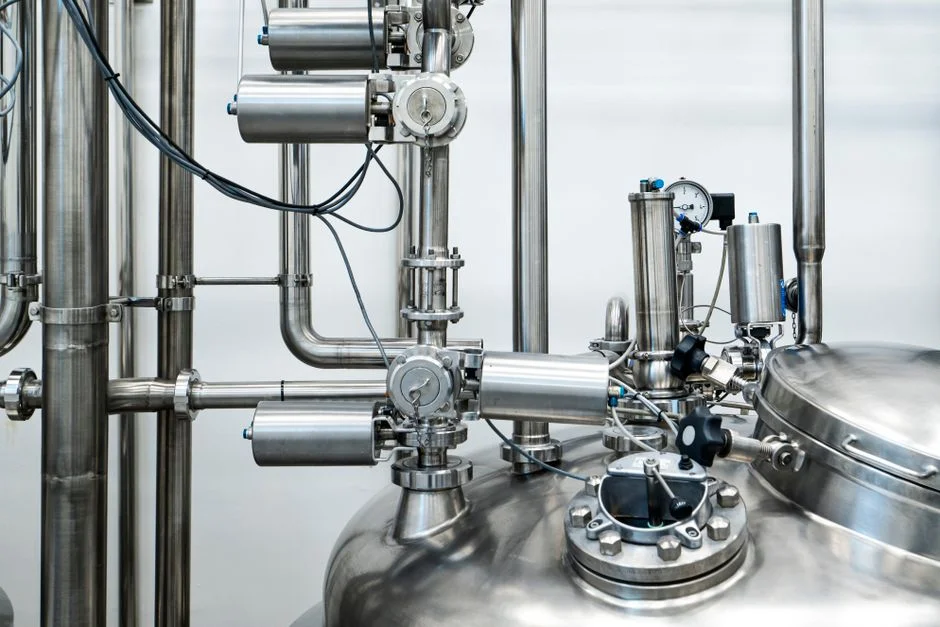
A food-processing wastewater treatment train works as a sequence because no single unit reliably removes solids, FOG, dissolved organics and nutrients equally. The sequence should begin with collection and screening, then stabilize flow, remove physical contaminants, establish suitable chemistry for biological treatment, reduce dissolved organics and add only the polishing steps required by the permit or reuse objective.
- Screen the wastewater. Remove food particles, packaging debris and fibrous material before they plug pumps or interfere with downstream biological treatment.
- Equalize flow and concentrated loads. Hixson identifies equalization as the means to buffer production surges and CIP chemical loads and release wastewater at a controlled rate, reducing shock loading on biological processes.
- Apply physical separation. Use sedimentation or flotation to remove suspended solids and FOG. Hixson describes DAF as a widely used primary technology in food processing because bubbles attach to suspended material and float it for removal.
- Control pH and alkalinity. USP Technologies states that unstable or improper pH can interfere with nitrification, sludge sedimentation and ammonia removal. Stabilization should occur before biological treatment rather than being treated as a downstream correction.
- Remove dissolved organics biologically. Aerobic treatment or an SBR addresses biodegradable BOD₅ and COD. For qualifying high-strength streams, anaerobic digestion may provide energy recovery; Hixson reports 89.8–96.5% COD removal in food-processing applications.
- Add required nutrient removal. USP Technologies identifies nitrogen and phosphorus as drivers of eutrophication and harmful algal blooms. Biological nutrient removal should be included when the Marietta permit or receiving-sewer program requires it.
- Disinfect only as required. A controlled disinfection stage is appropriate where required by the permit or receiving program. Do not add chemical treatment merely on the assumption that more treatment is better.
| Stage | Primary function | Contaminants addressed | Key design or operating check |
|---|---|---|---|
| Screening | Remove bulky material. | Food particles, packaging debris and fibrous solids. | Confirm accessible solids routing and adequate screen capacity. |
| Equalization | Buffer flow and load. | Production surges and concentrated CIP discharges. | Use representative flow and strength data to establish working volume and release rate. |
| DAF or another primary process | Physically separate material. | TSS, FOG, oil and grease and associated organic load. | Evaluate chemical conditioning, skimming, recycle performance and solids handling. |
| pH and alkalinity control | Protect biological chemistry. | pH excursion and inadequate alkalinity. | Use automatic control and verify response during CIP-derived spikes. |
| Aerobic, SBR or anaerobic treatment | Remove dissolved biodegradable material. | BOD₅ and COD; methane production may also be relevant under anaerobic operation. | Reconcile organic loading, temperature, alkalinity and process-control requirements. |
| Nutrient removal | Reduce nitrogen and phosphorus. | Total nitrogen and total phosphorus. | Include only where required by permit conditions or receiving-sewer requirements. |
| Disinfection | Reduce remaining pathogens. | Microbiological contaminants. | Confirm the receiving program’s treatment objective and monitoring requirements. |
An industrial DAF system for food-processing wastewater can serve the primary-removal stage. For chemical conditioning and pH control, a PLC-controlled automatic chemical dosing system should be evaluated as part of the complete control package rather than as a stand-alone guarantee of effluent performance.
Choose DAF, biological treatment or MBR by performance requirement
DAF, biological treatment and MBR perform different jobs, so their published results should not be compared as if they were full treatment trains under identical conditions. Hixson reports poultry-slaughterhouse field studies in which optimized DAF removed 74% of suspended solids and 99% of oil and grease. It also cites more recent poultry data showing up to 99% TSS removal, 85% BOD₅ reduction and 98% phosphate removal when coagulant selection and operating parameters were properly controlled. These are study results, not Marietta permit guarantees.
Choose DAF where the primary objective is solids, FOG and oil removal before biological treatment. HydropureWater’s catalog states that its DAF system covers 4–300 m³/h and is designed to remove suspended solids, FOG, oil and grease and colloidal matter. Treat that range as equipment-selection data; the selected unit must still be checked against representative peak flow and load.
Choose biological treatment where the main objective is dissolved organic-load reduction. Aerobic systems and SBRs oxidize biodegradable organics, while anaerobic digestion can suit high-strength streams and generate biogas. Hixson reports 89.8–96.5% COD removal in food-processing applications and methane yields of 0.27–0.33 liters CH₄ per gram of COD removed.
Choose MBR when tighter solids control, a smaller footprint or reuse readiness justifies added mechanical and operational complexity. Hixson cites beverage-facility pilot data showing effluent COD of 16.9 mg/L, TSS of 3.8 mg/L and COD removal of 92.6%. HydropureWater’s MBR catalog covers 10–2,000 m³/day and combines activated sludge with submerged PVDF membrane filtration. That capacity describes available equipment; it does not demonstrate compliance with a particular Marietta permit.
| Selection | Primary reason | Published or catalog evidence | Selection caveat |
|---|---|---|---|
| DAF | Remove TSS and FOG before biological treatment. | Hixson cites poultry field results of 74% TSS removal and 99% oil-and-grease removal under optimized conditions; later poultry data cited by Hixson show up to 99% TSS removal, 85% BOD₅ reduction and 98% phosphate removal. | Performance depends on wastewater characteristics, chemical conditioning and operating control. |
| Aerobic treatment or SBR | Reduce dissolved BOD₅ and COD. | Hixson identifies activated sludge and SBR as aerobic biological processes; wastewater treatment design for vegetable processing provides a sector-specific design reference. | Must handle variable organic load, pH, alkalinity and temperature. |
| Anaerobic digestion | Remove high-strength organics and potentially recover energy. | Hixson reports 89.8–96.5% COD removal and methane yields of 0.27–0.33 liters CH₄ per gram COD removed in food-processing applications. | Application-specific; assess strength, alkalinity, temperature and downstream solids handling. |
| MBR | Combine biological treatment with membrane solids separation. | Hixson cites beverage pilot effluent COD of 16.9 mg/L, TSS of 3.8 mg/L and 92.6% COD removal. HydropureWater’s catalog range is 10–2,000 m³/day. | Higher capital and energy costs apply; confirm site conditions and permit objective. |
Design monitoring and operating safeguards for continuous compliance
Compliance depends on knowing which treatment stage is drifting before the final discharge changes. Baseline each critical stage during representative operation so operators can distinguish an upstream failure from a biological or polishing problem. For example, worsening DAF skimming or chemical use may indicate changing FOG or solids loading, while declining oxygen uptake or solids behavior can point to biological stress after an upstream change.
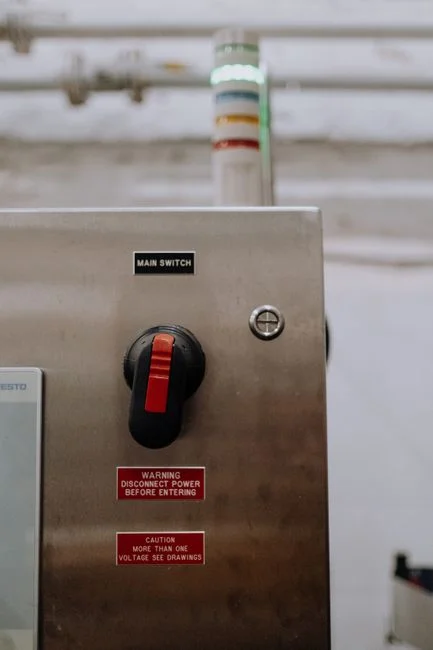
Automatic pH adjustment is a core safeguard because Hixson identifies CIP chemical spikes and pH variation as drivers of shock loading. The monitoring package should include influent and stage-specific readings, with automatic intervention where the permit or process design requires it. A PLC-controlled automatic chemical dosing system can inject coagulants, flocculants, pH adjusters and other specified chemicals, but controls still need verification against representative wastewater.
Track DAF skimm solids, chemical consumption, dissolved oxygen, biological solids behavior, effluent TSS and every permit-specific parameter. Hixson states that permits may already require continuous monitoring for parameters such as pH and that advanced sensors can identify exceedances earlier. For effluent monitoring, turbidity monitoring for wastewater effluent can provide an additional process signal, but it should not replace a permit-required measurement method.
| Control point | Indicators to track | Operational response |
|---|---|---|
| Equalization and chemical control | Flow, pH, alkalinity, dosing rate and chemical inventory. | Investigate sustained excursions or excessive chemical use before changing downstream settings. |
| DAF | Skimm characteristics, solids removal and chemical consumption. | Check recycle, conditioning and solids handling when separation performance declines. |
| Biological treatment | Dissolved oxygen, mixed-liquor behavior, sludge settling and organic removal indicators. | Protect alkalinity, review loading and avoid masking an upstream shock with downstream adjustment alone. |
| Final effluent | TSS, permit parameters and relevant sensor trends. | Confirm the approved analytical method, record results and initiate the plant’s escalation procedure for an exceedance. |
Do not promise a guaranteed discharge result without the current permit, representative characterization, reviewed equipment submittals and commissioning results. Published performance studies and equipment catalogs are selection inputs, not substitutes for site evidence.
Verify performance before the sewer connection is accepted
Acceptance testing should demonstrate that the installed treatment train handles representative wastewater and meets the requirements that control the discharge. The sequence below connects equipment startup with the operating record the plant will need for inspections, permit administration and future renewal.
- Review the compliance basis. Confirm the current Marietta permit, industrial user classification, local limits, monitoring schedule and required analytical methods.
- Check submittals against the selected train. Verify process capacities, controls, chemical systems, solids handling, redundancy and instrument provisions against the approved design basis.
- Start up with representative wastewater. Exercise normal production and cleaning-related loads under controlled conditions. Do not declare readiness using clean water, vendor-only testing or unrepresentative wastewater.
- Test every stage and the final effluent. Demonstrate performance against permit parameters and methods specified by the approving authority. Record deviations and corrective actions rather than averaging away poor results.
- Retain the operating evidence. Keep operating logs, calibration records, chemical-use data, sample results, control adjustments and startup reports together as the site’s compliance record.
Hixson states that NPDES permits typically last five years. Although a Marietta industrial discharge permit is a different instrument from a direct-discharger NPDES permit, the renewal point remains useful: the plant should anticipate changing production, revised monitoring expectations and future permit conditions. Startup is therefore the beginning of demonstrated performance, not the end of the project.
Frequently Asked Questions
What should a food and beverage plant request before selecting wastewater treatment equipment near Marietta?
Request the current wastewater discharge permit, sewer-use ordinance, industrial user classification, monitoring schedule, surcharge rules, sampling instructions and Service Waste Questionnaire. Then obtain representative flow and load data from normal production, peak production and cleaning periods. These documents establish the legal target and design basis; generic federal thresholds or catalog capacity ranges cannot substitute for them.
How should treatment capacity be sized for a food-processing wastewater train?
Size the system from representative production and cleaning data, including flow, BOD₅, COD, TSS, pH, FOG or oil and grease, total nitrogen, total phosphorus and temperature. Reconcile those inputs with the Marietta permit and the selected equipment’s capacity range. For an MBR, the relevant catalog range is 10–2,000 m³/day; for DAF, 4–300 m³/h. Neither range establishes suitability without site-specific hydraulic and load data.
Which supplier information should be evaluated when comparing food-wastewater treatment systems?
Request documented food-processing performance, the test conditions behind each performance claim, automatic-control scope, installation and utility requirements, sludge-handling provisions, service support and acceptance criteria. Ask the supplier to map every proposed unit to a contaminant and permit obligation. Also require evidence for the worst representative production and cleaning conditions rather than relying on a generic efficiency claim.
How much will food and beverage wastewater treatment cost near Marietta?
The supplied research does not provide a defensible Marietta cost range, so any quoted total would require site-specific inputs. Request a vendor estimate that separates equipment, installation, electrical and controls work, civil work, chemical use, utilities, sludge handling and commissioning. Include sewer surcharges and monitoring costs where applicable. A low equipment price does not establish the life-cycle cost if chemical consumption, energy use or residuals change the operating result.