What wastewater profile makes each system the better choice?
For a Wrangell food or beverage factory in 2026, choose DAF when floatable oils, FOG, product-loss organics, or non-settleable solids control the design; choose a sedimentation-based clarifier when the stream is mostly settleable solids and lower energy use is the priority. DAF uses 30–50 micron microbubbles to float conditioned solids for skimming, while clarifiers use settling and sometimes lamella plates to improve separation. DAF can remove suspended solids, organics, hydrocarbons, phosphorus, and nitrogen, but it requires air compression and more energy than sedimentation. Neither technology should be purchased before flow characterization, jar testing, and confirmation of the plant's permit or reuse targets.
The selection should begin with the wastewater, not the equipment category. FOG, spilled syrup, rejected batches, fruit pulp, soluble organics, nutrients, and settleable wash-water solids respond differently to flotation and settling. A stream dominated by recoverable oil or floating product solids may justify DAF even if its flow is modest. A stream dominated by heavy, settleable solids may be better served by sedimentation.
HydropureWater's 2026 beverage wastewater DAF design guide identifies CIP cleanings as flow-and-load surges and describes spilled syrup, rejected batches, and fruit pulp as product-loss events that alter the density profile. Those events can make routine production samples inadequate for equipment selection. They can also produce fragile floc or sinking material that does not rise with the float blanket.
Use the documented decision rule: favor DAF where FOG, product-loss organics, or phosphorus limits dominate; favor sedimentation where energy cost dominates and the load is predominantly settleable, according to HydropureWater's 2026 guide. The guide notes that DAF consumes more energy than sedimentation because it requires compressed air.
Neither source supplies current Wrangell-specific discharge limits or reuse requirements. Obtain those requirements directly from the applicable authority and the plant's internal reuse specifications before defining performance guarantees. The 2026 beverage wastewater DAF design guide provides a useful starting framework, but it cannot substitute for site-specific characterization.
How DAF and sedimentation clarifiers separate the waste stream
DAF separates floatable material by attaching conditioned particles to microbubbles, whereas a sedimentation clarifier separates settleable material by gravity. Clearwater/SigmaDAF describes its DAF systems as clarifiers that use dissolved air in the form of 30–50 micron microbubbles to lift suspended solids, oils, and fats to the surface for removal by a skimmer, with clarified effluent leaving beneath the float.
The complete beverage DAF sequence identified by HydropureWater's 2026 guide is screening and flow equalization, coagulant dosing, floc formation, saturated recycle-water addition, microbubble attachment, and skimming of the float blanket. Saturated recycle water introduces the dissolved air; the compressor and recycle pump create the flotation mechanism and its energy demand.
Chemical conditioning is part of the separation principle, not an accessory. Clearwater/SigmaDAF states that DAF should be paired with coagulation and flocculation so particles become larger and more readily contacted by microbubbles. HydropureWater's 2026 guide adds that a polyelectrolyte or polymer may be needed when floc is fragile or skimming is incomplete.
A lamella plate clarifier uses inclined plates to shorten the effective settling distance and collect settled solids. Clearwater/SigmaDAF describes its FPBC DAF configuration as a high-profile system incorporating lamella-pack technology to reduce water-flow velocity and improve separation efficiency. Thus, “DAF” and “clarifier” are not always mutually exclusive product categories; some DAF configurations include clarification aids.
Some suppliers also call DAF equipment a “dissolved-air flotation clarifier.” Compare process configuration, conditioning requirements, loading curves, sludge paths, controls, and guarantees rather than relying on the product label. The available industrial DAF system should be evaluated as a proposed treatment train rather than as a vessel selected by flow alone.
Side-by-side comparison for food and beverage plants
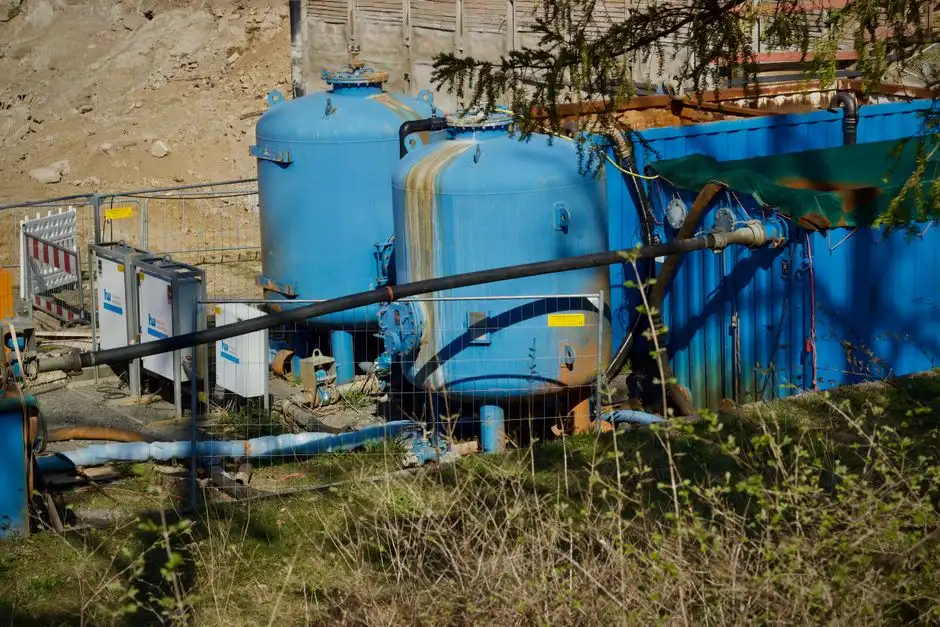
DAF and a sedimentation clarifier should be compared by how they handle the plant's actual pollutants, peak events, residuals, staffing, and compliance obligations. The central procurement issue is not which machine has the lower purchase price; it is which route reliably meets the required effluent or reuse targets at the verified peak and upset conditions.
| Procurement variable | Dissolved air flotation | Sedimentation clarifier |
|---|---|---|
| Target pollutants | Floatable suspended solids, oils, FOG, hydrocarbons, and conditioned organics; HydropureWater's 2026 guide also attributes phosphorus and nitrogen removal to DAF. | Predominantly settleable solids; removal of dissolved or floatable material depends on upstream treatment or conditioning. |
| Separation mechanism | 30–50 micron microbubbles attach to conditioned particles and carry them to the surface for skimming, according to Clearwater/SigmaDAF, 2026-04-27. | Solids settle through a quiescent zone; lamella plates may reduce effective settling distance. |
| Chemical conditioning | Coagulation and flocculation are required in principle; fragile floc may require polymer. | May require coagulant or flocculant for difficult suspensions, but the selected proposal must establish the chemical basis. |
| Peak and CIP handling | Equalization and verified peak-flow and solids-loading data are required; compressed-air capacity and recycle hydraulics must support the selected duty. | Surface loading, sludge collection, peak-flow behavior, and carryover must be stated in writing. |
| Energy | Higher operating-energy demand because air compression is required, according to HydropureWater's 2026 guide. | Lower energy demand because no air-compression step is required, according to the same 2026 guide. |
| Chemical and solids handling | Produces a skimmable float and may also produce sinking sludge; both withdrawal paths require provision. | Produces concentrated settled sludge that must be removed and conditioned or dewatered. |
| Configuration and materials | May be packaged as a skid or incorporated into a larger treatment train; Clearwater/SigmaDAF's standard DAF units use 304SS and can be supplied in 316SS, polypropylene, or other materials. | May be civil or packaged; materials, corrosion allowance, and food-process-water suitability require project-specific review. |
| Footprint | No universal advantage can be claimed; compare the vendor's site-specific general arrangement. | No universal advantage can be claimed; compare the vendor's site-specific general arrangement. |
| Automation and maintenance | Requires attention to compressors, recycle pumps, skimming, controls, chemical feeds, and both float and bottom-sludge withdrawal. | Requires attention to sludge collection, lamella or scraper mechanisms, odors, controls, and downstream sludge handling. |
| Best fit | FOG, floatable product-loss organics, non-settleable solids, or simultaneous removal targets dominate. | The load is mainly settleable and lower energy use is the operating priority. |
HydropureWater's 2026 guide warns that chemicals or particulates that do not float can create sinking sludge. The plant therefore needs two solids pathways: surface float for skimming and bottom sludge for withdrawal. For variable DAF float feeds, the same guide identifies a plate-and-frame filter press as a typical downstream option; the proposed sludge dewatering filter press must still be matched to the float's solids characteristics.
Clearwater/SigmaDAF, dated 2026-04-27, states that standard DAF clarifiers are manufactured in 304SS and available in 316SS, polypropylene, and other materials. That does not establish suitability for a particular food-contact or product-water application. Ask for material certificates, corrosion review, cleaning compatibility, and confirmation of where the equipment sits relative to sanitary process zones.
For a sedimentation alternative, compare the proposed lamella clarifier using its site-specific general arrangement rather than assuming a footprint advantage. Package the chemical scope as well: HydropureWater's 2026 guide identifies automatic dosing as appropriate for multi-shift beverage operations, making an automatic chemical dosing system part of the performance and reliability assessment.
How to size and prove performance before signing an equipment order
A defensible selection starts with measured wastewater data and ends with written performance evidence at the verified design load. The critical controls are peak flow, solids loading, conditioning chemistry, float or sludge removal, and the plant's own effluent or reuse specification.
- Characterize the wastewater. Obtain hourly average flow, peak hourly flow during CIP cleaning, influent TSS, FOG, BOD/COD, pH, and temperature in writing, following HydropureWater's 2026 design guide. Include routine production, CIP-spiked, and product-loss samples.
- Define the compliance basis. Attach the current discharge consent or reuse specification. Do not ask bidders to guarantee against an unspecified “standard” or substitute another industry's requirement.
- Obtain design outputs. Request hydraulic loading rate, air-to-solids ratio, recycle rate as a percentage of forward flow, flocculation retention time, and target effluent values for TSS, FOG, BOD, phosphorus, and nitrogen.
- Bench-test the chemistry. Use a jar-test matrix of three coagulants crossed with at least one polymer at three dose levels each, as specified in HydropureWater's 2026 guide. Test actual CIP-spiked and product-loss wastewater.
- Validate the selected route. Require a performance curve at the design solids loading, then use pilot or site trial evidence where the risk justifies it before the purchase order.
| Evidence required | DAF requirement | Clarifier requirement |
|---|---|---|
| Hydraulic basis | Forward flow, peak flow, recycle rate, hydraulic loading rate, and air-to-solids ratio at the design TSS load. | Forward flow, peak flow, surface-loading basis, and sludge-collection capacity. |
| Conditioning | Selected coagulant and polymer, dose range, mixing basis, flocculation retention time, and fragile-flot response. | Selected conditioning strategy, if required, and the basis for any flocculant use. |
| Performance | Target TSS, FOG, BOD, phosphorus, and nitrogen values with an air-to-solids curve, not one test point. | Target values for relevant settleable pollutants with peak-flow and carryover evidence. |
| Residuals | Skimmer geometry, float-thickening details, bottom-sludge withdrawal, and the downstream dewatering interface. | Sludge interface, collection method, sludge concentration, and dewatering interface. |
| Controls and acceptance | Automatic chemical dosing, PLC controls, both solids withdrawal paths, site SAT, and operator training. | PLC or instrumentation scope, controls, site SAT, and operator training. |
HydropureWater's 2026 guide explicitly says that air-to-solids data must be supplied as a curve at the design solids loading, not as one test point; it publishes no beverage-specific universal value. A single test point can conceal performance loss as solids rise during CIP or product-loss events.
For a clarifier, request the proposed surface-loading basis, sludge-collection method, lamella configuration, peak-flow behavior, and a guarantee tied to the relevant settleable pollutants. A project-specific mechanical screen may also be required, so the RFQ should define the pretreatment boundary. A rotary mechanical bar screen should be evaluated only if the verified stream contains material the selected upstream configuration must remove.
Include site acceptance testing and operator training in the written offer. HydropureWater's 2026 guide notes that beverage plants often operate continuously with limited maintenance staffing. The acceptance protocol should therefore define test samples, measured parameters, startup conditions, and correction responsibilities—not just state that the system is “installed.”
Which HydropureWater configuration fits the verified plant load?
The verified flow and load must fall within the equipment basis before configuration selection begins. HydropureWater's 2026 guide documents a published DAF range of 4–300 m³/h across 13 standard models. Use that envelope as a screening check: a verified design flow outside it requires a documented custom review rather than an improvised model assignment.
Clearwater/SigmaDAF provides a separate market example for a packaged DAF configuration: its COMPACT DAF uses a single skid for flows of 66 GPM or less and a modular two-skid arrangement above that flow. This is not a Wrangell sizing rule. It illustrates why a bidder's skid arrangement, equalization strategy, and performance at the upper boundary must be evaluated together.
The same COMPACT configuration combines chemical-conditioning equipment, a DAF clarifier, sensors, instruments, and a PLC control panel, according to Clearwater/SigmaDAF dated 2026-04-27. That integrated scope may fit a factory seeking a pre-assembled treatment train, but only if the proposal includes the necessary utilities, controls, solids handling, and verified process duty.
Connect the selected separation route to its auxiliary equipment. A DAF proposal may require the industrial DAF system, automatic chemical dosing system, and sludge dewatering filter press. A clarifier proposal needs a defined sludge-collection and dewatering path. Neither arrangement corrects an unverified wastewater profile.
Before releasing a purchase order, confirm actual flow and load data, utilities, materials, controls, chemical storage, downstream solids handling, maintenance access, and the applicable discharge or reuse requirements. Packaged equipment can simplify installation; it cannot substitute for process design.
What Wrangell factories should request from suppliers
Suppliers should be required to demonstrate performance under the plant's verified conditions, not merely provide a general equipment description. The RFQ should make every bidder answer the same technical questions with drawings, curves, test data, and contractual guarantees.
| RFQ item | Required response |
|---|---|
| Verified wastewater basis | Hourly average flow, CIP peak flow, TSS, FOG, BOD/COD, pH, temperature, and the sample periods supporting each value. |
| Performance guarantee | Explicit guarantee at routine production, verified CIP peak, and product-loss conditions, tied to the plant's current discharge or reuse targets. |
| Design curves | Hydraulic and air-loading curves, recycle ratio, flocculation retention time, and applicable solids-loading ranges. |
| Conditioning | Proposed coagulants and polymers, dose range, control method, chemical storage requirements, and evidence from jar or pilot testing. |
| Residuals and site interface | Skimmer geometry, float-thickening details, sinking-sludge withdrawal, sludge interface, utilities, controls, drawings, and access requirements. |
| Acceptance and support | Site SAT protocol, operator training, spare parts, warranty scope, and local service response. |
| References | Named food and beverage installations with comparable wastewater, rather than relying only on refinery or metalworking references, consistent with HydropureWater's 2026 guidance. |
Ask each bidder to describe how its configuration handles floatable FOG, fragile floc, sinking sludge, CIP peak flow, and product-loss events. These are the conditions that distinguish a food-and-beverage application from a generic industrial installation.
Compare bids on total installed requirements and lifecycle inputs rather than an unsupported cost range. The supplied research contains no verified Wrangell equipment price, local energy rate, footprint, or total-cost figure. Request the installed price, utility consumption assumptions, chemical use, maintenance requirements, disposal costs, replacement strategy, and the basis for any savings claim.
Finally, require every guarantee to identify its influent and hydraulic basis. A proposal demonstrated only with routine production wastewater does not prove performance during CIP surges, syrup loss, pulp carryover, or other verified upsets. The broader selection discipline in this industrial wastewater equipment-selection guide applies as a structure, but Wrangell's permit, reuse, utility, and wastewater data must remain the governing inputs.
Frequently Asked Questions
Should a Wrangell food or beverage factory choose DAF or a clarifier?
Choose DAF when FOG, product-loss organics, or non-settleable solids dominate the removal problem. Choose a sedimentation clarifier when the load is predominantly settleable and lower energy use is the operating priority. This decision should follow wastewater characterization and jar testing, not a general technology preference, consistent with HydropureWater's 2026 guide.
How should equipment be sized for a CIP peak flow?
Size against the verified peak hourly flow during CIP cleaning, the associated TSS and FOG loading, and the selected equipment's hydraulic and air-loading curves. Require the supplier to state whether its guarantee covers routine production only or includes the CIP-spiked condition. If the peak falls outside the standard equipment envelope, request a documented custom review and appropriate validation before purchase.
How do I compare DAF and clarifier operating costs without inventing a local price?
Request each bidder's installed scope, energy-consumption assumptions, chemical-use estimate, maintenance requirements, and downstream solids-disposal basis. HydropureWater's 2026 guide supports the qualitative distinction that DAF uses more energy than sedimentation because of air compression, but the supplied research provides no Wrangell electricity rate or equipment price. Build a plant-specific cost model from verified utility, chemical, labor, and disposal inputs.
What evidence should I require when selecting a wastewater supplier?
Require comparable food and beverage references, guaranteed effluent values tied to the plant's current discharge or reuse specification, design curves, chemical-conditioning details, solids-handling drawings, controls scope, site SAT, training, and warranty. For DAF, require air-to-solids performance at the design solids loading as a curve rather than a single test point, and require both float and sinking-sludge withdrawal provisions.