What pretreatment rules apply to a Canton food or beverage discharge?
Food and beverage plants near Canton generally meet sewer pretreatment limits through a treatment train rather than one device. The plant must comply with the federal National Pretreatment Program in 40 CFR Part 403, the applicable food-sector categorical standard in 40 CFR Parts 405–409, and its Canton-area POTW permit. EPA explains that local limits are imposed at the industrial user's end-of-pipe connection and protect the POTW, its sludge processes and receiving waters. Equipment sizing must meet the controlling permit requirements while addressing the plant's production and CIP wastewater variability.
The controlling documents form a hierarchy. The National Pretreatment Program provides the federal framework. Categorical standards then apply according to the plant's principal processing sector: 40 CFR Part 405 for dairy products, Part 406 for grain mills, Part 407 for canned and preserved fruits and vegetables, Part 408 for canned and preserved seafood, and Part 409 for meat products. The site-specific POTW permit adds the conditions that the plant must actually demonstrate and report.
EPA states that POTWs impose local limits at the industrial user's point of connection and that those limits are intended to protect the POTW, its sludge processes and its receiving waters. A treatment target selected by an equipment supplier is therefore not automatically a legal discharge limit. The current permit, applicable categorical standard and any written POTW interpretations must be checked together. For a broader sector-specific review, see the pretreatment-limits review framework.
| Control layer | What it establishes | Documents to obtain |
|---|---|---|
| Federal pretreatment program | General program, prohibited-discharge and pretreatment requirements for industrial users | 40 CFR Part 403 applicability and the control authority's interpretation |
| Categorical pretreatment standard | Requirements applicable to the plant's processing sector | Correct Part 405, 406, 407, 408 or 409 subpart and current process basis |
| POTW permit | Site-specific enforceable conditions and reporting duties | Current permit, exhibits, local-limit calculations, surcharge rules and written interpretations |
Before selecting equipment, confirm the receiving POTW, sector category, local limits, prohibited discharges, monitoring frequency, sampling method, reporting channel, renewal schedule and enforcement history. Identify whether the permit requires continuous pH and flow monitoring, composite sampling, or both. Also check whether the permit covers storage ponds, haul-off waste, bypasses, cooling-water diversions and recycled-water returns. A design review should close each of these items before a bid is issued.
Characterize the wastewater before choosing treatment equipment
Food-processing wastewater can be 10 to 100 times stronger than domestic wastewater in BOD and COD terms, according to Hixson. Production schedules, clean-in-place cycles and seasonal peaks can change flow, organic load, pH and temperature by the hour. The design basis must therefore come from plant-specific measurements across those operating states, not a generic food-processing profile. The SBR design guide for vegetable-processing wastewater provides adjacent process context, but the plant's own data remains controlling.
HydropureWater identifies six parameters that govern most food and beverage pretreatment design bases: BOD/COD, TSS, FOG, total phosphorus, pH and temperature. Its published guidance reports raw dairy and meat wastewater commonly at 1,000–10,000 mg/L BOD; FOG can reach several thousand mg/L in fryer, rendering and stickwater streams; and total phosphorus in cereal, dairy and meat wastewater commonly falls between 10 and 100 mg/L as P. These values describe stated source conditions, not automatic permit limits or guaranteed equipment performance.
| Design-basis parameter | Why it must be characterized | Measurement needed |
|---|---|---|
| BOD and COD | Quantifies organic loading and biological treatment demand | Raw and treated grab or composite samples linked to production conditions |
| TSS | Establishes solids loading and separation requirements | Total and dissolved solids fractions where relevant |
| FOG | Determines the required removal stage and residual loading | Concentrations by source stream and sampling location |
| Total phosphorus | Sets the need for biological uptake or chemical precipitation | Total phosphorus and, for jar testing, phosphorus speciation |
| pH and temperature | Controls chemical demand, biological activity and equalization needs | Continuous trends plus event-specific grab samples |
Obtain flow-duration data for product runs, CIP drains, cleanout and wastewater recycling. Record where each sample was taken relative to batching and chemical cleaning. An agreed sampling plan should cover normal production, peak production, CIP discharge and the weakest observed treatment condition. If those conditions are not represented, the eventual sizing basis will be difficult to defend to the POTW.
Segregate the water-use diagram before sampling. High-strength process water, dilute cooling or wash water, floor washdown, grease-bearing drains and chemically aggressive CIP streams should not be averaged into one characterization sample if they can be isolated. This segregation determines whether equalization can work hydraulically and whether separate chemical or biological treatment is warranted.
Build a pretreatment train that protects the POTW
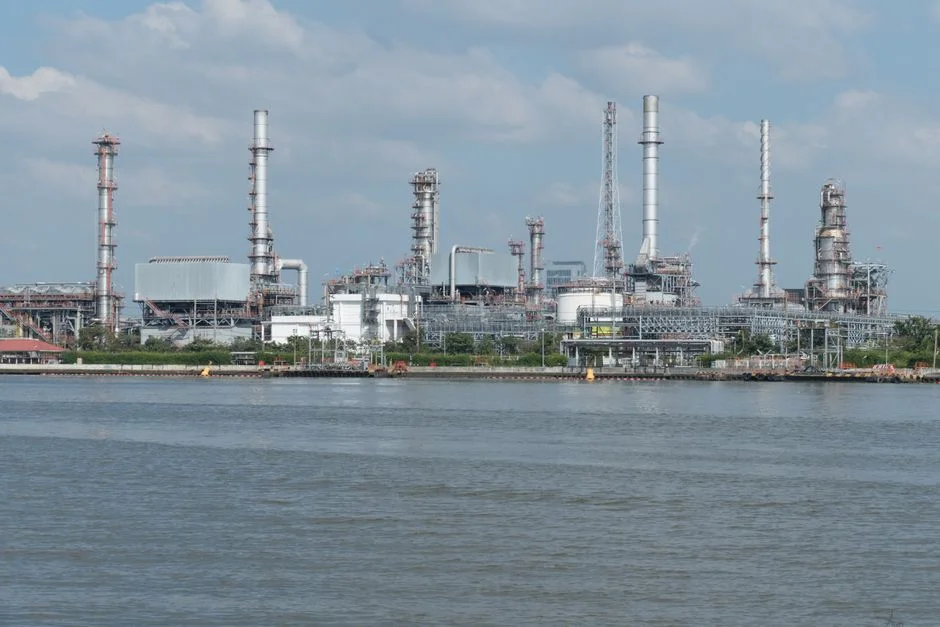
A defensible food and beverage pretreatment train generally progresses from screening to equalization, DAF, biological treatment, chemical precipitation and final polishing. Every stage needs an assigned pollutant, a measurable verification method and a defined corrective action. Omitting equalization or polishing because the equipment package looks simpler can shift the risk to biological upset, an unrepresentative composite sample or a permit exceedance.
Screening removes product pieces, packaging debris and other large solids that could damage pumps or interfere with downstream biological treatment. Equalization buffers production surges, CIP chemical spikes, temperature excursions and hydraulic overload. DAF then removes FOG and floatable suspended material before biological treatment. Activated sludge or another biological process addresses dissolved biodegradable organics. Chemical precipitation addresses phosphorus, while final polishing handles residual solids or other permit-specific parameters. For a technology comparison, review DAF versus clarifier for food and beverage wastewater.
HydropureWater gives DAF screening context of 4–25 m/h surface loading, an air-to-solids ratio of 0.005–0.02 and recycle at 20–40% of forward flow. The selected operating point must be established from influent FOG, TSS, treatment objectives and pilot or jar-test evidence. An industrial DAF system for FOG removal should therefore be evaluated against the actual waste stream, not catalog hydraulic capacity alone.
| Stage | Primary failure mode addressed | Verification metric | First corrective action |
|---|---|---|---|
| Screening | Large solids entering pumps or biological systems | Screen differential level and captured solids | Inspect screen, rake and downstream transfer |
| Equalization | Flow, pH, temperature or chemical shock | Level, pH, temperature and influent load trends | Verify basin working volume, mixing and trim controls |
| DAF | FOG pass-through and excess floatable solids | FOG, TSS, float depth and recycle rate | Check coagulant dose, recycle rate and flotation loading |
| Biological treatment | Dissolved biodegradable organics and solids carryover | BOD, TSS, process stability and sludge condition | Review feed load, aeration, settling and control response |
| Chemical precipitation | Phosphorus exceedance | Total phosphorus, dose, pH and mixed-liquor alkalinity | Adjust chemical feed and inspect flocculation |
| Final polishing | Residual solids or permit-specific exceedance | Permit parameter and filtrate or effluent quality | Check filter condition, backwash or cartridge loading |
Hixson cites optimized poultry DAF results of 74% suspended-solids removal and 99% oil-and-grease removal under field-study conditions. Those results are field context, not a guarantee for another food-processing stream. Project design still requires jar testing and pilot confirmation where the waste is variable or the permit margin is narrow.
Use the troubleshooting map deliberately: FOG pass-through indicates under-dosed coagulant or flotation overload; a pH excursion points to inadequate equalization or failed trim control; a CIP-cycle hydraulic overload points to an undersized equalization basin; and solids breakthrough during phosphorus control indicates poor flocculation. For broader sequencing guidance, see the SBR treatment-train guide.
Size DAF and biological systems from four measurable inputs
HydropureWater identifies four core inputs for preliminary food and beverage equipment sizing: forward flow, peak-to-average ratio, raw BOD and raw FOG. These inputs establish hydraulic and organic loading; they do not replace the current permit, site-specific testing or final process design. Average flow alone cannot describe a plant that discharges a high-strength batch during a short CIP cycle.
The worksheet below separates available evidence from design assumptions. Every value should carry a source, sampling date and confirmation status. A row remains open until the missing evidence is obtained.
| Input or design variable | Available data | Design value | Source | Confirmation status |
|---|---|---|---|---|
| Forward flow | Not yet supplied | To be determined | Flow-duration study | Open |
| Peak-to-average ratio | Not yet supplied | To be determined | Production and CIP log | Open |
| Raw BOD load | Not yet supplied | To be determined | Composite characterization | Open |
| Raw FOG load | Not yet supplied | To be determined | Source-stream testing | Open |
| Hydraulic retention time | Not yet supplied | 8–24 h conventional activated sludge; 4–10 h MBR | HydropureWater, 2026 | Confirm against pilot and permit |
| MLSS | Not yet supplied | 3,000–5,000 mg/L conventional; 8,000–12,000 mg/L MBR | HydropureWater, 2026 | Confirm against process model |
| Dissolved oxygen | Not yet supplied | 1.5–2.5 mg/L where nitrification is required | HydropureWater, 2026 | Confirm against permit and biology |
| Phosphorus chemical dose | Not yet supplied | 50–250 mg/L alum or 30–150 mg/L ferric chloride | HydropureWater, 2026 | Set by jar testing |
The cited biological and chemical values are screening ranges from HydropureWater's 2026 guidance. Chemical dose must be established by jar testing using phosphorus speciation and mixed-liquor alkalinity. Similarly, hydraulic retention and solids inventory require process-model refinement against the selected reactor configuration, temperature, seasonal loads and permit limits.
Final sizing remains blocked without the water-usage diagram, drain segregation, recycled-water returns, production forecast, permit limits, temperature profile and seasonal loading record. An integrated MBR wastewater treatment system should be compared with conventional activated sludge only after those inputs and the biological design basis are resolved. See also the frozen-food process-design guide.
Turn treatment into a defensible compliance system
HydropureWater states that most food and beverage categorical permits require 24-hour composite sampling for BOD, TSS, FOG and total phosphorus, while significant industrial users commonly need continuous pH and flow monitoring. That is a useful screening rule, but the plant's current permit controls. Sampling frequency, sample type, analyte list, preservation, analysis method and reporting deadline must be confirmed with the identified POTW and relevant state agency.
Create an event log that brings process and compliance evidence together. At minimum, capture flow, pH, temperature, DAF condition, biological-process status, chemical dose, alarms, operator actions and automatic or manual sampling events. Time-stamp excursions against batch and CIP schedules. A composite result can miss a short release unless the sampling program and operating record capture the event.
- Complete influent characterization under normal, peak and CIP conditions.
- Complete equipment factory and site acceptance testing against an approved cause-and-effect matrix.
- Perform hydraulic, control, alarm and power-failure tests.
- Confirm chemical dosing with jar testing and pilot testing where used.
- Complete a 30-day performance test, operator training and permit-contact verification.
- Reconcile laboratory results, monitor data, deviations and corrective actions during commissioning.
A passing sample does not resolve a prohibited or reportable excursion that was neither captured nor escalated. Testing, calibration, alarm response, deviation investigation and reporting must operate as one system. For chemical-feed controls, see chemical dosing cost optimization.
Do not assume a common electronic reporting portal across Canton-area facilities. The identified POTW must confirm its reporting channel, file format, certification process and noncompliance-notification procedure. Automatic data capture improves traceability only when the retained record, alarm routing and reporting workflow have been tested against the permit.
Equipment selection and procurement checklist
Equipment selection should compare each technology against the actual permit and wastewater, not a generic treatment train. DAF is appropriate where FOG and floatable solids must be removed upstream of biological treatment. A clarifier may offer a simpler solids-separation route where the waste profile and permit allow it. An MBR combines biological treatment with membrane filtration and occupies a different capital, operating and maintenance envelope. Compare the DAF and clarifier options against an integrated MBR wastewater treatment system using the same design basis.
| Bid item | Information the supplier must state | Buyer check |
|---|---|---|
| Guaranteed duty | Forward flow, peak factor and relevant raw pollutant loads | Does the guarantee match the permitted design basis? |
| Performance | Contaminant removal or effluent obligations, test method and operating conditions | Is performance guaranteed or stated as expected? |
| Operating resources | Chemical consumption, utilities, turndown and redundancy | Are assumptions included? |
| Controls and acceptance | Controls scope, FAT/SAT plan, alarms and training | Can the permit duties be demonstrated? |
| Residuals | Sludge concentration, disposal route and dewatering interface | Is total downstream capacity included? |
| Uncertainty | Values requiring jar or pilot confirmation | Are they improperly guaranteed? |
Every bid should state the guaranteed flow, influent design basis, performance parameters, chemical consumption, utilities, turndown, redundancy, controls scope, FAT/SAT plan, warranty and O&M assumptions. Ask each supplier to identify every performance value that must be confirmed by pilot testing rather than inferred from catalog data.
For sludge-generating systems, include concentration, removal, storage, disposal and downstream dewatering requirements in the compliance evaluation. Separately budget financing, operating labor, chemicals, energy and downtime. The supplied research supports chemical-efficiency considerations but does not provide a site-specific capital-cost range; a defensible estimate requires the proposed train, utility rates, chemical prices, labor basis and residual-disposal route. The cost-breakdown framework can help structure those inputs without substituting them for a site estimate.
Frequently Asked Questions
Is DAF or an MBR the better choice for food and beverage wastewater?
DAF is commonly placed upstream of biological treatment to remove FOG and floatable suspended solids. An MBR is a biological treatment and membrane-polishing option; it is not a direct substitute for DAF when FOG removal remains necessary. Select the train by mapping each stage to a permit parameter and failure mode. The activated-sludge troubleshooting guide can help assess the biological stage after FOG and solids loading have been characterized.
What information is required to size pretreatment equipment reliably?
At minimum, obtain forward flow, peak-to-average ratio, raw BOD and raw FOG, then add the applicable permit limits. Average flow alone is insufficient. Final sizing also needs the water-usage diagram, segregated drains, recycled-water returns, production forecast, temperature and seasonal load profile, and a sampling plan that includes the weakest observed treatment condition.
How should procurement teams compare supplier bids?
Use one common design basis and require each bid to define its guaranteed flow, raw influent basis, process guarantees, pilot-test obligations, FAT/SAT plan, controls, sludge handling and lifecycle operating costs. Separately verify chemical use, energy demand, redundancy and downstream residual capacity. Reject bids that present catalog performance without identifying the operating conditions or test method on which it depends.
What should be included in a site-specific pretreatment budget?
Request current utility rates, chemical prices, available operating labor, sludge-disposal costs and the proposed process train before calculating project cost. The supplied sources do not support a capital-cost range for a Canton-area food or beverage installation. Price equipment, installation, controls, utilities, chemicals, labor, residuals and downtime separately so that permit-critical operating costs remain visible.