How to choose DAF or clarifier for a Caldwell food plant
For Caldwell food and beverage plants in 2026, choose DAF when FOG, oil, colloidal material, or fragments of spent product are important targets; choose a clarifier when the load is predominantly settleable solids and lower energy use is the priority. A lamella clarifier is especially relevant where an existing basin is serviceable. DAF generally produces a more concentrated float, but it requires air compression and careful coagulation control. Neither technology should be selected from a generic flow chart: bench or pilot testing of the actual stream should establish hydraulic loading, air demand, chemical dose, and achievable TSS and FOG removal before purchase.
The first decision gate is wastewater characterization, not equipment layout. Floatable FOG and oil point toward DAF; settleable grit and food solids point toward gravity clarification; poorly settleable or colloidal material may require chemical conditioning before either route can perform reliably. The Portland food and beverage guide used in the research presents this as a 2026 decision framework, but its permit assumptions and commercial estimates are not Caldwell requirements.
Include CIP cleaning, washdown, syrup or product-loss streams, fruit pulp, spent grains, and bottle-wash surfactant carryover in the sampling program. Account for variable pH and the possibility that a chemical or particulate fraction will sink rather than float. Do not average away a CIP peak: simultaneous flow and pollutant loading can control the equipment size even when annual production volume appears modest.
| Observed stream condition | First process direction | Decision still required |
|---|---|---|
| Floatable FOG, oil, or fragile product solids | Conditioning followed by dissolved air flotation | Confirm floatability, skimming, and whether solids will sink |
| Predominantly settleable grit or food solids | Lamella clarification or gravity sedimentation | Confirm settling velocity, basin condition, and sludge withdrawal |
| Colloids or mixed FOG and solids | Jar-test coagulation, then compare DAF and clarification | Establish chemical demand and actual Caldwell outlet results |
| Serviceable existing clarifier with an FOG or polishing deficit | Test DAF as an upstream polish stage | Verify basin hydraulics, structure, and overall process compatibility |
Use DAF when floatable material and recovered water quality justify the recycle pump, compressor, and chemical system. A food and beverage DAF system is a candidate for that duty. Use a lamella clarifier when settling is reliable and simpler gravity operation is sufficient. The Portland guide describes DAF as a potentially lower-capital retrofit ahead of an existing clarifier, but requires jar testing and a chemistry audit; that is a case to test, not an automatic selection.
What Caldwell wastewater data should drive the decision
Caldwell’s permit, receiving sewer criteria, and actual wastewater characteristics determine the equipment decision; no supplied source provides Caldwell-specific numeric effluent limits for TSS, FOG, BOD, COD, pH, or temperature. Obtain those values in writing from the current permit, City of Caldwell, receiving POTW, and site sampling rather than importing another city’s thresholds or surcharge assumptions.
Request hourly average flow and peak hourly flow during CIP cleaning from the plant’s production and cleaning records. A production-day average does not expose the hydraulic surge that can overlap with syrup loss, rejected product, or fruit pulp. Define whether the relevant design event is the peak flow alone or simultaneous peak flow and pollutant loading, and document the operating duration of that event.
| Data request | Required use | Acceptable evidence |
|---|---|---|
| Hourly average and peak-hour flow, including CIP events | Hydraulic and equalization design | Meter records and production/CIP log |
| Influent and target effluent TSS, FOG, BOD/COD, pH, and temperature | Unit selection and performance guarantee | Site sampling plus written permit or reuse criteria |
| Phosphorus and nitrogen | Include where the permit or reuse specification requires them | Current written discharge or reuse requirement |
| CIP chemistry, product-loss composition, and surfactant carryover | Conditioning, materials, and downstream protection | Batch records and chemical inventory |
| Industrial-user authorization, local requirements, and review process | Compliance pathway | Direct confirmation with the City of Caldwell and receiving POTW |
The beverage DAF design guide, published by HydropureWater in 2026, identifies TSS, FOG, BOD/COD, pH, and temperature as required influent data. It does not publish Caldwell-specific numeric limits, so each supplier should supply its own design inputs and outlet assumptions for comparison. Where relevant, also require nutrients only if the current permit or reuse specification demands them.
Do not rely on the U.S. EPA’s Emerging Technologies for Wastewater Treatment and In-Plant Wet Weather Management as a current Caldwell standard. The report was published in March 2013, and its preface says some technology information was vendor-supplied, some cost data relied on estimated savings without full field data, and current information should be collected before evaluating technology, cost, or stated performance. It remains background material, not a substitute for 2026 permit confirmation.
Document the industrial-user discharge authorization, local sewer surcharge or pretreatment requirements, reuse criteria, and receiving authority review path. Confirm them directly with the City of Caldwell and receiving POTW. A GX rotary mechanical bar screen may be needed upstream, while a PLC-controlled chemical dosing system should follow the selected chemistry, but neither resolves the permit requirements.
Why DAF and clarification remove different material
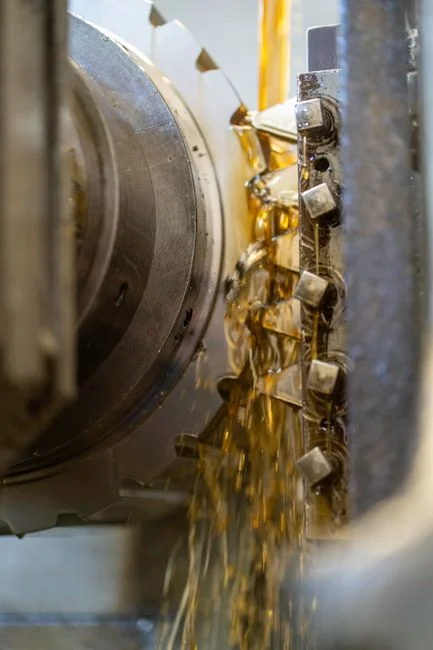
DAF and clarification separate different particle fractions because they use different physical forces, and the wastewater’s floatability determines which process can recover the required material. DAF introduces compressed-air micro-bubbles into conditioned flocs. The bubbles attach to suspended solids, organic matter, hydrocarbons, phosphorus, and nitrogen and carry them toward a surface blanket that can be skimmed. Clarification instead depends on gravity, density, and settling behavior.
A lamella clarifier improves effective separation area with inclined plates, while the hydraulic benefit still depends on the particles settling rather than floating. The HydropureWater catalog claim of 20–40 m/h surface loading and up to 30% lower chemical consumption is a manufacturer claim, not a Caldwell guarantee. Require the supplier to define the basis of both figures and show how the actual stream and selected chemical affect them.
The Portland guide reports DAF removal of 92–97% TSS and up to 95% FOG. These are site-specific HydropureWater claims, not a performance guarantee for a Caldwell plant. The same guide reports clarifier TSS removal below 50% on FOG duty. That contrast is mechanistically useful: a clarifier can perform well on genuinely settleable material while performing poorly when floatable or poorly settling FOG is the target.
| Process mechanism | Material most readily separated | Main engineering limitation |
|---|---|---|
| Dissolved air flotation | Flocculated suspended solids, hydrocarbons, FOG, and associated organics | Floc stability, bubble attachment, air supply, recycle, and skimming |
| Gravity sedimentation | Dense, readily settleable solids | Particle settling velocity, basin area, retention, and sludge withdrawal |
| Lamella clarification | Settleable solids within the effective inclined-plate area | Hydraulic distribution, plate condition, and solids inventory |
Use the process sequence, not the product label, to judge the proposal: screening and flow equalization, chemical conditioning and flocculation, DAF or lamella clarification, then sludge handling and any required downstream polishing. A food-processing stream can also contain fibrous debris, fruit solids, hair, and packaging fragments that interfere with pumps, recycle nozzles, and plate surfaces. A plate-and-frame sludge filter press may be required downstream, but its feed acceptance must be checked against the float and sinking solids actually produced.
Do not allow “DAF” or “lamella” to substitute for an outlet guarantee. The minimum comparison remains TSS and FOG at the written Caldwell target, with operating conditions, chemical range, and upstream screening stated explicitly.
DAF versus clarifier: performance, footprint, energy, and maintenance
DAF adds powered recycle, air saturation, and compression duties; clarification shifts the burden to basin area, hydraulic distribution, and reliable solids collection. The Portland guide reports DAF energy use of 0.2–0.5 kWh/m³, while a clarifier has near-zero aeration and minimal pumping needs. These figures are location-specific guide values rather than Caldwell tariffs or guaranteed operating costs.
DAF can also increase sludge concentration. The Portland guide reports float at 3–5% solids compared with clarifier underflow at 1–2%, and estimates 50–70% lower hauled-sludge volume for DAF. Treat that estimate as a screening assumption. Confirm float and underflow solids from bench or pilot testing, then compare the actual disposal route and Caldwell hauling cost.
| Buyer issue | DAF | Clarifier |
|---|---|---|
| Separation target | Floatable and flocculated material | Predominantly settleable material |
| Energy | Recycle pump, saturation vessel, and air compressor | Near-zero aeration; minimal pumping |
| Solids handling | Surface float plus possible sinking sludge | Bottom sludge or underflow |
| Site condition | Useful where footprint is constrained or a serviceable clarifier needs polishing | Existing serviceable basin can materially improve economics |
| Maintenance exposure | Chemical system, recycle system, compressor, skimmer, and clogged nozzles | Rake, sludge drawdown, basin condition, and hydraulic distribution |
| Published screening evidence | Portland guide reports 92–97% TSS and up to 95% FOG removal; site-specific HydropureWater claims | Portland guide reports below 50% TSS removal on FOG duty |
A DAF must provide separate routes for skimming surface float and withdrawing bottom sludge. DAF can produce sinking sludge when chemicals or particulates do not float, and the proposed cake dewatering system must be defined around both streams. The food-processing design should also address fibrous and packaging debris upstream. The Portland guide specifies a 2–3 mm rotary mechanical bar screen before the DAF because of nozzle-clogging risk, but that size is a guide specification rather than a Caldwell requirement.
DAF Corp separately states that its rectangular RC UniMax systems achieve 85–90% TSS removal and that its circular FC Maximizer systems achieve 92–98%. These are product-specific manufacturer claims, not comparable Caldwell guarantees. Require identical influent conditions, outlet definitions, test procedures, and loading bases when asking each supplier to demonstrate performance.
Footprint should be calculated at the selected design flow and solids loading, then checked against pipe routing, access, screenings, sludge handling, and future maintenance. A small equipment footprint does not necessarily mean a small installation. Conversely, a large existing basin may make clarification less expensive if its structure, coating, rake, drawdown, and hydraulics remain serviceable.
When a hybrid system is the smarter Caldwell option
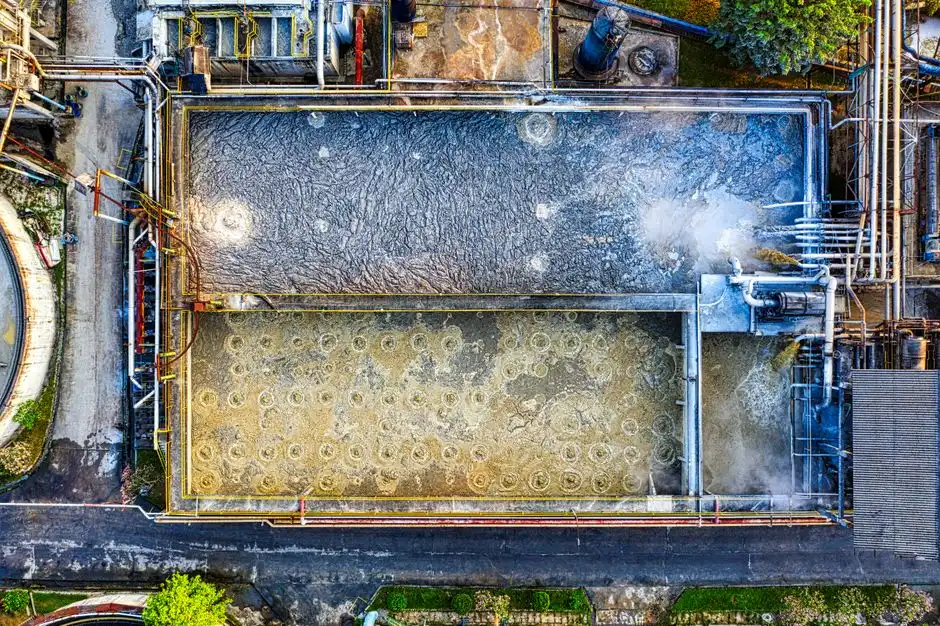
A hybrid DAF-as-polish stage is appropriate when an existing clarifier remains structurally and hydraulically sound but cannot meet the current Caldwell outlet requirement, especially where floatable FOG is the main gap. DAF can remove floatables before the clarifier handles the bulk solids, potentially reducing the scope of a basin rebuild. It remains a tested retrofit hypothesis, not a guaranteed outcome.
The Portland guide describes this as a 2026 retrofit path that may reach compliance at roughly half the capital cost of full DAF replacement. That is a location-specific commercial estimate, not a Caldwell budget, and it cannot be transferred without Caldwell flow, permit, basin, sludge-disposal, and site data. Request a transparent comparison of the complete hybrid scope against a standalone DAF and clarification-only alternatives.
Before selecting the hybrid, inspect the basin for structural integrity, coating condition, rake operation, sludge drawdown, hydraulic capacity, and available freeboard. Confirm that the existing unit can receive the DAF-polished stream without remobilizing solids, short-circuiting, or creating an unacceptable solids inventory. Then bench-test the combined process on the actual Caldwell wastewater.
Chemistry can decide whether the hybrid works. The Portland guide identifies pH 6.5–8.5 as a hard condition for common cationic flocculants. CIP chemicals can push pH outside that range, so include pH adjustment, chemical compatibility, and an operator-response plan in the review. A PLC-controlled chemical dosing system should follow the jar-test result, while a food and beverage DAF system should not be credited with performance that was not demonstrated in the combined test.
How to size, test, and specify the system
Size around the relevant peak flow and simultaneous peak pollutant loading, and place flow equalization upstream where production and CIP peaks overlap. The 2026 beverage DAF design guide requires hourly average flow, peak-hour CIP flow, influent TSS, FOG, BOD/COD, pH, and temperature. It also requires each supplier to state hydraulic loading rate, air-to-solids ratio, recycle rate as a percentage of forward flow, and flocculation retention time. No Caldwell-specific values for these design outputs are supplied; obtain them in writing and validate them on the actual stream.
- Verify authority requirements. Obtain the current industrial-user authorization, discharge or reuse targets, surcharge rules, and review process from the City of Caldwell and receiving POTW.
- Characterize the stream. Sample normal production, product loss, washdown, and CIP-spiked conditions. Record flow, TSS, FOG, BOD/COD, pH, temperature, and applicable nutrients.
- Run jar testing. Test suitable coagulants and at least one polymer at multiple dose levels. The 2026 beverage DAF guide lists alum, poly aluminum chloride, poly aluminum sulfate, ferric chloride, bentonite, and organic polymers for screening; it does not prescribe one universal chemical.
- Compare physical separation. Test DAF and clarification on the conditioned wastewater, including float recovery, underflow or sinking-sludge behavior, and outlet quality.
- Validate at pilot scale. Exercise the shortlisted design with the actual Caldwell stream and CIP-spiked conditions. Do not lock a guarantee from jar-test results alone.
- Issue a controlled RFQ. Require comparable design outputs, outlet guarantees, controls scope, testing, training, and solids interfaces.
| RFQ item | Supplier response required | Buyer acceptance check |
|---|---|---|
| Hydraulic loading | m³/m²·h at the design TSS loading | Peak flow and solids load are explicitly included |
| Air-to-solids performance | A curve, not a single test point | Curve covers the proposed design loading |
| Recycle rate | Percentage of forward flow | Recycle pump and air demand are sized consistently |
| Flocculation retention | Minutes | Selected chemical and mixing arrangement are identified |
| Performance | Written outlet guarantees for the Caldwell target | Definitions, test method, influent basis, and conditions are stated |
| Commissioning | SAT, startup sequence, operator training, PLC scope, and critical spares | Site acceptance and training obligations are contractual |
| Solids interface | Float, sinking sludge, concentration, and dewatering route | Residual-solids handling is defined |
Request food-and-beverage references because beverage wastewater is not interchangeable with refinery or metalworking wastewater. Require site-specific bench or pilot results, written outlet guarantees, SAT, operator training, PLC scope, startup sequence, critical spares, and a defined sludge interface. The PLC-controlled chemical dosing system should be tied to the tested chemical range, and any downstream plate-and-frame sludge filter press should be checked against the measured float and underflow characteristics.
Frequently Asked Questions
Is DAF or a lamella clarifier the cheaper option for a Caldwell food plant?
There is no defensible universal 2026 price for either option. The lower-cost choice depends on Caldwell peak flow, permit limits, chemical demand, energy cost, existing basin condition, sludge concentration, and disposal cost. Request an installed-cost comparison with separate prices for equipment, civil work, screening, chemical storage, controls, sludge dewatering, and disposal. Ask each bidder to identify which assumptions drive the difference. No supplied source provides a Caldwell-specific quotation or payback period, so do not accept a price without the underlying flow, load, and local-cost inputs.
How should a Caldwell food or beverage DAF system or lamella clarifier be sized?
Size from the relevant peak-hour flow and simultaneous peak pollutant loading, not a production-day average. Require the supplier to state hydraulic loading rate in m³/m²·h at the design TSS loading, recycle rate as a percentage of forward flow, flocculation retention time, and air-to-solids performance across a curve. Use equalization where CIP and production peaks overlap. Confirm the selected basis through bench or pilot testing on the actual Caldwell stream, including CIP-spiked conditions.
Which supplier qualifications reduce commissioning risk for food-processing wastewater?
Require food-and-beverage references for comparable streams, site-specific test data, and written outlet guarantees. Also require a defined startup sequence, SAT, operator training, PLC and alarm scope, chemical turndown, critical spares, and a clear solids-handling interface. These checks address different risks: references expose operating experience, test data supports the design, and contractual guarantees define what happens when performance is not achieved.
How can an equipment choice avoid failing Caldwell pretreatment or discharge requirements?
Verify the current industrial-user authorization and receiving-POTW criteria before selecting equipment, and include those written TSS, FOG, and other applicable limits in the RFQ and performance guarantee. Do not import Portland tariff or surcharge assumptions into a Caldwell budget. Require bench or pilot evidence using the actual stream, then obtain written acceptance criteria covering representative samples, test methods, and operating conditions. If a reused clarifier is part of the proposal, document its remaining hydraulic and structural capacity as part of the compliance case.