Which Process Fits the Wastewater?
For plastics and rubber wastewater in Akron, factories should generally choose DAF when oil, grease, latex, coating residues or other low-specific-gravity solids are a significant fraction of the load; choose a clarifier when the conditioned solids are primarily settleable. A DAF unit uses 30–50 micrometer microbubbles to float conditioned particles, while a clarifier separates solids by gravity, often with lamella plates. The better choice depends on measured buoyancies, suspended-solids and FOG loading, flow variation, chemical use, sludge handling, available footprint and discharge or reuse requirements. No single process should be selected from a generic “plastics” or “rubber” label alone.
Start with the wastewater, not the industry category. For an industrial DAF system for plastics and rubber wastewater, the stronger starting case is a stream with meaningful floating oil, grease, latex, coating residues, plasticizers or particles that remain suspended because their specific gravity is insufficient for dependable settling. DAF can collect that material as a surface float, although the float’s water content, recoverability and downstream dewatering still require site-specific evaluation.
The stronger starting case for a lamella clarifier for settleable industrial solids is a stream in which bench testing shows that most solids can be conditioned into floc that settles reliably. That choice generally favors a simpler gravity-separation train, but it remains dependent on hydraulic and solids-loading calculations rather than the word “lamella.”
A hybrid train deserves consideration when the wastewater contains both heavy fillers or grit that settle and a lighter fraction that floats. In that case, DAF can include a bottom solids-removal zone, while an upstream or downstream solids-contact clarification stage can manage the heavier fraction. The supplied research does not establish a universal hybrid arrangement for Akron factories; the configuration must follow a measured solids split and peak-load assessment.
“Plastics” and “rubber” are not wastewater classifications. The same production site may generate wash water, purge material, pellet-handling losses, coating residues and cleaning discharges with materially different physical behavior. EPA’s Process Design Manual for Suspended Solids Removal distinguishes gravity separation, physical straining and granular media filtration; clarification addresses only the settleable-solids portion of the problem. Source control, screening, equalization and chemical conditioning remain part of the treatment decision.
How DAF and Clarifiers Separate Wastewater Solids
Dissolved air flotation uses pressurized air released as microbubbles to attach to conditioned particles, lift them to the surface and form a float that a skimmer removes; heavier particles may settle into a bottom collection zone.
Clearwater Industries’ commercial DAF literature, published 2026-04-27, identifies the microbubbles as 30–50 micrometers. Its description also states that DAF should be paired with coagulation and flocculation so particles become larger and more able to contact the bubbles. A paddle skimmer removes the floated solids, while heavier solids are removed from a bottom collection zone. In practical terms, DAF is not simply a tank in which everything rises: it is a conditioned flotation system with a solids-recovery mechanism for both floating and settled fractions.
A gravity clarifier separates conditioned solids by settling. A lamella clarifier improves the effective separation area through inclined plates, allowing solids to slide from the plates into a collection zone. A buyer should specify the intended mechanism because some manufacturers call DAF tanks “DAF clarifiers,” as Clearwater Industries does in its 2026-04-27 DAF literature. The purchase specification should say either “dissolved air flotation with recycle, pressurization, air saturation and surface-skimmer collection” or “gravity sedimentation with lamella plates and bottom sludge withdrawal.”
EPA’s Process Design Manual for Suspended Solids Removal, January 1975, identifies soluble, colloidal, supracolloidal and settleable fractions and states that particle size, specific gravity and strength or shear resistance can affect separation performance. The manual also explains that coagulation and flocculation alter solids characteristics to facilitate physical separation. That distinction matters for plastics and rubber plants: a particle can be suspended, float after conditioning, or settle after conditioning, and the desired floc structure is different in DAF and gravity systems.
| Design item | Dissolved air flotation | Gravity or lamella clarifier |
|---|---|---|
| Separation mechanism | Conditioned particles attach to microbubbles and float | Conditioned particles settle by gravity |
| Required floc behavior | Enough size and durability to contact and attach to bubbles | Enough density and durability to settle without shearing apart |
| Solids collection | Surface float removed by skimmer; heavier solids may collect at the bottom | Bottom sludge withdrawal |
| Key auxiliary systems | Recycle pump, pressurization, air saturation, release mechanism and skimmer | Inlet design, settling hydraulics, sludge withdrawal and potentially sludge recirculation |
| Terminology control | State “DAF” and require flotation, recycle and skimmer details | State “gravity sedimentation” or “lamella clarifier” and require plate, inlet and sludge details |
Plastics and Rubber Wastewater Conditions That Drive the Choice
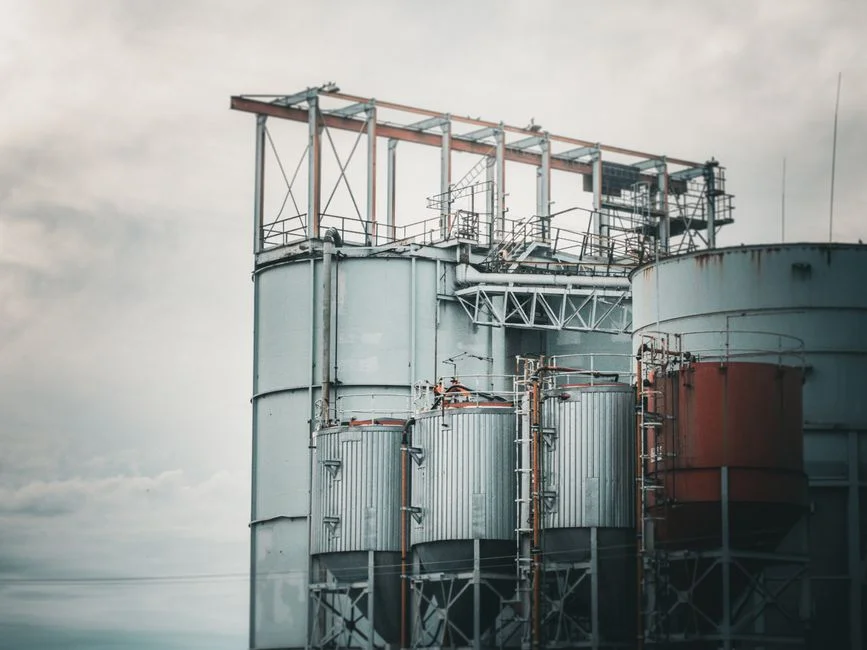
The physical composition of each source stream—not the production label—determines whether flotation or gravity separation should lead the treatment train.
For polymer processing, map wastewater by origin. Extrusion cleanup, purge material and pellet handling may generate particles and fragments; washing and recycling can add suspended solids and degraded polymer; coating operations can contribute residues, oils or other poorly settling material. The relevant question is whether contaminants are solid, emulsified, dissolved or free-floating, and whether they remain discrete or reform into particles downstream.
For tire and rubber processing, examine elastomer fines, carbon black, mineral fillers, release oils, surfactants and wash-water solids as separate fractions. Elastomer and carbon-black behavior can differ from that of mineral filler, while release oils can create a floating or emulsified load that changes both clarification demand and the required chemical program. Do not assume that lightweight polymer material will float; determine whether it is buoyant, neutrally buoyant or trapped below the surface.
Jar tests or comparable bench work should record:
- settleable, floatable and remaining suspended fractions;
- settling velocity and observed floc durability under mixing;
- particle specific gravity or flotation response;
- pH, oil-and-grease characteristics and chemical demand;
- performance at representative production and cleaning discharges.
EPA’s January 1975 manual gives 200 mg/L as a typical suspended-solids concentration for raw domestic wastewater. That is a municipal example, not an industrial design basis for a plastics or rubber facility. It should not be used to size an Akron clarifier or DAF unit or to predict factory effluent.
Batch production makes peak conditions as important as daily averages. Cleaning cycles, polymer-grade changes, temperature changes and intermittent high-strength discharges can shift both flow and contaminant loading. The design basis must identify which discharges are continuously treated, which are segregated, and which require equalization. EPA’s manual specifically addresses flow variation, performance under variable flow and flow equalization, making it useful process guidance even though it is a January 1975 publication and not a current equipment standard.
Chemical demand should be established during testing rather than inferred from the product category. An automatic chemical dosing system for controlled coagulation and flocculation can support repeatable operation, but the pump and tank arrangement must match the chemistry demonstrated by jar or pilot testing. A supplier claiming that one polymer or coagulant suits every plastics or rubber stream has not established a defensible basis for the factory.
DAF or Clarifier: Head-to-Head Comparison
DAF earns its place when the treatment objective is to recover floatable material, while a clarifier earns its place when the conditioned solids reliably settle and a simpler gravity-separation train is appropriate.
| Evaluation criterion | DAF | Gravity or lamella clarifier | Selection check |
|---|---|---|---|
| Primary separation advantage | Floatable solids, oil and grease, and particles made buoyant by conditioning | Dense conditioned solids that settle under gravity | Measure the floatable and settleable mass fractions separately |
| Floc requirement | Particles must contact and attach to microbubbles | Floc must remain settleable and resist breakup | Run jar or pilot tests at representative mixing intensity |
| Solids output | Skimmer-collected float; some DAF systems also collect bottom solids | Settled sludge withdrawn from the bottom | Test water content, volume and dewatering demand |
| Process complexity | Adds recycle, pressurization, air saturation, bubble release and skimming | Depends more heavily on settling hydraulics, inlet design, sludge withdrawal and sludge recirculation | Compare utilities, controls, operator steps and maintenance access |
| Chemical program | Requires conditioning that promotes bubble contact and floc durability | Requires conditioning that produces dense, settleable floc | Compare tested chemical consumption and pH control |
| Main operating risk | Poor attachment, short float residence, carryover or unstable float | Carryover, sludge blanket problems or poorly distributed flow | Include upset and cleaning conditions in testing |
| Footprint basis | Model-specific flotation area, recycle and loading criteria | Surface loading and hydraulic criteria | Compare the engineered basis, not tank dimensions alone |
Both processes can benefit from chemical conditioning, but the floc objective differs. A DAF floc must remain intact through contact with bubbles and flotation; a gravity-settlement floc must remain dense enough to settle and must not shear apart in the inlet zone. Clearwater Industries’ 2026-04-27 guidance states that DAF should be paired with proper coagulation and flocculation, while its earlier commercial guidance identifies 15–45 seconds for serpentine flocculation tubes and states that some chemicals require longer contact determined through jar testing.
DAF’s skimmer makes surface recovery operationally accessible, while a clarifier naturally produces bottom sludge. Neither mechanism determines dewatering performance by itself. Actual float and sludge water content, polymer or oil content, volume and downstream handling must be measured with representative solids.
Footprint comparisons require the selected model’s hydraulic data. HydropureWater’s lamella product lists 20–40 m/h surface loading as a manufacturer specification, while DAF capacity depends on the selected flotation model and wastewater loading. HydropureWater also lists 13 DAF models from 4–300 m³/h. Those figures describe supplier offerings, not proof that a particular unit will meet factory performance or permit requirements.
Some commercial DAF units incorporate lamella packing to reduce overflow velocity. That does not make them gravity clarifiers: if the operating principle is bubble attachment and skimming, the equipment remains a DAF system. Bid language should identify the mechanism and performance obligations, not rely on the product category alone.
Build the Right Treatment Train in Akron
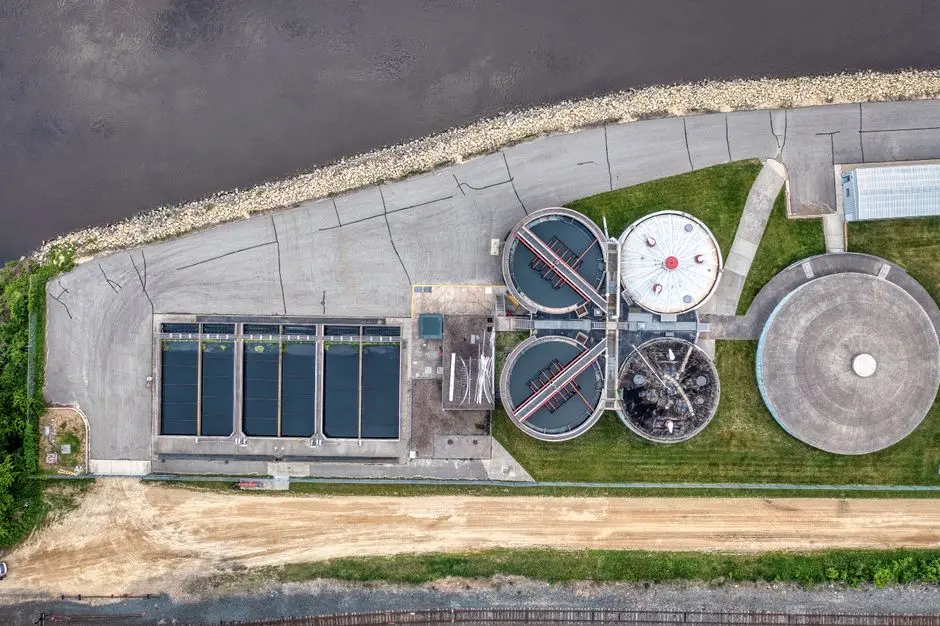
Source control and characterization should precede clarification-equipment selection because batch cleaning and purge streams can determine whether a system is hydraulically or chemically overloaded.
- Segment the wastewater. Identify washing, extrusion cleanup, purge, pellet handling, coating, compaction, recycling and tire or rubber washing streams. Keep concentrated cleaning or purge discharges separate until their treatment route is established.
- Remove damaging bulk material. Use screening or straining where fibrous material, pellets or bulky debris could enter pumps, mixers or sludge handling. A rotary mechanical bar screen for factory wastewater pretreatment may be relevant for that role. EPA’s January 1975 manual lists physical straining as a distinct solids-separation process, separate from gravity separation and granular media filtration.
- Equalize variable flows and loads. Size the equalization duty around production, cleaning and discharge variations rather than average flow alone. EPA’s manual specifically addresses flow variation, performance under variable flow and flow equalization.
- Condition the solids. Provide rapid chemical mixing followed by contact and flocculation before the selected clarifier. The automatic chemical dosing system used for wastewater coagulation and flocculation must be coordinated with the mixer and contact-time design.
- Recover and dewater solids. Plan float or sludge withdrawal, storage and dewatering around the selected process. Where further liquid-solid separation is required, evaluate a plate-and-frame filter press for sludge dewatering using representative solids rather than assuming either DAF float or clarifier sludge will dewater identically.
- Confirm the disposal route. Check the factory’s current sewer permit, pretreatment limits, sampling and monitoring requirements before the process is specified. The supplied research establishes no universal Akron discharge limit, and the final train must address the applicable permit and reuse destination.
For a mixed plant, the process sequence may be source segregation, screening, equalization, chemical conditioning, clarification, solids recovery and either further dewatering or permitted disposal. The purpose of each step should be defined by the contaminant it removes. Equipment should not be added simply because another treatment stage appears in a generic industrial flow diagram.
Sizing, Pilot Testing and Supplier Evaluation
A defensible 2026 specification should state the wastewater design basis, treatment objectives and demonstrated performance rather than select a unit from flow capacity alone.
| Procurement package | Information to require | Reason for the check |
|---|---|---|
| Design basis | Average and peak flow; suspended solids, floatable solids and oil-and-grease loads; production and cleaning schedule | Prevents selection from an incomplete flow-only basis |
| Mass balance | Expected floatable solids, settled solids, residual suspended solids and chemical addition | Connects equipment separation to solids handling and treatment performance |
| Performance test | Representative-wastewater jar or pilot results for pH, mixing, contact time, float recovery and settleability | Tests the actual floc behavior and operating sensitivity |
| Equipment definition | Clarification mechanism, hydraulic calculation, recycle or sludge systems, controls, drawings and utilities | Prevents equipment names from substituting for an engineered design |
| Lifecycle commitments | Chemical use, compressed air, recycle pumping, maintenance, cleanability, corrosion protection and replacement parts | Supports operating-cost and maintainability comparison |
| Compliance scope | Current permit and sewer-pretreatment requirements mapped to each treatment objective | Avoids unsupported or universal effluent claims |
Ask each bidder to identify whether the proposal uses a gravity-settling mechanism or dissolved-air flotation. Require the manufacturer to state its design flow, average and peak wastewater loads, required clarification performance, chemical system, solids-removal method, materials and controls as explicit design-basis items. A standard model range is useful for market comparison but does not establish suitability.
Require a mass balance covering expected suspended solids, floatable solids, oil and grease, settled solids and chemical addition. Reject proposals that size equipment only from flow rate or tank footprint. Where project risk warrants it, request pilot or bench-test evidence using factory wastewater, including pH, mixing, contact time, float recovery and settleability under representative shear.
Compare lifecycle requirements rather than purchase price alone: chemical use, compressed-air demand, recycle-pump operation, skimmer or sludge-removal maintenance, operator controls, cleanability, corrosion resistance and replacement-part availability. For a DAF proposal, also examine access to the saturation system, skimmer and bottom collection zone. For a clarifier, examine inlet distribution, sludge withdrawal, plate access and sludge recirculation.
EPA’s January 1975 manual remains foundational process guidance, but it is not a 2026 equipment standard. The final design should be checked against current project-specific standards, permits and engineered calculations. See these 2026 DAF design and operating considerations for broader process context, while treating the Akron factory’s wastewater data as the controlling design input.
Frequently Asked Questions
What will DAF cost compared with a clarifier for plastics and rubber wastewater?
The supplied research does not contain a valid site-specific price for either equipment choice, so a responsible comparison cannot be based on a generic equipment cost. Request itemized bids covering chemical consumption, compressed air, recycle pumping, power, sludge or float handling, routine maintenance, controls and any equalization or dewatering required by the selected train. Ask bidders to state the chemical dose and operating hours underlying their operating-cost estimate, then compare the complete treatment train rather than equipment alone.
Which equipment should be sized for an Akron plastics or rubber factory?
Size the selected process from wastewater characterization, not from the manufacturer’s standard flow range. The design package should include average and peak flow, suspended-solids and floatable-solids loading, oil and grease, settling or flotation performance, pH, chemical demand, production variability and equalization needs. For a DAF proposal, ask the supplier to identify the flotation model, recycle basis and required clarification performance; for a clarifier, require the surface-loading calculation, inlet design and sludge-handling assumptions.
How should a supplier be selected for wastewater clarification equipment?
Request a guaranteed design basis, current drawings, materials information, controls description, utility requirements, installation and commissioning scope, maintenance provisions, spare-parts plan and applicable performance documentation. A credible bidder should identify the actual separation mechanism and show how its proposal addresses the factory’s measured solids. Commercial DAF literature from Clearwater Industries dated 2026-04-27 supports asking for conditioning, bubble-contact, surface-skimmer and bottom-solids details; it should not substitute for plant-specific evidence.
What compliance risk should be checked before buying a DAF or clarifier?
Require the proposed equipment to be mapped against the factory’s current sewer permit, pretreatment limits, sampling and monitoring requirements, and any reuse criteria. Do not accept a universal effluent claim because the supplied research provides no universal Akron discharge limit. Also document whether the proposed train addresses floating solids, settleable solids, oil and grease, batch peaks and sludge fate, since a clarification device may meet its own performance objective without satisfying the permitted discharge or reuse requirements by itself.
Related Equipment
- industrial DAF system for plastics and rubber wastewater — specifications, capacity range, and technical data