Why Gelatin Wastewater Breaks a Standard DAF
Gelatin is manufactured from animal skin, bone and sarcolemma through more than a dozen stages — classification, washing and dipping, degreasing, neutralization, hydrolysis, filtration, concentration, gelation, drying and crushing — each of which adds suspended solids, animal fat, protein and dissolved organics to the drain (Jorsun S2). When this stream reaches a dissolved air flotation unit, the loading profile is fundamentally different from municipal or light-industrial DAF duty: oil concentration is high, solids are high, and the chemistry is aggressive.
The Jorsun retrofit illustrates the failure mode precisely. The 8,000 m³/d plant had two existing air-flotation units in operation, yet "no micro-bubbles are generated, and the removal efficiency of oil and suspended solids is not obvious" (Jorsun S2). The downstream biological system absorbed the shortfall, ran at high load, and produced an unstable effluent index with large fluctuations (Jorsun S2). In other words, the DAF was installed, switched on, and still failed the design intent — not because DAF is the wrong technology, but because the unit was not specified for gelatin duty.
Two root causes recur in gelatin DAF retrofits. The first is hydraulic: the recycle ratio and hydraulic loading rate were below the values needed for a high-FOG influent, so the saturator could not generate enough bubble surface area to lift the oil and solids (Jorsun S2). The second is chemical: the acid and alkaline washing stages concentrate Cl⁻ and SO₄²⁻ in the wastewater, and when the influent is not homogeneously equalized, the primary treatment equipment — carbon-steel tanks, weirs, instruments — corrodes through pitting under deposits (Jorsun S2). A defensible 2026 DAF specification for gelatin must address both root causes in the same RFQ: high oil and solids loading on the process side, and high Cl⁻/SO₄²⁻ exposure on the materials side.
Mapping the Gelatin Process to DAF Feed Streams
The first design decision is not the DAF itself — it is where the DAF sits in the gelatin flowsheet, and which streams reach it. Gelatin plants typically drain washing/dipping, degreasing, neutralization, hydrolysis, filtration and concentration streams to a common sewer, and that combined wastewater is the DAF feed (Jorsun S2). Treating those streams in isolation is impractical, but routing them untreated to the DAF is corrosive and unstable.
Acid washing and alkaline washing are carried out in stages, producing pulses of strong acid and strong alkaline wastewater (Jorsun S2). If those pulses are not homogeneously mixed in an equalization tank before the DAF, the pH swings attack the primary treatment equipment and destabilize the flotation chemistry (Jorsun S2). Equalization is therefore a prerequisite for DAF, not an optional buffer. The flowsheet that follows from this is mechanical bar screen → equalization → DAF → primary sedimentation → biological treatment, with the DAF positioned as the core of the pretreatment section and the workhorse for grease and suspended solids removal (Jorsun S2).
Stream-by-stream, the division of labor is straightforward. The DAF is sized to remove floating grease, free oil and suspended solids — the >95% removal benchmark reported in the Jorsun case is achieved on that fraction (Jorsun S2). Dissolved COD, protein and hydrolysis residues are the biological stage's job. Conflating the two leads to an oversized DAF that still underperforms, because the saturator is being asked to do work that coagulation, flocculation and bio-oxidation are designed to handle. A HydropureWater GX Series rotary mechanical bar screen upstream of the DAF protects the saturator and release nozzles from ragging and grit.
| Stage | Unit Operation | Design Function | Performance Target |
|---|---|---|---|
| 1 | Mechanical bar screen (5 mm opening) | Remove rags, bones, large solids | Protect downstream pumps and saturator |
| 2 | Equalization tank | Homogenize acid/alkaline pulses, dampen flow | Stable pH and feed to DAF |
| 3 | Dissolved air flotation (DAF) | Remove oil, FOG, suspended solids | >95% oil/SS removal (Jorsun S2) |
| 4 | Primary sedimentation | Capture settleable solids leaving DAF | Reduce SS load to bio-stage |
| 5 | Biological treatment (biochemical train) | Remove dissolved COD, protein, residual organics | Meet final discharge standards |
Core DAF Design Parameters for Gelatin Wastewater
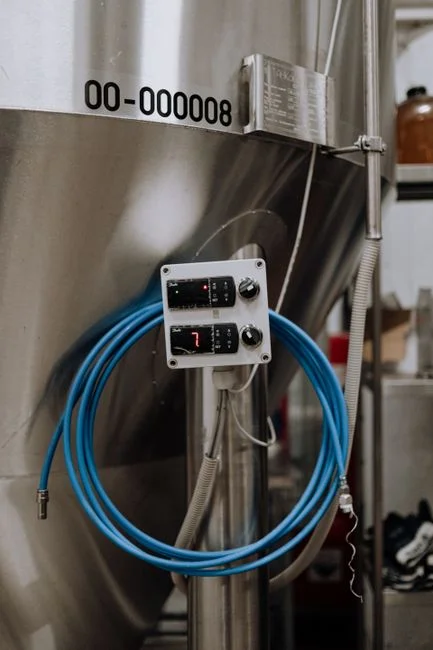
For a 2026 DAF specification on gelatin duty, the parameter set is the deliverable. The recycle ratio, hydraulic load, tank geometry, skimmer layout and release-valve specification determine whether the unit will generate micro-bubbles, lift the float layer and survive the chemistry — or repeat the Jorsun failure pattern of two running air-flotation units producing no micro-bubbles at all (Jorsun S2).
Recycle ratio. The Jorsun design specifies that the air-flotation return ratio "should not be less than 40%" for a high-oil gelatin influent, and that "the design of the dissolved air reflux ratio needs to be appropriately enlarged, and should not be lower than 45%" when influent solids are high (Jorsun S2). The 45% lower bound is the binding number for gelatin — it is set above the typical food-and-beverage DAF range because the saturator must deliver enough dissolved air to float viscous animal fats and proteinaceous solids that would otherwise carry through.
Hydraulic loading rate. High-efficiency sedimentation DAF achieves 9 m³/m²·h in this duty; the Jorsun case conservatively sets the operating window at 5.5–7.0 m³/m²·h to absorb influent variability (Jorsun S2). The lower bound is the sizing number for a design that must hold 9 m³/m²·h as a peak, not an average.
Tank geometry. Rectangular DAF units require 20–30 minutes of residence time; circular DAF units require only about 3 minutes because of the spiral-scoop flow pattern (Wikipedia S3). For a high-FOG influent, the choice is between footprint and residence time, not between good and bad performance.
Skimmer and release valve. The Jorsun design requires a full-area sludge skimmer with no dead zones, a conferted (recessed) scraper geometry to reduce hydraulic disturbance of the float layer, and an anti-clogging releaser designed so the operator does not need to disassemble it for cleaning (Jorsun S2). The DAF feed is typically dosed with a coagulant such as ferric chloride or aluminum sulfate, followed by a flocculant to build floc size for bubble attachment (Wikipedia S3) — a step that should be specified alongside the HydropureWater DAF systems (4–300 m³/h, 13 standard models) and the HydropureWater PLC-controlled coagulant and flocculant dosing equipment.
| Parameter | Design Value for Gelatin Duty | Source |
|---|---|---|
| Recycle ratio (initial design) | ≥ 40% | Jorsun S2 |
| Recycle ratio (high solids influent) | ≥ 45% | Jorsun S2 |
| Hydraulic load (peak) | 9 m³/m²·h | Jorsun S2 |
| Hydraulic load (conservative sizing window) | 5.5–7.0 m³/m²·h | Jorsun S2 |
| Tank geometry — circular | ~3 min residence time | Wikipedia S3 |
| Tank geometry — rectangular | 20–30 min residence time | Wikipedia S3 |
| Skimmer coverage | Full area, no dead zones, conferted scraper | Jorsun S2 |
| Release valve | Anti-clogging, no-disassembly cleaning | Jorsun S2 |
| Coagulant | Ferric chloride or aluminum sulfate | Wikipedia S3 |
Materials of Construction for the Aggressive Gelatin Chemistry
Corrosion is the most expensive line item the Jorsun retrofit had to absorb, and it is the line item a 2026 RFQ should price in up front rather than discover during commissioning. Gelatin wash waters concentrate Cl⁻ and SO₄²⁻ from staged acid and alkaline washing, and these ions "will seriously corrode the steel structure equipment in the pretreatment section" — the Jorsun case names the failure mode directly (Jorsun S2). The damage is not just general wall-thickness loss; under deposits, pitting initiates and propagates through carbon steel far faster than uniform corrosion rates predict.
The Jorsun retrofit also flags "the influence of the waste water medium on the corrosion and failure of the instrument in the later stage" as a design consideration in the same paragraph as the recycle-ratio and release-valve specifications (Jorsun S2). That pairing is deliberate: pH probes, level transmitters, recycle-line flow meters and saturator instruments are wetted parts, and they fail before the tank does if specified to commodity standards. The RFQ should call out the saturator, release valve body, recycle piping, level instrumentation and skimmer drive hardware as items requiring corrosion-resistant alloys or non-metallic wetted surfaces — and it should price the corrosion allowance into the capex, not the opex.
| Wetted Component | Failure Risk in Gelatin Service | Specify |
|---|---|---|
| Flotation tank shell | Pitting under deposits from Cl⁻/SO₄²⁻ | Non-metallic lining, FRP, or high-alloy |
| Saturator vessel | General and crevice corrosion | High-alloy or rubber-lined carbon steel |
| Recycle piping and fittings | Pitting at welds and elbows | High-alloy or non-metallic |
| Release valve body | Nozzle corrosion and clogging | Anti-clogging, corrosion-resistant alloy |
| pH, level, flow instrumentation | Probe failure from Cl⁻ attack | Service-rated sensors and isolators |
| Skimmer drive and bearings | Exposure to float-layer FOG and condensates | Sealed drives with corrosion-resistant hardware |
| Valves and pipe-line accessories | Seat and stem degradation | Specified for high-Cl⁻ service — see HydropureWater spare valves, instruments and media |
2026 Sizing Example: 8,000 m³/d Gelatin Plant Retrofit
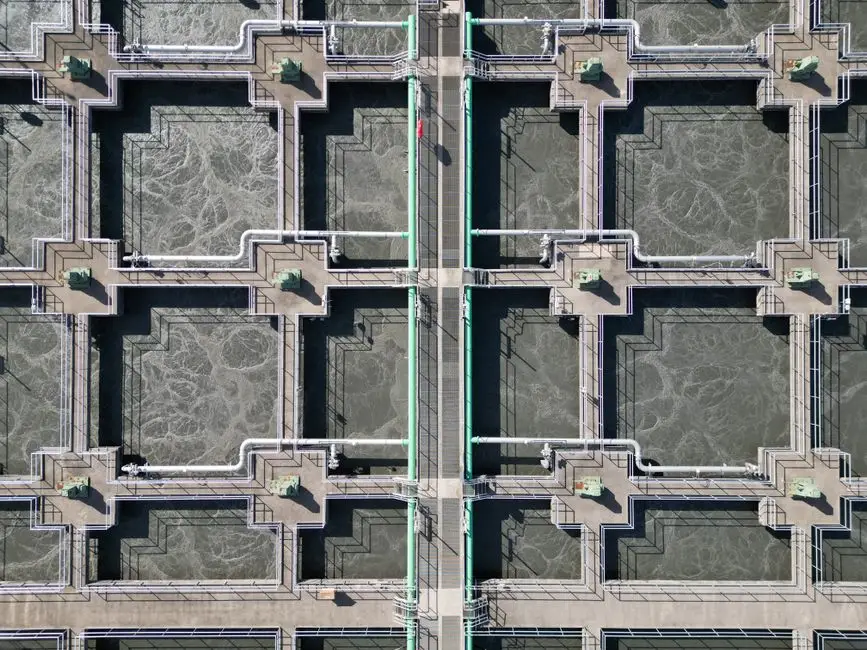
How big does the DAF need to be? The Jorsun retrofit gives a worked reference. The plant treats 8,000 m³/d with two existing air-flotation units that are underperforming, and the new air-flotation system is sized for a maximum processing capacity of 200 m³/h (Jorsun S2). High-efficiency sedimentation DAF is selected over a conventional rectangular unit because the spiral-scoop flow pattern keeps the Reynolds number low enough for laminar separation in the flotation zone (Jorsun S2; Wikipedia S3).
The hydraulic load is set at 9 m³/m²·h at the flotation zone, with a conservative operating window of 5.5–7.0 m³/m²·h used to size tank area when influent is variable (Jorsun S2). The recycle ratio is held at ≥45% on the basis of high influent solids (Jorsun S2). The result, as operated, is "the removal rate of animal oils and fats in wastewater is greater than 95%" with effluent forwarded to the biochemical train (Jorsun S2).
Two economic points sit alongside the engineering numbers. The recovered oil is re-refined into industrial oil, and the Jorsun case identifies the annual oil-recovery revenue as "millions of dollars" tied directly to pretreatment performance (Jorsun S2). For the engineer, this is the answer to the plant manager's capex objection: the DAF pays back through recovered oil, not just avoided discharge penalties. The Jorsun numbers are a sanity check, not a copy-paste spec — gelatin wastewater strength and equalization vary plant to plant, and the parameter set is the deliverable, while the 8,000 m³/d and 200 m³/h figures are illustrative. For broader DAF unit selection, the best DAF unit for industrial wastewater in 2026 framework gives the cross-industry comparison.
Bridging DAF to Downstream Treatment in a 2026 Flowsheet
A DAF is not a standalone widget — it is one stage in a treatment train, and the engineer who specifies it must also specify what happens to the float, the underflow and the clarified effluent. In gelatin service, the float layer is predominantly animal fat and proteinaceous solids with high calorific value, and is typically routed to a plate-and-frame filter press for dewatering and then to rendering or anaerobic digestion rather than landfill (Jorsun S2). A HydropureWater plate and frame filter press for float-sludge dewatering is the typical downstream dewatering step on the float-sludge line.
The clarified DAF effluent is the prerequisite feed for stable downstream biological treatment; without it, the bio-stage sees shock loads and produces an unstable discharge index (Jorsun S2). A HydropureWater lamella clarifier can sit between the DAF and the bio-stage as a polishing step to drop residual SS and protect the aeration basin from hydraulic surges. The DAF float, the lamella underflow and the bio-stage waste activated sludge all converge on the sludge-handling line, so the dewatering device must be sized for the combined cake, not just the DAF float alone.
For the regulator's discharge report, the framing is: DAF delivers >95% oil/SS removal at the pretreatment section (Jorsun S2), the biochemical train takes the residual dissolved load, and the final effluent meets the standards the plant is permitted to. For the plant manager's capex review, the framing is: pretreatment performance drives the oil-recovery revenue line, and that line is what the DAF is buying.
Frequently Asked Questions
How do I convert a gelatin plant's daily flow into DAF tank area?
Divide the design hourly flow by the hydraulic loading rate. With the Jorsun parameters, use 9 m³/m²·h as the peak and 5.5–7.0 m³/m²·h as the conservative sizing window (Jorsun S2). At 200 m³/h peak, the 9 m³/m²·h figure gives a flotation zone of roughly 22 m²; at the conservative 5.5 m³/m²·h, the same flow needs about 36 m². Plant-specific equalization, diurnal peaking and future-expansion allowance should be requested from the EPC before the area is frozen.
Why does a gelatin DAF need a higher recycle ratio than a typical food-and-beverage DAF?
Gelatin influent carries high oil and high suspended solids, including viscous animal fats and proteinaceous particulates that demand more bubble surface area to lift. The Jorsun design holds the recycle ratio at ≥40% as a floor and raises it to ≥45% when influent solids are high (Jorsun S2). On a typical food-and-beverage DAF, lower ratios are common; on gelatin duty, the saturator must deliver enough dissolved air to float the floatable fraction reliably, and the 45% figure is the binding lower bound for design.
What wetted parts of a gelatin DAF must be specified for high Cl⁻ and SO₄²⁻ service?
The flotation tank, saturator, recycle piping, release valve body, skimmer drive hardware and pH/level/flow instrumentation should all be specified for the service, because the Jorsun retrofit identified Cl⁻/SO₄²⁻-driven corrosion of both the steel structure and the downstream instruments as a primary failure mode (Jorsun S2). Commodity carbon steel with a standard paint system is not adequate for the wash-water concentrations produced by staged acid and alkaline washing.
What should an EPC look for in a 2026 DAF supplier for gelatin duty?
Three items are non-negotiable on the supplier scorecard. First, a model range that covers the required flow envelope — the 4–300 m³/h, 13-model best DAF unit for industrial wastewater in 2026 catalogue gives the breadth a gelatin plant typically needs. Second, an anti-clogging release valve that does not require disassembly for cleaning, as specified in the Jorsun design (Jorsun S2). Third, demonstrated documentation of corrosion-resistant wetted-parts options for high Cl⁻/SO₄²⁻ service, not a generic "suitable for industrial wastewater" line on the datasheet. For cross-sector comparison, the DAF configuration for hotel wastewater in 2026 reference and the potato-starch and citric-acid design guides show how the same parameters shift with influent strength. Pricing for the DAF skid and ancillaries must be requested per RFQ, because unit cost varies with material upgrades, instrumentation package and site-specific delivery terms — the buyer should ask for an itemized bid that separates the tank, the saturator, the release valve, the dosing skid and the instrument package.