
Where DAF Fits in a Citric Acid Effluent Train
Place a DAF unit between fermentation broth recovery (or primary screening) and any biological or membrane polishing step. The job at this point is to lift the suspended fraction — mycelial biomass from Aspergillus niger, residual sugars sorbed onto biomass, and calcium-bearing precipitates from partial lime neutralization — before that load reaches the next unit operation. Per Wikipedia's DAF entry, the process removes suspended matter by dissolving air under pressure and releasing it at atmospheric pressure inside a flotation tank, where the resulting microbubbles attach to particles and float them to the surface for skimming (Wikipedia, "Dissolved air flotation"). The mechanism is mechanistically suited to the light, flocculent biomass typical of fermentation effluent rather than dense mineral solids.
The choice of DAF over a primary clarifier is driven by what sits downstream. If the next step is anaerobic or aerobic biology, the DAF protects the biomass from hydraulic and organic shock loads, and it strips the floatable COD fraction that would otherwise consume reactor volume. If the next step is UF or RO, the DAF lowers the TSS and turbidity hitting the membranes, which directly extends CIP intervals and reduces flux decline. The Wikipedia source also notes that DAF is "very widely used in treating the industrial wastewater effluents from oil refineries, petrochemical and chemical plants… paper mills, general water treatment and similar industrial facilities" (Wikipedia, "Dissolved air flotation"), which supports positioning it as a primary clarifier rather than a polishing step in this train.
Influent Characterization: What to Measure Before Sizing
Per the Wikipedia DAF article, the float-tank feed is dosed with coagulant and flocculant, so the influent characterization must capture both the particulate and colloidal fractions, not just total solids. For a citric acid effluent that means TSS, turbidity, and a particle size distribution; a stream dominated by intact or fragmented mycelium behaves differently under flocculation than one dominated by fine mineral precipitate.
Citric acid streams are acidic. The Wikipedia source notes that pH affects coagulant performance, and the report should include pH, alkalinity, and calcium hardness — the latter is critical because lime or calcium-carbonate neutralization is often used upstream of biological or membrane steps, and any residual calcium reaching the DAF cell can precipitate as calcium citrate or gypsum. COD, BOD, and residual sugar are not part of the DAF removal mechanism itself, but they set the load on the downstream biological step and should be measured so the DAF outlet can be bench-marked against the design envelope of that next stage.
Flow regime parameters are equally important. The datasheet needs average and peak hourly flow, temperature (which changes air solubility and rise rate), and any batch discharges from fermentation or recovery — without these, hydraulic loading, recycle percentage, and air-to-solids ratio cannot be defended in a P&ID review.
| Parameter | Why it matters for DAF sizing | Typical sampling cadence for a brownfield |
|---|---|---|
| TSS (mg/L) | Drives hydraulic loading and air-to-solids ratio | 24-h composite, 5–7 days |
| Turbidity (NTU) | Cross-check on colloidal fraction | Grab, 3× per shift |
| Particle size distribution | Sets flocculant type and dose | Single campaign with laser sizer |
| pH | Coagulant hydrolysis, scaling potential | Continuous probe at DAF inlet |
| Calcium hardness (mg/L as CaCO₃) | Citrate and sulfate scaling risk | Daily composite |
| Alkalinity (mg/L as CaCO₃) | Coagulant demand, pH buffer | Daily composite |
| Flow (m³/h, avg and peak) | Hydraulic loading, recycle sizing | Continuous flowmeter |
| Temperature (°C) | Air solubility, bubble size | Continuous probe |
Coagulation and Flocculation Chemistry at Low pH

Per the Wikipedia DAF article, the standard coagulants for DAF duty are ferric chloride and aluminum sulfate, with polymer flocculants used to build floc strength. The article specifies that "the feed water to the DAF float tank is often (but not always) dosed with a coagulant (such as ferric chloride or aluminum sulfate) to coagulate the colloidal particles and/or a flocculant to conglomerate the particles into bigger clusters" (Wikipedia, "Dissolved air flotation").
Low fermentation pH — typically below 4 in raw broth before any neutralization — suppresses the hydrolysis of both ferric and aluminum coagulants, which need a near-neutral pH range to form the hydroxide species that destabilize colloids. The practical consequence is that pH correction has to happen before the DAF cell, in an upstream neutralization or equalization tank, not inside it. Coagulant addition inside an acidic DAF cell wastes chemistry and produces weak floc that breaks up at the skimmer.
Calcium from lime or calcium-carbonate neutralization is the second design driver. Residual calcium reacts with citrate to form calcium citrate and with sulfate to form gypsum, and both can blind DAF piping and lamella surfaces if the solubility product is exceeded inside the float tank. The chemistry section of a P&ID review should therefore call out a hardness probe or daily composite at the DAF outlet, and a blowdown or acid-wash strategy for the saturation vessel and recycle ring. Where explosion risk applies — for example in oil-industry induced-gas units — the Wikipedia source notes that "nitrogen gas is used instead [of air] to create the bubbles" (Wikipedia, "Dissolved air flotation"); for citric acid service, which is non-flammable, air is acceptable, but the saturation vessel and relief device must still be specified for the chosen gas, and any future conversion to nitrogen blanketing should be priced into the vessel at the RFQ stage.
Reactor Geometry: Circular vs Rectangular, With or Without Lamellas
Per Wikipedia, circular DAF needs about 3 minutes residence time, while rectangular DAF needs 20–30 minutes — a roughly 6–10× footprint difference for the same hydraulic throughput. The same source notes that one of the bigger advantages of the circular type is its spiral scoop for skimming, while rectangular units are typically paired with a traversing scraper (Wikipedia, "Dissolved air flotation").
For a fermentation stream that often foams — and that can carry surface-active residues from the broth — geometry choice should consider foam handling at the surface, not just quiescent separation efficiency. A circular cell with a spiral scoop discharges the floated layer over a small lip, which is forgiving of foam; a long rectangular cell with a traversing scraper can accumulate a thick, unstable blanket if the hydraulic surge from a fermentation batch is not damped upstream.
Per the Wikipedia source, "some DAF unit designs utilize parallel plate packing material (e.g. lamellas) to provide more separation surface and therefore to enhance the separation efficiency of the unit" (Wikipedia, "Dissolved air flotation"). Lamellas increase effective surface area inside the same footprint, which is useful when floor area is constrained, but they add to the mechanical cleaning burden and should not be specified purely on the basis of catalogue efficiency gains — ask the vendor for a guaranteed TSS removal at design loading with and without the pack.
| Geometry | Residence time | Skimmer mechanism | Footprint for same throughput | Foam handling |
|---|---|---|---|---|
| Circular (no lamellas) | ~3 min (Wikipedia) | Spiral scoop | Compact | Discharges over a small lip — forgiving |
| Circular with lamellas | ~3 min (Wikipedia) | Spiral scoop | Compact, higher effective surface | Same; pack requires periodic cleaning |
| Rectangular (no lamellas) | 20–30 min (Wikipedia) | Traversing scraper | 6–10× circular footprint | Long surface — foam blanket can build |
| Rectangular with lamellas | 20–30 min (Wikipedia) | Traversing scraper | Larger footprint, higher surface loading | Pack adds cleaning access constraints |
Air Saturation, Recycle Ratio, and Hydraulic Sizing
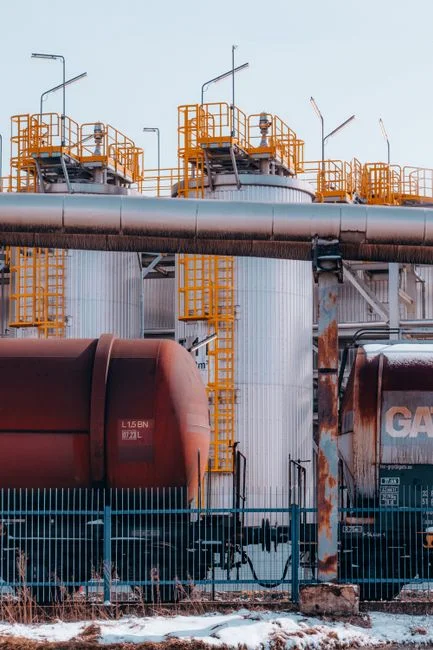
Per the Wikipedia DAF article, "a portion of the clarified effluent water leaving the DAF tank is pumped into a small pressure vessel (called the air drum) into which compressed air is also introduced. This results in saturating the pressurized effluent water with air. The air-saturated water stream is recycled to the front of the float tank and flows through a pressure reduction valve just as it enters the front of the float tank, which results in the air being released in the form of tiny bubbles" (Wikipedia, "Dissolved air flotation"). That recycle-and-flash loop is the heart of the system; the datasheet parameters are saturation pressure, recycle percentage, and the air-to-solids ratio the vendor will guarantee at design TSS.
Hydraulic sizing is driven by the hydraulic loading rate (m/h) on the tank surface; per Wikipedia, lamella packing can be added to increase the surface loading capacity for the same footprint. The air-to-solids ratio is the next check: under-aerated systems lose fine floc over the weirs, and over-aerated systems disturb the surface blanket and reduce skim dryness. The supplied research does not specify a numeric recycle or saturation value, so the engineer should ask the vendor for a guaranteed figure at design TSS and a turndown curve, and confirm the saturation vessel is sized for the peak — not the average — recycle flow.
| Parameter | What the datasheet should specify | What the supplied research confirms |
|---|---|---|
| Saturation pressure | Vendor to confirm; sized to dissolve air for design recycle flow | Mechanism described (Wikipedia) |
| Recycle ratio (% of throughput) | Vendor to confirm; research does not give a numeric value | Loop described, % not given (Wikipedia) |
| Air-to-solids ratio | Vendor guarantee at design TSS, with turndown curve | Not specified in supplied research |
| Hydraulic loading rate (m/h) | Calculated from design flow and tank surface area | Lamellas can raise effective surface (Wikipedia) |
Sludge Handling and Integration with Downstream Steps
Per the Wikipedia DAF article, the floating layer is removed by a skimming device, and the floated sludge is the by-product the rest of the plant has to deal with. In a citric acid train, that sludge is a mixed biological-inorganic stream — Aspergillus niger mycelium plus calcium citrate and gypsum precipitate — and the downstream dewatering device (typically a belt press or screw press) should be specified for that mixed cake, not for a pure biological sludge.
Skimmed solids can also carry recoverable citrate if the upstream recovery step has not stripped it; the DAF sludge line should therefore be coordinated with any upstream ion-exchange or precipitation recovery step so that citrate is not lost to the sludge dewatering building. The clarified DAF effluent still has to meet the design envelope of the downstream step — biological or membrane — and TSS, turbidity, and residual coagulant (iron or aluminum) should be measured at the DAF outlet, not just at the plant outfall, so the downstream step is not quietly absorbing a poor DAF performance.
Sizing Checklist and Supplier Selection
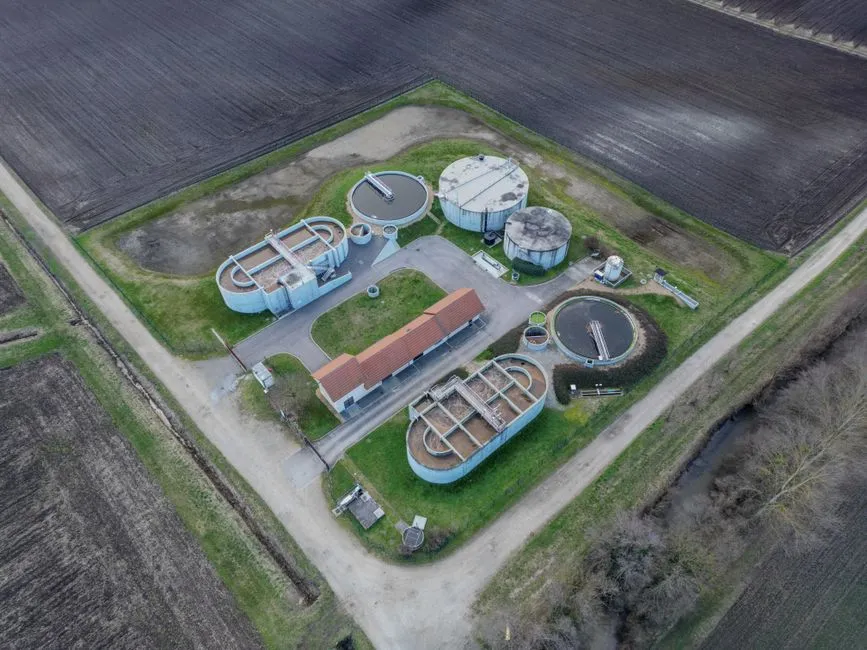
The HydropureWater DAF system (4–300 m³/h, 13 standard models) defines a reference envelope for what a single skid can deliver, and the HydropureWater automatic chemical dosing system covers the coagulant and flocculant feed side that has to be designed in parallel. Use the catalogue envelope as a sizing sanity check, not as a substitute for vendor confirmation on the specific duty.
Carry this checklist into the vendor meeting. The vendor has to confirm: TSS removal at design loading, air-to-solids ratio at design conditions, skimmer mechanism type, materials of construction (a stainless grade suitable for acidic service, not just carbon rubber-lined), and the control scope (pH, flow, recycle pressure, sludge layer). For fermentation duty, ask for reference installations in food or fermentation plants — a track record on municipal drinking water is not the same. Confirm whether the proposed unit is circular or rectangular and whether lamellas are included, because those decisions are made once and are expensive to retrofit. The DAF system engineering specifications guide and the best DAF unit for industrial wastewater decision framework cover the parameter detail; pair them with the DAF common problems and solutions field guide to anticipate commissioning issues.
| Checklist item | What to ask the vendor | Why it matters for citric acid |
|---|---|---|
| Capacity envelope | Confirm 4–300 m³/h catalogue range fits design flow | Defines the number of skids and the P&ID footprint |
| TSS removal at design loading | Guaranteed % at design TSS, with pilot data if available | Sets load on downstream biology or membrane |
| Air-to-solids ratio | Guaranteed value, with turndown | Controls fine-floc loss and blanket stability |
| Skimmer mechanism | Spiral scoop (circular) or traversing scraper (rectangular) | Affects foam handling and maintenance access |
| Materials of construction | Stainless grade for acidic service; lining specification | Low pH and chloride exposure |
| Reference installations | Food or fermentation duty, not only municipal | Validates chemistry and biomass handling |
| Geometry and lamellas | Circular vs rectangular, lamella pack included or not | Footprint vs robustness, retrofit cost |
| Control scope | pH, flow, recycle pressure, sludge layer | Drives integration with the wider plant DCS |
Frequently Asked Questions
Where should a DAF sit in a citric acid wastewater train, and what does it actually remove?
Place the DAF between primary screening (or broth recovery) and the biological or membrane polishing step. Per Wikipedia, DAF removes suspended matter by dissolving air under pressure and releasing it at atmospheric pressure inside a flotation tank, where the resulting microbubbles attach to particles and float them to the surface for skimming (Wikipedia, "Dissolved air flotation"). In a citric acid train that means mycelial biomass, residual sugar solids, and calcium-bearing precipitates — not dissolved COD, which passes through to the biological step.
How do I size a DAF for citric acid effluent, and what inputs do I need from the lab?
Size from TSS, hydraulic loading rate, and the vendor's guaranteed air-to-solids ratio at design conditions. The lab has to deliver TSS, turbidity, particle size distribution, pH, calcium hardness, alkalinity, average and peak flow, and temperature; recycle ratio and saturation pressure are vendor inputs. Per the Wikipedia DAF article, the saturated recycle is flashed through a pressure-reduction valve at the float-tank inlet to generate the bubbles, and lamella packing can be added to raise the effective separation surface for the same footprint (Wikipedia, "Dissolved air flotation").
What does a citric-acid-duty DAF cost, and how do I budget the RFQ?
The supplied research does not provide a numeric CAPEX or OPEX figure for a citric-acid DAF, so do not anchor a budget on a generic range. Instead, send the influent characterization in the previous answer to two or three vendors with a request for a budget price on a defined flow envelope, and ask each vendor to state the air-to-solids ratio, recycle percentage, materials of construction, and skimmer type that the price is based on. Apples-to-apples comparison requires those four parameters to be locked in the RFQ, not negotiated after the bid.
How do I choose a DAF supplier for a citric acid plant, and what compliance risk should I flag?
Evaluate on chemistry competence, fermentation reference list, and acid-tolerant materials — not on catalogue capacity alone. Ask for installed references in food or fermentation plants, confirm a stainless grade suitable for acidic service, and request a guaranteed TSS removal at design loading. Compliance risk depends on the plant's discharge consent and on the downstream treatment train, neither of which the supplied research specifies, so the DAF supplier should not be the party that signs off on consent compliance — that has to be tied to the overall plant discharge permit before the RFQ is issued.