Why Hotels Need DAF as the First Treatment Step
Hotel wastewater is a blend of four distinct streams that arrive at the treatment plant in a different chemical state than municipal sewage: low-load guest-room greywater (BOD 100–200 mg/L), high-FOG kitchen effluent (FOG 50–200 mg/L with peak 400+ mg/L during banquet service), hot laundry waste (BOD up to 1,200 mg/L, 30–60°C, surfactant-laden), and pool backwash spikes with high chlorine residual and low BOD. A typical mid-scale hotel mixes these streams at a 1.0 : 0.6 : 0.3 : 0.1 ratio, producing an influent that no municipal-style primary clarifier can handle because FOG coats the settled sludge blanket, surfactant emulsifies the oil, and hot laundry pulses over-aerate any downstream biological reactor.
Free and emulsified FOG cause three specific failures downstream: biological-reactor foaming (carryover of 15–30% mixed liquor suspended solids into the clarifier), clarifier scum-blanket buildup that short-circuits settled solids into the effluent, and — in MBR systems — irreversible membrane fouling when oil contacts the PVDF/PES surface (flux loss of 40–60% within 72 hours per DAF field data, 2026). Grease interceptors ahead of the DAF remove only settleable FOG (approximately 30% of total oil); dissolved and emulsified FOG pass straight through. DAF closes that gap: pressurized air is supersaturated at 4–6 bar then released through a needle-valve nozzle, producing 10–100 µm micro-bubbles that attach to hydrophobic particles and lift them when the bubble-particle agglomerate's specific gravity drops below 1.0 (per ScienceDirect DAF overview). For a hotel, this is the difference between biological-stage compliance and a chronic foam-over event. The HydropureWater dissolved air flotation system is sized specifically for these mixed hospitality streams.
Hotel Wastewater Characterization and Flow Sizing
Average per-room water use runs 200–450 L/room/day for mid-scale hotels and 500–700 L/room/day for luxury properties; on-site laundry, a full-service kitchen, and pool operations each push the figure 20–40% higher. Peak-to-average flow ratio is 2.5–3.5× during morning (06:00–09:00) and evening (18:00–21:00) meal-prep and laundry windows — DAF must be sized on the peak, not the daily average, otherwise the recycle pump floods and effluent TSS doubles.
Typical hotel influent characterization is tighter than municipal sewage: BOD 200–400 mg/L, COD 400–800 mg/L, TSS 150–350 mg/L, FOG 50–200 mg/L, pH 6.5–8.0, temperature 20–35°C (per EPA 40 CFR 133 secondary-treatment benchmarks and DAF field data, 2026). Worked sizing example for a 200-room mid-scale hotel: 200 rooms × 0.30 m³/day = 60 m³/day average; ×3.0 peak factor = 180 m³/day peak (7.5 m³/h); ×1.20 recycle + hydraulic margin = 9.0 m³/h DAF flotation-zone capacity. This falls within the DAF 4–300 m³/h range, covered by 13 standard models.
| Hotel size | Rooms | Avg flow (m³/day) | Peak flow (m³/day) | Peak (m³/h) | Recommended DAF capacity (m³/h) |
|---|---|---|---|---|---|
| Boutique | 50 | 15 | 45 | 1.9 | 3–4 |
| Mid-scale | 200 | 60 | 180 | 7.5 | 9–10 |
| Large full-service | 400 | 130 | 390 | 16.3 | 18–20 |
| Luxury/resort | 500 | 250 | 750 | 31.3 | 35–40 |
Core DAF Design Parameters for Hotel Applications
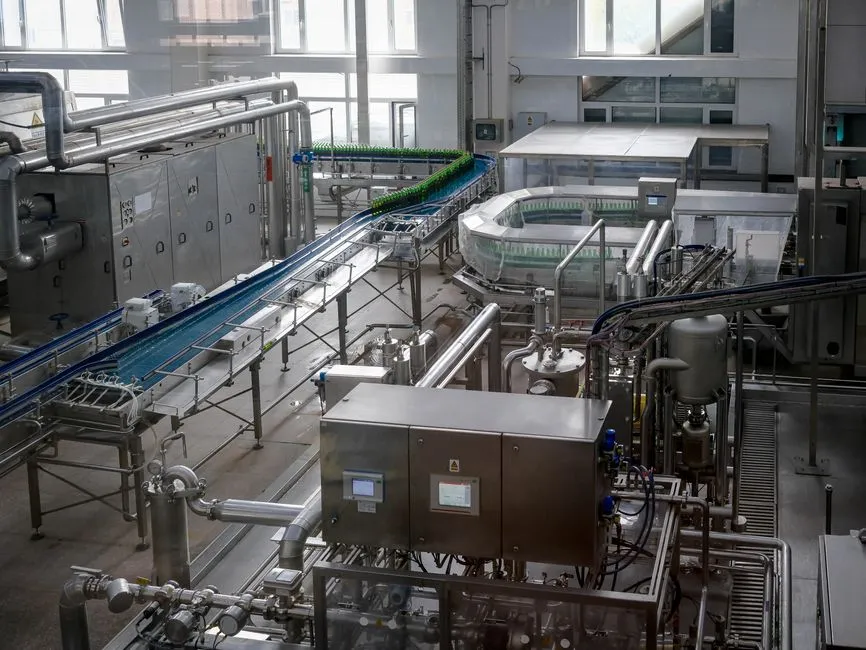
The full parameter set, written for a design-basis memo, is below. Hotel FOG-dominant streams are forgiving on hydraulic loading but demanding on bubble-particle contact time, so the conservative end of each range is the right starting point.
- Hydraulic loading rate (HLR): 5–25 m/h on the flotation zone; specify 10–15 m/h for hotel service to give bubbles 15–30 minutes of contact time with floc.
- Air-to-solids ratio (A/S): 0.02–0.06 kg air/kg TSS — push to 0.04–0.06 for hotels with on-site laundry, because surfactants (LAS, alcohol ethoxylates) compete for the air-water interface and starve bubble attachment.
- Recycle rate: 10–30% of influent flow, pressurized at 4–6 bar; specify 20–25% when influent is below 25°C, because colder water holds less dissolved air at the same saturation pressure.
- Saturation pressure: 4–6 bar (typical 5 bar); higher pressure yields smaller bubbles (better attachment on fine FOG droplets) at the cost of 15–20% more compressor kWh per m³ of recycle.
- Flotation/contact time: 15–30 minutes residence; hotels with emulsified kitchen FOG need 25+ minutes for full bubble-floc agglomeration.
- Polymer/coagulant dose: 5–15 mg/L cationic polyaluminum chloride (PAC) + 0.5–2 mg/L anionic polyacrylamide (PAM); for high-emulsion FOG (banquet/buffet service hotels), total dose rises to 20–40 mg/L split across coagulant and flocculant.
- Skimmer speed: 0.5–1.5 m/min; below 0.5 m/min the floated sludge re-suspends, above 1.5 m/min the skimmer drags clarified water back into the sludge hopper.
| Parameter | Typical range | Hotel-specific recommendation | Unit |
|---|---|---|---|
| Hydraulic loading rate | 5–25 | 10–15 | m/h |
| Air-to-solids ratio | 0.02–0.06 | 0.04–0.06 | kg air/kg TSS |
| Recycle rate | 10–30 | 20–25 | % of Q |
| Saturation pressure | 4–6 | 5 | bar |
| Flotation time | 15–30 | 25+ | min |
| PAC dose | 5–15 | 10 | mg/L |
| PAM dose | 0.5–2 | 1.0–1.5 | mg/L |
| Skimmer speed | 0.5–1.5 | 0.8–1.0 | m/min |
Recycle-stream saturated-air flow at 5 bar is roughly 25–30 L air per m³ of recycle water, which sets the compressor duty (DAF field data, 2026).
Step-by-Step DAF Process Flow for a Hotel
- Bar screening (5–10 mm): a rotary mechanical bar screen removes rags, plastics, and kitchen debris that would otherwise rag the recycle pump impeller.
- Grease interceptor / grit chamber: 10–20 minutes retention drops settleable FOG (typically 25–35% of total oil) and protects the DAF contact zone from grease slugs.
- Equalization tank: 4–8 hours retention dampens the 2.5–3.5× peak-to-average flow ratio; without it, the DAF contact zone sees hydraulic surges that shear floc and drop FOG removal by 20–30 percentage points.
- Coagulation + flocculation: 2–5 minutes rapid mix (PAC) followed by 15–25 minutes slow mix (PAM), dosed by an automatic PAC and PAM chemical dosing system paced to the equalization-tank level signal.
- DAF contact + separation zone: 20–25% recycle water saturated at 5 bar is injected; micro-bubbles (10–100 µm) nucleate on floc particles and lift them in 15–30 minutes.
- Sludge skimming and dewatering: floated sludge (3–6% DS) is scraped to a holding tank and dewatered in a plate and frame filter press to 25–35% DS cake.
- Clarified effluent transfer: 20–60 mg/L TSS, <20 mg/L FOG water goes forward to biological polishing (SBR or MBR) or, in simple sewer-discharge projects, to disinfection.
Removal Performance: What DAF Actually Delivers for Hotels
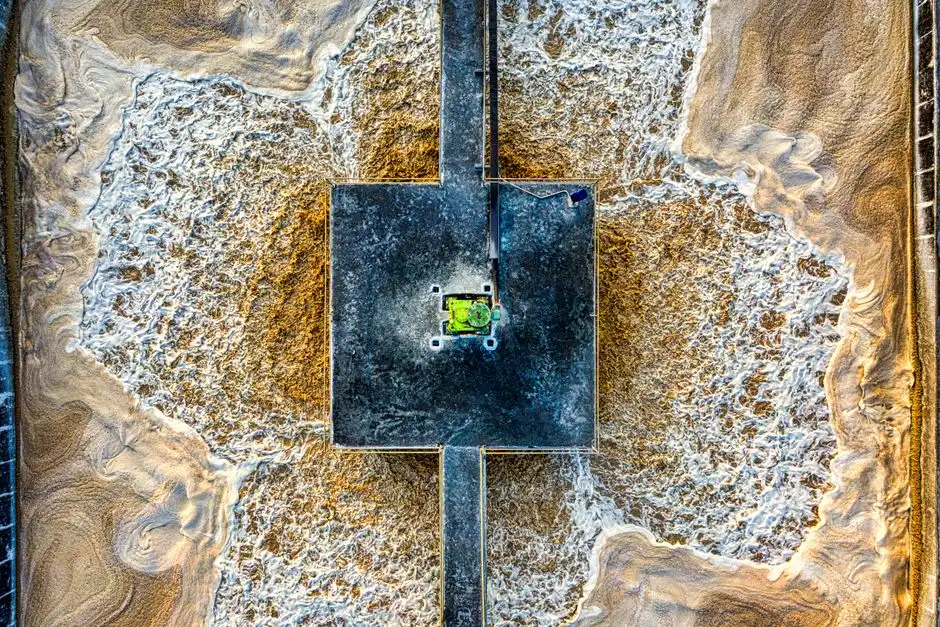
Realistic performance, with proper polymer conditioning, is the difference between a defensible design and a regulator-facing surprise.
- TSS removal: 70–95% (typical 85% in hotel service, DAF field data 2026).
- FOG removal: 60–90% — DAF handles free oil efficiently but only 50–70% of emulsified oil without chemical pre-treatment; this is why a 10–15 mg/L PAC dose is non-optional on hotel service.
- BOD removal: 30–50% (particulate-bound BOD floats off; soluble BOD passes through to the biological stage).
- COD removal: 35–55%.
| Parameter | Influent (mg/L) | DAF effluent (mg/L) | Removal (%) |
|---|---|---|---|
| TSS | 150–350 | 20–60 | 70–95 |
| FOG | 50–200 | <20 | 60–90 |
| BOD | 200–400 | 100–280 | 30–50 |
| COD | 400–800 | 180–520 | 35–55 |
Under-dosing polymer drops FOG removal to 40–50% and produces cloudy effluent; over-dosing re-stabilizes the oil-in-water emulsion and does the same. Jar tests on a 24-hour composite at the design flow should bracket the dose before commissioning. For recurring FOG excursions, the DAF system troubleshooting guide walks through skimmer, recycle, and contact-zone fixes.
Cost Benchmarks: DAF CAPEX and OPEX for Hotels
Budget numbers for 2026, based on packaged stainless-steel DAF skids including compressor, skimmer, recycle pump, and PLC controls (DAF field data, 2026).
- CAPEX: USD 2,500–6,000 per m³/h capacity. For the 200-room worked example (9 m³/h DAF), skid CAPEX is USD 22,500–54,000; civil works add 30–60%.
- OPEX per m³ treated: USD 0.08–0.18, dominated by polymer (USD 0.03–0.06), compressor + recycle pump electricity (USD 0.02–0.05), and skimmed-sludge hauling (USD 0.03–0.07).
- Annual OPEX (200-room hotel, 25,000 m³/yr): USD 2,000–4,500.
- Skimmed sludge: 0.5–1.5% of influent flow as wet sludge at 3–6% DS — roughly 0.4–1.0 m³/day for the 200-room case — hauled or dewatered on-site with a plate and frame filter press to cut volume by 80–85%.
| Hotel size | DAF size (m³/h) | Skid CAPEX (USD) | OPEX (USD/m³) | Annual OPEX (USD) |
|---|---|---|---|---|
| Boutique (50 rooms) | 3–4 | 7,500–24,000 | 0.10–0.20 | 550–1,100 |
| Mid-scale (200 rooms) | 9–10 | 22,500–60,000 | 0.08–0.18 | 2,000–4,500 |
| Large full-service (400 rooms) | 18–20 | 45,000–120,000 | 0.07–0.16 | 3,800–8,500 |
| Luxury/resort (500 rooms) | 35–40 | 87,500–240,000 | 0.06–0.15 | 7,500–17,000 |
DAF-only discharge projects run USD 0.12–0.22/m³. DAF + MBR + disinfection for on-site reuse runs USD 0.45–0.85/m³ but typically offsets 30–50% of freshwater cost when reused for toilet flushing and landscape irrigation (per the cavitation air flotation maintenance cost 2026 benchmark and DAF field data, 2026).
Choosing Downstream Treatment After DAF
The DAF effluent target is fixed (TSS 20–60 mg/L, FOG <20 mg/L, BOD 100–280 mg/L); the downstream unit is selected against the discharge or reuse target.
| Downstream option | Effluent target | Footprint | CAPEX (USD/m³/day) | Operator skill | Reuse-compatible? |
|---|---|---|---|---|---|
| DAF → SBR (sequencing batch reactor) | BOD/TSS <20 mg/L, sewer discharge | Medium | 350–650 | Moderate (timer/PLC) | No (needs tertiary) |
| DAF → MBR (membrane bioreactor) | BOD/TSS <5 mg/L, turbidity <1 NTU | Compact | 700–1,200 | Higher (membrane CIP) | Yes (toilet/irrigation) |
| DAF → MBBR (moving bed biofilm reactor) | BOD/TSS <30 mg/L, coastal/marine discharge | Medium-large | 400–750 | Lower (robust to peaks) | Limited |
| DAF → constructed wetland | BOD/TSS <20 mg/L, irrigation reuse | Large footprint | 200–450 | Low | Yes (irrigation) |
| DAF → disinfection only | Discharge to municipal sewer | Smallest | 50–120 | Lowest | No |
For sewer-only discharge, the lowest-total-cost path is DAF → SBR. For any on-site reuse target (toilet flushing, irrigation, cooling-tower make-up), DAF → MBR is the default because only membranes deliver the <1 NTU turbidity downstream disinfection requires. The WSZ underground package sewage treatment plant (1–80 m³/h) covers the SBR envelope and the HydropureWater MBR membrane bioreactor system (10–2,000 m³/day) covers the MBR envelope, both sized to take DAF effluent directly. For a full MBR-vs-SBR design comparison, the MBR vs SBR comparison for 2026 walks through the trade-offs, and the 2026 domestic sewage treatment solution guide shows how DAF + downstream fits a typical hotel design package.
Frequently Asked Questions
What hydraulic loading rate should I use for a hotel DAF?
Specify 10–15 m/h on the flotation zone for hotel FOG-dominant streams. This gives 15–30 minutes of bubble-particle contact time, which is the range needed to lift emulsified oil droplets with 10–100 µm micro-bubbles (per ScienceDirect DAF mechanism, 2026).
How much polymer does a hotel DAF need?
Plan 5–15 mg/L cationic PAC plus 0.5–2 mg/L anionic PAM as the baseline. Hotels with banquet kitchens or on-site laundry typically need 20–40 mg/L total because emulsified FOG and surfactants demand higher coagulant dose (DAF field data, 2026).
Can DAF handle peak hotel flows 3× the daily average?
Yes, provided the equalization tank upstream is sized for 4–8 hours retention and the DAF is sized on the peak, not the average. A 200-room hotel at 60 m³/day average needs a 180 m³/day peak-rated DAF, not a 60 m³/day unit (per DAF sizing methodology, 2026).
What removal rates can the hotel owner realistically expect from DAF?
TSS 70–95% (typical 85%), FOG 60–90%, BOD 30–50%, COD 35–55%. These are the numbers to put in the design basis; under-dosing polymer or skipping equalization routinely drops performance 20–30 percentage points.
Is DAF enough on its own, or does the hotel need biological treatment after?
DAF alone is enough for sewer discharge if the municipality accepts the load, but biological polishing is needed for surface discharge, irrigation reuse, or toilet-flushing reuse. DAF → SBR for discharge, DAF → MBR for reuse — both are covered by the WSZ and MBR systems sized to take DAF effluent directly.