Why Poultry Wastewater Tests Biological Treatment Systems
IFAS can be a strong biological-treatment option for poultry processing wastewater, but only after high-solids, FOG, blood, and protein streams are adequately controlled. IFAS combines activated sludge with a carrier-based fixed film, allowing more biomass to remain in the reactor than in conventional activated sludge. A 2025 study found 43% organic removal in a coupled A/O–IFAS system versus 17% for A/O alone. For procurement, compare IFAS with activated sludge and MBR, then size the system using site flow, COD/BOD, TSS, FOG, nitrogen, variability, and permit data.
Poultry wastewater combines substantial water use with concentrated organic and solids loads. FRC Systems, citing the U.S. Poultry & Egg Association, reports that a typical broiler processing facility may use six to nine gallons of potable water per bird each processing day. Clean water entering evisceration, chilling, cut-up, packaging, further processing, equipment cleaning, and sanitation can carry feathers, offal, blood, viscera, fecal material, fats, proteins, cleaning chemicals, and other organic matter.
That mixture makes upstream characterization essential. IFAS improves biological solids retention, but it does not replace screening, equalization, or FOG removal. Coarse solids can obstruct pumps and mixers or foul carrier media; free and emulsified oils interfere with aeration and biological transfer; and shock loads can disrupt the suspended and attached biomass populations that support treatment.
Flow and loading also change with production shifts, kill volume, product mix, further-processing activity, sanitation cycles, and byproduct handling. Equalization must therefore be evaluated as part of the biological system, not as an optional tank. The designer should establish whether the proposed IFAS reactor can tolerate the site’s actual hydraulic and contaminant peaks after pretreatment.
| Parameter | Poultry wastewater concern | Information needed before IFAS selection |
|---|---|---|
| TSS | Feathers, tissue, offal, fecal material, and fine solids | Source-separated TSS profiles, including peak events and grit |
| FOG | Floatable or emulsified processing fats and oils | FOG concentration, emulsification, recoverability, and pretreatment removal |
| BOD and COD | Dissolved and colloidal organics from blood, proteins, residues, and cleaners | Average, peak-day, peak-hour, and production-linked loading |
| Nitrogen and phosphorus | Blood, proteins, tissue, and sanitation contributions | Total nitrogen, ammonia, phosphorus, and applicable treatment targets |
| Microbial indicators | Fecal material and processing residues | Permit requirements and whether disinfection is needed |
Before selecting biological equipment, request stream-specific information from slaughter, further-processing, cleaning, and sanitation operations. Their hydraulic and contaminant contributions differ, and combining them into one average can conceal the conditions that control equipment sizing. The industrial DAF system for poultry wastewater pretreatment should therefore be evaluated against measured fat, protein, and solids loading, not selected from average flow alone.
What IFAS Changes Inside the Biological Reactor
Integrated fixed-film activated sludge retains biomass on carrier media while a suspended activated-sludge population continues to operate in the same reactor. The carrier-attached population increases the reactor’s working biomass inventory without relying solely on suspended-solids concentration, while the mixed-growth system combines biological solids retention with the operational flexibility of activated sludge.
That distinction matters when a plant needs more treatment capacity or greater resilience to short-term loading changes. Carrier media can remain in service during some sludge-wasting operations, and the fixed-film population provides an additional biological inventory. However, media fouling, mixing, aeration distribution, and excess biofilm release still require active control. IFAS is not a passive form of biological treatment.
Evidence supports comparative potential, not a universal performance guarantee. In a 2025 bioRxiv study of livestock and poultry digestate, a coupled anaerobic–oxic and IFAS process achieved 43% organic removal, compared with 17% for the anaerobic–oxic process alone. Molecular analysis also identified distinct transformation pathways between the processes.
The scope of that study limits direct transfer to a poultry slaughterhouse. It examined high-refractory-organic-content digestate rather than the full mix of feathers, FOG, blood, sanitation wastewater, and variable flows generated by a processing plant. The result demonstrates that IFAS can outperform the coupled anaerobic–oxic configuration under the tested conditions; it does not establish a guaranteed removal percentage for a different feed or process train.
IFAS also does not independently remove coarse solids, feathers, or free oil. Upstream separation and FOG control protect the media, mixers, pumps, aeration system, and reactor. If an rotary mechanical bar screen and adequate FOG pretreatment are outside the proposed scope, the biological performance and equipment warranty should be evaluated against that boundary rather than assumed.
Build the Treatment Train Before Sizing the IFAS
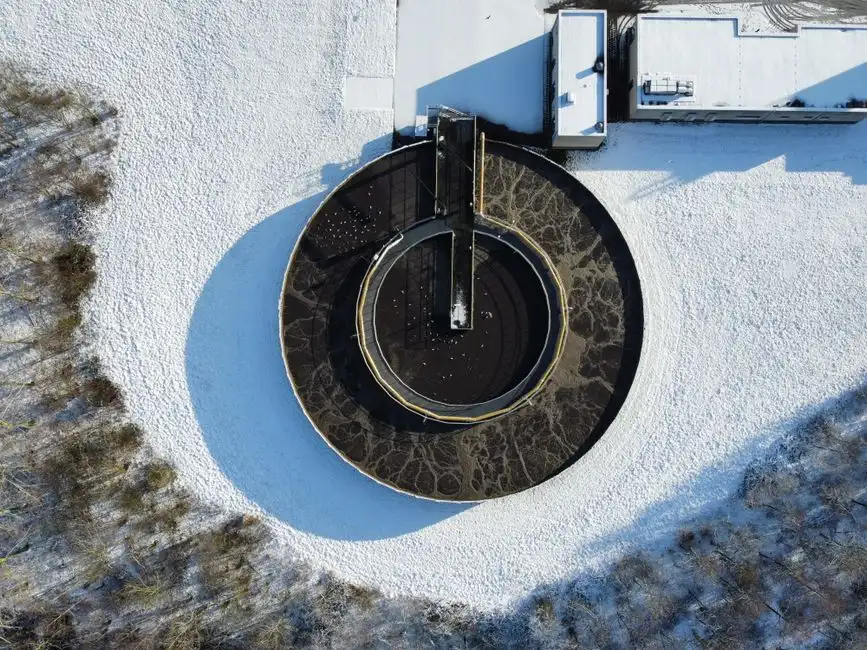
A defensible poultry treatment train assigns each stage a specific protection or removal function before the IFAS reactor is sized. Coarse separation removes feathers, offal, and large solids; fine screening captures smaller biological solids; equalization dampens hydraulic and loading shocks; chemical conditioning prepares emulsified fats and proteins for separation; DAF removes floatable and emulsified material; biological treatment addresses soluble and colloidal organics; and dewatering handles the resulting residuals.
This sequence matters because no biological process should be expected to compensate for inadequate front-end protection. Screening reduces plugging and pump wear. Equalization makes chemical dosing and biological loading more stable. DAF provides the direct removal of FOG, oil and grease, suspended solids, and colloidal material before the biological stage. An industrial DAF system for poultry wastewater pretreatment should therefore be sized around measured contaminant loads, expected float characteristics, and the variability of the combined stream.
Request source-separated data rather than relying on a single plant composite. Slaughterhouse drainage, further-processing discharge, equipment cleaning, and sanitation flows should be characterized independently because their organic, solids, FOG, pH, and chemical contributions differ. The engineer should then define whether these streams will remain separate or will be equalized together. That decision affects DAF performance, biological loading, chemical use, and the peak condition used for equipment selection.
Residual handling belongs in the same scope. DAF float, screened solids, and biological sludge each have different solids and oil characteristics, so they should not be treated as one generic sludge. Their potential destinations may include rendering, byproduct recovery, permitted disposal, or another treatment route. The plate-frame filter press or other dewatering method should be selected only after the engineer defines the expected physical properties, transportability, destination, and operating schedule for each residual stream.
| Process stage | Defined function | Design evidence to request |
|---|---|---|
| Coarse separation and fine screening | Remove feathers, offal, tissue, and solids that could obstruct downstream equipment | Solid-generation rates, grit content, screen loading, and bypass conditions |
| Equalization | Reduce hydraulic, FOG, pH, and organic-loading shocks | Production schedule, diurnal flow, peak events, and required mixing |
| Chemical conditioning and DAF | Remove FOG, TSS, and emulsified or flocculated proteins | FOG and TSS profiles, chemical demand, float yield, and recovered-stream quality |
| IFAS biological treatment | Remove soluble and colloidal biodegradable organics and support required nutrient treatment | Influent load after pretreatment, biological loading, SRT, media, and aeration demand |
| Residuals handling | Manage screened solids, DAF float, and biological sludge | Solids characteristics, dewatering performance, destination, and operating hours |
The commercial poultry evidence supports pretreatment as an integrated part of the treatment strategy. FRC Systems identifies rotary drum screening, equalization, DAF, biological treatment, and sludge dewatering as complementary components and states that DAF can remove suspended solids, FOG, oil and grease, and colloidal matter before biological treatment. For a deeper solids-handling issue, see decanter centrifuge design for poultry processing wastewater.
Compare IFAS, Activated Sludge, and MBR
IFAS, conventional activated sludge, and membrane bioreactors retain biological solids differently and should be compared against the plant’s discharge route, footprint, reuse objectives, and operating constraints. The cited performance percentages came from separate studies and waste streams; they are not a head-to-head ranking.
Conventional activated sludge offers a simpler solids-separation arrangement than IFAS or MBR and can achieve strong COD removal in poultry wastewater. In a 2011 Environmental Technology study, an activated-sludge reactor operating at 26°C removed 93.5%–97.2% of COD while mean cell residence time varied from 4.6 to 24.3 days. The study identified a high-removal operating envelope of 15–24 days mean cell residence time or an F/M ratio of 0.3–0.7 kg COD/kg VSS under its test conditions.
IFAS may be attractive when the site needs additional biological solids retention or operational resilience but does not need membrane separation. It adds carrier media, biological solids inventory, and specific mixing, aeration, wasting, and fouling controls. Activated sludge remains attractive when its demonstrated treatment envelope is compatible with the wastewater, available footprint, and operating model.
MBR combines biological treatment with membrane solids separation. It may be appropriate where low suspended solids, reuse potential, or footprint objectives justify membrane maintenance and capital implications. The MBR alternative for poultry wastewater treatment uses submerged PVDF membranes, specifies filtration below 1 μm, and lists capacities from 10 to 2,000 m³/day. Those are equipment specifications, not proof that either capacity or effluent outcome will fit a particular poultry facility.
| Decision factor | IFAS | Conventional activated sludge | MBR |
|---|---|---|---|
| Solids retention | Suspended biomass plus carrier-attached biomass | Suspended biomass retained through clarifier and wasting controls | Biological solids retained with membrane separation |
| Physical solids separation | Requires downstream separation unless paired with another system | Requires clarifier or equivalent separation | Uses membranes for solids separation |
| Principal design concern | Carrier selection, mixing, aeration, biofilm control, and media fouling | Clarifier performance, sludge inventory, SRT, and process stability | Membrane configuration, fouling control, cleaning, and replacement |
| Footprint driver | Reactor volume and media handling requirements | Aeration basin and clarifier arrangement | Bioreactor and membrane footprint |
| Reuse relevance | Depends on downstream solids separation and effluent quality | Depends on downstream solids separation and effluent quality | Potential advantage where stringent solids separation is required |
| Best fit when | More biological solids retention is valuable without a membrane system | A simpler operating model and established COD performance are sufficient | Low suspended solids, reuse potential, or footprint objectives dominate |
Define the IFAS Design Basis and Operating Controls
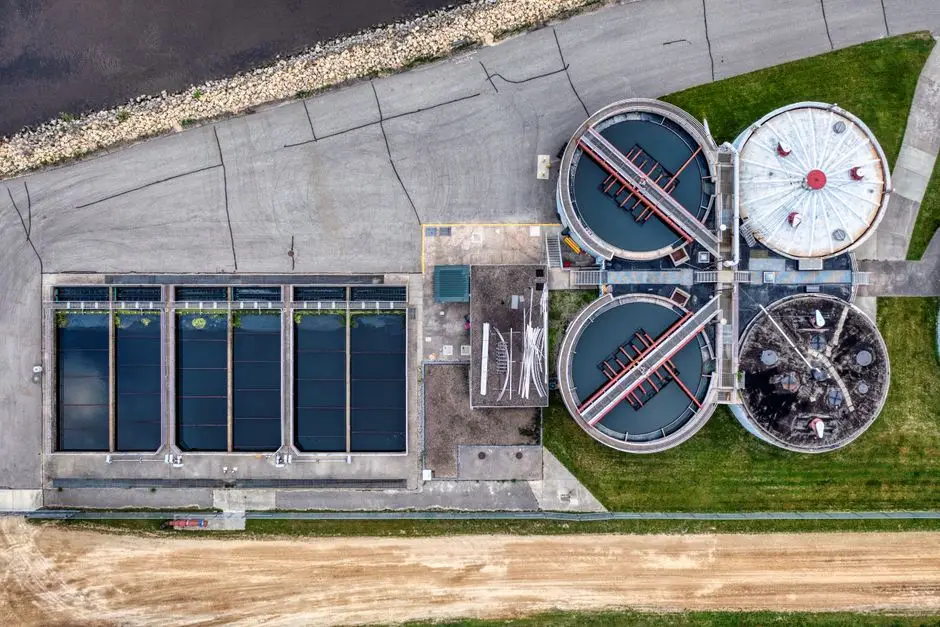
IFAS sizing should begin with a time-resolved wastewater characterization, not an average daily flow. Request 30–90 days of flow and wastewater-characterization data if available, together with production schedules, sanitation events, current treatment performance, residual-handling arrangements, and the applicable permit or sewer limits. The data set must represent normal production, kill-volume changes, further processing, cleanup, and sanitation periods.
Peak-hour and peak-day hydraulic flows and organic loads are essential. Request average and peak BOD and COD, TSS, FOG, total nitrogen, ammonia, phosphorus, pH, and temperature. A composite sample can conceal short-duration FOG or solids events that control DAF loading, equalization requirements, and biological resilience.
The preliminary biological design must reconcile several operating-control categories. Mixing must keep carrier media in suspension and distribute the biological inventory. Aeration must meet oxygen demand without excessive foam or shear. Solids-return and wasting controls must maintain the required inventory. Media selection must be compatible with wastewater chemistry, mechanical loading, cleaning, and replacement. Foam and grease intrusion must be controlled, while equalization must protect the reactor from production and cleaning shocks.
The 2011 activated-sludge study provides useful questions for the design review, not automatic defaults. Its 26°C test temperature and 4.6–24.3-day mean-cell-residence-time range should be compared with the actual site temperature, selected process, and treatment objectives. The identified 15–24-day high-removal envelope and 0.3–0.7 kg COD/kg VSS F/M ratio likewise require validation against the poultry wastewater and reactor configuration.
| Control or design category | Information to establish | Acceptable evidence |
|---|---|---|
| Hydraulic loading | Average, peak-hour, and peak-day flow | Time-series flow record reconciled with production and sanitation schedules |
| Organic loading | Average and peak BOD/COD after pretreatment | Flow-paced sampling with load calculations and uncertainty |
| FOG and solids protection | Residual FOG, TSS, grit, and solids variability | Stream-specific characterization and demonstrated upstream removal |
| Carrier media | Material, size, protected area, density, filling, fouling, and replacement | Vendor specification linked to the selected wastewater and reactor design |
| Aeration and mixing | Oxygen demand, air distribution, mixer arrangement, and foam control | Calculated demand and equipment-performance basis |
| Solids inventory and wasting | Target inventory, SRT approach, return rate, and wasting control | Process model, operating philosophy, and pilot or historical operating data |
| Performance uncertainty | Effect of variability, refractory organics, fats, and permit limits | Pilot test or site-specific performance program |
Include pilot or performance testing when wastewater variability, refractory organics, FOG, or permit limits create material uncertainty. A pilot should use representative wastewater across production and sanitation conditions and should measure the variables the proposed reactor will control, not only a single COD removal figure.
Check Compliance and Recovery Outcomes
For U.S. direct dischargers, 40 CFR Part 432 covers wastewater discharged directly by slaughterhouses, further processors, independent renderers, and poultry processors. The U.S. EPA states that these requirements are incorporated into NPDES permits, so the applicable permit—not a generic treatment description—must define the compliance basis.
Rulemaking status also matters. On August 28, 2025, the EPA administrator signed a final action withdrawing a proposed 2024 revision of the Meat and Poultry Products effluent guidelines and certain new pretreatment standards. Buyers should therefore distinguish the existing regulatory framework from the withdrawn proposal and confirm current requirements for the specific facility and discharge route.
An indirect discharger sends wastewater to a municipal system rather than receiving a direct discharge permit. It must also satisfy the local pretreatment program, sewer-use ordinance, permitted pollutant limits, and surcharge rules. A process selected to minimize sewer FOG or BOD may still differ from the biological configuration required for direct-discharge compliance.
Recovery decisions should be tied to the treatment train. Separated fats, proteins, feathers, and offal may have rendering or byproduct value, but each stream still requires characterization, handling, quality, and destination decisions. Biological residuals must be evaluated separately from DAF float and screened solids.
USDA’s Sustainable Poultry Processing Research project runs through August 31, 2027. Its stated objectives include treatment systems that upcycle waste materials and nutrients, removal of pathogens and antimicrobial processing aids, irrigation suitability, and nutrient-removal approaches. These are research objectives, not evidence that a particular IFAS configuration will meet a plant’s future discharge or reuse criteria.
Use a Decision Framework to Select the Next Step
A four-step sequence can turn the technical evaluation into a defensible procurement scope:
- Characterize slaughter, further-processing, cleaning, and sanitation streams separately, including production-linked flow and contaminant peaks.
- Establish pretreatment performance for coarse solids, FOG, TSS, proteins, and hydraulic equalization using representative wastewater.
- Compare IFAS, activated sludge, and MBR against permit or sewer requirements, footprint, residual handling, staffing, and reuse objectives.
- Pilot the shortlisted process when variability, refractory organics, fats, or permit limits remain unresolved.
Select IFAS when the plant values robust biological solids retention and can provide consistent equalization and adequate FOG and TSS control. Select conventional activated sludge when its demonstrated COD-removal performance is compatible with the simpler operating model and site constraints. Select MBR when stringent solids separation, reuse potential, or footprint objectives outweigh membrane-maintenance and capital implications.
Require every vendor to use the same proposal format. The scope should identify hydraulic and biological loading calculations, media details, aeration, controls, performance guarantees, pretreatment responsibilities, residual handling, exclusions, and the data used to establish the basis. A MBR versus conventional activated sludge comparison can provide additional context for that selection, but poultry-specific evidence should remain the deciding criterion.
| Decision condition | Next action | Required evidence |
|---|---|---|
| Wastewater profile is incomplete | Characterize each source before selecting a process | Time-linked sampling and production schedule |
| FOG or solids control is uncertain | Define and test pretreatment performance | DAF and screening performance under representative loads |
| IFAS is shortlisted | Issue a common-format technical proposal | Loading, media, aeration, controls, guarantees, and exclusions |
| Variability or refractory organics remain material | Run a representative pilot | Measured performance across production and sanitation conditions |
| Direct discharge applies | Verify the NPDES permit and current federal requirements | Facility-specific permit limits and EPA correspondence where needed |
| Municipal discharge applies | Obtain local pretreatment and surcharge requirements | Local sewer-use ordinance and POTW permit |
Frequently Asked Questions
Is IFAS suitable for poultry processing wastewater?
Yes, when IFAS follows effective solids and FOG control and the plant provides dependable equalization. It adds carrier-attached biomass to activated sludge and can improve biological solids retention. The 2025 bioRxiv result of 43% organic removal versus 17% for A/O alone was obtained with livestock and poultry digestate, so it should be treated as comparative evidence rather than a guaranteed slaughterhouse removal rate.
What does an IFAS system cost compared with activated sludge or MBR?
No supported quotation is available for a comparable poultry facility. A buyer should request installed and operating proposals with the same boundaries: biological loading, media quantity, aeration, controls, pretreatment, residuals, maintenance, and performance guarantees. This lets vendors price the real treatment train instead of quoting incompatible equipment scopes.
What information is required to size IFAS for a poultry plant?
Average flow alone is insufficient. The design basis needs peak-hour and peak-day hydraulic flow, average and peak BOD and COD, TSS, FOG, total nitrogen, ammonia, phosphorus, pH, temperature, production schedules, sanitation events, equalization data, and applicable discharge or sewer limits.
How should IFAS suppliers be selected?
Require evidence from comparable poultry or food-processing streams, identify the wastewater source and operating conditions behind each result, and state pretreatment responsibilities explicitly. The proposal should also define media, aeration, mixing, wasting, controls, guarantees, and exclusions. Pilot testing is warranted when variability or residual FOG materially affects performance.
Does the facility need NPDES or pretreatment requirements?
A direct discharger must evaluate 40 CFR Part 432 and its NPDES permit; the U.S. EPA states that Part 432 requirements are incorporated into those permits. An indirect discharger must instead obtain local pretreatment and surcharge requirements. The EPA’s August 28, 2025 withdrawal of a proposed 2024 MPP revision should not be mistaken as removal of the existing regulation.
Related Equipment
- industrial DAF system for poultry wastewater pretreatment — specifications, capacity range, and technical data