Artemus Decision Context: What Drives the Technology Choice Here
For mining/metals wastewater in Artemus, MBR is favored when footprint is constrained, reuse is targeted, or consistent <5 mg/L TSS is required; conventional activated sludge (CAS) wins when land is available, flows are stable, and existing clarifier/aeration assets lower capital cost. HydropureWater's 2026 benchmarks show MBR CAPEX 20-40% higher and OPEX 15-30% higher per m³ at 1,000 m³/day, with a 60% smaller footprint. Neither technology removes dissolved metals — pH adjustment and chemical precipitation must precede biology to meet 40 CFR Part 440 limits for arsenic, lead, zinc, copper, nickel, and cadmium. Final selection requires Artemus-specific permit review, wastewater characterization (metals speciation, sulfate, TDS, toxicity), and a pilot evaluating fouling, cleaning recovery, and upset response.
Federal 40 CFR Part 440 establishes baseline standards for ore-mining and dressing discharges involving arsenic, lead, zinc, copper, nickel, and cadmium, but site-specific Kentucky Pollutant Discharge Elimination System (KPDES) permits or local municipal sewer discharge limits dictate actual compliance targets. Evaluating biological options for an Effluent Treatment Plant (ETP) near Artemus requires mapping site-specific physical and regulatory constraints before evaluating equipment quotes. Plant engineers cannot assume that published figures from other regions—such as the 2026-04 Sunrise Ranch master plan appendix referencing hydrogeologically constrained subbasins in Southern California—apply to the local hydrology, climate, or regulatory oversight of Knox County, Kentucky.
Engineering teams must evaluate five core site conditions during initial scoping:
- Permit Discharge Limits: Whether the site holds a direct KPDES surface discharge permit or disposes via a local Publicly Owned Treatment Works (POTW), as documented in the Sassafras mining compliance case (metals pretreatment, permit strategy).
- Land Availability: Total available acreage, topography, and proximity to process infrastructure.
- Power Supply and Tariffs: Grid electrical stability and localized kilowatt-hour rates.
- Operator Certification: Local staff licensing levels and availability for sophisticated membrane maintenance or secondary clarifier management.
- Community Sensitivity: Proximity to residential zones requiring heightened odor and noise control.
Prior to committing to a biological process, plant managers must complete a comprehensive wastewater characterization record. This sampling campaign must capture pH, suspended solids, settleable solids, BOD, COD, total and dissolved metals speciation, hardness, alkalinity, sulfate, TDS, aquatic toxicity, and oil and grease content.
Core Process Difference: Membrane Filtration vs Gravity Clarification
In Phase I pilot testing published in HydropureWater's 2026 documentation, an MBR operating at a 20-day solids retention time (SRT) and a 10-hour hydraulic retention time (HRT) consistently produced effluent with BOD under 6 mg/L, TSS under 5 mg/L, and total Kjeldahl nitrogen (TKN) of 1.3 mg/L. The fundamental engineering divergence between a Membrane Bioreactor (MBR) and Conventional Activated Sludge (CAS) lies in the physical mechanism used for solid-liquid separation. MBR relies on pressure-driven physical filtration through microfiltration membranes, whereas CAS depends on gravity settling inside a secondary clarifier.
In an integrated MBR system (10-2,000 m³/day, <1 μm filtration), submerged PVDF membrane modules isolate suspended biomass directly within the biological basin. Systems equipped with DF-series PVDF flat-sheet modules (0.1 μm, 80-225 m²) retain all particulate matter larger than 0.1 microns, decoupling solids retention time (SRT) from hydraulic retention time (HRT). This allows operators to run high mixed liquor suspended solids (MLSS) concentrations without risking biomass carryover.
Conversely, CAS secondary clarifier performance depends on sludge settleability, measured by the Sludge Volume Index (SVI). Filming bulking, hydraulic surges, or temperature fluctuations directly alter clarifier settling rates, creating risk of suspended solids escaping into the final effluent stream. MBR removes gravity settling variables but introduces distinct failure modes, including membrane fouling, chemical cleaning demand, and potential membrane integrity breaches.
| Process Parameter | Membrane Bioreactor (MBR) | Conventional Activated Sludge (CAS) |
|---|---|---|
| Solids Separation Method | 0.1 μm PVDF membrane filtration | Gravity settling in secondary clarifier |
| Typical Operational MLSS | 8,000 – 12,000 mg/L | 2,000 – 4,000 mg/L |
| Control Parameters | Transmembrane pressure (TMP), flux, scour air | Sludge Volume Index (SVI), return sludge (RAS) rate |
| Footprint Requirement | 60% smaller than CAS | Baseline footprint requirement |
| Effluent Suspended Solids | Consistently <5 mg/L TSS | Variable (10–30 mg/L TSS based on settling) |
Metals Removal Reality Check: Biology Does Not Remove Dissolved Metals
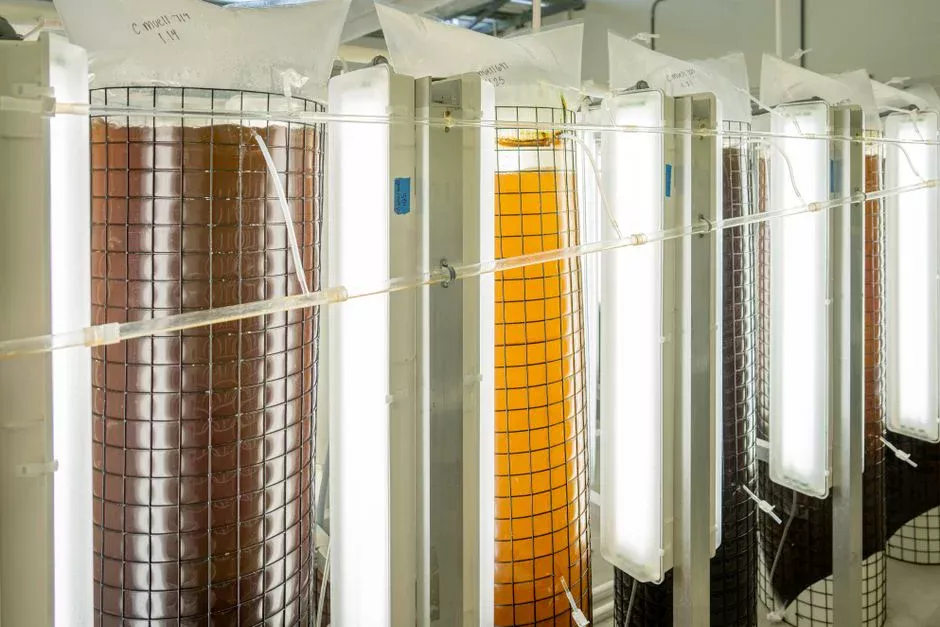
Biological treatment mechanisms in both membrane bioreactors and conventional activated sludge systems do not convert or remove dissolved heavy metals from wastewater. Neither MBR nor CAS can reduce dissolved concentrations of arsenic, lead, zinc, copper, nickel, or cadmium without upstream chemical precipitation. While biological flocs or membrane biomass may adsorb trace quantities of particulate metals, effective compliance with federal 40 CFR Part 440 ore-mining baseline discharge standards requires chemical pretreatment prior to the biological basin.
Pretreatment design must incorporate pH adjustment combined with chemical precipitation—using hydroxide, sulfide, or carbonate reagents—to convert soluble ions into insoluble metallic hydroxides or sulfides. A comprehensive metals mass balance, derived from representative sampling of dissolved versus particulate fractions, determines chemical reagent selection, dosage requirements, and total chemical sludge production.
Pretreatment chemistry directly influences downstream biological performance. Excess coagulants, abrupt pH swings, or elevated sulfate levels resulting from acid neutralization affect the biological process differently across technologies:
- MBR Impact: High concentrations of precipitated metal salts or residual polymer can accelerate inorganic membrane scaling and pore fouling, increasing clean-in-place (CIP) frequency.
- CAS Impact: Variable chemical dosing can disrupt biological floc structure, impairing sludge settleability in secondary clarifiers and leading to solids carryover.
Chemical sludge generated during metals precipitation increases total solid volume handling. Facility design must incorporate appropriate mechanical dewatering equipment, such as a plate and frame filter press, and account for hazardous or non-hazardous chemical sludge disposal fees in preliminary OPEX budgets.
2026 Cost & Footprint Benchmarks for a 1,000 m³/day Artemus Reference Plant
According to HydropureWater’s 2026 preliminary planning benchmark data for a 1,000 m³/day treatment plant, MBR capital expenditure (CAPEX) is estimated at 20% to 40% higher than conventional activated sludge, while operating expenditure (OPEX) is 15% to 30% higher per cubic meter. These benchmarks serve as an initial screening reference for project engineers structuring capital allocation requests in Knox County.
The elevated CAPEX of an MBR stems from membrane module procurement, automated clean-in-place (CIP) skid assemblies, continuous membrane scour blowers, and specialized instrumentation. However, MBR achieves a 60% footprint reduction compared to conventional activated sludge across the 10 to 2,000 m³/day plant size range. For brownfield mining operations near Artemus where available land is constrained or earthworks costs are prohibitive, footprint savings can partially offset initial capital equipment premiums.
The higher OPEX associated with MBR is driven by electrical power for coarse-bubble membrane scour air, periodic chemical cleaning consumables (citric acid and sodium hypochlorite), and an established membrane replacement reserve based on a standard 5- to 7-year membrane service life. Detailed cost trade-offs are detailed in the 2026 MBR cost per m³ guide with CAPEX/OPEX breakdowns and the broader mining-wastewater MBR vs CAS comparison.
| Benchmark Category | Membrane Bioreactor (MBR) | Conventional Activated Sludge (CAS) |
|---|---|---|
| Relative CAPEX (1,000 m³/day) | 20% – 40% higher than baseline CAS | Baseline reference capital cost |
| Relative OPEX ($/m³ treated) | 15% – 30% higher than baseline CAS | Baseline reference operating cost |
| Process Footprint | 60% smaller footprint | Standard footprint baseline |
| Membrane Hardware Specs | 0.1 μm PVDF; 32–135 m³/day per module | N/A (Uses secondary clarifiers) |
| Consumables & Replacement Reserve | CIP chemicals (citric acid/NaOCl); 5–7 yr module replacement reserve | Clarifier mechanical drives, return sludge pump maintenance |
Decision Matrix: Matching Technology to Artemus Site Priorities
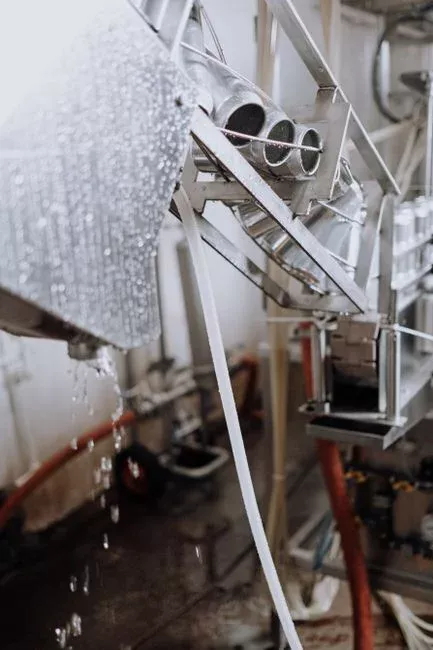
Selecting between membrane bioreactors and conventional activated sludge requires evaluating site-specific weights across footprint, effluent reuse goals, existing asset reuse, power tariff stability, and operator certification level. To establish a defensible technology selection for plant management, project engineers should apply a weighted multi-attribute matrix scoring each criterion from 1 (unfavorable) to 5 (highly favorable) based on Artemus site conditions.
| Selection Criterion | Site Weight | MBR Score (1-5) | CAS Score (1-5) | Engineering Rationale |
|---|---|---|---|---|
| Footprint Limitations | High (if <0.5 acre) | 5 | 2 | MBR eliminates secondary clarifiers, achieving a 60% footprint reduction. |
| Effluent Reuse / Strict Limits | High (if TSS <5 mg/L) | 5 | 2 | MBR provides physical barrier filtration (<1 μm), ensuring ultra-low effluent solids. |
| Existing Asset Utilization | High (if retrofit) | 2 | 5 | CAS integrates easily into existing concrete tanks and civil structures. |
| OPEX & Consumable Certainty | Medium | 2 | 4 | CAS avoids membrane replacement reserves and continuous air scour energy costs. |
| Operational Complexity Risk | Medium | 3 | 4 | CAS failure modes (settling) are traditional; MBR requires automated CIP control discipline. |
Multiply each criterion score by its site-specific weighting factor. If space is tight or high-quality process water reuse is required to reduce raw intake near Artemus, MBR typically nets the higher aggregate score. If civil land is unconstrained and local technical staff favors established gravity-settling protocols, CAS provides a lower-capital configuration.
Bid-Spec Checklist: Forcing Apples-to-Apples Vendor Proposals
Standardizing vendor proposals for mining effluent treatment requires establishing mandatory engineering baselines for design flows, chemical dosing, electrical tariffs, labor rates, and sludge disposal routes. To ensure vendor bids can be evaluated on an identical commercial and technical basis, incorporate the following checklist into the bid specification documentation:
- Design Flow Basis: Define average daily flow, peak hourly flow, and minimum seasonal flow (m³/day) accompanied by duration curves.
- Wastewater Characterization: Specify fixed influent ranges for BOD, COD, TSS, VSS, TKN, NH3-N, total phosphorus, total and dissolved metals speciation, sulfate, TDS, alkalinity, pH range, and aquatic toxicity (IC25).
- Chemical Pretreatment Assumptions: Mandate precise reagent types, dosing assumptions, coagulant/flocculant additions, pH adjustment chemicals, and CIP chemical consumption rates.
- Power Tariff Standardization: Require all power cost projections to use a fixed regional tariff ($/kWh), accounting for energy usage and demand charges.
- Labor Unit Rates: Specify standardized labor hourly rates ($/hr) for operations, mechanical maintenance, and electrical support.
- Sludge Handling & Disposal: Establish a fixed off-site disposal route, transportation fee per wet ton, and target cake dryness percentage (% solids) from the filter press.
- Membrane Lifecycle Terms: For MBR quotes, mandate design flux rates (LMH), a maximum 5- to 7-year replacement schedule, replacement module unit pricing, and explicit pro-rated warranty parameters.
- Capital Contingency: Apply a fixed contingency allowance to commercial quotes—15% to 20% for MBR systems and 10% to 15% for conventional activated sludge systems.
Frequently Asked Questions
What is the typical MBR vs CAS CAPEX difference for a 1,000 m³/day mining wastewater plant in 2026?
Based on HydropureWater's 2026 planning benchmark data for a 1,000 m³/day facility, MBR capital cost is estimated to be 20% to 40% higher than a conventional activated sludge plant. This premium covers membrane modules, air scour blowers, automated cleaning skids, and advanced controls. Buyers must request complete itemized scope boundaries from vendors, including civil construction, tankage, electrical distribution, and membrane warranty terms, to verify capital comparisons.
How should an Artemus plant manager structure vendor bid specifications to compare MBR and CAS suppliers fairly?
To force an apples-to-apples vendor comparison, plant managers must enforce fixed engineering parameters across all bids: identical design flows, influent solids and dissolved metals specs, standard chemical dosing prices, unified power tariffs ($/kWh), set labor rates, defined sludge disposal routes, and standard contingency percentages. Bidders should also disclose exact membrane replacement schedules, guaranteed module service life, and explicit performance penalty guarantees.
Does biological treatment in MBR or CAS remove dissolved heavy metals like arsenic, cadmium, or lead?
No. Neither MBR nor CAS biological processes remove dissolved heavy metals. Compliance with federal 40 CFR Part 440 ore-mining limits for arsenic, lead, zinc, copper, nickel, or cadmium requires upstream chemical precipitation and pH adjustment. Chemical pretreatment converts dissolved metals into insoluble particulates that are separated before or during solids handling, protecting downstream biological performance.
What are the primary operational risks specific to MBR performance in mining applications?
The principal operational risks unique to MBR systems include organic and inorganic membrane fouling, chemical scaling from mineral precipitation, capacity loss due to reduced design flux, and potential membrane breaches. These risks are managed through automated air scouring, periodic clean-in-place (CIP) cycles using citric acid or sodium hypochlorite, pre-screening, and active transmembrane pressure (TMP) monitoring.