Which Rules Control Sewer Discharge Near Sassafras?
Mining and metals plants near Sassafras generally meet sewer pretreatment limits by treating wastewater to the more stringent applicable requirement before it enters the municipal collection system. For sewer discharge, the controlling pathway is the Clean Water Act pretreatment program under 40 CFR Part 403, administered by the receiving publicly owned treatment works (POTW) through permits, sewer-use ordinances, and local limits; an NPDES permit governs qualifying direct discharges to surface water. A defensible treatment train typically starts with pH adjustment, followed by coagulation and flocculation, DAF or lamella clarification, ancillary chemical treatment where needed, and filtration. Equipment sizing must follow current permits, applicable categorical standards, discharge-monitoring data, and site-specific influent characterization rather than a generic mining-water design.
A plant sending wastewater through a municipal sewer is an indirect discharger and may be a Categorical Industrial User subject to the POTW’s industrial-user permit or equivalent control mechanism. EPA’s Local Limits Development Guidance explains that obligations for indirect dischargers are determined by POTW-issued permits or equivalent control mechanisms and applicable regulatory requirements; where guidance conflicts with a permit or regulation, the permit or regulation controls.
NPDES and pretreatment are not interchangeable. NPDES addresses direct discharges to waters of the United States through the Clean Water Act §402 permitting program, while pretreatment controls protect the POTW, its collection system, biological treatment process, sludge, and workers. A facility with separate surface-water outfalls may therefore need both NPDES coverage and POTW pretreatment authorization. The applicable mining category must also be confirmed rather than assumed.
The supplied Sassafras buyer’s guide identifies 40 CFR Part 440 as the federal categorical framework for metal mining and identifies TSS and total recoverable metals among its associated parameters (HydropureWater, 2025). Other mining or processing operations may fall under a different federal subcategory. The Part 440 category and the receiving POTW’s current requirements must be verified before treatment scope is fixed.
Before selecting equipment, obtain the current industrial-user permit or POTW control mechanism, sewer-use ordinance, local limits, and applicable categorical standards. Use the 2026 mining wastewater sewer-limit compliance guide to organize that legal review, then complete the site-specific engineering gate below.
Build the Permit and Influent Envelope Before Sizing Equipment
The equipment design basis should not be issued until five site inputs have been reviewed: the current NPDES permit, the receiving POTW’s discharge limits, the applicable 40 CFR Part 440 subcategory, the 2025–2026 Discharge Monitoring Report data, and a 12-month influent characterization. That package distinguishes enforceable requirements from engineering assumptions and prevents a supplier from sizing a clarification system around average flow when the actual constraint is a batch release or chemical load.
If separate outfalls discharge to surface water, include the NPDES permit and its relevant discharge-monitoring requirements in the review. A sewer permit does not replace an NPDES authorization, and an NPDES permit does not replace the POTW’s local sewer limits. The governing treatment target for sewer discharge is the more stringent applicable POTW requirement; federal categorical standards do not displace stricter local limits.
Characterize more than average flow. The record should address:
- Flow variability, hydraulic surges, and process batch releases;
- pH across normal operations and upset conditions;
- TSS and turbidity;
- Dissolved metals and total metals, including total recoverable metals where required;
- Oil and grease where vehicle washing, machining, or process streams are present; and
- Equalization requirements that can moderate chemical-feed and hydraulic peaks.
The supplied research warns that hydraulic surges and changing chemistry determine whether clarification and filtration can maintain compliance (HydropureWater, 2026). The character of the metal-bearing solids is equally important: hydrophobic particles, fine hydrophilic hydroxides, and dense settling sludge do not necessarily respond equally to DAF, lamella clarification, and polymer conditioning.
Jar tests should establish the operating pH window, chemical dose, settling or flotation performance, filtrability, and residual-metal removal. Use those results to select production equipment and to define what the controls system must measure. The mining and metals pretreatment guide for Kimper provides a useful format for separating permit constraints, measured influent, and equipment assumptions before requesting budgetary pricing.
Treat Acidic, Metal-Laden Wastewater in the Right Sequence
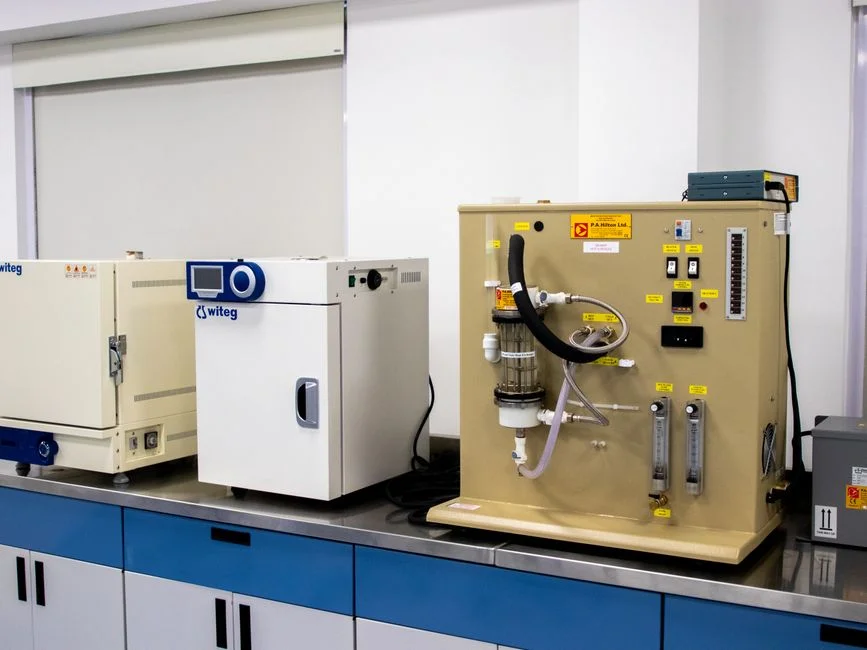
The four-block sequence in the supplied mining treatment research begins with pH adjustment, followed by coagulation and flocculation, ancillary chemical treatment, and filtration (Genesis Water Technologies, 2026). For acid mine drainage and metal-bearing process water, each block has a defined function and should not be rearranged during equipment selection.
- Adjust pH. Controlled acid or alkali dosing prepares the stream for metal hydroxide precipitation and downstream coagulation. The supplied research identifies iron, arsenic, and manganese among the dissolved metals affected by pH correction (Genesis Water Technologies, 2026).
- Coagulate, flocculate, and clarify. Coagulant and flocculant dosing converts suspended material and small metal particles into larger flocs for removal by DAF or settling. A PLC-controlled chemical dosing system should be evaluated against the actual control objectives, not merely by pump capacity.
- Apply ancillary treatment where justified. Corrosion inhibitors protect equipment, ion exchange or specialty resin addresses residual metals not removed by pH control alone, and biocide controls biological fouling where needed.
- Polish with filtration. The supplied research identifies backwash multimedia filtration as a common final step after DAF or lamella clarification, with anthracite, sand, and garnet described as a filter arrangement (HydropureWater, 2026).
| Block | Primary function | Design evidence to verify |
|---|---|---|
| pH adjustment | Establishes conditions for hydroxide precipitation | Jar-test pH window, alkalinity demand, dosing-control response |
| Coagulation, flocculation, and clarification | Removes suspended solids and metal-hydroxide flocs | Peak flow, chemical dose, solids capture, sludge production |
| Ancillary chemical treatment | Controls residual metals, corrosion, and fouling | Constituent-specific analysis and POTW requirements |
| Filtration | Polishes residual solids before discharge | Clarified-water TSS, turbidity, backwash demand, filtrate quality |
Metal sludge must be included in the design. The supplied research identifies plate-and-frame filter presses as a documented dewatering option, with plate area, plate count, and manual or PLC operation selected from sludge volume and continuous or batch operation (HydropureWater, 2026). Confirm filtrate-return routing, cake handling, and disposal requirements during design rather than after the treatment skid is purchased.
Add disinfection only where the POTW’s rules or the incoming wastewater streams justify it. The supplied research identifies chlorine dioxide as a pH-tolerant option and UV as the non-chemical alternative where residual oxidizer is discouraged (Genesis Water Technologies, 2026). For a detailed equipment discussion, compare the process sequence with the DAF-versus-clarifier treatment analysis for fabricated-metals wastewater.
Choose DAF or Lamella Clarification by Wastewater Character
DAF is the better fit when the stream contains oil, grease, light, oily, or hydrophobic particles, or when low-density precipitates float readily; lamella clarification is generally more suitable for dense metal-bearing sludge, higher-flow service, or installations with footprint constraints. Neither technology should be selected solely by average flow or equipment price.
| Decision factor | DAF | Lamella clarification |
|---|---|---|
| Primary feed characteristic | Oil, grease, hydrophobic particles, low-density flocs | Dense metal-bearing sludge |
| Hydraulic-loading figure in supplied research | 5–25 m/h | 20–40 m/h surface loading |
| Capacity figure in supplied research | 4–300 m³/h | No capacity figure supplied |
| Footprint | Depends on the selected unit and tankage | Roughly one-third that of a conventional clarifier |
| Main vulnerability | Poor floatability without suitable conditioning | Less effective capture of free oil and some colloidal fines |
The DAF loading and capacity figures, and the lamella surface-loading and footprint comparisons, come from the supplied Sassafras buyer’s guide (HydropureWater, 2025). They are screening references, not permission to apply a listed unit without matching the site’s actual hydraulic, batch-release, and chemical envelope.
Hydrophilic fine metal hydroxides require special attention. The same Sassafras source gives a polymer-conditioning range of 0.5–5 mg/L and states that a cationic or anionic polyacrylamide may be used (HydropureWater, 2025). Treat that as a jar-test starting range, not a universal dose. Confirm the product, water chemistry, mixing energy, and floc response on site before setting a control value.
The supplied Sassafras guide also states a 92–97% TSS-removal claim for DAF in the described mining application (HydropureWater, 2025). That is a stated performance figure for that application, not a guarantee for every Sassafras wastewater stream. Review the Sassafras DAF versus clarifier comparison and the mining-wastewater DAF-versus-clarifier analysis during technology screening.
A combined train can be rational where primary settling removes the densest solids before DAF captures residual fines, emulsified oils, and low-density precipitates. Size around peak and batch-release conditions; nominal average flow alone can hide the condition that overloads clarification. For an industrial dissolved air flotation system, request the hydraulic basis and performance criteria for the verified feed, not only the stated removal percentage.
Match Final Polishing to Sewer Discharge or Water Reuse
For sewer-only discharge, the final filtration barrier should be sized against the POTW’s solids and metals limits and the clarified-water performance demonstrated by site testing. The filtration step must also have enough backwash capacity for the verified solids load; a nominal filtration rate alone does not show how the system responds to a hydraulic surge or chemical-feed upset.
Reuse creates a different design objective. The supplied research describes adding ultrafiltration ahead of reverse osmosis when reuse or zero-liquid-discharge objectives extend beyond the four-block sewer-discharge train (HydropureWater, 2026). A hollow-fiber UF at roughly 0.03 micron is described as removing residual colloids that could otherwise foul RO membranes. That figure describes the cited equipment configuration; the selected system still requires confirmation against the actual turbidity, chemistry, and recovery target.
Evaluate sewer discharge and reuse using three inputs identified in the supplied research (HydropureWater, 2026):
- The receiving POTW’s capacity charge;
- The cost of freshwater; and
- The process need for higher-quality reuse water.
If reuse does not provide sufficient value against those inputs, adding UF and RO is not automatically justified. If process water quality requires membrane treatment, filtration becomes a pretreatment-protection function rather than merely the final polishing step. Review the industrial water-reuse technology assessment for the economic comparison, and base any recovery calculation on current site and utility inputs.
Turn Compliance into a Procurement Checklist
A treatment proposal should connect every major unit to a measured influent characteristic and a specific permit, local-limit, or reuse requirement. Written process competence and relevant project experience are minimum checks because equipment selection errors cannot be corrected merely by purchasing larger vessels.
- Require evidence of metal hydroxide precipitation competence and relevant industrial wastewater project experience.
- Map each treatment block to a documented influent characteristic, treatment objective, and governing requirement.
- Confirm PLC controls, chemical-storage and dosing safeguards, interlocks, backwash strategy, sludge handling, maintenance access, and commissioning support.
- Obtain a guaranteed supply plan for filter media, resin, chemicals, membranes, and critical spare parts where applicable.
- Require the supplier to review the five-document permit-and-characterization package before finalizing equipment selection.
- Check the final design against the current industrial-user permit, POTW limits, applicable categorical standard, discharge-monitoring record, and site-specific test results.
The supplied research specifically calls for written evidence of metal hydroxide precipitation competence, verifiable mining or metal-finishing project experience, and after-sales support including commissioning and a guaranteed consumables supply chain (HydropureWater, 2026). The Kimper pretreatment procurement guide can be used to turn those checks into bid-document requirements.
Do not release the final purchase order until the permit review, influent characterization, jar testing, equipment review, and current POTW acceptance have all been completed. If the bid cannot be traced to those inputs, it is a conceptual price—not a procurement-ready offer.
Frequently Asked Questions
What documents should a Sassafras plant provide before requesting an equipment quote?
Provide the current NPDES permit, the receiving POTW’s discharge limits, the applicable 40 CFR Part 440 subcategory, the 2025–2026 Discharge Monitoring Report data, and a 12-month influent characterization. Include the current industrial-user permit or equivalent control mechanism and sewer-use ordinance because they establish the enforceable sewer-discharge terms (HydropureWater, 2026).
Is DAF required for every mining wastewater stream?
No. Favor DAF for oily, hydrophobic, or low-density solids; consider lamella for dense metal-bearing sludge, higher-flow service, or a constrained footprint. Confirm the choice with jar tests and actual peak and batch-release data rather than treating either unit as universally applicable.
How should a plant decide between sewer discharge and treatment for reuse?
Compare the POTW capacity charge, freshwater cost, and required process-water quality (HydropureWater, 2026). Add UF and RO only when the reuse objective justifies their cost and the receiving process needs the resulting water quality.
What should a buyer ask a treatment supplier to reduce compliance risk?
Require written metal hydroxide precipitation competence, relevant project evidence, a process map tied to permit requirements, commissioning support, and availability commitments for media, resin, chemicals, membranes, and spares. Also require the supplier to review the five-document package before freezing the design.
When is UF needed before RO?
UF is needed when the reuse train includes RO and residual colloids could foul the RO membranes. The supplied research describes hollow-fiber UF at roughly 0.03 micron for that protection function (HydropureWater, 2026), but the final selection still depends on verified chemistry, turbidity, and recovery requirements.