
Tube Settler vs Plate Settler: Engineering Comparison & Decision Framework (2026 Data)
Compare tube settlers and plate settlers for industrial wastewater treatment: efficiency, cost, footprint, and real-world performance data to choose the best lamella technology for your plant.
Submerged MBR Troubleshooting: 12 Critical Failures & Expert Fixes (2026 Data)
Diagnose 12 common submerged MBR failures with step-by-step fixes, fouling prevention, and O&M cost data. Includes membrane recovery cleaning protocols and energy-saving aeration strategies.
Chlorine Dioxide vs UV Disinfection: Engineering Comparison & Decision Framework
Compare chlorine dioxide (ClO₂) and UV disinfection for industrial wastewater treatment. Engineering data, cost analysis, and compliance decision framework.
Hospital Effluent Treatment Plant Troubleshooting: 12 Critical Failures & Expert Fixes (2026 Guide)
Diagnose and resolve 12 common hospital effluent treatment plant failures with expert troubleshooting steps, parameter benchmarks, and prevention protocols. Data-driven guide for engineers and operators.
DAF vs Sedimentation: Industrial Wastewater Treatment Comparison (2026 Data)
Compare DAF and sedimentation for industrial wastewater treatment: efficiency, cost, footprint, and compliance. Data-driven 2025 guide for engineers and plant managers.
Micro Bubble Flotation Troubleshooting: 12 Common Problems & Industrial Fixes (2026 Guide)
Micro bubble flotation failures in industrial DAF systems trace back to twelve recurring problems, from clogged saturators cutting bubble generation by 40-60% to chemical dosing errors that drop TSS removal by 30-50%. Diagnose with a four-step saturator and nozzle check, hold pH at 6.5-7.5 and saturator pressure at 4-6 bar (58-87 psi) for 30-50 μm bubbles, and calibrate skimmers against the actual solids loading rate. ROI on common fixes ranges from 1-3 months for a saturator acid wash to 12-24 months for an air compressor upgrade, per HydropureWater field data from 200+ DAF installations.
Wet vs Dry Scrubber for SO2 Removal: 2026 Selection Guide
Wet scrubbers generally provide the highest SO₂ and fine-particulate removal, while dry and semi-dry systems reduce water use and simplify solid handling. The choice depends on inlet load, permit margin, water and wastewater capacity, reagent logistics, corrosion and scaling exposure, and 10-year CAPEX/OPEX. EPA guidance also separates DSI from stand-alone dry FGD, so those options should not share one performance assumption.
SO2 Scrubber System Troubleshooting: A Comprehensive Guide for Industrial Operations
Diagnose and resolve common SO2 scrubber system problems, from low removal efficiency to plugging and pump failures. Get expert troubleshooting steps for optimal performance and compliance.
DAF vs Oil Water Separator Comparison: Efficiency, Cost, and Compliance
Compare DAF and oil water separators for industrial wastewater treatment. Learn about efficiency, cost, and compliance requirements.
Wet FGD Scrubber Troubleshooting Guide 2026: Plant Engineers
This guide diagnoses wet FGD failures by connecting SO₂ emissions, pressure drop, slurry pH, L/G ratio, reagent feed, pump condition, mist washing, and blowdown. It covers limestone scaling, slurry-pump cavitation, absorber plugging, mist eliminator fouling, emission exceedances, preventive maintenance, and FGD wastewater treatment decisions.
Primary vs Secondary Treatment: Which is Better for Industrial Wastewater?
Compare primary and secondary wastewater treatment methods for industrial applications, including removal efficiency, costs, and regulatory compliance
High Turbidity in Wastewater Effluent: Causes, Diagnostics & Industrial Fixes
High turbidity in wastewater effluent marks solids and colloidal carryover that drive permit risk, chemical use, and weak disinfection. EPA secondary standards use 30 mg/L SS (30-day average), while NTU limits are usually permit-specific; UV performance falls when turbidity and TSS cut transmittance. Diagnose with settle tests, jar tests, particle size, and zeta potential, then match coagulation, lamella, DAF, or MBR to the particle band.
Aerobic vs Anaerobic Wastewater Treatment: Engineering Comparison & Decision Framework
Aerobic and anaerobic wastewater treatment differ in oxygen need, COD fit, energy use, and sludge yield. Aerobic trains suit COD below about 1,000 mg/L with 75–98% COD removal; anaerobic trains suit COD above about 2,000 mg/L and can yield about 0.35 m³ methane per kg COD removed. EPA training materials (2021) cite reactor DO of 1.0–2.0 mg/L and about 1.0 kWh per lb BOD₅ removed for conventional activated sludge. Use influent strength, permit limits, and energy price to choose aerobic, anaerobic, or hybrid.
How to Reduce COD in Industrial Wastewater: Methods & Technologies Guide
Industrial COD is cut with staged physical, biological, and advanced treatment matched to influent strength and the permit. DAF often removes 50-80% of solids- and FOG-linked COD; aerobic biology typically removes 85-95% of biodegradable COD; MBR and AOPs polish refractory residuals. Select the train from BOD/COD ratio, toxicity, footprint, and CAPEX/OPEX rather than a single technology label.
DAF vs. Sedimentation: Which is Better for Industrial Wastewater Treatment?
DAF vs sedimentation depends on particle density and FOG: flotation suits light solids and oils in about 10 minutes, while gravity clarifiers suit dense settleable TSS at 2–4 hours HRT. Compare footprint, sludge solids (about 3–5% float vs 0.5–2% underflow), and power before selecting a primary clarifier.
ISO 9001 Certified Wastewater Equipment Manufacturer Guide
Find a reliable ISO 9001 certified wastewater equipment manufacturer. Learn how 9001:2015 standards ensure system reliability and 100% compliance.
DAF System Power Consumption vs Treatment Capacity: Energy Efficiency Guide
Discover how DAF system power consumption scales with treatment capacity. Learn energy-saving strategies, cost benchmarks, and real-world efficiency data for industrial wastewater treatment.
Onsite Wastewater Treatment Systems Manual PDF: Free Download & Expert Guide
Get free access to the EPA and state-approved Onsite Wastewater Treatment Systems Manual PDF. Learn design, installation, and maintenance best practices for residential and industrial systems.
Turbidity Monitoring in Wastewater Effluent: A Guide
Turbidity monitoring in wastewater effluent measures clarity as NTU or FNU and flags suspended solids before discharge. EPA’s 2022 Construction General Permit keeps a 50 NTU weekly-average benchmark for dewatering to sensitive waters; that benchmark triggers corrective action and is not an effluent limit. Use Method 180.1 (NTU) or ISO 7027 (FNU), verify meters daily when field rules require it, and control solids with settling, flotation, filtration, or coagulation.
MBR Effluent Quality Standards: What to Expect in Wastewater Treatment
MBR plants typically deliver BOD5 below 5 mg/L, TSS below 1–2 mg/L, and turbidity under 0.5 NTU when MLSS, HRT, and membrane cleaning stay in range. U.S. EPA secondary treatment still sets 30 mg/L BOD5 and 30 mg/L TSS as 30-day averages (40 CFR 133.102); well-run MBRs clear that baseline with margin. With anoxic zoning, total nitrogen often reaches 3–8 mg/L, and reuse trains usually add UV or chlorine for pathogen credit.
Water Management Industry: Trends, Technologies & Future Outlook 2026
The water management industry covers municipal and industrial treatment, reuse, and discharge systems sized by flow, COD/TSS/TDS, and permit limits. China's 2021 industrial wastewater recycling plan targets about 94% scale industrial water reuse by 2025, updating older 70% Water Ten Plan framing. EPA WaterSense notes heating and cooling mechanical systems can reach about 30% of facility water use. Buyers typically compare MBR, DAF, AOP, and ZLD on CapEx, kWh/m3, and reuse grade.
Electrooxidation Wastewater Treatment: How It Works & Industrial Applications
Electrooxidation wastewater treatment oxidizes refractory organics with in-situ hydroxyl radicals at ambient conditions. Typical cells run at 10–50 mA/cm² and about 0.5–5 kWh/m³, with sludge often 0.1–0.5 kg/m³. It is used as a polisher or hybrid stage for petrochemical, pharmaceutical, textile, leachate, and hospital streams.
What is the Best Wastewater Treatment System for a Small Factory?
Find the best wastewater treatment system for your small factory. Explore compact, cost-effective, and compliant solutions tailored for industrial effluent. Get expert advice from HydropureWater.
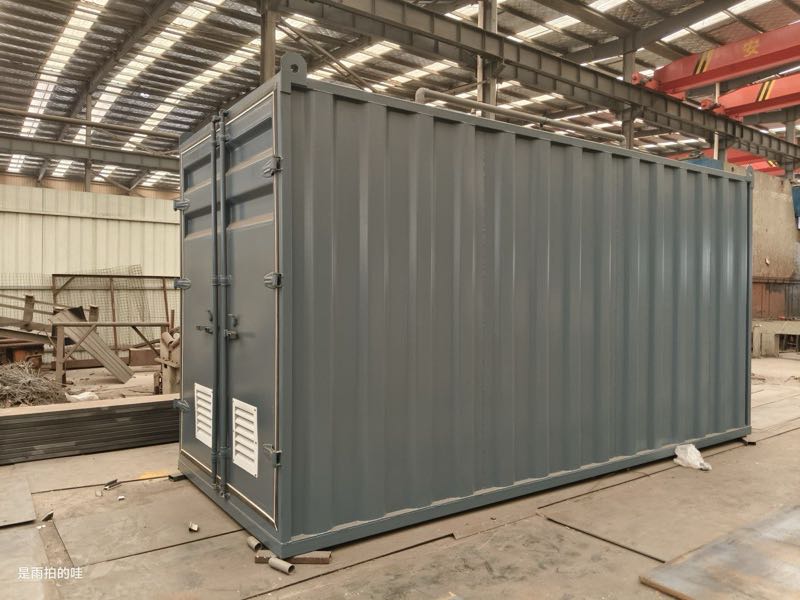
Prefabricated Pump Stations vs Traditional Pump Stations: Construction, Maintenance, and Total Cost Comparison
Prefabricated (packaged) pump stations arrive factory-tested and typically install for 30–40% less than cast-in-place on a 50 L/s duplex municipal duty ($113,000–191,000 vs $175,000–300,000). Project duration often falls from 37–74 weeks to 18–40 weeks because factory build runs in parallel with site work. GRP/HDPE wet wells resist H₂S without recoating cycles common on unprotected concrete.
Industrial Wastewater Treatment Equipment Selection: Matching the Right System to Your Industry
A comprehensive guide to industrial wastewater treatment equipment selection by industry sector. Covers textile, food processing, slaughterhouse, and metalworking wastewaters with specific process recommendations.
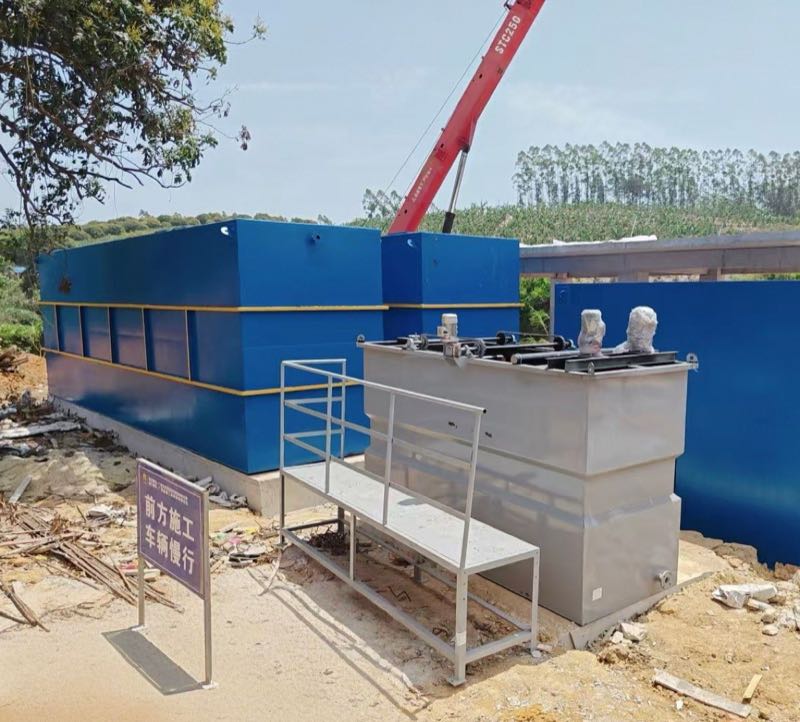
Rural & Small Community Sewage Treatment: Which Process Fits Your Community?
A practical guide to selecting wastewater treatment processes for rural and small communities. Covers decentralized systems, underground plants, and disinfection options for populations under 10,000.
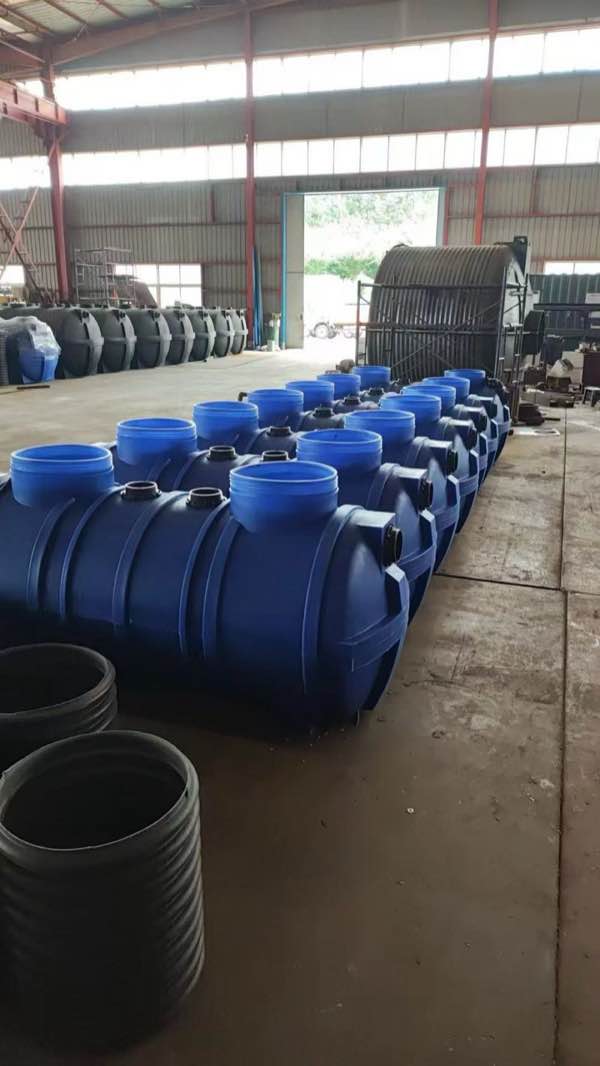
MBR vs Conventional Activated Sludge: When Is It Worth the Extra Investment?
An in-depth technical and economic comparison of MBR and conventional activated sludge systems. Covers effluent quality, footprint, energy costs, and ROI analysis for engineers and buyers.
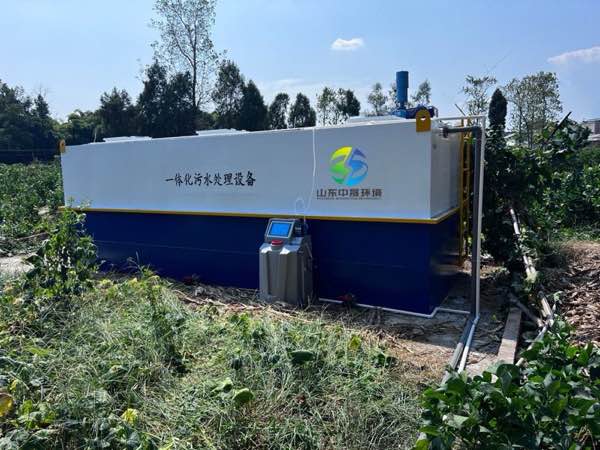
How to Choose the Right Packaged Wastewater Treatment System: A Complete Guide from Flow Rate to Effluent Standards
A comprehensive guide to selecting packaged wastewater treatment systems. Covers flow rate calculation, effluent standards (EPA, EU), process selection, and key factors for engineers and procurement managers.