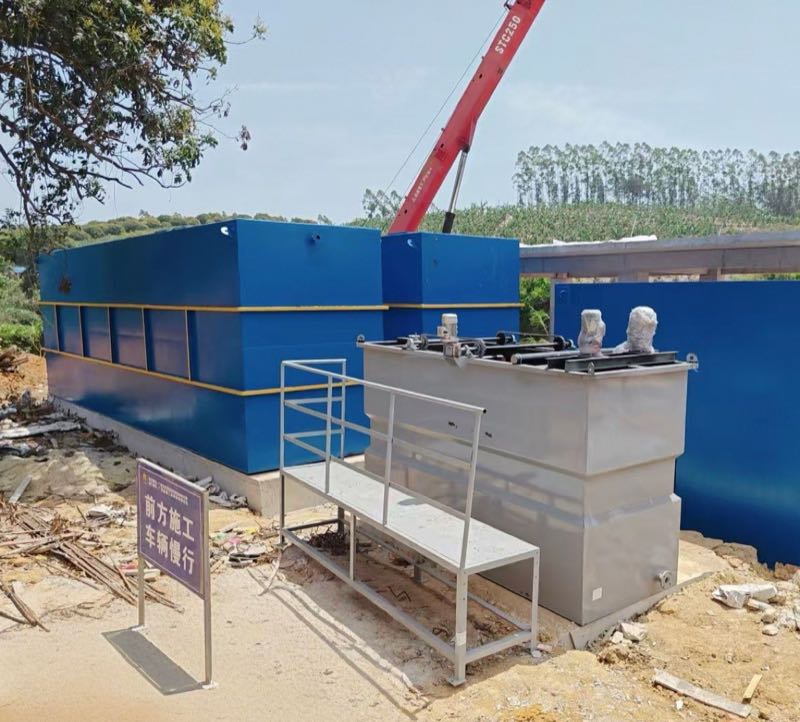
DAF vs sedimentation is a primary-clarification choice driven by particle density, FOG content, available footprint, and target effluent TSS. Dissolved air flotation lifts light, non-settleable solids and FOG with microbubbles in roughly 10 minutes of tank residence in many industrial trains. Gravity sedimentation settles denser solids over a hydraulic retention time (HRT) of about 2–4 hours. Neither unit is universally better; match the separator to the solids that dominate the load.
DAF vs sedimentation: which process wins for your wastewater?
For FOG, algae, or fine low-density TSS, dissolved air flotation usually beats sedimentation on speed and footprint, often clarifying in about 10 minutes versus 30 minutes or more of gravity settling. Dense grit and readily settleable solids still favor sedimentation at 2–4 hours HRT. Match the separator to particle density, FOG fraction, land, and sludge cost.
How DAF and sedimentation separate solids
Primary clarification removes bulk TSS and FOG before biological or advanced stages. Left untreated, those loads clog media, raise aeration demand, and risk permit exceedances. Two common solid–liquid separators fill that role: dissolved air flotation and gravity sedimentation.
A Dissolved Air Flotation (DAF) System saturates a recycle stream with air under pressure, then releases it at atmospheric pressure so bubbles typically in the 20–80 µm range attach to particles and FOG. Design guidance for clarification contact zones often cites 40–80 µm bubbles and 60–120 seconds contact time (Water Corporation DS211, 2022). The particle–bubble aggregates rise, form a float layer, and are skimmed. That buoyancy path suits neutrally buoyant or low-density solids that settle slowly or not at all.
Traditional sedimentation, including HydropureWater's high-efficiency sedimentation tanks, relies on gravity. Particles denser than water settle under Stokes-type conditions set by size, density difference, and viscosity. Basins are sized for enough HRT—commonly 2–4 hours in industrial primary clarifiers—so heavy solids accumulate as underflow sludge. According to US EPA development documents for industrial effluent guidelines, flotation is preferred when solids have specific gravity only slightly greater than water or when free and emulsified oils dominate, because those loads need abnormally long settling times by gravity alone (US EPA, OCPSF Development Document).
Coagulation and flocculation usually precede both separators so flocs are large enough to float or settle. That chemical step sits inside the broader 7 essential steps in wastewater treatment train most plants already run.
When is flotation better than gravity settling?
Flotation outperforms gravity settling when the dominant solids are light, oily, colloidal, or algal rather than dense grit. Food, dairy, meatpacking, and rendering plants with high FOG typically select DAF because emulsified oils float with microbubbles instead of rising as a messy scum layer that still leaves turbidity in a clarifier. Most plants we size for oily food wastewater run DAF as the primary FOG barrier before equalization or biological treatment.
Both processes cut particulate COD and BOD by removing organic solids. DAF usually delivers higher FOG-linked COD removal; sedimentation does better when COD rides on dense settleable TSS. Clarification time also differs: DAF can finish in about 10 minutes of flotation residence, while sedimentation often needs 30 minutes or more of quiet settling, which cuts throughput on the same footprint.Optimum alum dose still depends on the source—for example, about 30 mg/L for some reservoir waters versus about 10 mg/L for some stream waters.
| Performance Metric | Dissolved Air Flotation (DAF) | Traditional Sedimentation |
|---|---|---|
| Target Contaminants | Fine, light, non-settleable TSS, FOG, colloidal matter, algae, low-density particles | Denser, larger, easily settleable TSS |
| FOG Removal | Superior; highly effective for floating or emulsified FOG | Limited; FOG often floats, requiring additional treatment |
| TSS Removal | Excellent for fine/light TSS (e.g., 88-85% for low turbidity) | Excellent for heavy/dense TSS (e.g., 84-86% for low turbidity) |
| COD/BOD Reduction | Effective, especially for particulate organic matter associated with FOG/colloids | Effective for particulate organic matter; less so for FOG/colloids |
| Algae Removal | Highly effective for algal-rich water | Ineffective; algae typically float |
| Clarification Time | Rapid (e.g., 10 minutes) | Slower (e.g., 30 minutes or more) |
| Turbidity Removal | High (e.g., 88-85% for low turbidity) | High (e.g., 84-86% for low turbidity) |
| Color Removal | Variable (e.g., 65-62% for apparent color) | Potentially higher in specific conditions (e.g., 87% for apparent color) |
| UV-254 nm Removal (NOM) | Higher (e.g., 74-73%) | Lower (e.g., 64-69%) |
What solids load favors a sedimentation tank?
Sedimentation tanks fit wastewater dominated by heavy, readily settleable TSS with little FOG. Mining, sand and gravel, and some metal-finishing streams often fall in that band: particles sink fast enough that a large basin at 2–4 hours HRT beats the energy cost of saturators and recycle pumps. If land is cheap and FOG is low, gravity clarification stays the default primary step.
Footprint drives many urban plant decisions. DAF runs at higher surface loading and shorter residence, so the flotation tank is usually much smaller than a conventional clarifier for the same flow. Water Corporation design guidance notes that DAF supports higher hydraulic loading than most settling processes and is more efficient than sedimentation for low-density floc from TOC coagulation (Water Corporation DS211, 2022). Sedimentation still needs that long HRT even when lamella packs shrink the plan area.
Sludge quality differs as much as water quality. DAF float commonly thickens to about 3–5% solids; well-designed WAS thickening DAF units target at least 3.5% solids without polymer, with higher values possible when conditioned (Water Corporation DS211, 2022). Gravity underflow is denser by particle type but wetter by solids fraction, often about 0.5–2% solids, so haul volume rises. Chemical use is common to both and is best controlled with automatic chemical dosing systems tied to turbidity or streaming current. Energy leans the other way: DAF pays for compressors and recirculation—see the DAF system power consumption guide—while sedimentation mainly powers scrapers and feed pumps.
| Operational/Economic Factor | Dissolved Air Flotation (DAF) | Traditional Sedimentation |
|---|---|---|
| Footprint / Space | Significantly smaller due to faster processing and higher loading rates | Larger footprint required due to longer HRT and gravity settling area |
| Hydraulic Retention Time (HRT) | Rapid (e.g., 10 minutes) | Longer (e.g., 2-4 hours) |
| Sludge Characteristics | Thicker, drier sludge foam; higher solids concentration (3-5% solids) | Denser, wetter sludge; lower solids concentration (0.5-2% solids) |
| Sludge Volume | Potentially lower volume after dewatering due to higher initial solids | Higher volume due to lower initial solids, increasing disposal costs |
| Chemical Consumption | Requires coagulants/flocculants; dosages vary by application | Requires coagulants/flocculants; dosages vary by application |
| Energy Consumption | Higher for air compressors and recirculation pumps | Lower for sludge scrapers and pumping, generally |
| Maintenance Complexity | Skimming, air system checks, pump maintenance | Sludge scraping, basin cleaning, mechanical component checks |
| Responsiveness to Shock Loads | Higher due to rapid processing | Lower due to longer HRT |
Selection checklist for industrial primary clarification
Use this checklist with the broader industrial wastewater treatment equipment selection guide before freezing a P&ID:
- Measure FOG, settleable solids, and TSS particle-size distribution on representative shifts.
- Confirm target effluent TSS, oil and grease, and COD after primary treatment.
- Compare available plot area against DAF surface loading versus 2–4 hour sedimentation HRT.
- Estimate sludge solids (about 3–5% float versus 0.5–2% underflow) and dewatering cost.
- Budget power for saturator/recycle versus scrapers only.
- Plan coagulant and polymer jar or bench flotation tests; settling jars alone under-predict DAF dose needs.
- If the stream mixes grit and FOG, sequence grit/sedimentation ahead of DAF polish rather than forcing one tank to do both.
Favor DAF when: FOG is high; solids are light, colloidal, or algal; clarification must finish in about 10 minutes; land is tight; or float cake dryness cuts haul cost.
Favor sedimentation when: solids are dense and settleable; FOG is low; land is available; and lower continuous power outweighs a larger basin.
Who this is for and next step
This comparison is for plant engineers, EPC designers, and procurement teams sizing primary clarification on industrial wastewater with mixed TSS and FOG. Look elsewhere if you only need tertiary polishing after a stable biological plant with already-low FOG, or if the duty is pure grit removal with no emulsified oil. For a duty-specific size and chemical package, request a DAF or sedimentation sizing review with your influent data and effluent limits.
Frequently Asked Questions
What solids does DAF remove that sedimentation misses?
DAF removes light, non-settleable TSS, FOG, colloids, and algae that gravity clarifiers leave suspended or floating. Sedimentation removes denser particles that settle within the design HRT. If your jar tests show slow-settling flocs or free oil, plan flotation rather than a deeper clarifier alone.
How do DAF and sedimentation change sludge disposal cost?
DAF float often reaches about 3–5% solids, so less water leaves with the cake and dewatering chemicals can drop. Sedimentation underflow commonly sits near 0.5–2% solids, which raises haul volume before thickening. Always compare cake solids and polymer dose on your own sludge, not brochure averages.
Can DAF replace sedimentation on every industrial wastewater?
No. DAF cannot replace sedimentation when the load is mostly heavy grit or dense precipitates that settle cleanly in 2–4 hours. Those streams waste saturator energy and can overload float scrapers. Hybrid trains—grit or sedimentation first, then DAF—handle mixed dense-plus-FOG wastewaters better than a single vessel.
Which system costs more to operate day to day?
DAF usually costs more in power for compressors and recycle pumps, plus saturator maintenance. Sedimentation usually costs more in sludge volume and land. Chemical spend is similar when both use coagulants; the deciding OPEX line is often sludge haul versus kilowatt-hours at your local rates.
How much smaller is a DAF footprint than a clarifier?
DAF footprints are typically much smaller because flotation residence is on the order of 10 minutes and surface loading is higher than gravity settling. Conventional sedimentation still needs large basin area for 2–4 hours HRT. Exact area ratios depend on loading rate, recycle fraction, and whether lamella packs are used on the clarifier.