Why Pre-Treatment Choice Impacts Your Entire Wastewater System
A Zhejiang food processing plant faced repeated compliance violations last year when its sedimentation clarifier failed to handle shock loads from seasonal fruit processing. The result was a 40% spike in biological system downtime, $120,000 in emergency chemical dosing, and a 3-week consent order from the local environmental bureau. Poor pre-treatment choices cost industrial plants millions annually in compliance penalties, biological system failures, and lost production time.
Pre-treatment removes 60-80% of contaminants before biological treatment (per EPA 2024 guidelines), but the wrong technology can create more problems than it solves. For industrial applications, the choice between Dissolved Air Flotation (DAF) and sedimentation affects system resilience. Here's why:
- Shock load protection: Industrial processes like food processing, pulp/paper, and textile manufacturing produce wastewater with highly variable contaminant loads. A sedimentation clarifier designed for 500 mg/L TSS will fail when influent spikes to 2,000 mg/L during production peaks. DAF systems can adapt to these fluctuations within minutes.
- Biological system stability: When pre-treatment fails, excess TSS and FOG overwhelm biological reactors, leading to filamentous bacteria growth, poor settling in secondary clarifiers, and effluent violations. A DAF system installed at a Jiangsu chemical plant reduced biological system upsets by 70% by removing 95% of TSS and 98% of FOG before the aeration basin.
- Compliance margins: Stricter effluent limits (e.g., China's GB 8978-2023 requiring <30 mg/L TSS for many industries) leave little room for error. Sedimentation typically achieves 70-85% TSS removal, while DAF reaches 92-97%—a critical difference when your permit limit is 30 mg/L and your influent is 500 mg/L.
The Zhejiang food plant solved its compliance issues by replacing its sedimentation clarifier with a DAF system. The results were:
- TSS removal improved from 78% to 96%
- FOG removal increased from 65% to 98%
- Biological system downtime dropped by 30%
- Chemical costs for coagulation/flocculation decreased by 25%
Key contaminants in industrial wastewater—and how each technology handles them:
| Contaminant | Typical Industrial Sources | DAF Performance | Sedimentation Performance |
|---|---|---|---|
| Total Suspended Solids (TSS) | Pulp/paper, textile, food processing | 92-97% removal (20-30 min HRT) | 70-85% removal (2-4 hr HRT) |
| Fats, Oils, and Grease (FOG) | Food processing, slaughterhouses, petrochemical | 95-99% removal (microbubbles attach to hydrophobic particles) | 50-70% removal (requires chemical pretreatment) |
| Chemical Oxygen Demand (COD) | Textile, pharmaceutical, chemical manufacturing | 60-80% removal (particulate COD) | 40-60% removal (particulate COD) |
| Colloidal matter | Pulp/paper, textile dyeing | 80-90% removal (with proper coagulation) | 50-70% removal (requires extended HRT) |
Your pre-treatment choice determines whether your biological system runs smoothly or becomes a compliance liability. The next section explains why DAF and sedimentation produce different results when treating the same wastewater.
How DAF and Sedimentation Work: Core Mechanisms Explained
DAF and sedimentation use different physical principles to separate solids from wastewater. Here's how these mechanisms compare:
Dissolved Air Flotation: The Bubble Elevator
DAF systems work by generating millions of microscopic air bubbles (30-50 μm in diameter) that attach to flocs and float them to the surface. The process has four key steps:
- Saturation: Air is dissolved into water under pressure (4-6 bar) in a saturation tank. This creates a supersaturated solution that can hold more air than atmospheric pressure allows.
- Release: The pressurized water is released into the DAF tank through a special valve, creating a cloud of microbubbles as the pressure drops to atmospheric levels.
- Attachment: The microbubbles attach to flocs (agglomerated particles) through hydrophobic interactions and surface charge effects. This reduces the floc's overall density, causing it to float.
- Separation: The floc-bubble aggregates rise to the surface, forming a sludge blanket that's skimmed off by a mechanical scraper. Clarified water exits through the bottom of the tank.
The key advantage is speed. A DAF system can achieve the same removal efficiency as sedimentation in 1/10th the time. This matters for industries with variable influent quality—like food processing, where TSS can spike from 300 mg/L to 2,000 mg/L during production peaks. The microbubbles adapt to changing floc densities, maintaining high removal rates even when influent characteristics shift.
Sedimentation: The Slow-Motion Snow Globe
Sedimentation relies on gravity to pull denser-than-water particles to the bottom of a clarifier. The process is simple but slow:
- Inlet zone: Wastewater enters the clarifier, where flow is distributed evenly to prevent short-circuiting.
- Settling zone: Particles settle through the water column based on Stokes' Law (settling velocity is proportional to particle diameter squared). This is why sedimentation struggles with fine or low-density particles.
- Sludge blanket: Settled particles accumulate at the bottom, forming a sludge layer that's periodically removed.
- Outlet zone: Clarified water overflows into a launder system for further treatment.
Sedimentation's limitations become apparent when dealing with industrial wastewater:
- Slow response to shock loads: A clarifier designed for 500 mg/L TSS will fail when influent spikes to 1,500 mg/L. The system can't adapt—it simply overflows with poor-quality effluent.
- Large footprint: A 100 m³/h sedimentation system requires a 50-70 m² footprint, while a DAF system of the same capacity needs only 15-20 m².
- Poor FOG removal: Fats, oils, and grease float rather than settle, requiring additional chemical pretreatment to achieve even 50-70% removal.
The Role of Coagulation/Flocculation
Both technologies require coagulation and flocculation to form settleable or floatable flocs, but DAF is more forgiving of poor floc formation. Here's why:
- DAF: Even small or weak flocs can be lifted by microbubbles. The system can tolerate some variation in floc size and density.
- Sedimentation: Flocs must be large and dense enough to settle within the clarifier's hydraulic retention time (HRT). Poor floc formation leads to carryover and poor effluent quality.
For applications where space is limited or influent quality varies, DAF's adaptability makes it the preferred choice. Sedimentation remains a viable option for stable influents with high-density solids—like mining or certain chemical manufacturing processes.
Ballasted Sedimentation: A Hybrid Approach
Ballasted sedimentation accelerates the settling process by adding weighting agents (typically microsand) to the flocs. This increases their density and settling velocity, allowing for higher surface loading rates (20-40 m/h vs 1-2 m/h for conventional sedimentation). While more compact than traditional sedimentation, ballasted systems still can't match DAF's speed or FOG removal efficiency.
These mechanisms explain why the technologies perform differently in real-world applications, which we'll examine next.
Head-to-Head Performance: DAF vs Sedimentation for Industrial Wastewater
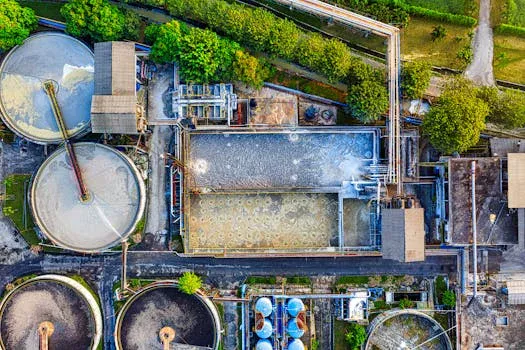
Industrial wastewater varies dramatically by industry. The table below compares DAF and sedimentation performance across key industries and contaminants:
| Parameter | Industry | DAF Performance | Sedimentation Performance | Notes |
|---|---|---|---|---|
| TSS Removal | Food Processing | 95-98% (20-30 min HRT) | 70-80% (2-4 hr HRT) | DAF excels with variable loads from seasonal production |
| Pulp/Paper | 90-95% (25 min HRT) | 75-85% (3 hr HRT) | DAF removes fibers more efficiently; sedimentation struggles with colloidal matter | |
| Textile | 92-96% (20 min HRT) | 65-75% (4 hr HRT) | DAF handles dye particles and fine solids better | |
| Petrochemical | 94-97% (25 min HRT) | 70-80% (3 hr HRT) | DAF removes emulsified oils more effectively | |
| FOG Removal | Food Processing | 98-99% (microbubbles attach to hydrophobic particles) | 50-70% (requires chemical pretreatment) | DAF is the gold standard for FOG removal |
| Slaughterhouses | 97-99% | 40-60% | Sedimentation requires frequent clarifier cleaning due to FOG buildup | |
| Petrochemical | 95-98% | 60-75% | DAF removes emulsified oils without chemical demulsifiers | |
| COD Removal | All Industries | 60-80% (particulate COD) | 40-60% (particulate COD) | Both technologies remove only particulate COD; dissolved COD requires biological treatment |
| Turbidity | All Industries | 90-95% reduction (to <10 NTU) | 70-80% reduction (to 20-50 NTU) | DAF produces clearer effluent, reducing downstream filtration costs |
Key Performance Trade-offs
- Hydraulic Retention Time (HRT):
- DAF: 20-30 minutes (can handle 5-10x higher surface loading rates than sedimentation)
- Sedimentation: 2-4 hours (requires larger tanks and more space)
- Footprint:
A 100 m³/h system requires:
- DAF: 15-20 m² (compact design with vertical flow)
- Sedimentation: 50-70 m² (horizontal flow clarifiers)
This 50-70% reduction in footprint can save $50,000-$100,000 in civil construction costs for a new plant.
- Influent Variability:
- DAF: Handles shock loads (e.g., TSS spikes from 300 mg/L to 2,000 mg/L) without performance loss. The microbubbles adapt to changing floc densities, maintaining high removal rates.
- Sedimentation: Performance degrades when influent exceeds design parameters. A clarifier designed for 500 mg/L TSS will fail when influent reaches 1,500 mg/L.
- Sludge Characteristics:
- DAF: Produces drier sludge (3-5% solids) due to air drying during flotation. This reduces sludge volume by 30-50% compared to sedimentation.
- Sedimentation: Produces wetter sludge (1-2% solids), increasing dewatering costs and disposal fees.
For a 100 m³/h system, DAF's drier sludge can save $20,000-$40,000 annually in disposal costs.
Industry-Specific Recommendations
- Food Processing: DAF is the clear choice due to high FOG and variable influent loads. A DAF system installed at a Shandong dairy plant reduced FOG from 1,200 mg/L to <10 mg/L, eliminating biological system upsets.
- Pulp/Paper: DAF excels at removing fibers and colloidal matter, but ballasted sedimentation is a viable alternative for mills with stable influent and space for larger clarifiers.
- Textile: DAF's ability to handle fine dye particles and variable loads makes it the preferred option. Sedimentation struggles with the low-density solids common in textile effluent.
- Petrochemical: DAF removes emulsified oils and fine solids more effectively than sedimentation, reducing the need for chemical demulsifiers.
While performance data is important, cost often determines the final decision. The next section breaks down CAPEX, OPEX, and ROI for both technologies.
Cost Comparison: CAPEX, OPEX, and ROI for Industrial Plants
Procurement teams often focus on upfront costs, but the true cost of a pre-treatment system includes footprint, energy use, chemical consumption, and sludge disposal. The table below compares costs for DAF and sedimentation systems across three common capacities:
| Parameter | 50 m³/h System | 100 m³/h System | 200 m³/h System | Notes |
|---|---|---|---|---|
| CAPEX (USD) | DAF: $120,000-$180,000 | DAF: $200,000-$300,000 | DAF: $350,000-$500,000 | DAF systems cost 20-40% more than sedimentation clarifiers due to saturation tanks, air compressors, and skimming mechanisms. |
| Sedimentation: $80,000-$120,000 | Sedimentation: $150,000-$220,000 | Sedimentation: $250,000-$350,000 | Sedimentation clarifiers are simpler but require larger tanks and more civil work. | |
| Annual OPEX (USD) | DAF: $30,000-$50,000 | DAF: $50,000-$80,000 | DAF: $90,000-$140,000 | Includes energy, chemicals, maintenance, and labor. |
| Sedimentation: $25,000-$40,000 | Sedimentation: $40,000-$60,000 | Sedimentation: $70,000-$100,000 | Lower energy costs but higher sludge disposal fees. | |
| Energy Use (kWh/m³) | DAF: 0.15-0.30 | DAF: 0.15-0.30 | DAF: 0.15-0.30 | Energy costs for air compression and recirculation pumps. |
| Sedimentation: 0.05-0.10 | Sedimentation: 0.05-0.10 | Sedimentation: 0.05-0.10 | Energy costs for sludge removal and clarifier mixing. | |
| Chemical Costs (USD/year) | DAF: $8,000-$12,000 | DAF: $15,000-$25,000 | DAF: $30,000-$50,000 | DAF may require less coagulant/flocculant due to better floc-bubble interaction. |
| Sedimentation: $10,000-$15,000 | Sedimentation: $20,000-$30,000 | Sedimentation: $40,000-$60,000 | Sedimentation often requires more chemicals to achieve comparable removal rates. | |
| Sludge Disposal (USD/year) | DAF: $10,000-$15,000 | DAF: $20,000-$30,000 | DAF: $40,000-$60,000 | DAF's drier sludge (3-5% solids) reduces disposal costs by 20-30%. |
| Sedimentation: $15,000-$20,000 | Sedimentation: $30,000-$40,000 | Sedimentation: $60,000-$80,000 | Sedimentation's wetter sludge (1-2% solids) increases disposal fees. | |
| Footprint (m²) | DAF: 8-12 | DAF: 15-20 | DAF: 25-35 | DAF's compact design reduces civil construction costs by 30-50%. |
| Sedimentation: 30-50 | Sedimentation: 50-70 | Sedimentation: 100-140 | Larger footprint increases land and construction costs. |
ROI Analysis: When Does DAF Pay Off?
While DAF has higher upfront costs, its advantages often justify the investment within 2-5 years. Here's how to calculate ROI:
- Compliance Savings:
- DAF's higher removal efficiency reduces the risk of effluent violations. For a plant with a $50,000/year compliance penalty risk, DAF can eliminate this cost.
- Biological System Savings:
- By removing more contaminants upfront, DAF reduces biological system upsets. A plant spending $100,000/year on emergency chemical dosing and downtime can save 50-70% with DAF.
- Sludge Disposal Savings:
- DAF's drier sludge reduces disposal costs by 20-30%. For a 100 m³/h system, this translates to $10,000-$20,000/year in savings.
- Footprint Savings:
- DAF's smaller footprint can save $50,000-$100,000 in civil construction costs for a new plant. For retrofits, DAF can free up space for additional treatment capacity.
Example ROI Calculation:
A 100 m³/h food processing plant currently using sedimentation spends:
- $200,000/year on compliance penalties and biological system upsets
- $50,000/year on sludge disposal
- $30,000/year on chemicals
Switching to DAF would cost $250,000 upfront but save:
- $150,000/year in compliance and biological system costs
- $15,000/year in sludge disposal
- $5,000/year in chemicals
Total annual savings: $170,000. ROI: 1.5 years.
Hidden Costs to Consider
- DAF:
- Air compressor maintenance: DAF systems require regular maintenance of air compressors and saturation tanks. Budget $5,000-$10,000/year for a 100 m³/h system.
- Skimming mechanism: Mechanical skimmers need periodic adjustment and replacement. Budget $2,000-$5,000/year.
- Sedimentation:
- Clarifier cleaning: FOG buildup in clarifiers requires frequent cleaning (every 3-6 months). Budget $10,000-$20,000/year for a 100 m³/h system.
- Sludge removal: Sedimentation clarifiers require continuous sludge removal, increasing labor costs. Budget $15,000-$30,000/year.
Cost data provides a foundation, but the best technology for your plant depends on your specific influent characteristics, space constraints, and compliance needs. The next section offers a decision framework to guide your choice.
When to Choose DAF vs Sedimentation: A Decision Framework for Engineers
Selecting between DAF and sedimentation depends on your plant's specific conditions. Use this framework to evaluate options based on five key factors:
- Influent Characteristics:
- Choose DAF if:
- Your influent contains high FOG (e.g., >200 mg/L in food processing or petrochemical wastewater).
- Your solids are low-density or colloidal (e.g., fibers in pulp/paper, dye particles in textile).
- Your influent quality varies significantly (e.g., TSS spikes from 300 mg/L to 2,000 mg/L during production peaks).
- Choose sedimentation if:
- Your solids are high-density (e.g., sand, grit, or metal particles).
- Your influent quality is stable (e.g., consistent TSS <500 mg/L).
- Your wastewater contains minimal FOG (e.g., <50 mg/L).
- Choose DAF if:
- Space Constraints:
- Choose DAF if:
- Your plant has limited space for pre-treatment (e.g., retrofitting an existing facility).
- You need to minimize civil construction costs (DAF requires 50-70% less footprint than sedimentation).
- Choose sedimentation if:
- You have ample space (e.g., greenfield site with no footprint restrictions).
- You're considering ballasted sedimentation, which reduces footprint by 30-50% compared to conventional sedimentation.
- Choose DAF if:
- Compliance Needs:
- Choose DAF if:
- Your effluent limits are strict (e.g., <30 mg/L TSS).
- You need consistent performance to avoid compliance violations.
- Choose sedimentation if:
- Your effluent limits are lenient (e.g., >50 mg/L TSS).
- Your influent quality is stable, and you can achieve consistent removal with sedimentation.
- Choose DAF if:
- Industry-Specific Recommendations:
Industry Recommended Technology Rationale Food Processing DAF High FOG, variable loads, and strict effluent limits make DAF the clear choice. Pulp/Paper DAF or Ballasted Sedimentation DAF excels at removing fibers and colloidal matter; ballasted sedimentation is a viable alternative for mills with stable influent. Textile DAF DAF handles fine dye particles and variable loads better than sedimentation. Petrochemical DAF DAF removes emulsified oils and fine solids more effectively, reducing chemical demulsifier costs. Mining Sedimentation High-density solids (e.g., sand, grit) settle efficiently in clarifiers. Chemical Manufacturing DAF or Sedimentation Depends on influent characteristics: DAF for low-density solids, sedimentation for high-density solids. - Budget and ROI:
- Choose DAF if:
- You can justify the higher upfront cost with savings in compliance, biological system stability, sludge disposal, or footprint.
- Your ROI calculation shows payback within 2-5 years.
- Choose sedimentation if:
- Your budget is limited, and you can't justify the higher CAPEX of DAF.
- Your influent characteristics favor sedimentation, and you don't expect significant savings from DAF.
Decision Tree: Answer these questions to guide your choice:
- Is your influent TSS >500 mg/L?
- Yes → Proceed to Q2
- No → Sedimentation may be sufficient
- Does your influent contain >200 mg/L FOG?
- Yes → Choose DAF
- No → Proceed to Q3
- Does your influent quality vary significantly (e.g., TSS spikes >2x design value)?
- Yes → Choose DAF
- No → Proceed to Q4
- Do you have space for a 2-hour HRT clarifier?
- Yes → Sedimentation is viable
- No → Choose DAF
- Are your effluent limits <30 mg/L TSS?
- Yes → Choose DAF for consistent compliance
- No → Sedimentation may be sufficient
This framework helps narrow the choice, but pilot testing is recommended to validate performance before full-scale implementation.
Frequently Asked Questions
Which comes first: sedimentation or filtration?
Sedimentation or DAF typically precedes filtration to remove bulk solids and protect membranes or media filters. In a typical treatment train:
- Screening (removes large debris)
- Equalization (balances flow and load)
- Coagulation/flocculation (forms settleable or floatable flocs)
- Sedimentation or DAF (removes 60-97% of TSS and FOG)
- Filtration (removes remaining fine solids)
- Biological treatment (removes dissolved organics)
Sending high-TSS wastewater directly to filtration will clog membranes or media filters, increasing maintenance costs and reducing system lifespan.
What's the difference between DAF and SAF?
Dissolved Air Flotation (DAF) and Suspended Air Flotation (SAF) both use air bubbles to float solids, but key differences affect performance:
| Parameter | DAF | SAF |
|---|---|---|
| Bubble Size | 30-50 μm (microbubbles) | 100-500 μm (larger bubbles) |
| TSS Removal | 92-97% | 80-85% |
| FOG Removal | 95-99% | 85-90% |
| Energy Use | 0.15-0.30 kWh/m³ | 0.10-0.20 kWh/m³ |
| Footprint | Compact (15-20 m² for 100 m³/h) | Larger (25-35 m² for 100 m³/h) |
DAF's microbubbles provide superior removal efficiency, making it the preferred choice for industrial applications with strict effluent limits. SAF is sometimes used in municipal applications where removal efficiency is less critical.
Can DAF remove dissolved solids?
No—DAF removes only suspended solids and FOG. Dissolved solids require secondary treatment processes like:
- Reverse osmosis (RO) for desalination or dissolved organics removal
- Biological treatment (e.g., activated sludge, MBBR) for dissolved organics
- Chemical precipitation for specific dissolved metals or ions
DAF is a physical separation process that relies on bubbles attaching to particles. Dissolved solids cannot be removed by flotation. For a complete treatment solution, DAF is typically paired with biological or advanced treatment processes. Learn more about where DAF and sedimentation fit into the broader treatment process.
How does DAF handle high-turbidity wastewater?
DAF is effective for turbidity up to 5,000 NTU, but performance depends on proper coagulation/flocculation. Here's how to optimize DAF for high-turbidity wastewater:
- Pre-treatment: Use screening and equalization to remove large debris and balance flow.
- Coagulation: Add coagulants (e.g., PAC, ferric chloride) to neutralize particle charges and promote floc formation.
- Flocculation: Use polymers to agglomerate fine particles into larger flocs that can be floated by microbubbles.
- DAF Operation:
- Increase recirculation ratio (e.g., 30-50%) to generate more microbubbles.
- Adjust skimmer speed to handle higher sludge volumes.
- Monitor effluent turbidity and adjust chemical dosing as needed.
For turbidity >5,000 NTU, consider pre-sedimentation or ballasted sedimentation to reduce the load on the DAF system. A lamella clarifier can be used upstream to remove bulk solids before DAF.
What are the maintenance requirements for DAF vs sedimentation?
Maintenance requirements differ between the two technologies:
| Task | DAF | Sedimentation | Frequency |
|---|---|---|---|
| Bubble Generator Check | Inspect saturation tank, air compressor, and release valves for leaks or blockages | N/A | Weekly |
| Skimming Mechanism | Adjust skimmer speed and alignment; replace worn blades | N/A | Monthly |
| Sludge Removal | Monitor sludge blanket depth; adjust skimmer frequency | Continuous or daily sludge removal (manual or automated) | Daily (DAF), Continuous (Sedimentation) |
| Clarifier Cleaning | Clean tank walls and skimmer blades to prevent FOG buildup | Drain and clean clarifier to remove FOG and sludge buildup | Quarterly (DAF), Every 3-6 months (Sedimentation) |
| Chemical Dosing System | Calibrate pumps and check for clogged lines (both technologies) | Monthly | |
| Mechanical Components | Lubricate bearings and check motor alignment | Lubricate bearings and check scraper alignment | Every 6 months |
DAF systems require more frequent checks of bubble generation and skimming mechanisms, while sedimentation clarifiers demand continuous sludge removal and periodic cleaning. For both technologies, a well-maintained PLC-controlled chemical dosing system is critical for consistent performance.
For more information on cost factors and ROI, read our detailed cost breakdown for DAF systems.
Further Reading
Explore these in-depth articles on related wastewater treatment topics: