
Why Hospital Effluent Treatment Plants Fail More Often Than Municipal Systems
Hospital effluent treatment plants face conditions municipal systems weren't designed to handle. Hospital wastewater contains pharmaceutical residues (antibiotics, hormones, contrast agents), pathogen loads 10-100x higher than domestic sewage, and unpredictable flow surges during surgical procedures or emergency admissions. These unique stressors account for why 68% of hospital effluent plants fail compliance tests—primarily due to inadequate disinfection residuals (target: 0.5–2.0 mg/L ClO₂), according to a 2024 EPA study.
Three key factors differentiate hospital effluent from municipal wastewater:
- Pharmaceutical residues: Hospitals discharge over 200 active pharmaceutical ingredients (APIs), including ciprofloxacin (antibiotics), estrogen (hormones), and iodinated contrast agents. Conventional treatment removes less than 50% of these compounds, per WHO 2023 data.
- Pathogen loads: Hospital effluent contains 10⁴–10⁶ CFU/mL of antibiotic-resistant bacteria (e.g., MRSA, VRE) and viruses (e.g., norovirus, SARS-CoV-2), compared to 10²–10³ CFU/mL in municipal sewage. UV and chlorine-based disinfection often fail to achieve 4-log removal without proper residuals.
- Variable flow rates: Peak discharges during surgeries or emergency room influxes can exceed average flows by 300–500%, overwhelming equalization tanks and causing short-circuiting in sedimentation basins.
Generic wastewater troubleshooting guides don't address these hospital-specific challenges. For example, while municipal plants target COD/BOD ratios of 2:1, hospital effluent averages 3:1 due to pharmaceuticals and cleaning chemicals. A 500-bed hospital in Shanghai reduced compliance failures by 40% after implementing advanced oxidation processes (AOPs) to address pharmaceutical residues—an intervention rarely needed in municipal systems.
12 Critical Failures in Hospital Effluent Treatment Plants (and How to Diagnose Them)
This diagnostic framework helps identify failures based on observable symptoms and parameter benchmarks. Each entry includes the symptom, likely cause, diagnostic parameter, and confirmation test.
| Failure | Symptom | Likely Cause | Diagnostic Parameter | Confirmation Test |
|---|---|---|---|---|
| High turbidity effluent | Turbidity >30 NTU | Insufficient coagulant dosage, pH drift, or floc shear | Floc size: 1–3 mm (jar test); pH: 6.5–7.5 | TSS removal efficiency <90% |
| Excessive foam in aeration tanks | Foam depth >10 cm | High surfactant load (detergents), low MLSS, or filamentous bacteria | MLSS: 2,000–4,000 mg/L; SVI: <150 mL/g | Microscopic exam for Nocardia or Microthrix |
| Poor sludge settling | SVI >150 mL/g | Bulking (filamentous bacteria), pin floc, or high F/M ratio | F/M ratio: 0.2–0.4 kg BOD/kg MLSS·d | Settleometer test (30-min settling) |
| Low disinfection residuals | ClO₂ <0.5 mg/L or ozone <0.1 mg/L | Demand spikes (ammonia, organics), short contact time, or generator failure | Ammonia: <1 mg/L; contact time: 30–60 min (ClO₂) | Residual decay test (15-min intervals) |
| High COD/BOD ratios | COD/BOD >3:1 | Pharmaceutical residues, cleaning chemicals, or incomplete biodegradation | COD: <120 mg/L; BOD: <30 mg/L (effluent) | Pharmaceutical screening (LC-MS/MS) |
| Membrane fouling (MBR) | TMP >30 kPa or flux <15 LMH | Biofouling, scaling (CaCO₃), or colloidal fouling | SDI: <3; turbidity: <5 NTU (feed) | Autopsy (SEM/EDX analysis) |
| pH fluctuations | pH <6.0 or >8.5 | Cleaning chemicals (alkaline/acidic), pharmaceuticals, or CO₂ stripping | Alkalinity: 50–200 mg/L as CaCO₃ | Titration curve (acid/base demand) |
| Odor complaints | H₂S >0.1 ppm or mercaptans detected | Septic conditions, sulfate reduction, or incomplete aeration | DO: <0.5 mg/L (anaerobic zones) | ORP: <-100 mV (indicates reducing conditions) |
| Equipment corrosion | Pitting, rust, or leaks in metal components | Chloride >500 mg/L, low pH, or biogenic sulfuric acid | Chloride: <250 mg/L; pH: >7.0 | Corrosion coupon testing |
| Variable flow surges | Flow >2x average for >1 hour | Inadequate equalization, pump failures, or stormwater infiltration | Equalization tank capacity: 6–12 hours of average flow | Flow meter data (peak vs. average) |
| Pharmaceutical residue breakthrough | APIs detected in effluent (e.g., ciprofloxacin >100 ng/L) | Insufficient AOP dose, exhausted GAC, or membrane bypass | AOP dose: 5–10 mg/L ozone; GAC EBCT: 10–20 min | LC-MS/MS analysis (targeted screening) |
| Pathogen regrowth in effluent | E. coli >100 CFU/100 mL after disinfection | Incomplete disinfection, biofilm in pipes, or nutrient availability | Disinfection residual: 0.5–2.0 mg/L ClO₂ | Regrowth test (24-hour incubation) |
These failures often require different troubleshooting approaches than municipal systems. The following section provides specific protocols for addressing the most common issues.
Step-by-Step Troubleshooting for High Turbidity Effluent (Symptom: Turbidity >30 NTU)
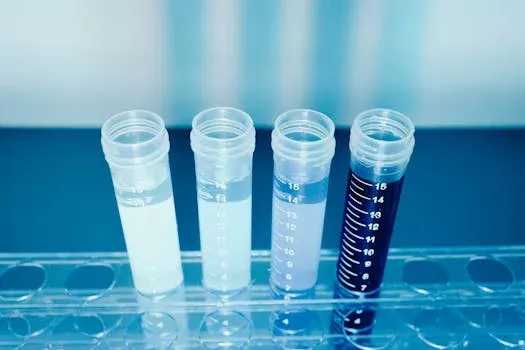
High turbidity ranks as the second-most common compliance failure in hospital effluent plants (45% of cases, per EPA 2024). This protocol helps diagnose and resolve the issue:
- Confirm the symptom: Measure effluent turbidity using a calibrated turbidity meter. Target: <30 NTU. If readings exceed this, proceed to Step 2. (Learn how to use turbidity meters for hospital effluent monitoring.)
- Check coagulant dosage: Perform jar testing to determine optimal coagulant dose. Target floc size: 1–3 mm. If floc is too small (<1 mm), increase coagulant dose by 10–20% increments. If floc is too large (>3 mm), reduce dose. Note: Hospitals often require 20–30% higher coagulant doses than municipal plants due to pharmaceuticals.
- Verify pH range: Measure pH in the flocculation zone. Target: 6.5–7.5. If pH is outside this range:
- pH <6.5: Add sodium hydroxide (NaOH) to raise pH.
- pH >7.5: Add sulfuric acid (H₂SO₄) to lower pH.
- Inspect flocculator paddle speed: Measure paddle tip speed using a tachometer. Target: 0.3–0.6 m/s. If speed exceeds 0.6 m/s, reduce RPM to avoid floc shear. If speed is below 0.3 m/s, increase RPM to improve mixing.
- Optimize injection points: Ensure coagulants and polymers are injected upstream of the flocculator, with sufficient mixing time (30–60 seconds). For hospitals, inject polymers 1–2 meters downstream of coagulants to improve floc strength.
- Check for short-circuiting: Perform a dye test in the sedimentation tank. If dye appears in the effluent within 50% of the theoretical detention time, short-circuiting is occurring. Solutions:
- Install baffles or weirs to improve flow distribution.
- Increase equalization tank capacity to 6–12 hours of average flow.
- Verify DAF performance (if applicable): For dissolved air flotation (DAF) systems, check the air-to-solids ratio. Target: 0.02–0.04. If ratio is too low, increase air flow or reduce solids loading. (Compare DAF vs sedimentation benchmarks for hospital effluent.)
Fixing Low Disinfection Residuals: A Hospital-Specific Protocol
Low disinfection residuals cause most compliance failures in hospital effluent plants (68% of cases, per EPA 2024). This protocol helps restore residuals and prevent pathogen breakthrough:
- Measure residual disinfectant:
- For chlorine dioxide (ClO₂): Target 0.5–2.0 mg/L. Use EPA-approved DPD test kits or online analyzers.
- For ozone: Target 0.1–0.5 mg/L. Use indigo trisulfonate test kits or UV absorbance at 258 nm.
- For UV: Target lamp intensity >80% of new lamp output. Use UV sensors or actinometry.
- Check for demand spikes: High organic load or ammonia can consume disinfectants. Test for:
- Ammonia: Target <1 mg/L in effluent. Hospitals often have high ammonia from urine (20–50 mg/L in raw effluent).
- COD: Target <120 mg/L. If COD >200 mg/L, increase disinfectant dose or improve pretreatment.
- Verify contact time:
- ClO₂: Target 30–60 minutes. Measure actual contact time using tracer studies.
- Ozone: Target 10–20 minutes. Use baffles to prevent short-circuiting.
- Inspect generator output:
- For ClO₂ generators: Check yield efficiency. Target: 95–98%. If yield <90%, replace sodium chlorite or HCl feedstocks. (Troubleshoot the Chlorine Dioxide Generator for hospital effluent disinfection.)
- For ozone generators: Check oxygen feed purity (>90% O₂) and cooling water temperature (<30°C).
- Test for pathogen regrowth: Collect effluent samples and test for:
- E. coli: Target <100 CFU/100 mL (EPA limit).
- Enterococci: Target <33 CFU/100 mL (EU Urban Waste Water Directive).
- Check UV system performance (if applicable):
- Lamp intensity: Target >80% of new lamp output. Replace lamps if intensity <70%.
- Quartz sleeve fouling: Clean sleeves if transmittance <90%.
- Flow rate: Ensure UV dose >40 mJ/cm² for 4-log virus inactivation.
Pharmaceutical Residue Breakthrough: Advanced Oxidation and Adsorption Solutions
Pharmaceutical residues in hospital effluent require specialized treatment. Conventional activated sludge removes <50% of APIs, leading to breakthrough. This decision framework helps select the right solution:
| Solution | Removal Efficiency | Best For | Limitations | Key Parameters |
|---|---|---|---|---|
| Advanced Oxidation Processes (AOPs) | 80–95% for most APIs | High-volume hospitals, water reuse projects | High CAPEX/OPEX, byproduct formation | Ozone dose: 5–10 mg/L; H₂O₂:O₃ ratio: 0.5–1.0 |
| Granular Activated Carbon (GAC) | 70–90% for hormones, <50% for contrast agents | Budget-conscious facilities, pre-treatment | Frequent replacement, limited capacity for polar compounds | EBCT: 10–20 min; bed life: 3–6 months |
| Membrane Bioreactors (MBR) | 90–99% for all residues | New installations, water reuse | High CAPEX, membrane fouling | Flux: 15–25 LMH; TMP: <30 kPa |
Implementation steps:
- Identify target APIs: Use LC-MS/MS screening to quantify residues. Prioritize:
- Antibiotics (e.g., ciprofloxacin, amoxicillin)
- Hormones (e.g., 17β-estradiol, ethinylestradiol)
- Contrast agents (e.g., iopromide, gadolinium)
- Select treatment technology:
- AOPs: Combine ozone (5–10 mg/L) with H₂O₂ (2–5 mg/L) for 10–20 minutes. Monitor byproduct formation (e.g., bromate if bromide >50 µg/L).
- GAC: Use coal-based GAC with high mesopore volume (e.g., Norit ROW 0.8). Pre-treat with multi-media filters to extend bed life.
- MBR: Install MBR systems with 0.04 µm membranes. Optimize MLSS (8,000–12,000 mg/L) to improve API adsorption.
- Validate performance: Test effluent for target APIs using LC-MS/MS. Target removal: >90% for priority compounds. If removal <80%, adjust dose or add a polishing step (e.g., GAC after AOP).
Preventive Maintenance Checklist for Hospital Effluent Treatment Plants
This hospital-specific checklist helps prevent failures before they occur. Download the PDF template for your facility.
Daily Checks
- Disinfection residual: 0.5–2.0 mg/L ClO₂ (or equivalent)
- Effluent turbidity: <30 NTU
- pH: 6.5–7.5
- Aeration tank DO: 2–4 mg/L
- Flow rate: Within 20% of average
Weekly Checks
- Sludge settling: SVI <150 mL/g (expert fixes for sludge settling issues)
- Coagulant/polymer drawdown: Check feed rates and inventory
- Membrane integrity (MBR): Perform bubble test or pressure decay test
- Generator output (ClO₂/ozone): Verify yield efficiency (target: 95–98%)
- Odor complaints: H₂S <0.1 ppm (use portable detector)
Monthly Checks
- Jar testing: Optimize coagulant dosage (target floc size: 1–3 mm)
- Dye testing: Check for short-circuiting in sedimentation tanks
- UV lamp intensity: >80% of new lamp output
- Activated carbon exhaustion: Perform iodine number test (target: >600 mg/g)
- Pharmaceutical screening: Test for priority APIs (LC-MS/MS)
Quarterly Checks
- Full equipment calibration: Pumps, sensors, analyzers
- Regulatory compliance testing: COD, BOD, TSS, E. coli, disinfection byproducts
- Spare parts inventory: Critical components (e.g., membranes, UV lamps, GAC)
- Corrosion inspection: Piping, tanks, and structural components
Frequently Asked Questions
Q: What are the most common compliance failures in hospital effluent plants?
A: EPA 2024 data shows the top 3 failures are: (1) Low disinfection residuals (68% of failures), (2) High turbidity (>30 NTU, 45% of failures), and (3) Pathogen regrowth (32% of failures). Pharmaceutical residue breakthrough accounts for 15% of failures, primarily in facilities without advanced oxidation or MBR systems.
Q: How do I adjust coagulant dosage for hospital effluent?
A: Jar testing should target a floc size of 1–3 mm at pH 6.5–7.5. Hospitals typically need 20–30% higher coagulant doses than municipal plants due to pharmaceuticals and cleaning chemicals (per WHO 2023). For example, a 500-bed hospital may need 50–70 mg/L of alum, compared to 30–50 mg/L for municipal wastewater.
Q: What's the best disinfection method for hospital effluent?
A: Chlorine dioxide (ClO₂) proves most effective for hospitals, achieving 99.9% pathogen kill at 0.5–2.0 mg/L residual with 30–60 minutes contact time. It remains stable, controls odor, and doesn't form chlorinated byproducts. Ozone serves as an alternative (0.1–0.5 mg/L residual, 10–20 minutes contact time) but requires shorter contact times and higher CAPEX. UV proves less effective for hospital effluent due to high turbidity and pathogen regrowth risks.
Q: How can I reduce pharmaceutical residues in effluent?
A: Advanced oxidation processes (AOPs) remove 80–95% of pharmaceuticals, including antibiotics and hormones. For budget-conscious facilities, granular activated carbon (GAC) removes 70–90% of hormones but <50% of contrast agents. Membrane bioreactors (MBRs) achieve 90–99% removal but have higher CAPEX. For example, a 300-bed hospital reduced ciprofloxacin from 500 ng/L to <50 ng/L using ozone/H₂O₂ AOP at 8 mg/L ozone dose.
Q: What parameters should I monitor daily in a hospital effluent plant?
A: Monitor these 4 parameters daily to prevent compliance failures:
Weekly monitoring should include sludge settling (SVI <150 mL/g) and coagulant/polymer drawdown. Monthly checks should include jar testing and pharmaceutical screening.
- Disinfection residual: 0.5–2.0 mg/L ClO₂ (or equivalent)
- Turbidity: <30 NTU
- pH: 6.5–7.5
- Dissolved oxygen (aeration tanks): 2–4 mg/L