Selecting a packaged wastewater treatment system is one of the most consequential decisions a facility manager or project engineer will make. The wrong choice can lead to regulatory non-compliance, excessive operating costs, and years of operational headaches. The right choice delivers reliable effluent quality, minimal operator intervention, and a favorable total cost of ownership over the system's 15–25 year lifespan.
This guide walks you through every critical factor — from determining your design flow rate to matching effluent requirements to the optimal treatment process. Whether you are specifying a system for a new resort, a food processing plant, or a rural housing development, this article gives you a structured framework for making an informed decision.
Step 1: Define Your Design Flow Rate
The design flow rate is the single most important parameter in system selection. Undersize it and the plant will be hydraulically overloaded within a year. Oversize it and you waste capital while risking process instability from underloading.
How to Calculate Design Flow
For municipal and domestic applications, design flow is typically calculated using per-capita wastewater generation rates multiplied by the design population, then adjusted with a peaking factor:
Q_design = Population × Per-Capita Flow × Peaking Factor
- Per-capita flow: Ranges from 80 L/person/day in water-scarce regions to 250 L/person/day in North America and parts of Europe. The US EPA commonly uses 190–250 L/person/day (50–65 gallons) for residential design.
- Peaking factor: For small systems (<500 PE), use 2.5–4.0×. For larger systems (5,000+ PE), use 1.5–2.5×. Harmon's peaking factor formula is widely used: PF = 1 + 14 / (4 + P^0.5), where P is population in thousands.
- Industrial flows: Must be based on actual production data (m³/ton of product, m³/batch), measured over at least 3 months including peak production seasons.
For projects where the population or production volume will grow over time, design for the 20-year projected flow but ensure the system can operate efficiently at 50–60% of design capacity during the initial years.
Flow Equalization Considerations
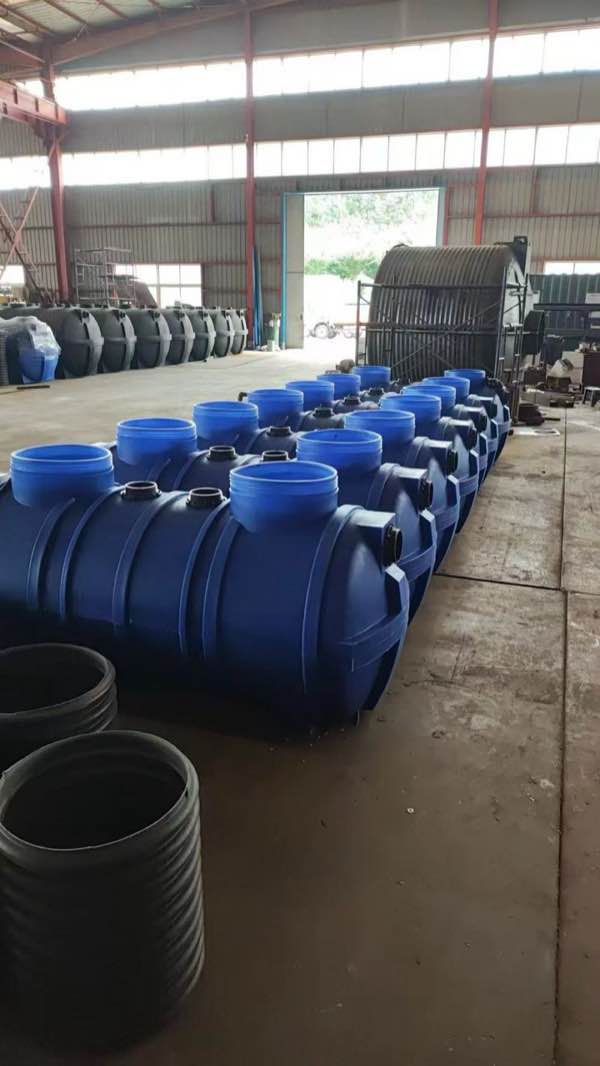
If your inflow pattern is highly variable — common in resorts, event venues, and batch-process industries — consider adding a flow equalization tank upstream of the treatment system. This allows you to specify a smaller (and less expensive) treatment unit while still handling peak flows. Many underground integrated sewage treatment plants include built-in equalization chambers for exactly this purpose.
Step 2: Characterize Your Influent Quality
Flow rate tells you how big the system needs to be. Influent quality tells you what kind of system you need. The key parameters to characterize are:
| Parameter | Typical Domestic Range | Why It Matters |
|---|---|---|
| BOD₅ | 150–350 mg/L | Determines biological treatment capacity needed |
| COD | 300–700 mg/L | Indicates total organic load; COD/BOD ratio reveals biodegradability |
| TSS | 150–400 mg/L | Affects solids handling and clarification design |
| TN (Total Nitrogen) | 25–60 mg/L | Determines if nitrification/denitrification is required |
| TP (Total Phosphorus) | 4–12 mg/L | May require chemical dosing for removal |
| Fats, Oils & Grease | <50 mg/L (domestic) | High FOG demands pretreatment (DAF or grease trap) |
Critical rule: Never design based on "typical" values alone. Always collect at least 10 composite samples over different days and seasons. For industrial wastewater, sample during every distinct production cycle.
Step 3: Know Your Effluent Standards
Your effluent discharge standard determines the level of treatment required. Standards vary significantly by jurisdiction and discharge destination.
Common International Standards
- US EPA Secondary Treatment: BOD₅ ≤ 30 mg/L, TSS ≤ 30 mg/L (30-day average). Many states impose stricter limits, especially for nitrogen and phosphorus in nutrient-sensitive watersheds.
- EU Urban Wastewater Treatment Directive (91/271/EEC): For sensitive areas, requires TN ≤ 10–15 mg/L and TP ≤ 1–2 mg/L, in addition to BOD₅ ≤ 25 mg/L and COD ≤ 125 mg/L.
- WHO Guidelines for Reuse: If treated water will be used for irrigation, WHO guidelines for restricted/unrestricted irrigation apply, with specific pathogen reduction targets.
If you need to meet stringent nutrient limits (TN < 10 mg/L, TP < 1 mg/L), conventional systems will struggle. This is where advanced biological processes — particularly MBR (Membrane Bioreactor) integrated systems — demonstrate their value, consistently producing effluent suitable for direct reuse or discharge to sensitive receiving waters.
Step 4: Select the Treatment Process
With your flow rate, influent quality, and effluent targets defined, you can now narrow down the appropriate treatment technology. Here are the most common packaged system options:
Extended Aeration / Activated Sludge
The workhorse of small-to-medium sewage treatment. Extended aeration systems use long hydraulic retention times (18–36 hours) and high sludge ages (20–30 days) to achieve stable BOD and TSS removal. They are forgiving of load variations and produce well-stabilized sludge. Best suited for flows of 10–500 m³/day where effluent requirements are standard secondary treatment level.
MBR (Membrane Bioreactor)
Combines biological treatment with membrane filtration, eliminating the need for secondary clarifiers. MBR systems produce superior effluent quality (BOD < 5 mg/L, TSS < 1 mg/L, turbidity < 1 NTU) in a significantly smaller footprint. The premium in capital cost (typically 20–40% more than conventional systems) is offset by smaller tank volumes, consistent effluent quality regardless of load variations, and suitability for water reuse applications.
SBR (Sequencing Batch Reactor)
A fill-and-draw system that performs all treatment steps in a single reactor. SBR systems excel at nutrient removal and handle variable flows well. However, they require more sophisticated automation and are less suitable for continuous-flow applications.
MBBR (Moving Bed Biofilm Reactor)
Uses plastic carrier media to grow attached biomass, increasing treatment capacity within a given volume. MBBR is excellent for upgrading existing systems or for applications with high organic loads. Often combined with clarification or membrane separation downstream.
Integrated Package Plants
For flows under 200 m³/day, fully integrated package plants like the JY Integrated Water Purification System offer the simplest solution. These units combine multiple treatment stages (coagulation, sedimentation, filtration, disinfection) into a single skid-mounted or containerized unit that can be deployed and commissioned in days rather than months.
Step 5: Evaluate Site and Operational Constraints
The "best" process on paper may not be the best process for your specific site. Consider these practical factors:
- Available footprint: If space is severely limited, MBR or underground systems are the clear winners. A buried package plant eliminates the visual and odor impact entirely.
- Operator skill level: Remote sites with no on-site operator need systems with robust automation and remote monitoring. Extended aeration and SBR systems are the most forgiving of operator error.
- Climate: In cold climates, biological process rates slow significantly. Enclosed or underground systems maintain more stable temperatures. In hot climates, dissolved oxygen management becomes critical.
- Power availability: If grid power is unreliable, prioritize low-energy processes and consider solar or generator backup. Aeration is the largest energy consumer — diffuser selection and VFD control can reduce blower energy by 30–40%.
- Sludge disposal: Every treatment process produces sludge. Understand your sludge disposal options (land application, landfill, incineration) and their costs before selecting a process. Systems with longer sludge ages (extended aeration, MBR) produce less sludge that is more stabilized.
Step 6: Compare Total Cost of Ownership
Capital cost is only part of the picture. A proper evaluation must include:
- Capital cost: Equipment, shipping, installation, commissioning
- Civil works: Foundation, piping, electrical, housing/enclosure
- Annual operating cost: Energy, chemicals, membrane replacement (for MBR), sludge disposal, labor
- Maintenance cost: Spare parts, major overhauls (typically at 7–10 year intervals)
- Compliance risk cost: What is the financial penalty for non-compliance? Systems with higher reliability may justify their premium.
Calculate the Net Present Value (NPV) over a 20-year horizon using a discount rate appropriate for your region (typically 5–8%). In our experience, MBR systems that appear 30% more expensive on a capital basis often come within 10–15% of conventional systems on a total cost basis, while delivering significantly better and more consistent effluent quality.
Step 7: Supplier Evaluation Criteria
The equipment is only as good as the company behind it. Evaluate potential suppliers on:
- Track record: How many similar installations have they completed? Ask for references you can contact and, ideally, visit.
- Design transparency: Will they share detailed process calculations, not just a brochure? A reputable manufacturer will walk you through the design basis.
- After-sales support: What is the warranty period? Do they offer remote monitoring? How quickly can they deliver spare parts to your region?
- Commissioning support: Will they provide on-site commissioning and operator training? This is non-negotiable for packaged biological systems.
- Certifications: ISO 9001 for quality management, ISO 14001 for environmental management, and relevant product certifications (CE, NSF, etc.).
Common Mistakes to Avoid
- Buying on price alone: The cheapest system almost never has the lowest total cost of ownership. Budget systems often use undersized components that fail prematurely.
- Ignoring future expansion: Design for at least 10 years of growth. Modular systems that can be expanded incrementally are ideal.
- Skipping pilot testing for industrial wastewater: Domestic sewage is predictable. Industrial wastewater is not. Always pilot-test before committing to a full-scale system for industrial applications.
- Neglecting pretreatment: Screening, grit removal, and FOG separation protect your biological process and extend equipment life. Never skip pretreatment to save money.
Frequently Asked Questions
What is the typical lifespan of a packaged wastewater treatment system?
A well-manufactured packaged system using appropriate materials (SS304/316 for wetted parts, quality coatings for carbon steel) should last 20–25 years with proper maintenance. The biological process components (aeration systems, membranes) will need periodic replacement — typically every 5–8 years for membranes and 8–12 years for diffusers — but the tank structure and core equipment should last the full design life.
Can a packaged system meet strict nutrient discharge limits?
Yes. Modern packaged MBR and SBR systems routinely achieve TN < 10 mg/L and TP < 0.5 mg/L when properly designed and operated. For phosphorus removal below 1 mg/L, chemical dosing (typically ferric chloride or alum) is usually required in addition to biological removal. The key is ensuring the system includes adequate anoxic and anaerobic zones for biological nutrient removal.
How much does a packaged wastewater treatment system cost?
Costs vary widely depending on flow rate, treatment level, and materials. As a rough guide: for domestic sewage at secondary treatment level, expect USD $1,500–3,500 per m³/day of design capacity for conventional systems, and USD $2,500–5,000 per m³/day for MBR systems. These figures include equipment only — add 30–60% for installation, civil works, and commissioning. Always request budgetary quotes from multiple manufacturers for an accurate comparison.
What maintenance does a packaged treatment system require?
Routine maintenance includes: daily visual inspections and parameter logging (can be automated), weekly sludge settling tests (SV30) and dissolved oxygen checks, monthly blower filter cleaning and general equipment inspection, quarterly sludge wasting and belt/chain lubrication, and annual comprehensive inspection of all mechanical and electrical components. For MBR systems, add periodic membrane cleaning (typically every 3–6 months chemical clean-in-place). A well-designed system should require no more than 1–2 hours of operator attention per day for systems under 500 m³/day.