
Ozone generators in portable, benchtop and cabinet formats plus water tank self-cleaning disinfectors, AOT photo-oxidation catalytic sterilizers and silver ion processors. Prevents bacterial regrowth in storage tanks and oxidizes taste, odour and colour compounds.
Where UV provides instantaneous inactivation with no residual, ozone and its related oxidation technologies provide powerful oxidation that also destroys taste, odour and colour compounds — and, in the case of water tank self-cleaning sterilizers, maintains disinfection inside a storage tank where treated water would otherwise stagnate and re-contaminate. HydropureWater supplies ozone generators in portable, benchtop and cabinet formats, AOT photo-oxidation catalytic sterilizers, silver ion water processors, and water tank self-cleaning disinfectors in internal and external mounting configurations.
Ozone generation: ozone is produced on site from oxygen or dry air by corona discharge and dissolved into the water, where it acts as a powerful oxidant — inactivating micro-organisms and simultaneously breaking down the organic compounds responsible for taste, odour and colour. Because ozone decomposes back to oxygen within a short period, it leaves no persistent residue.
Water tank self-cleaning disinfector: the unit sits inside or beside a storage tank. A releaser submerged in the tank distributes disinfectant generated by the control unit, with a gas-guide tube connecting the two, so that stored water is continuously treated rather than left to stagnate between fill and draw. This addresses the failure mode where water that left the treatment plant to specification degrades in the storage tank before it reaches the tap.
AOT photo-oxidation: advanced oxidation combines UV irradiation with a photocatalyst to generate hydroxyl radicals, oxidizing contaminants that resist conventional treatment.
| Category | Types Available | Typical Use |
|---|---|---|
| Ozone generator | Portable, benchtop and floor-standing cabinet formats | Water disinfection, taste and odour control, tank sterilization |
| Water tank self-cleaning disinfector | WTS-2A, WTS-2B, one-to-two, external cabinet, stainless steel casing | Storage tank water quality maintenance |
| Water tank water quality processor | Wall-mounted and cabinet units | Continuous conditioning of stored water |
| AOT photo-oxidation catalytic sterilizer | Cabinet-mounted instruments, single and multi-unit banks | Advanced oxidation for resistant contaminants |
| Silver ion water processor | Inline pipe-mounted units | Residual protection in distribution |
Selection depends on tank volume, turnover rate and target water quality. Send your tank capacity and usage pattern for a specified unit.
Storage tanks are the most commonly overlooked point in a water system. Water can leave a treatment plant fully compliant and still fail at the tap because it sat in a warm tank long enough for bacteria to regrow — and no amount of upstream treatment fixes that. HydropureWater specifies tank sterilization as part of the system rather than as an accessory, matching the disinfector type and capacity to tank volume and turnover, and offering internal releaser or external cabinet mounting depending on whether the tank can be entered for installation and service.
They solve different problems. UV inactivates micro-organisms instantly as water flows past, but leaves no residual and does not remove taste, odour or colour. Ozone oxidizes organics as well as disinfecting, and carries briefly through the water, making it suitable for tank treatment. Many plants use both: UV as the inline barrier, ozone for tank and organics duty.
Because water quality degrades in storage. Treated water sitting in a warm tank between fill and draw allows bacterial regrowth, so water that met specification at the plant may not meet it at the tap. A tank self-cleaning disinfector treats the stored volume continuously rather than relying on upstream treatment alone.
No persistent one. Ozone decomposes back to oxygen relatively quickly, which is an advantage for product water quality but also means it does not provide long-term residual protection in a distribution network. Where residual protection is required, a silver ion processor or a chlorine-based residual is used alongside it.
Advanced oxidation combines UV with a photocatalyst to generate hydroxyl radicals, which oxidize contaminants that resist conventional disinfection and filtration. It is specified where the water carries persistent organic compounds rather than simply a microbiological load.
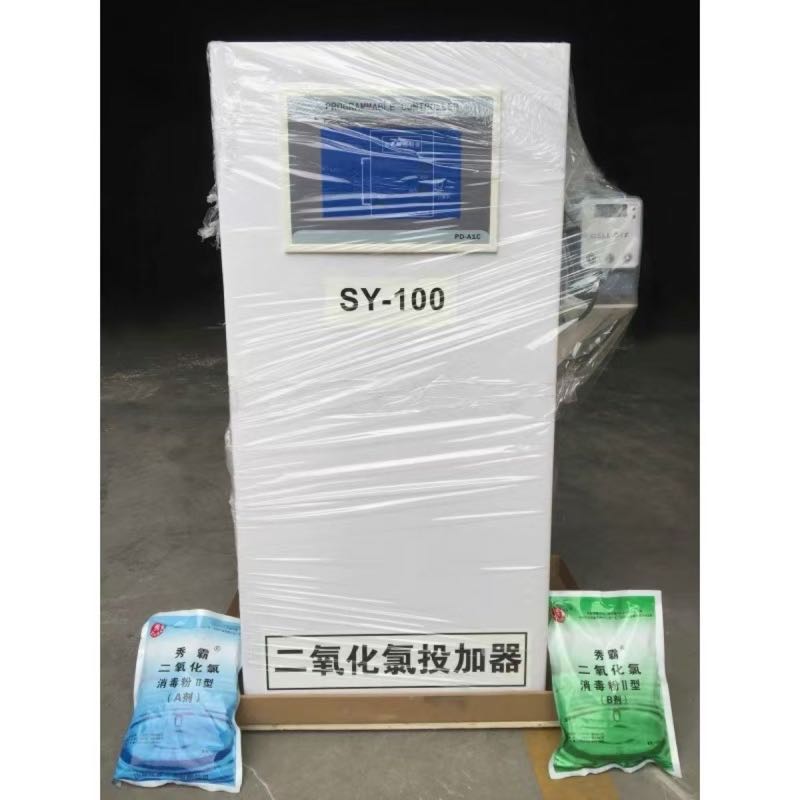
HydropureWater Chlorine Dioxide Generators produce high-purity ClO₂ disinfectant on-site using proven chemical or electrolytic methods. Available in eight configurations — from compact manual units (50 g/h) to fully automated industrial systems (20,000 g/h) — these generators deliver reliable microbial control for municipal drinking water, hospital effluent, industrial cooling loops, and process wastewater. Compliant with EPA, EU Drinking Water Directive 98/83/EC, and WHO Guidelines for Drinking-water Quality.

Full pipeline UV-C sterilizer range - flange, quick-connect, double lamp, medium-pressure, self-cleaning, outdoor rainproof and open-channel configurations. Chemical-free disinfection effective against chlorine-resistant Cryptosporidium and Giardia, with no by-products or taste change.
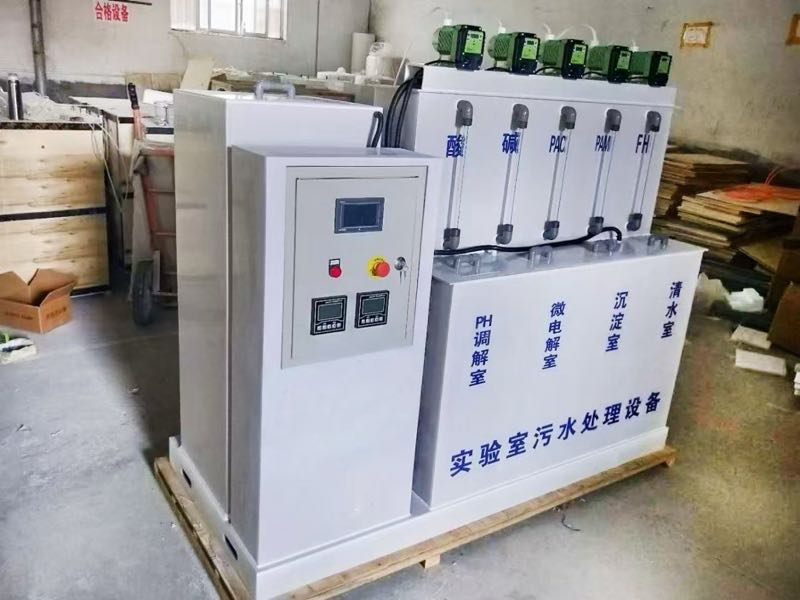
The HydropureWater Medical Wastewater Treatment System is a compact, fully automated unit engineered for clinics, dental offices, veterinary hospitals, and small medical facilities. Combining multi-stage filtration with ozone disinfection (99%+ kill rate), it meets EPA and EU Urban Waste Water Directive 91/271/EEC discharge requirements in a footprint as small as 0.5 m² — with no chemical dosing, no noise, and no secondary pollution.

Hollow-fiber ultrafiltration systems from 2,000 to 40,000 L/h using 0.03 micron PVDF membranes. Removes bacteria, colloids and suspended solids without chemicals, accepts up to 300 ppm turbidity, with automatic backwash and air scour. For municipal, rural and RO pretreatment duty.
Get a free consultation and customized quote from our engineering team.
