What Are Thailand's Industrial Wastewater Discharge Standards?
Thailand's industrial wastewater discharge standards are set by Ministry of Industry Notification B.E. 2560 (2017), effective 7 June 2017, which revoked the 1996 rules. Under Factory Act B.E. 2535, untreated discharge other than dilution is illegal. Public waterways and IEAT zones use different limit tracks. PCD, ONEP, and IEAT enforce the rules; breaches can bring large fines and shutdowns.
The discharge point decides which limit set applies. Factories releasing effluent into public waterways must meet the stricter public limits. Sites inside an IEAT zone send wastewater to a central collection system and face looser BOD and TSS ceilings because the estate plant polishes the stream downstream. The dual-track approach resembles how China regulates industrial effluent by sector and region.
Monitoring and reporting obligations are equally strict. Operators must run self-monitoring at a frequency tied to their permit and the PCD risk rating, and keep records of pH, flow, and key pollutants ready for inspection. Sudden unplanned releases, even inside limits, often trigger immediate reporting. Most plants we audit in Thailand have run a composite sampling program for at least 12 months before the PCD accepts a baseline.
Core Effluent Parameters and Legal Limits
Thailand's industrial wastewater discharge standards for physico-chemical and organic parameters are the first numbers every plant engineer checks. Exceeding these is the most common cause of violations at manufacturing sites in Thailand.
pH must sit between 5.5 and 9.0. Effluent outside this band is corrosive and acutely toxic to aquatic life. Continuous pH monitoring is standard practice because a swing often signals a process upset or a treatment failure. Temperature must not exceed 40°C for public discharge and 45°C in IEAT zones, since thermal pollution strips dissolved oxygen from receiving waters. Total Dissolved Solids (TDS) are limited to 3,000 mg/L for typical freshwater receivers; higher salinity pushes a plant toward reverse osmosis.
Biochemical Oxygen Demand (BOD) measures organic load. The public discharge limit is not more than 20 mg/L; IEAT zones permit up to 500 mg/L because the central plant takes a second pass. Chemical Oxygen Demand (COD) is the controlling parameter for chemical-heavy sectors such as textiles and pharmaceuticals: not more than 120 mg/L public, not more than 750 mg/L IEAT. Total Suspended Solids (TSS) must stay at or under 50 mg/L (public) or 200 mg/L (IEAT). High TSS smothers benthic habitats and can clog the IEAT collection network. Fats, Oil, and Grease (FOG) are capped at 5 mg/L public and 10 mg/L IEAT, with mandatory grease traps on canteen streams.
| Parameter | Unit | Public Discharge Limit | IEAT Zone Limit |
|---|---|---|---|
| pH | - | 5.5 - 9.0 | 5.5 - 9.0 |
| Temperature | °C | < 40 | < 45 |
| TDS | mg/L | < 3,000 | < 3,000 |
| BOD | mg/L | < 20 | < 500 |
| COD | mg/L | < 120 | < 750 |
| TSS | mg/L | < 50 | < 200 |
| FOG | mg/L | < 5 | < 10 |
Plants battling high TSS and FOG usually start with a high-efficiency DAF system for FOG and TSS removal before adding biological polishing.
Toxic Pollutants: Heavy Metals and Chemicals
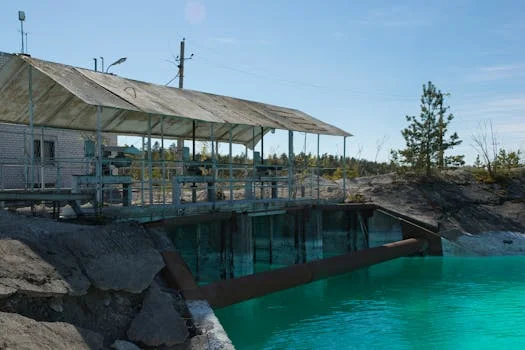
Heavy metals and toxic chemicals carry the tightest discharge limits under Thailand's industrial wastewater discharge standards because they persist, bioaccumulate, and damage downstream ecosystems. Violations here can trigger immediate cessation orders rather than fines.
Mercury is capped at 0.005 mg/L, which demands precise treatment such as chemical precipitation or ion exchange. A single broken thermometer in a process line has been enough to push a reading over the line at plants we have visited. Hexavalent chromium must drop to 0.25 mg/L or less, normally by reducing it to the less toxic trivalent form (limit 0.75 mg/L) before hydroxide precipitation. Cadmium (less than 0.03 mg/L), Lead (less than 0.2 mg/L), and Arsenic (less than 0.25 mg/L) appear in electroplating, battery, and mining runoff and are removed through staged chemical coagulation followed by filtration.
Cyanide (as HCN) is limited to 0.2 mg/L and calls for destructive oxidation via alkaline chlorination or UV-ozonation. Incomplete destruction can create more toxic by-products, so reaction control is critical. Sulfide (as H₂S) must stay at or below 1.0 mg/L to limit toxicity and odor; aeration or chemical oxidation is the standard fix. Sulfides form readily in anaerobic pockets of wastewater and corrode concrete pipework within months if untreated.
| Parameter | Unit | Limit (Public & IEAT) |
|---|---|---|
| Mercury | mg/L | < 0.005 |
| Cadmium | mg/L | < 0.03 |
| Lead | mg/L | < 0.2 |
| Arsenic | mg/L | < 0.25 |
| Hexavalent Chromium | mg/L | < 0.25 |
| Cyanide (as HCN) | mg/L | < 0.2 |
| Sulfide (as H₂S) | mg/L | < 1.0 |
Hitting these metals consistently at low concentrations requires a precisely controlled automatic chemical dosing system for coagulants and pH adjusters so each reaction stage stays in its optimal window.
How Wastewater Treatment Systems Meet Thai Standards
Equipment selection is best framed as a mapping exercise from exceeded parameters to proven unit processes. The table below translates Thailand's discharge standards into a clear treatment roadmap.
When FOG exceeds 5 mg/L and TSS exceeds 50 mg/L, Dissolved Air Flotation (DAF) is the workhorse. Micro-bubbles attach to oil droplets and fine solids, floating them to the surface for skimming. DAF is common in food processing, petrochemical, and metalworking effluent, and its removal rate is set largely by coagulant and flocculant dose.
To hit the strict BOD at or below 20 mg/L and COD at or below 120 mg/L required for public discharge, a Membrane Bioreactor (MBR) is the most reliable biological option. It pairs activated sludge with an ultrafiltration membrane, producing a low-turbidity effluent that often qualifies for reuse. Most MBRs we commission in Thailand run at mixed liquor suspended solids of 8,000-12,000 mg/L to keep flux stable.
TDS above 3,000 mg/L forces desalination. Reverse Osmosis (RO) is the default choice for textile and tannery streams. It produces compliant permeate but also a brine concentrate that must be evaporated, further treated, or sent to an authorized receiver. Plan for brine management at the same time you size the RO.
Heavy metals are removed by dosing metal-specific precipitants (typically hydroxides or sulfides) at controlled pH, followed by sedimentation or DAF for solids capture. Multi-stage precipitation is common because the optimal pH differs for each metal. A final ozone or chlorine dioxide polish controls odor and pathogens before discharge.
| Exceeded Parameter | Target Limit | Primary Treatment Technology |
|---|---|---|
| FOG, TSS | <5 mg/L FOG, <50 mg/L TSS | Dissolved Air Flotation (DAF) |
| BOD, COD | <20 mg/L BOD, <120 mg/L COD | Membrane Bioreactor (MBR) |
| TDS | <3,000 mg/L | Reverse Osmosis (RO) |
| Heavy Metals (Cr, Cd, Pb, etc.) | Varies (e.g., Cd <0.03 mg/L) | Chemical Precipitation + DAF/Sedimentation |
For most biological treatment needs, a compact MBR system for ultra-low BOD and COD effluent provides the highest compliance assurance. For high-salinity streams, RO systems are essential for TDS reduction.
Compliance Strategy: From Assessment to Equipment Selection
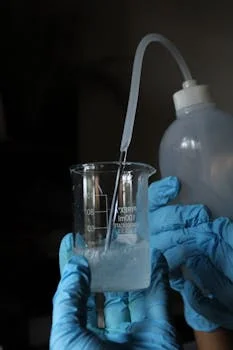
A disciplined compliance path protects both the operating license and the capital budget. Start with a 24-hour composite sample to establish a defensible baseline of every parameter the PCD tracks. The composite almost always reveals the real loadings, since grab samples tend to miss batch peaks and weekly cleaning cycles. BOD, COD, TSS, and FOG are the typical priorities for Thai manufacturers, in that order.
Specify modular, skid-mounted treatment systems when feasible. They install faster inside an existing plant footprint, can be commissioned in parallel with the running line, and scale by adding trains as production grows. Pair the skids with PLC automation and online sensors for pH, ammonia, and flow so operators see exceedance trends before they reach the discharge point. This level of control is detailed in our guide to PLC automation for wastewater treatment process control.
Engage a certified environmental consultant early to handle PCD submissions and permit modifications. An experienced consultant will also pressure-test the design basis against the inspector's likely questions. Done well, compliance becomes a documented, predictable line item — and your license to operate stays intact.
Who This Guide Is For — and Next Step
Plant engineers, EPC contractors, and procurement managers at Thai food, textile, electroplating, chemical, and electronics plants will use the parameter tables and technology map directly. If your site sits in an IEAT zone with a tight BOD ceiling, or faces a PCD audit within 12 months, the framework above shortens the path from sampling to equipment order.
For a side-by-side comparison with regional rules, see our guide to the UAE's industrial effluent limits and treatment requirements. When you are ready to size a DAF, MBR, or RO skid against your composite sample data, send the flow rate and parameter list for a feasibility and capex review.
Frequently Asked Questions
What is the pH limit for industrial wastewater in Thailand?
pH must stay between 5.5 and 9.0 for every industrial discharge under Thailand's wastewater discharge standards, whether the outlet is a public waterway or an IEAT collection manhole. Continuous monitoring with automatic acid or caustic dosing is the practical way to hold that narrow window during batch swings.
Can I discharge wastewater with 600 mg/L COD in Thailand?
No. 600 mg/L COD breaches the public discharge ceiling of 120 mg/L and is a serious violation. A COD of 600 mg/L is only acceptable inside an IEAT zone, where the limit is 750 mg/L and the central treatment plant handles the residual load before final release.
How do I reduce TDS below 3,000 mg/L?
Reverse Osmosis (RO) is the standard route for cutting Total Dissolved Solids to meet the 3,000 mg/L ceiling, with Electrodialysis Reversal (EDR) used for selected ionic profiles. Run a full ionic analysis first so membrane selection and pretreatment (softening, antiscalant dose) match the feedwater and protect RO recovery.
Is DAF enough for FOG removal?
Yes. A correctly sized Dissolved Air Flotation unit with the right coagulant and flocculant program will consistently hold FOG under the 5 mg/L public limit. Schedule routine checks on the saturator pressure, nozzle condition, and skimmer mechanism, since those three items drive most of the performance drift we see in the field.
Do I need a grease trap for canteen wastewater?
Yes. The Thai wastewater guidelines require a grease trap on all canteen and kitchen streams, with daily grease removal during operating hours. Skipping that routine turns the trap into a bypass source and risks FOG excursions downstream of the main treatment train.
Further Reading
Explore these in-depth articles on related wastewater treatment topics: