PLC Automation for Wastewater Treatment: Process Control & Efficiency Guide
PLC automation in wastewater treatment utilizes Programmable Logic Controllers as the central control point for real-time monitoring and automated operation of processes like pumping, chemical dosing, and filtration. This technology significantly improves operational stability, reduces manual intervention, and ensures consistent effluent quality, even in harsh industrial environments with high humidity and electrical noise.The Imperative for PLC Automation in Industrial Wastewater Treatment
The complexity of industrial wastewater treatment processes has escalated significantly due to fluctuating influent quality, variable flow rates, and increasingly stringent regulatory constraints. Industrial facilities face the challenge of treating diverse waste streams, which can vary in composition from day to day, demanding adaptive and precise control to prevent compliance breaches and operational inefficiencies. Manual processes, which were once common, are now largely insufficient to meet modern demands for consistency, reliability, and continuous compliance, leading to higher operational costs, increased risks of non-compliance, and potential environmental penalties. Programmable Logic Controller (PLC) automation emerges as the core solution for overcoming these challenges, establishing itself as an indispensable component of modern industrial control systems. PLCs are essential for maintaining operational stability, executing precise commands, protecting critical assets from adverse conditions, and ensuring that treatment processes run optimally with minimal human intervention. This fundamental shift towards process automation is not merely an upgrade but a necessity for sustainable and compliant industrial wastewater management. To understand how PLCs meet this necessity, it's important to grasp their fundamental design and function.Understanding Programmable Logic Controllers (PLCs) in Wastewater
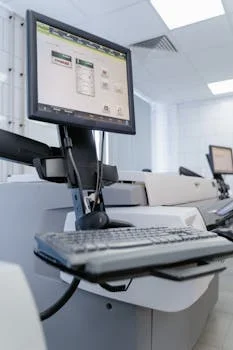
- Compact PLCs: Integrated CPU and I/O in a single unit, suitable for smaller, dedicated applications like a single pump station or a basic chemical dosing skid.
- Modular PLCs: Allow for flexible expansion of I/O modules, memory, and communication capabilities, making them scalable for medium to large-sized treatment processes with evolving requirements.
- Rack-mounted PLCs: High-performance systems typically used for large-scale, complex wastewater treatment plants requiring high I/O density, extensive processing power, and redundancy.
- Soft PLCs: Software-based PLCs that run on industrial PCs, offering flexibility and integration with PC-based control systems, often used in conjunction with Human-Machine Interfaces (HMIs) for visualization.
Key Wastewater Processes Automated by PLCs
Programmable Logic Controllers are indispensable across virtually all stages of industrial wastewater treatment, providing the precision and reliability required for optimal performance. They interact with a wide array of equipment to execute specific control functions, ensuring efficient operation and consistent effluent quality.- Influent Pumping & Flow Control: PLCs manage variable flow rates by controlling the speed of influent pumps, often using Variable Frequency Drives (VFDs) to match incoming flow. They sequence multiple pumps (e.g., lead-lag operation) and maintain optimal liquid levels in equalization tanks using real-time sensor data, preventing overflow or pump cavitation.
- Chemical Dosing: PLCs enable precise, automated injection of various chemicals such as coagulants, flocculants, pH adjusters, and disinfectants. By integrating with pH, ORP, or turbidity sensors, PLCs prevent under-dosing (leading to poor treatment) or over-dosing (wasting chemicals and potentially causing issues), thereby optimizing treatment efficiency and reducing operational costs, as seen in HydropureWater's precise PLC-controlled chemical dosing systems.
- Aeration Systems: In biological treatment, PLCs control blowers and aerators to maintain optimal dissolved oxygen (DO) levels, typically between 1.5-2.5 mg/L, essential for microbial activity. They integrate with DO sensors and VFDs to adjust blower speed, significantly optimizing energy consumption while ensuring efficient biological treatment.
- Clarification & Sedimentation: PLCs manage the operation of scraper mechanisms in clarifiers, control sludge withdrawal rates based on sludge blanket levels, and adjust overflow weirs. This automation optimizes solid-liquid separation, ensuring efficient removal of suspended solids from the treated water.
- Filtration & Membrane Systems: For advanced treatment, PLCs automate critical functions in multi-media filters, ultrafiltration (UF), membrane bioreactors (MBR), and reverse osmosis (RO) systems. This includes initiating automated backwash cycles based on filter run times or differential pressure, monitoring trans-membrane pressure (TMP) to detect fouling, and executing chemical cleaning sequences, as exemplified by fully automatic PLC-controlled filter presses and fully automated PLC-controlled RO systems.
- Disinfection: PLCs control disinfection processes, such as chlorine dioxide generators or UV systems, by adjusting dosage or UV intensity based on flow rates and residual disinfectant measurements (e.g., chlorine residual), ensuring effective pathogen reduction before discharge.
| Wastewater Process | Key Equipment | PLC Function & Typical Parameters Controlled |
|---|---|---|
| Influent Pumping | Pumps, VFDs, Level Sensors | Pump sequencing (lead/lag), variable flow rate control, tank level (e.g., 20-80% full) |
| Chemical Dosing | Dosing Pumps, Mixers, pH/ORP/Turbidity Sensors | Chemical injection rate, pH (e.g., 6.5-8.5), ORP (e.g., 200-400 mV), turbidity (e.g., <5 NTU) |
| Aeration | Blowers, VFDs, Diffusers, DO Sensors | Blower speed, dissolved oxygen (DO) levels (e.g., 1.5-2.5 mg/L), air flow |
| Clarification | Scrapers, Sludge Pumps, Level Sensors | Scraper speed, sludge withdrawal timing/rate, sludge blanket level |
| Filtration/Membrane | Filters, RO Skids, Backwash Pumps, Pressure/Flow Sensors | Backwash cycles, filter run time, trans-membrane pressure (TMP), permeate flow, cleaning cycles |
| Disinfection | UV Lamps, Chemical Generators, Flow/Residual Sensors | UV intensity, chemical dosage, flow rate, disinfectant residual (e.g., Free Chlorine 0.5-2.0 mg/L) |
PLC Control Strategies and Programming for Wastewater
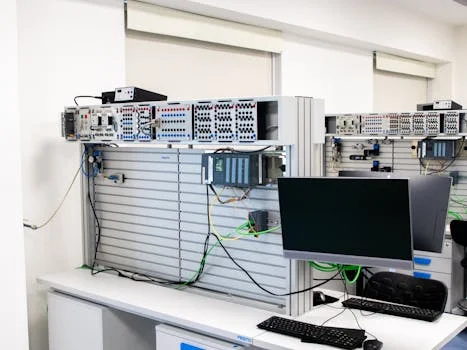
- Fundamental Control Loops:
- ON/OFF Control: This is the simplest form, where an output is either fully on or fully off based on a single input threshold. For example, a PLC can start a pump when the water level in an equalization tank reaches a high setpoint and stop it when the level drops to a low setpoint.
- PID Control: Proportional-Integral-Derivative (PID) control is used for processes requiring precise modulation of an output to maintain a specific setpoint. In wastewater, PID loops are crucial for chemical dosing (e.g., adjusting coagulant feed rate based on pH or ORP readings to maintain target effluent pH between 6.5-8.5), flow control, or maintaining dissolved oxygen (DO) levels (e.g., 1.5-2.5 mg/L) in aeration basins by modulating blower speed.
- Sequential Control: Many wastewater operations involve a series of timed or event-driven steps. A common example is a filter backwash sequence, where the PLC executes a precise series of valve openings/closings, pump starts/stops, and air scour cycles in a specific order and for defined durations.
- Programming Logic Structures: PLCs are programmed using specialized languages, each suited for different tasks:
- Ladder Logic (LD): Resembling electrical relay control circuits, it is highly intuitive for electricians and maintenance personnel, making it ideal for discrete ON/OFF control and interlocks.
- Function Block Diagram (FBD): A graphical language using standard function blocks (e.g., timers, counters, PID controllers), suitable for complex control algorithms and process control.
- Structured Text (ST): A high-level, text-based language similar to Pascal, preferred for complex mathematical calculations, data manipulation, and implementing advanced algorithms.
- Simplified PLC Program Example (Equalization Tank Level Control):
Consider an equalization tank with two pumps (P1, P2) and three level sensors (Low-Low, Low, High, High-High).
Logic:
- Pump Start (Lead/Lag): When tank level rises above 'Low', start P1 (lead pump). If P1 is running and level rises above 'High', start P2 (lag pump).
- Pump Stop: When level drops below 'Low', stop P2. When level drops below 'Low-Low', stop P1.
- Alternation: After a set number of cycles or run hours, the PLC automatically designates P2 as the new lead pump and P1 as the lag pump to equalize wear.
- High-High Level Alarm/Shutdown: If level exceeds 'High-High', trigger a critical alarm and potentially shut down upstream processes or divert flow to an emergency basin to prevent overflow.
- Low-Low Level Pump Protection: If level drops below 'Low-Low', stop all pumps to prevent dry running and damage.
- Safety Interlocks and Alarm Management: PLCs are critical for implementing safety interlocks (e.g., preventing a pump from starting if its discharge valve is closed) and managing alarms. They continuously monitor process parameters and equipment status, alerting operators to abnormal conditions (e.g., high pressure, low flow, motor overcurrent) through HMIs, SMS, or email, allowing for rapid response.
- Robust Programming Practices: For reliability and fault tolerance in demanding environments, programming emphasizes clear, modular code, error handling routines, and redundancy where critical. This ensures ease of troubleshooting, maintenance, and future modifications.
- Typical Process Parameters Monitored and Controlled: PLCs continuously monitor and control parameters such as pH (e.g., discharge range 6.0-9.0), ORP (e.g., anaerobic digestion range -200 to -400 mV), dissolved oxygen (DO), turbidity, flow rate, pressure, temperature, and liquid levels, ensuring precise environmental management.
Integrating PLCs with SCADA Systems for Comprehensive Control
SCADA (Supervisory Control and Data Acquisition) systems provide a centralized platform for monitoring and controlling an entire industrial wastewater treatment plant, acting as the human-machine interface (HMI) for operators. While PLCs serve as the 'brains' at the field level, executing real-time commands and local control loops, SCADA systems offer a holistic view by aggregating data from multiple PLCs and processes across the facility. This integration allows for centralized monitoring, comprehensive data logging, historical trending of critical parameters (e.g., flow rates, pH, energy consumption), and efficient alarm management. The benefits of robust PLC-SCADA integration are substantial: enhanced visibility into plant operations, remote control capabilities for operators, and the ability to perform historical data analysis for process optimization and improved decision-making. Communication between PLCs and SCADA systems typically relies on industrial protocols such as Modbus, Ethernet/IP, and Profibus, ensuring reliable and secure data exchange. The evolution of cloud SCADA systems, as explored in optimizing wastewater management with cloud SCADA, extends these benefits, enabling multi-site management, advanced analytics, and greater accessibility, moving beyond traditional on-premise solutions. This layered automation architecture ensures both precise local control and comprehensive plant-wide supervision. The robust control achieved through PLC-SCADA integration translates directly into significant operational and financial benefits.Benefits and ROI of PLC Automation in Wastewater
- Increased Operational Efficiency: PLC automation reduces manual intervention by automating routine tasks, optimizing chemical consumption (e.g., leading to a typical 10-30% reduction in chemical usage through precise dosing), and achieving substantial energy savings through intelligent control of pumps, blowers, and mixers via VFDs. This optimization ensures processes run at peak efficiency with minimal waste.
- Improved Reliability & Uptime: PLCs provide proactive fault detection and automated system responses to abnormal conditions, minimizing human error and reducing the likelihood of equipment failure or process upsets. This leads to higher system availability and reduced unplanned downtime.
- Enhanced Compliance: Through continuous real-time monitoring and adaptive control of critical parameters like pH, DO, and turbidity, PLCs ensure consistent effluent quality, helping facilities reliably meet stringent discharge standards and avoid regulatory penalties.
- Reduced Labor Costs: Automation minimizes the need for continuous operator presence for routine tasks, allowing skilled personnel to focus on higher-value activities such as process analysis, maintenance, and strategic planning.
- Better Data for Decision-Making: PLCs collect vast amounts of real-time and historical operational data. This data is invaluable for process optimization, identifying trends, implementing predictive maintenance strategies, and accurately planning for future capacity expansion, providing actionable insights for plant managers.
Challenges and Future Trends in Wastewater PLC Automation
While PLC automation offers substantial benefits, its implementation in industrial wastewater treatment plants presents common challenges, including the initial investment cost for hardware and software, the complexity of integrating new automation systems with existing legacy equipment, and the ongoing need for skilled personnel for programming, maintenance, and troubleshooting. Overcoming these hurdles often requires careful planning, phased implementation, and continuous training. Looking ahead, the future of wastewater PLC automation is characterized by several transformative trends. There is increasing integration with advanced technologies such as Artificial Intelligence (AI) and Machine Learning (ML) for predictive analytics and process optimization, as detailed in discussions on AI for chemical dosing optimization and implementing predictive maintenance for wastewater equipment. Enhanced cybersecurity measures are becoming paramount to protect industrial control systems from increasingly sophisticated threats. The role of Internet of Things (IoT) sensors is expanding, providing PLCs with richer, more diverse data streams for even more precise control and monitoring, as explored in the guide to IoT sensors for wastewater treatment. These advancements promise to make wastewater treatment plants more autonomous, resilient, and efficient.Frequently Asked Questions About PLC Automation in Wastewater
What are the primary benefits of using PLCs in wastewater treatment?
PLCs significantly improve operational efficiency, enhance regulatory compliance, increase system reliability and uptime, and reduce labor and chemical costs through precise, automated control and monitoring.
How do PLCs ensure compliance with wastewater discharge regulations?
PLCs continuously monitor critical effluent parameters (e.g., pH, flow, turbidity) and automatically adjust treatment processes in real-time to maintain consistent effluent quality within regulatory limits, minimizing the risk of non-compliance.
What are typical challenges when implementing PLC automation in an existing wastewater plant?
Common challenges include the initial capital investment, integrating new PLCs with existing legacy equipment, and ensuring that operational staff possess the necessary skills for programming, maintenance, and system oversight.
Can PLCs be integrated with existing SCADA systems?
Yes, PLCs are designed to integrate seamlessly with SCADA (Supervisory Control and Data Acquisition) systems, typically using industrial communication protocols like Modbus or Ethernet/IP, to provide centralized monitoring, data logging, and control across the entire plant.
What are the main types of sensors that connect to PLCs in wastewater applications?
PLCs in wastewater commonly connect to sensors for measuring parameters such as pH, Oxidation-Reduction Potential (ORP), Dissolved Oxygen (DO), turbidity, flow rate, pressure, temperature, and liquid level.
Related Equipment
- fully automated package sewage treatment plants — view specifications, capacity range, and technical data
- precise PLC-controlled chemical dosing systems — view specifications, capacity range, and technical data
- fully automatic PLC-controlled filter presses — view specifications, capacity range, and technical data
- fully automated PLC-controlled RO systems — view specifications, capacity range, and technical data
Need a customized solution? Request a free quote with your specific flow rate and pollutant parameters.