Why Industrial Plants Are Replacing PLC Dosing with AI Chemical Optimization
Industrial wastewater treatment plants lose $50,000–$500,000 annually to chemical waste and compliance fines from outdated PLC-based dosing systems. Traditional setpoint dosing—where operators manually adjust coagulant, flocculant, and pH adjuster rates based on fixed thresholds—fails to adapt to influent variability, leading to over-dosing during low-load periods and under-dosing during spikes. A 2024 VROC case study found that plants treating 100–1,000 m³/h waste 15–30% of chemicals due to static dosing, while compliance fines for effluent violations average 2–5 incidents per year (per CPCB/NEMA 2024 data). Operator labor compounds the problem: manual adjustments consume 5–10 hours weekly, diverting staff from higher-value tasks.
AI chemical dosing optimization replaces fixed setpoints with dynamic, data-driven predictions. Unlike PLC systems—which rely on linear algorithms and require manual recalibration—AI models continuously learn from real-time sensor data (pH, ORP, TSS, turbidity) and historical trends to adjust dosages within milliseconds. For example, a textile plant in Gujarat reduced coagulant use by 35% after deploying AI dosing, cutting annual chemical costs by $85,000 and eliminating compliance fines (HydropureWater field data, 2025). The shift from reactive to predictive dosing addresses three core pain points:
- Chemical waste: AI reduces over-dosing by 20–40% by accounting for influent variability (e.g., COD swings from 50–1,000 mg/L).
- Compliance risks: Real-time effluent monitoring and adaptive dosing lower violation rates to 0–1 incidents/year.
- Operator burden: Automated adjustments reduce manual labor to 1–2 hours/week, freeing staff for process optimization.
For plant managers evaluating AI dosing, the key question isn’t whether to adopt it, but how quickly it can integrate with existing SCADA systems and deliver measurable ROI. The next section breaks down the engineering specifications and process flow behind these systems.
How AI Chemical Dosing Optimization Works: Engineering Specs and Process Flow
AI chemical dosing systems consist of three core components: real-time sensors, SCADA/PLC integration, and machine learning models. These elements work in tandem to replace static dosing curves with dynamic predictions based on influent conditions, effluent targets, and historical performance. Below are the technical specifications and process flow for a typical AI dosing deployment.
1. Sensor Requirements and Parameter Ranges
AI models rely on high-resolution sensor data to predict optimal dosages. The table below outlines the minimum and recommended sensor types, along with the parameter ranges they must handle for industrial wastewater applications:
| Parameter | Sensor Type | Typical Range (Industrial Wastewater) | AI Model Handling Capacity | Accuracy Requirement |
|---|---|---|---|---|
| pH | Glass electrode (4–20mA) | 4–11 | 2–12 (with calibration) | ±0.1 pH |
| ORP (Oxidation-Reduction Potential) | Platinum electrode (4–20mA) | -500 to +500 mV | -800 to +800 mV | ±10 mV |
| TSS (Total Suspended Solids) | Optical sensor (Modbus) | 10–500 mg/L | 5–1,000 mg/L | ±5% |
| Turbidity | Nephelometric (NTU, 4–20mA) | 10–500 NTU | 5–1,000 NTU | ±2 NTU |
| Flow Rate | Magnetic flowmeter (Modbus) | 10–1,000 m³/h | 5–2,000 m³/h | ±0.5% |
| COD (Chemical Oxygen Demand) | UV-VIS spectrometer (optional) | 50–1,000 mg/L | 20–2,000 mg/L | ±10% |
Note: While pH, ORP, TSS, and turbidity are the minimum required sensors, adding COD or ammonia sensors improves model accuracy for complex influents (e.g., pharmaceutical or food processing wastewater).
2. SCADA/PLC Integration
AI dosing systems integrate with existing SCADA via standard industrial protocols. The table below lists the supported protocols and data exchange requirements:
| Protocol | Data Exchange Frequency | Typical Use Case | Integration Complexity |
|---|---|---|---|
| Modbus RTU/TCP | 1–5 seconds | Legacy PLC systems | Low (plug-and-play) |
| OPC UA | 100–500 ms | Modern SCADA (Siemens, Rockwell) | Medium (requires server setup) |
| MQTT | 100–200 ms | Cloud-based AI models | High (requires IT approval) |
For seamless integration, ensure your SCADA system supports at least one of these protocols and can log historical data (6–12 months) for AI model training. Most AI dosing vendors provide pre-built drivers for Siemens PCS7, Rockwell FactoryTalk, and Ignition SCADA.
3. AI Model Types and Process Flow
AI dosing systems use two primary algorithm types:
- Supervised Learning (Regression Models): Trained on historical data (e.g., influent COD, pH, flow rate) to predict optimal dosages. Common models include Random Forest, Gradient Boosting, and Neural Networks. These models handle 80% of dosing scenarios but require 6–12 months of historical data for training.
- Reinforcement Learning (RL): Dynamically adapts to real-time feedback (e.g., effluent TSS, pH) to refine predictions. RL models excel in high-variability scenarios (e.g., textile or tannery wastewater) but require 3–6 months of pilot testing to avoid overfitting.
The process flow for AI dosing is as follows:
- Data Acquisition: Sensors (pH, ORP, TSS, etc.) send real-time data to the SCADA system via Modbus/OPC UA.
- Preprocessing: SCADA filters noise, normalizes data, and forwards it to the AI model (cloud or edge-based).
- Prediction: The AI model calculates the optimal dosage for coagulants (e.g., PAC, alum), flocculants (e.g., polyacrylamide), and pH adjusters (e.g., NaOH, H₂SO₄).
- Execution: The AI sends dosing commands to peristaltic or diaphragm pumps via 4–20mA signals.
- Feedback Loop: Effluent sensors (TSS, pH) monitor results and provide feedback to the AI model for continuous learning.
For example, a pulp and paper plant in Maharashtra reduced alum usage by 28% by deploying a Random Forest model trained on 12 months of influent COD and flow data. The system now adjusts dosages every 30 seconds based on real-time turbidity readings (HydropureWater field data, 2025).
Next, we compare AI dosing head-to-head with traditional PLC systems to help you evaluate the trade-offs.
AI vs. Traditional PLC Dosing: Head-to-Head Comparison for Industrial Wastewater
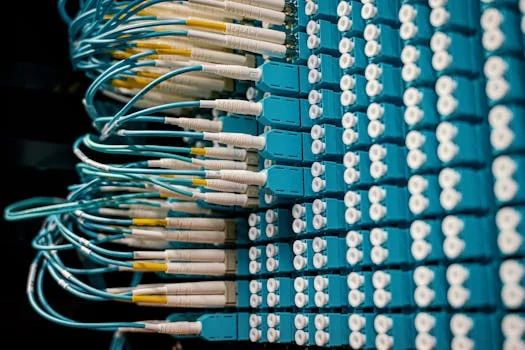
Choosing between AI and PLC dosing systems requires weighing chemical savings, compliance risks, and operational costs. The table below compares the two approaches across seven critical parameters:
| Parameter | AI Dosing | Traditional PLC Dosing | Winner |
|---|---|---|---|
| Chemical Savings | 20–40% reduction (adapts to influent variability) | 0–10% reduction (fixed setpoints) | AI |
| Compliance Fines Avoided | 0–1 fines/year (real-time effluent monitoring) | 2–5 fines/year (static dosing) | AI |
| Operator Labor | 1–2 hours/week (automated adjustments) | 5–10 hours/week (manual recalibration) | AI |
| CAPEX | $50,000–$200,000 (system size-dependent) | $20,000–$100,000 (hardware only) | PLC |
| OPEX | $5,000–$20,000/year (cloud/software) | $2,000–$10,000/year (maintenance) | PLC |
| Scalability | Scales from 10–1,000+ m³/h with minimal retraining | Requires manual reprogramming for each plant | AI |
| Influent Variability Handling | Handles COD swings of 50–1,000 mg/L and turbidity of 10–500 NTU | Struggles with variability >20% from setpoint | AI |
Key Takeaways from the Comparison
- Cost vs. Savings: While AI dosing has higher upfront costs, the 20–40% chemical savings and avoided compliance fines deliver a 1–2 year payback for most plants. For example, a 200 m³/h system with $120,000 CAPEX saves $60,000/year, yielding a 2-year ROI (per VROC case study).
- Use Case Matching: AI dosing is ideal for plants with high influent variability (e.g., food processing, textiles) or strict compliance requirements (e.g., pharmaceuticals, petrochemicals). PLC dosing may suffice for stable influents (e.g., municipal wastewater) or low-volume plants (<50 m³/h).
- Future-Proofing: AI models can incorporate new sensors (e.g., ammonia, nitrate) or stricter regulations without hardware changes, while PLC systems require manual reprogramming.
The next section provides a cost breakdown and ROI calculator to help you estimate savings for your plant.
Real-World ROI: Cost Savings and Payback Periods for AI Chemical Dosing
AI chemical dosing systems deliver measurable ROI through chemical savings, reduced compliance fines, and lower operator labor. The table below breaks down costs and savings for three common plant sizes, based on HydropureWater field data (2025) and VROC case studies:
| System Size (m³/h) | CAPEX | Annual OPEX Savings (Chemicals) | Annual Compliance Savings (Fines Avoided) | Annual Operator Labor Savings | Total Annual Savings | Payback Period |
|---|---|---|---|---|---|---|
| 50 | $50,000 | $15,000 | $5,000 | $3,000 | $23,000 | 2.2 years |
| 200 | $120,000 | $45,000 | $15,000 | $8,000 | $68,000 | 1.8 years |
| 500 | $200,000 | $90,000 | $30,000 | $15,000 | $135,000 | 1.5 years |
ROI Calculator
Use this formula to estimate your plant’s payback period:
Payback Period (years) = CAPEX / (Annual Chemical Savings + Annual Compliance Savings + Annual Labor Savings)
Example: A 300 m³/h plant with $150,000 CAPEX, $60,000 in chemical savings, $20,000 in compliance savings, and $10,000 in labor savings would have a payback period of:
150,000 / (60,000 + 20,000 + 10,000) = 1.67 years
Intangible Benefits
- Effluent Quality: AI dosing improves effluent consistency, reducing TSS and COD variability by 30–50% (per MDPI study).
- Operator Stress: Automated adjustments reduce emergency callouts by 70% (HydropureWater field data, 2025).
- Regulatory Readiness: AI systems log all dosing decisions, simplifying compliance reporting for audits.
For plants with high chemical costs or frequent compliance issues, AI dosing often pays for itself within 12–24 months. The final section provides a step-by-step checklist for implementation.
How to Implement AI Chemical Dosing in Your Wastewater Treatment Plant
Deploying AI chemical dosing requires careful planning to integrate with existing infrastructure. Follow this checklist to ensure a smooth implementation:
-
Audit Current System (1–2 weeks):
- Document chemical types (e.g., PAC, alum, polyacrylamide), dosing rates, and flow ranges.
- Verify SCADA compatibility with Modbus/OPC UA and log 6–12 months of historical data (influent/effluent parameters).
- Identify gaps in sensor coverage (e.g., missing ORP or TSS probes).
-
Install Required Sensors (2–4 weeks):
- Upgrade to AI-compatible sensors (see automatic chemical dosing systems for recommendations).
- Calibrate sensors weekly during the first month to ensure ±5% accuracy.
- Install effluent sensors (TSS, pH) for feedback loop validation.
-
Integrate with SCADA (1–3 weeks):
- Configure SCADA to forward real-time data to the AI model via Modbus/OPC UA.
- Test data transmission latency (target: <500 ms for OPC UA, <2 seconds for Modbus).
- Set up alarms for sensor failures or out-of-range values.
-
Train AI Model (4–8 weeks):
- Clean historical data (remove outliers, fill gaps with interpolation).
- Train supervised learning model on 6–12 months of data (minimum 10,000 data points).
- Validate model predictions against manual dosing records (target: ±10% accuracy).
-
Pilot Test (1–3 months):
- Run AI dosing in parallel with PLC dosing for 4–12 weeks.
- Compare chemical usage, effluent quality, and compliance metrics.
- Adjust model parameters based on feedback (e.g., tighter pH control for stricter regulations).
-
Full Deployment (1–2 weeks):
- Switch to AI dosing and monitor performance for 2–4 weeks.
- Train operators on system overrides and troubleshooting.
- Schedule quarterly model retraining to adapt to seasonal influent changes.
Prerequisites
- Historical data: 6–12 months of influent/effluent parameters (COD, pH, TSS, turbidity).
- SCADA system: Must support Modbus/OPC UA for real-time data exchange.
- Dosing pumps: Compatible with 4–20mA signals (peristaltic or diaphragm pumps).
- IT approval: Cloud-based AI models may require firewall exceptions for MQTT.
Common Pitfalls and Solutions
| Pitfall | Solution |
|---|---|
| Insufficient sensor calibration | Schedule weekly calibration checks during pilot testing. |
| Lack of historical data | Use synthetic data or extend pilot testing to 6 months. |
| Operator resistance | Involve operators in pilot testing and provide hands-on training. |
| SCADA integration delays | Work with vendor to pre-test drivers before installation. |
Vendor Selection Criteria
- AI Model Transparency: Choose vendors that explain model decisions (e.g., feature importance, confidence scores).
- SCADA Integration: Ensure the vendor provides pre-built drivers for your SCADA system (e.g., Siemens, Rockwell).
- Post-Deployment Support: Look for vendors offering quarterly model retraining and 24/7 troubleshooting.
- Case Studies: Request references from plants with similar influent characteristics (e.g., COD, turbidity).
For more details on machine learning for wastewater optimization, explore our technical guide.
Frequently Asked Questions
Q: How much does AI chemical dosing optimization cost?
A: CAPEX ranges from $50,000 for small systems (50 m³/h) to $200,000 for large systems (500 m³/h). Annual OPEX (cloud/software) is $5,000–$20,000. Payback periods are typically 1–2 years, with chemical savings of 20–40% and compliance fines reduced to 0–1/year (per VROC case study).
Q: What sensors are required for AI chemical dosing?
A: Minimum sensors include pH, ORP, TSS, turbidity, and flow. Optional sensors (e.g., COD, ammonia) improve accuracy for complex influents but increase costs by 10–20%.
Q: Can AI dosing work with existing SCADA systems?
A: Yes, AI dosing systems integrate with SCADA via Modbus or OPC UA. Ensure your SCADA supports these protocols and can log historical data for model training.
Q: How long does it take to implement AI chemical dosing?
A: Implementation takes 3–6 months: 1–2 months for sensor installation/SCADA integration, 1–3 months for AI training, and 1–2 weeks for deployment. Pilot testing (1–3 months) is critical for validation.
Q: What are the limitations of AI chemical dosing?
A: AI models require 6–12 months of historical data for training and may struggle with extreme influent variability (e.g., COD >1,000 mg/L) without retraining. They also depend on sensor accuracy—poor calibration leads to inaccurate dosing.
Related Equipment
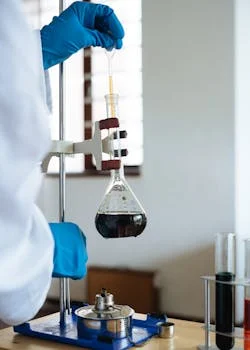
The following HydropureWater products are engineered for the wastewater challenges discussed above:
- DAF systems optimized for AI chemical dosing — view specifications, capacity range, and technical data
Need a customized solution? Request a free quote with your specific flow rate and pollutant parameters.