Nigeria NESREA Wastewater Discharge Permit Requirements
Nigeria NESREA wastewater discharge permit requirements come from the NESREA Act 2007 and the National Environmental (Surface and Groundwater Quality Control) Regulations 2011. A point-source plant needs a discharge permit before release. Ogun State adds its own effluent permit under the Water Quality Regulations 2023. Permits commonly run two to three years.
The National Environmental Standards and Regulations Enforcement Agency enforces these rules under Act No. 25 of 2007, which commenced on 30 July 2007. The Act applies across the 36 states and the Federal Capital Territory. Federal oversight sits with the Federal Ministry of Environment. LASEPA in Lagos and KASEPA in Kano handle site-level checks above that federal baseline.
UNEP's Law and Environment Assistance Platform lists the 2011 rules as S.I. 22 of 2011. A LawNigeria text records commencement on 28 April 2011, made under section 34 of the Act. Discharge permitting still refers to NESREA's Permitting and Licensing System Regulations 2009. A point source is any discernible, confined conveyance such as a pipe, ditch, or tunnel.
Plants that exceed a limit, or that discharge without a valid industrial waste discharge permit, face sealing orders and administrative fines. Section 27 of the Act is the hazardous-discharge offence. Section 24 is the effluent-limitation offence. Read the section that matches the sample before you reserve a penalty.
The NESREA Act and Its Mandate for Wastewater Management
The NESREA Act 2007 replaced the Federal Environmental Protection Agency Act, which section 36 repeals. Section 7 directs the Agency to enforce laws, guidelines, policies, and standards on environmental matters, including water quality and effluent discharge, plus treaties Nigeria has ratified. Permitting under section 7(j) applies other than in the oil and gas sector. Oil-terminal effluent is outside this NESREA file.
Under sections 7 and 8, NESREA sets and revises standards, monitors quality, issues discharge permits, runs environmental audits, and conducts inspections. Section 24 requires effluent limitations for new point sources using the best control technology currently available. Existing point sources are reviewed against best practicable control technology and a compliance schedule. Most plants we size for a first permit are existing basins, so that schedule decides the upgrade.
Section 30 allows entry and search only with a court warrant, at a reasonable time, and on production of a certificate of designation if required. Officers may sample wastewater for laboratory analysis and examine waste-management records. A court order under section 30(1)(g) can suspend activities, seal, and close the premises. Take the warrant limit seriously before you argue about access.
The Act is applied with the Polluter Pays Principle, so facilities bear management and remediation costs. Sector rules still expect Best Available Technology (BAT) or Best Practical Technology (BPT) where those rules impose them. A package-plant label does not by itself equal BAT. Match the train to the numeric limit on the permit you were given.
Nigeria Industrial Effluent BOD COD Limits NESREA
Nigeria industrial effluent limits under NESREA split into ambient criteria and end-of-pipe permit numbers. The 2011 Regulations protect rivers, lakes, streams, and aquifers through those ambient criteria and through regulated discharges. Schedule I lists physico-chemical ambient criteria for surface water; for waters designated for effluent discharges, irrigation and reuse, BOD5 is 6.0 mg/L and COD is 30.0 mg/L. End-of-pipe plant limits still come from sector regulations and permit conditions.
Operators sizing treatment and disposal of industrial waste in nigeria should read both ambient criteria and their sector schedule. A river number will not match the figure printed on the permit. Design the outfall to the permit, then check the ambient use of the receiving water.

For land-based industrial and municipal discharges, the table below summarises commonly applied general effluent targets used in Nigerian permitting practice. Earlier general industrial guidance often cited COD below 250 mg/L. Ogun State's Water Quality Regulations 2023 Third Schedule sets BOD5 at 30 mg/L and COD at 50 mg/L for effluent discharged to the environment. Sectors such as chemicals, pharmaceuticals, and food processing face extra parameters.
Organizations operating across borders often benchmark these standards against similar African wastewater regulations to keep environmental management systems regionally consistent. That benchmark does not replace a Nigerian permit condition. Quote the Nigerian limit on the discharge point.
| Parameter | Standard Limit (General Industrial) | Standard Limit (Municipal Sewage) | Unit |
|---|---|---|---|
| pH | 6.0 – 9.0 | 6.5 – 8.5 | - |
| Biochemical Oxygen Demand (BOD5) | < 30 | < 50 | mg/L |
| Chemical Oxygen Demand (COD) | < 250 | < 150 | mg/L |
| Total Suspended Solids (TSS) | < 50 | < 30 | mg/L |
| Oil and Grease | < 10 | < 5 | mg/L |
| Total Dissolved Solids (TDS) | < 2000 | < 500 | mg/L |
| Nitrate (as NO3) | < 20 | < 10 | mg/L |
| Phosphate (as PO4) | < 5 | < 2 | mg/L |
| Temperature | < 40 | < 35 | °C |
| Lead (Pb) | < 0.05 | < 0.01 | mg/L |
According to the Ogun State Water Quality Regulations 2023, the Third Schedule also sets total suspended solids at 25 mg/l and lead at 0.01 mg/l. Total dissolved solids are 1200 mg/l, and oil and grease is listed at 10. Non-marine pH is 6.5-8.5, and temperature follows ambient by plus or minus 3°C. Where that schedule is stricter than the general table, including TSS under 50 mg/L, design to the stricter figure.
For a public sewer in Ogun, the Fifth Schedule also sets biological oxygen demand at 30 mg/L and chemical oxygen demand at 50 mg/L. That sewer COD sits well below the general industrial line of COD below 250 mg/L. Name the outfall, sewer or environment, before you quote either number.
State rules such as Ogun's 2023 Regulations emphasise groundwater monitoring. Regulation 8 bars a sewage or industrial outlet to groundwater without an Agency permit. A facility discharging into a soakaway or drainage system that may infiltrate soil must show the effluent will not compromise the local aquifer. Most plants we audit still call a soakaway "no discharge," and the first inspection rejects that label.
Ogun Regulation 16 requires monthly effluent quality and quantity records submitted to the Agency. Operators must also submit quarterly or bi-annual reports to NESREA or the relevant state agency, with effluent quality verified by an accredited laboratory, so trends are tracked before damage spreads. Keep both rhythms when both permits are live.
What BOD and COD limits does NESREA use?
NESREA's 2011 Schedule I sets an ambient BOD5 of 6.0 mg/L for waters designated to receive effluent, not a single end-of-pipe number. Commonly applied industrial targets keep BOD5 below 30 mg/L and COD below 250 mg/L. Ogun's Third Schedule sets BOD5 at 30 mg/L and COD at 50 mg/L for effluent to the environment. Use the permit sheet first, then the stricter state cell.
LASEPA KASEPA Wastewater Compliance Lagos Kano
LASEPA in Lagos and KASEPA in Kano enforce site wastewater compliance above the federal NESREA baseline. A federal discharge permit does not close the state file. Ogun's 2023 Third Schedule is an Ogun instrument, not a Lagos or Kano limit. Most plants we audit in Lagos fail first on fats and grid cuts, not on a missing federal cover sheet.
Who enforces wastewater rules in Lagos and Kano?
LASEPA enforces wastewater compliance in Lagos, and KASEPA does that job in Kano, both beside the NESREA permit. The plant still meets the 2011 federal instrument and any numeric consent the state writes into its own permit. The Ogun schedule cited above does not travel to either city. Confirm the state consent before you guarantee BOD5 below 30 mg/L at the outfall.
Ogun shows how a state layer is actually written. Regulation 17 gives OGEPA thirty working days to decide a complete effluent-permit application. After approval, the Agency checks the discharge and issues the permit within twenty-one (21) days. Regulation 20(3) says that state permit is not transferable, and Regulation 17(4) leaves the validity period to the Agency.
Regulation 13(4) required existing Ogun facilities to obtain a permit within six months of commencement. Regulation 19(3) says a state approval does not remove the duty to hold federal permits. Regulation 6(c) also sets a siting band of a minimum of six meters and a maximum of thirty meters from the highest ever recorded flood level. Keep the industrial waste discharge permit number in nigeria on the sample label so a LASEPA, KASEPA, or OGEPA inspector can match the bottle to the licence.
How an Industrial Waste Discharge Permit Is Issued
Any facility generating point-source effluent must obtain an industrial waste discharge permit before operations begin. The permit is a legal licence to discharge treated wastewater within numerical limits in the applicable regulations, and the application checks that treatment infrastructure and an upset-response plan are in place. File the pack before commissioning. A late file does not legalise the months already discharged.
The application begins with an environmental impact assessment (EIA) for new projects or an Environmental Evaluation Report (EER) for existing facilities. These documents must detail operations, wastewater volume and characteristics, and the proposed treatment methods. NESREA officials then inspect the site to verify the information and assess installed systems, such as integrated package sewage treatment plants. Put design flow and design BOD on one sheet for that visit.
Permits are generally issued for two to three years; renewal is not automatic and needs proof of consistent compliance, including monitoring logs and independent audit reports. Operating without a valid industrial waste discharge permit, or breaking permit conditions, exposes a company to sanctions under the NESREA Act, including suspension of operations. State agencies often require their own permits, so operators must meet both federal and state requirements to stay in legal standing.
For a parallel limits-and-permits walkthrough, see our Wastewater Discharge Standards Nigeria guide. Use it when a reviewer asks how a 30 mg/L end-of-pipe BOD5 target sits beside the ambient 6.0 mg/L criterion. The permit-facing page is NESREA BOD Limits and Nigeria Discharge Permits.
Specifications that still quote an epa effluent discharge limit in nigeria are pointing at the repealed Federal Environmental Protection Agency Act. Section 36 of the NESREA Act 2007 is the repeal. The binding federal instruments are now the NESREA Act and the 2011 Regulations. Print the live citation on the data sheet, not the repealed one.
Meeting Nigeria NESREA wastewater discharge permit requirements also means the file holds an EIA or an EER, the inspection record, and the state consent where one exists. Auditors ask for that trio before they discuss equipment brands. Have it in one folder.
MBR Wastewater Treatment Nigeria Food Processing Compliance
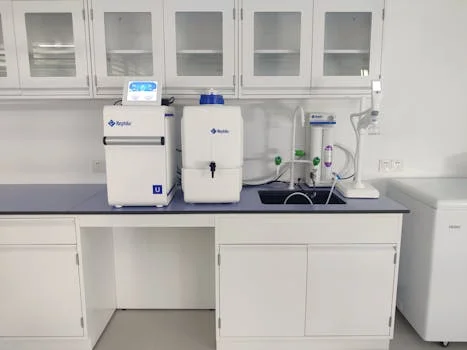
MBR wastewater treatment on a Nigerian food site is sized to the permit number, not to a catalogue recovery claim. Industrial facilities in Nigeria face real compliance hurdles: aging infrastructure designed before 2011, costly imported treatment chemicals, and unstable grid power that disrupts aerobic biology. Most plants we audit in the Lagos–Abuja corridor run older activated-sludge basins sized for BOD above 50 mg/L. Hitting the 30 mg/L industrial target usually means adding polishing capacity rather than rebuilding the whole train.
Power instability is the silent killer of biological systems—every extended outage sets biomass recovery back by days. Modern technologies such as MBR membrane bioreactor systems have gained traction because they deliver effluent consistently inside NESREA limits within a compact footprint. For high-strength streams with fats or suspended solids, a dissolved air flotation (DAF) unit as pre-treatment cuts the load on secondary stages and stabilises downstream biology. Most food plants we size place that DAF first when the raw jar shows a fat layer.
Using MBR wastewater treatment for food processing also reclaims water for non-potable reuse, cutting both compliance risk and water utility costs. OGEPA's Fourth Schedule marks BOD for canned fruit and vegetable plants, sugar processing, and bakeries, and it lists dairy products and grain mills on that same monitoring grid. On an Ogun discharge to the environment, those sites still design to BOD5 at 30 mg/L and COD at 50 mg/L. The membrane only counts if it stays online through the outage.
The practical side of treatment and disposal of industrial waste in nigeria today starts by keeping the high-strength sump off the dilute line. A waste audit before the MBR usually finds one stream that dominates COD. Treat that stream first. Diluting it into the main drain only hides the load until the composite fails.
Does food-plant MBR effluent meet NESREA limits?
A food-plant MBR can meet a Nigerian permit target of BOD5 below 30 mg/L when the membrane is online and fat is removed ahead of it. The ambient BOD5 of 6.0 mg/L in the 2011 Schedule I is a receiving-water criterion, not the usual end-of-pipe guarantee. In Ogun, COD at 50 mg/L from the Third Schedule is the tighter environmental number for that discharge. Write the influent COD the guarantee assumes, or the promise is empty.
Best practices for sustained compliance include regular wastewater audits to isolate high-strength streams, an ISO 14001 Environmental Management System, and structured operator training—even a well-sized ClO₂ disinfection generator fails when dosing is left to guesswork. Many operators now choose containerized wastewater plants, which are pre-tested and modular, so deployment is faster and capacity can move with the plant. Modular kit does not remove the permit.
In the municipal sector, the shift from basic septic tanks to engineered municipal sewage treatment plant projects remains essential for protecting urban groundwater quality. A septic tank with no point-source outfall is a different path from an industrial pipe. Do not mix the two applications in one permit file.
Sanctions and Enforcement Mechanisms for Non-Compliance
Section 27 of the NESREA Act prohibits discharge of hazardous substances in harmful quantities into air, land, or waters of Nigeria except where lawfully authorised. A person who violates Section 27(1) faces a fine not exceeding N1,000,000 or imprisonment for a term not exceeding 5 years. A body corporate faces a fine not exceeding N1,000,000 plus an additional N50,000 for every day the offence continues. Section 27(4) deems the person in charge guilty unless that person proves lack of knowledge or due diligence.
Effluent-limit breaches are section 24 of the same Act. A person who violates those regulations faces a fine not exceeding N200,000 or imprisonment not exceeding 2 years, or both, plus an additional N5,000 for every day the offence subsists. A body corporate faces a fine not exceeding N1,000,000 and an additional N50,000 for every day. Section 27 itself caps the corporate fine at N1,000,000 plus daily N50,000, not an open-ended multi-million award.
Enforcement runs on periodic audits and unannounced inspections. On detection of non-compliance, the agency issues an abatement or improvement notice giving a defined cure window—usually 30 to 90 days. The 2011 Regulations list an improvement notice at regulation 33, and Ogun Regulation 14(6) provides one as well. Failure to comply can escalate to court-ordered sealing that halts production.
Sector regulations may set different penalty floors. Extreme negligence that drives public-health emergencies can also expose directors or officers to prosecution. NESREA records enforcement actions publicly, so non-compliance damages access to financing and international contracts. The agency also encourages whistleblowing through dedicated hotlines and digital platforms.
Who This Guide Is For and Next Step
This guide is written for plant engineers, EPC contractors, and procurement managers sizing or upgrading wastewater systems for Nigerian industrial or municipal sites. If you only need a basic septic tank for a small facility with no point-source discharge, the federal permit process may not apply and a local agency will be your primary contact. Operators with legacy activated-sludge basins struggling to hit 30 mg/L BOD should evaluate MBR retrofits or DAF pre-treatment before the next permit cycle.
Freeze the design only after this checklist is ticked.
- Confirm the outfall is a point source, a public sewer, or a groundwater soakaway.
- List NESREA plus the state file: LASEPA, KASEPA, or OGEPA.
- Write the stricter of the general table and the state schedule beside each parameter.
- File an EIA for a new plant or an EER for an existing one, then book the inspection.
- Put the permit number on every sample and keep monthly logs where Ogun Regulation 16 applies.
- Add polishing if the basin was sized for BOD above 50 mg/L and the permit wants a lower BOD5.
- Keep oil-and-gas effluent off this NESREA path.
Send your influent characteristics and target effluent limits, and we will size a treatment train with permit-ready monitoring for your site. Request a preliminary sizing and budget estimate.
Frequently Asked Questions

What is the NESREA Act and how does it relate to wastewater?
The NESREA Act 2007, Act No. 25, commenced on 30 July 2007 and repealed the Federal Environmental Protection Agency Act. NESREA enforces water-quality standards and issues discharge permits outside the oil and gas sector. Section 24 sets effluent limits for point sources. Section 27 bans harmful hazardous discharges unless a law in force allows them, with a corporate fine not exceeding N1,000,000 plus N50,000 per day.
How often are wastewater discharge permits renewed in Nigeria?
Wastewater discharge permits in ordinary Nigerian practice are valid for two to three years, and renewal is not automatic. The operator files again with NESREA or the state environmental agency and attaches a recent audit plus monitoring logs. Ogun Regulation 17(4) leaves the state permit term to OGEPA, and Regulation 20(3) says that permit cannot be transferred. Keep the same monitoring method so the new term can be compared with the old one.
What is the industrial effluent BOD limit in Nigeria?
Commonly applied general industrial targets keep BOD5 below 30 mg/L and COD below 250 mg/L. Municipal sewage in that comparison is often held below 50 mg/L BOD5 and 150 mg/L COD. Ogun State's 2023 Third Schedule sets BOD5 at 30 mg/L and COD at 50 mg/L for effluent to the environment. The 2011 Regulations Schedule I ambient criterion for waters receiving effluent is BOD5 6.0 mg/L, with COD at 30.0 mg/L.
How do I get an industrial waste discharge permit in Nigeria?
File an EIA for a new project or an EER for an existing facility with NESREA, describe volume and treatment, pass the site inspection, and pay the prescribed fee. In Ogun the state file is Form A of the Seventh Schedule, OGEPA answers within thirty working days, and a satisfactory check produces the permit within twenty-one (21) days. Federal permits in this guide run for two to three years and need fresh audit evidence at renewal.
What happens if a facility violates NESREA effluent standards?
NESREA issues an abatement or improvement notice with a 30 to 90 day cure period. A continued breach can bring a court order that seals the site and halts production. Section 24 caps a corporate effluent-limit fine at N1,000,000 plus N50,000 per day. Section 27 uses the same corporate ceiling for hazardous discharges, and a person faces imprisonment not exceeding 5 years.