Punjab's Municipal Sewage Crisis and the Need for Modern Treatment
Lahore generates over 1,000 million gallons per day (MGD) of municipal wastewater, yet less than 30% receives any form of treatment before discharge. Most untreated sewage reaches the River Ravi through open drains and nallahs, driving a severe environmental and public health emergency across municipal sewage treatment plant planning in Punjab. Biological Oxygen Demand (BOD) in the river routinely exceeds 150 mg/L. Some briefs cite a 30 mg/L BOD discharge target; Pakistan's National Environmental Quality Standards for municipal and liquid industrial effluents set BOD at 80 mg/L for inland waters (Pak-EPA S.R.O. 742(I)/93 and S.R.O. 1023(I)/95). That gap still leaves Ravi water unfit for downstream use.
The crisis extends beyond river pollution. During monsoon seasons, urban flooding in Lahore worsens when solid waste and fats, oils, and grease (FOG) clog drainage channels. That failure disrupts city life and damages property.
Communities near these channels face high rates of typhoid, cholera, and hepatitis. Environmental damage, weak drainage, and health risk together force high-capacity sewage treatment plants across municipal Punjab.
Major Municipal Sewage Treatment Projects in Punjab 2025
International financiers and provincial agencies are funding sewerage rehabilitation, drainage works, and new plants across Punjab. Asian Infrastructure Investment Bank (AIIB) and World Bank programs sit beside provincial and French-backed construction schemes.
The flagship Babu Sabu Wastewater Treatment Plant in Lahore remains the largest single municipal build. The Provincial Development Working Party (PDWP) approved an investment near PKR 50 billion with Agence Française de Développement (AFD) support. Ecnec later approved Rs56bn for the same plant (Dawn, August 2026). Phase 1 is designed for 88 MGD, among Pakistan's largest municipal trains.
Parallel work expands capacity province-wide. The AIIB-funded Lahore Wastewater and Drainage Management Project (often framed with the broader Lahore water and wastewater programme) targets trunk sewers, pumping, and drain rehabilitation; Babu Sabu WWTP is an associated AFD-funded facility. In Faisalabad, a 50 MGD plant is in its beta phase with a resource-recovery focus. The World Bank's Punjab Inclusive Cities Program extends upgrades to Rawalpindi, Gujranwala, and Sialkot.
| Project Name | Capacity (MGD) | Investment | Primary Funder | Key Focus |
|---|---|---|---|---|
| Babu Sabu WWTP (Lahore) | 88 (Phase 1) | PKR 50 Billion | Govt. of Punjab / French Assistance | Biological treatment, River Ravi pollution control |
| Lahore Water & Wastewater Mgmt. Project | System-wide | AIIB Loan | Asian Infrastructure Investment Bank (AIIB) | Drainage, sewer rehabilitation, institutional capacity |
| Faisalabad WASA Project | 50 | N/A | Govt. of Punjab | Sustainable resource recovery |
| Punjab Inclusive Cities Program | Multi-city | World Bank Loan | World Bank | Sewerage system upgrades in Rawalpindi, Gujranwala, Sialkot |
Wastewater Treatment Technologies for Punjab's Municipal Plants
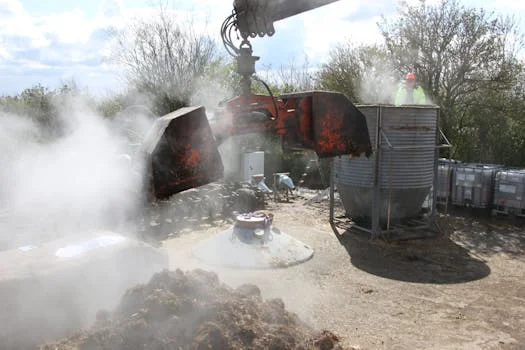
Technology choice must hit NEQS effluent limits within land, capital, and staffing constraints. Biological and physical-chemical trains can be matched to Punjab's high-volume, high-load municipal sewage.
Anoxic/Oxic (A/O) Process: This modified activated sludge process removes organics and nitrogen at moderate cost. Systems such as HydropureWater's WSZ series, sized for 1–80 m³/h (265–21,100 GPD), fit decentralized zones inside cities like Lahore and cut load on central trunks.
Membrane Bioreactor (MBR): MBR couples biology with ultrafiltration, delivering turbidity below 1 NTU and near-complete pathogen removal. Footprint is about 60% of a conventional plant, which matters where land is scarce. This high-efficiency MBR system is the usual pick when effluent must support reuse.
Dissolved Air Flotation (DAF): As pre-treatment, DAF removes suspended solids, FOG, and colloids. The DAF system, at 4–300 m³/h, suits market and food-district flows where FOG would otherwise shock biological stages.
Disinfection: Final disinfection is mandatory for pathogen control, especially for reuse. Chlorine dioxide (ClO₂) generators offer a safer, more consistent option than chlorine gas for discharge and reuse duty.
| Technology | Ideal Application | Key Advantages | Typical Flow Range |
|---|---|---|---|
| A/O Process (WSZ) | Decentralized treatment, cost-sensitive projects | High BOD/N removal, operational simplicity | 1 - 80 m³/h |
| MBR | Space-constrained sites, high-quality reuse | Superior effluent quality, compact footprint | 5 - 500 m³/h |
| DAF | Pre-treatment for high FOG/Solid loads | Effective FOG & TSS removal, reduces biological load | 4 - 300 m³/h |
Meeting NEQS Standards: Effluent Limits and Compliance Pathways
Pakistan's National Environmental Quality Standards for municipal and liquid industrial effluents set inland-water limits of BOD 80 mg/L, COD 150 mg/L, and TSS 150 mg/L (Pak-EPA S.R.O. 742(I)/93 and S.R.O. 1023(I)/95). Earlier project briefs often used BOD ≤ 30 mg/L, COD ≤ 250 mg/L, and TSS ≤ 100 mg/L; designers should confirm the governing provincial PEQS and permit before locking process guarantees. Fecal coliform targets of ≤ 1,000 MPN/100 mL remain common in municipal briefs.
A well-tuned A/O train can meet BOD and TSS inland limits. For stricter pathogen goals and for irrigation or cooling reuse, add tertiary polishing. An MBR system followed by a ClO₂ disinfection system is a reliable compliance path.
Sludge handling is part of compliance, not an afterthought. Dewatering to a solid cake cuts volume by over 80%, lowers haul cost, and supports safer disposal or agricultural use. Plate and frame filter presses remain the municipal standard for high cake solids.
Technology Comparison: Selecting the Right System for Your Plant
Effluent quality, CAPEX, OPEX, and land decide the train. No single package fits every Punjab city plant. Most plants we size for compliance-only duty sit at the lower CAPEX end; reuse sites usually pay the MBR premium.
MBR systems deliver >95% BOD removal and reuse-grade effluent. CAPEX typically runs 25–30% above conventional activated sludge, and OPEX rises with membrane cleaning and replacement. The trade-off is a smaller footprint and tighter compliance margin.
Conventional A/O systems keep CAPEX and operations simpler for basic NEQS BOD and TSS compliance. They need more land and may still need tertiary filters or disinfection for the strictest pathogen or reuse targets.
DAF systems are not standalone organic removers. Removing about 90% of TSS and 95% of FOG protects biology from shock and clogging. For a detailed breakdown, see our side-by-side MBR vs conventional activated sludge data for municipal planners.
| Parameter | A/O Process | MBR | Conventional Activated Sludge + Tertiary |
|---|---|---|---|
| BOD Removal Efficiency | 90-95% | >95-99% | 90-95% |
| Footprint | High | Low (~60% of conventional) | High |
| Effluent Quality | Meets NEQS | Exceeds NEQS, suitable for reuse | Meets NEQS (with tertiary) |
| Relative CAPEX | Low | High | Medium |
| Relative OPEX | Low | Medium-High | Medium |
Who This Is For and Next Step
This guide fits EPC contractors and procurement managers sizing plants for Punjab cities above 1 MGD, and WASA planners comparing MBR versus A/O for NEQS compliance with optional reuse.
How do you prevent unexpected tank cleaning costs?
Lock influent FOG and grit baselines before bid award, specify accessible tank geometry, and budget scheduled desludging instead of emergency cleanouts. Teams already seeing tank-cleaning overruns should review our guide on preventing unexpected costs in wastewater tank cleaning projects before commissioning.
What drives wastewater tank cleaning cost overruns?
High FOG, grit, and unplanned shutdowns drive most overruns on municipal trains. DAF ahead of biology, plus dewatering that cuts sludge volume by over 80%, reduces haul frequency and emergency call-outs.
Selection checklist for Punjab municipal projects: confirm influent BOD/COD baseline; match effluent goal (NEQS only vs reuse) to technology; verify land area for footprint class; budget CAPEX and 20-year membrane OPEX for MBR; include DAF if FOG load is high; specify sludge dewatering target solids content. To request a sized proposal and budget estimate for a specific flow rate, send your influent data and site constraints here.
Frequently Asked Questions
What is the capacity of the Babu Sabu Wastewater Treatment Plant?
Phase 1 of the Babu Sabu Wastewater Treatment Plant is designed for 88 MGD. That duty makes it one of the largest municipal sewage trains planned in Pakistan. Ultimate build-out discussed in project papers reaches higher capacity in later phases. PDWP advanced the scheme with French AFD support; Ecnec later approved a revised Rs56bn cost envelope.
How is Lahore's sewage currently managed?
Less than 30% of Lahore's more than 1,000 MGD of municipal wastewater receives treatment today. Most flow still moves through open drains and nallahs into the River Ravi. That pattern drives high river BOD, monsoon flooding from clogged channels, and elevated waterborne disease risk for nearby communities.
Which technology is best for municipal sewage treatment in Punjab?
Choose MBR when land is tight and reuse-quality effluent is required. Choose A/O when the brief is basic NEQS compliance at lower CAPEX. Add DAF when FOG or solids would shock biology. Match the train to influent data, permit limits, and available footprint rather than a single default package.
Who is funding sewage projects in Punjab?
Key financiers include AIIB, the World Bank, AFD, and the Government of Punjab through PDWP and Ecnec approvals. AIIB's Lahore wastewater and drainage loan funds trunks, pumps, and drains. Babu Sabu WWTP is the associated French-backed treatment plant. The World Bank Punjab Inclusive Cities Program covers multi-city sewer upgrades.
What are Pakistan's NEQS limits for treated sewage?
Pak-EPA NEQS for municipal and liquid industrial effluents set inland BOD at 80 mg/L, COD at 150 mg/L, and TSS at 150 mg/L under S.R.O. 742(I)/93 and S.R.O. 1023(I)/95. Earlier briefs often cited BOD ≤ 30 mg/L, COD ≤ 250 mg/L, and TSS ≤ 100 mg/L. Confirm provincial PEQS and the site permit before guaranteeing performance, including any fecal coliform clause.
Further Reading
Explore these in-depth articles on related wastewater treatment topics: