An MBR wastewater treatment system for food processing combines activated sludge with submerged PVDF membrane filtration (0.1 μm pore size), achieving >95% COD removal and 60% smaller footprint than conventional systems. It handles high-BOD loads (up to 5,000 mg/L) and variable flows common in food plants, producing reuse-quality effluent.
Why Food Processing Wastewater Demands Advanced Treatment
Food processing wastewater typically presents a complex and high-strength effluent profile, characterized by significant organic loads and challenging contaminants. Depending on the specific sector, chemical oxygen demand (COD) can reach up to 5,000 mg/L, with biochemical oxygen demand (BOD) often exceeding 3,000 mg/L. For instance, COD/BOD ratios range from approximately 0.4–0.5 for bakery products to over 0.8 for poultry processing, indicating high biodegradability but also substantial and variable organic strength (The MBR Site research, 2025). This food and beverage wastewater also contains high concentrations of fats, oils, and grease (FOG), suspended solids, and nutrients (nitrogen and phosphorus). These components pose significant challenges for conventional wastewater treatment systems, as FOG can cause severe clogging and interfere with biological processes, while high suspended solids hinder effective settling.
Food processing operations often involve batch production, leading to considerable flow and load variability. This fluctuating influent can overwhelm traditional biological systems, causing instability, sludge bulking, and inconsistent effluent quality. Robust pretreatment is essential to manage these characteristics. This typically includes coarse and fine screening to remove large solids, often followed by dissolved air flotation (DAF) to effectively reduce FOG and suspended solids. An equalization tank is critical to buffer flow and load variations, ensuring a more consistent feed to the biological treatment stage. Without these advanced considerations, conventional systems struggle to meet increasingly stringent discharge limits or achieve the quality required for industrial water reuse initiatives. HydropureWater offers solutions like rotary mechanical bar screens and dissolved air flotation (DAF) machines to manage these pretreatment needs effectively.
How MBR Technology Solves Food Industry Wastewater Challenges
Membrane Bioreactor (MBR) technology directly addresses the inherent complexities of food processing wastewater by integrating biological treatment with advanced membrane filtration. An MBR system couples an aerobic bioreactor with a submerged MBR system utilizing ultrafiltration membranes, typically with a 0.1 μm pore size, for complete solid-liquid separation. This eliminates the need for a secondary clarifier, a common bottleneck in conventional systems where sludge bulking or washout can occur during high load spikes or hydraulic surges, which are frequent in high BOD wastewater treatment from food plants. By retaining all biomass within the bioreactor, MBR systems can maintain high mixed liquor suspended solids (MLSS) concentrations, often up to 12,000 mg/L, significantly increasing the volumetric treatment capacity within a substantially smaller footprint.
The consistent and high-quality effluent produced by an MBR system for food processing is a key advantage, typically achieving less than 10 mg/L TSS and less than 30 mg/L COD. This quality is consistently suitable for direct discharge to sensitive environments or for industrial water reuse applications, reducing water consumption and operational costs. The continuous membrane filtration acts as an absolute barrier to suspended solids, bacteria, and pathogens. The design of modern PVDF flat sheet membranes incorporates robust aeration systems underneath the membrane modules. This membrane aeration serves a dual purpose: it supplies oxygen for the biological process and provides a strong scouring action on the membrane surface. This scouring effectively mitigates membrane fouling, especially when treating FOG-resistant membrane streams common in food processing, ensuring stable flux rates and prolonged membrane lifespan. The MBR’s ability to operate with long sludge retention times (SRT) also contributes to superior organic removal and nitrification.
MBR vs Conventional Activated Sludge: Performance and Cost Comparison
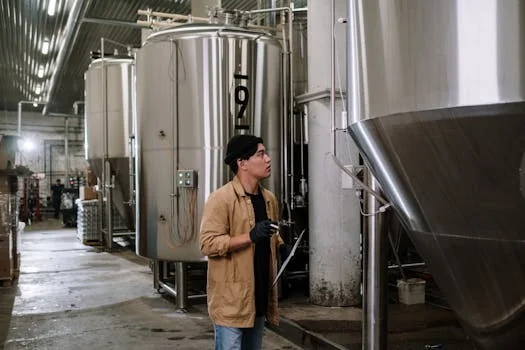
MBR systems offer distinct advantages in footprint, effluent quality, and lifecycle cost when compared to Conventional Activated Sludge (CAS) systems, making them a superior choice for food processing facilities. An MBR system achieves up to a 60% smaller footprint than a CAS system for the same treatment capacity, a critical factor for land-constrained industrial sites (HydropureWater product catalog). This significant MBR footprint reduction is primarily due to the elimination of secondary clarifiers and the ability to operate at much higher MLSS concentrations. While CAS systems rely on gravity settling for solid-liquid separation, which is prone to upsets, MBR uses physical membrane filtration, guaranteeing consistent effluent quality regardless of sludge settleability. Sludge production in MBR systems is also reduced by 20–30% compared to CAS, attributed to longer sludge retention times (SRT) and more complete degradation of organic matter, leading to lower sludge disposal costs. For a more detailed MBR vs CAS data on efficiency, footprint, and lifecycle cost, refer to our comprehensive guide.
Energy consumption is another key differentiator. While MBR systems generally have higher aeration requirements for membrane scouring, modern submerged flat sheet PVDF membrane designs consume 10–20 times less energy than external cross-flow membrane systems (HydropureWater DF series specs). When comparing to CAS, MBR energy use is comparable or slightly higher due to membrane aeration, but this is often offset by reduced energy for tertiary filtration (which CAS needs for reuse quality) and lower sludge handling costs. CAS systems typically require larger tanks, secondary clarifiers, and often tertiary filtration (e.g., sand filters, UV disinfection) to achieve effluent quality suitable for reuse, whereas MBR integrates all these steps into a single, compact unit. Although MBR systems typically have a higher capital expenditure (CAPEX) upfront, their lower operational expenditure (OPEX) over a 10-year lifecycle, driven by reduced sludge disposal, minimal land requirements, and automation, often results in a lower total cost of ownership.
| Parameter | MBR System | Conventional Activated Sludge (CAS) |
|---|---|---|
| Footprint Reduction | Up to 60% smaller | Larger area required |
| Effluent TSS | <10 mg/L | 10–30 mg/L (with good settling) |
| Effluent COD | <30 mg/L (>95% removal) | 30–100 mg/L (variable) |
| Sludge Production | 20–30% lower | Higher |
| MLSS Concentration | 8,000–12,000 mg/L | 2,000–4,000 mg/L |
| Reuse Potential | Directly suitable (with disinfection) | Requires tertiary filtration |
| Operational Complexity | Automated, less prone to upsets | Sensitive to load/flow variations |
Key Design Parameters for Food Processing MBR Systems
Optimizing an MBR system for food processing wastewater requires careful consideration of specific technical parameters to ensure robust performance and long-term operational efficiency. The choice of membrane type is critical: submerged flat sheet PVDF membranes with a 0.1 μm pore size are generally optimal due to their mechanical robustness, chemical resistance, and superior resistance to fouling from high-FOD (fats, oils, and grease) and FOG loads prevalent in food processing. Maintaining stable flux rates is essential for continuous operation; typical design flux rates for food wastewater range from 15–25 L/m²/h, assuming adequate pretreatment to reduce FOG and suspended solids. Insufficient pretreatment, such as neglecting a dissolved air flotation (DAF) unit, can necessitate lower flux rates and more frequent cleaning cycles.
Aeration is a dual-purpose parameter in MBRs. An aeration ratio of 8–12 Nm³ air per m³ of water is typically required to meet the biological oxygen demand (BOD) for organic degradation and nitrification, while also providing sufficient scouring air to prevent membrane fouling. Hydraulic Retention Time (HRT) within the bioreactor, typically 6–12 hours, allows for adequate contact time between the biomass and the wastewater. Sludge Retention Time (SRT), ranging from 20–40 days, is crucial for developing a stable microbial population capable of effective COD removal and nitrification, while also minimizing excess sludge production. Proper integration with an equalization tank is non-negotiable for flow and load buffering, ensuring the MBR operates under stable conditions despite the inherent variability of food and beverage wastewater. Pretreatment stages like DAF are essential to reduce influent FOG to below 100 mg/L, preventing severe membrane fouling.
| Parameter | Typical Range for Food Processing MBR |
|---|---|
| Membrane Type | Submerged flat sheet PVDF |
| Pore Size | 0.1 μm (Ultrafiltration) |
| Design Flux Rate | 15–25 L/m²/h (with proper pretreatment) |
| Aeration Ratio | 8–12 Nm³ air/m³ treated water |
| Hydraulic Retention Time (HRT) | 6–12 hours |
| Sludge Retention Time (SRT) | 20–40 days |
| MLSS Concentration | 8,000–12,000 mg/L |
| Influent FOG (post-pretreatment) | <100 mg/L |
Cost, ROI, and Implementation Timeline for Food Plant MBR Projects
The capital expenditure (CAPEX) for MBR systems in food processing typically ranges from $150–$300 per m³/day for systems with capacities between 100–1,000 m³/day, with costs generally scaling down for larger plants due to economies of scale. This range includes the MBR modules, bioreactor tanks, blowers, pumps, control systems, and associated civil works. Operational expenditure (OPEX) for an MBR wastewater treatment system for food processing is estimated at $0.60–$1.20/m³ of treated water. This figure encompasses energy consumption (primarily for aeration and pumping), routine maintenance, chemical cleaning agents, and the amortized cost of membrane replacement, which typically occurs every 5–7 years with proper operation and maintenance. The return on investment (ROI) for an MBR system in a food processing facility is often achieved within 3–5 years. This rapid payback is driven by several factors: significant reductions in sludge disposal costs due to lower sludge production, savings from reduced land requirements, and potential revenue or cost avoidance from industrial water reuse