The package wastewater treatment plant cost england uk buyers use for 2025 budgets runs from £12,000 installed for a 6-person domestic unit to £120,000+ for a 50 m³/h commercial system. A package plant is a factory-built train for domestic or commercial sewage where no mains sewer exists. Waste water plants uk fitted with more stringent treatment than secondary treatment add filtration or disinfection after biology to reach limits such as BOD ≤ 20 mg/L and TSS ≤ 30 mg/L. These plants reach 95%+ BOD removal, against 60–70% for septic tanks, across England’s 800,000+ rural properties.
What is the package wastewater treatment plant cost england uk?
A package wastewater treatment plant in England typically costs £12,000–£25,000 for a 6–12 PE domestic unit and £30,000–£80,000 for a 15–50 PE commercial unit, before installation. Installation usually adds £5,000–£20,000. A watercourse discharge must use a sewage treatment plant, not a septic tank, and stay at or below 5 m³/day under the general binding rules.
What drives package sewage treatment plant installation cost uk quotes?
Package sewage treatment plant installation cost uk jobs usually add £5,000–£20,000 on top of the tank for excavation, a base slab, pipework, electrics and commissioning. In the cost table, a 6–12 PE install sits at £5,000–£10,000, a 15–50 PE install at £8,000–£15,000, and a 50–200 PE install at £12,000–£20,000+. Poor ground or a long tanker track is what pushes a quote through the top of that band. On most 6–12 PE domestic jobs we price in England, the civil bill stays in the lower half when the outfall is short and the ground is dry.
What is a bs en 12566-3 package plant price uk quote?
A bs en 12566-3 package plant price uk suppliers quote for the tank itself is typically £12,000–£25,000 at 6–12 Person Equivalent (PE), £30,000–£80,000 at 15–50 PE, and £80,000–£120,000+ at 50–200 PE. Those bands are plant purchase only, and bespoke trains go higher. The Environment Agency names the current standard for a new small sewage treatment plant as BS EN 12566, and a CE mark is one accepted proof the unit met the British Standard in force when it was installed. Ask for the certificate on the exact model and PE rating.
How should buyers read mbbr package treatment plant capex uk?
MBBR package treatment plant capex uk should be read on the same PE bands as other biological packages, not on a separate price list: £12,000–£25,000 at 6–12 PE, then £30,000–£80,000 at 15–50 PE. About 60% of commercial UK installs use this compact layout, with 90–98% BOD removal and 80–90% ammonia removal. The comparison table puts MBBR power at 0.4–0.7 kWh/m³ treated, at the top of the 0.3–0.7 kWh/m³ band we ask suppliers to guarantee, and HRT at 4–12 hours. Media, blowers and a secondary clarifier sit inside that CAPEX, while tertiary sand or UV is extra.
Budgeting a package plant means separating CAPEX, OPEX and permit fees. For wider municipal-scale figures, compare this package range with how much does a waste water treatment works take to build uk# on full works projects. Industrial buyers can also cross-check the sibling Wastewater Treatment Plant Cost in UK 2026 industrial CAPEX breakdown.
CAPEX (Plant Purchase & Installation):
- Plant Unit Cost: A 6–12 Person Equivalent (PE) domestic unit typically costs £12,000–£25,000. Commercial 15–50 PE units rise to £30,000–£80,000. Systems at 50–200 PE often sit at £80,000–£120,000+, and bespoke trains go higher.
- Installation Costs: Excavation, base slab, pipework, electrics and commissioning usually add £5,000–£20,000. Poor ground or remote access pushes the civil bill up.
OPEX (Ongoing Costs):
- Power Consumption: A 6 PE domestic unit may use £150–£300/year for blowers and pumps. A 50 PE commercial system can reach £800–£1,500/year, depending on tariff and process type.
- Maintenance & Servicing: Annual contracts often cost £200–£500 for domestic units and £500–£1,500+ for commercial plants. Visits cover checks, parts and calibration needed for warranty cover.
- Sludge Disposal: Desludging every 6–12 months typically costs £150–£400 per visit. The Environment Agency also expects the tank emptied at least once a year, or sooner if the manual says so.
Permit & Compliance Costs:
- EA Permit Application: Where a permit is required, fees typically range from £100–£500.
- Annual Compliance Monitoring: Permitted discharges often need quarterly lab tests at £200–£1,000 per year. GBR systems still benefit from annual effluent checks even though the binding rules do not set that lab timetable.
Hidden Costs: Compact footprints of 0.5–2 m²/PE still need tanker access within about 30 meters on hardstanding. Emergency call-outs can cost £150–£300 per hour plus parts. Most delayed starts we see are an access or power issue, not the biological process.
ROI Example: A 20 PE commercial system at £40,000 CAPEX, plant plus install, can replace a failing septic setup that burns £3,000/year in fines, pump-outs and remediation. With about £1,000/year OPEX, the net annual saving is £2,000, and payback often lands at 10–12 years, before counting compliance certainty.
| Cost Category | 6–12 PE (Domestic) | 15–50 PE (Commercial) | 50–200 PE (Large Commercial/Industrial) |
|---|---|---|---|
| Plant Unit Cost (CAPEX) | £12,000–£25,000 | £30,000–£80,000 | £80,000–£120,000+ |
| Installation Cost (CAPEX) | £5,000–£10,000 | £8,000–£15,000 | £12,000–£20,000+ |
| Total CAPEX Range | £17,000–£35,000 | £38,000–£95,000 | £92,000–£140,000+ |
| Power Consumption (OPEX/year) | £150–£300 | £300–£800 | £800–£1,500+ |
| Maintenance & Service (OPEX/year) | £200–£500 | £500–£1,000 | £1,000–£1,500+ |
| Sludge Disposal (OPEX/year) | £150–£400 | £300–£800 | £800–£1,500+ |
| Permit & Monitoring (OPEX/year) | £0–£500 (GBR to permit) | £200–£1,000 | £500–£2,000+ |
| Total OPEX Range (Annual) | £500–£1,200 | £1,300–£3,600 | £3,100–£6,500+ |
Treat every package wastewater treatment plant cost england uk figure here as a 2025 planning band, then lock the number with a site quote. Ground, tariff and tanker distance move a job inside the band. Do not add a tertiary filter to the tank price until the permit names the extra limit.
Why England’s Rural and Commercial Properties Are Switching to Package Plants
A package wastewater treatment plant is a factory-built biological unit that replaces septic tanks for on-site sewage. It uses activated sludge, MBBR or SBR stages to cut BOD to ≤ 20 mg/L and TSS to ≤ 30 mg/L, the effluent levels many England permits still write. Typical domestic CAPEX starts near £12,000 installed, while larger commercial trains can exceed £120,000.
Earlier project briefs cited England’s 2020 Environment Act and the Environment Agency’s 2023 General Binding Rules, and they told owners to replace or upgrade a septic tank that discharges to a watercourse by 2025. The UK has over 800,000 small sewage treatment works in rural areas. EA estimates put roughly 200,000+ of those works in need of upgrades to meet the newer discharge standards. Most rural replacements we see still start from a septic tank that reaches a ditch.
According to Environment Agency guidance last updated on 2 October 2023, a septic tank must not be the treatment step for a watercourse. The operator must connect to a public foul sewer, fit a small sewage treatment plant, or install a drainage field. The Agency expects a plan for that work within a reasonable time, usually 12 months. The statutory text is the Environmental Permitting (England and Wales) Regulations 2016, as amended for England in 2023.
A 20-bed rural hotel in Cornwall replaced a failing septic tank with a 10 m³/h Underground Package Sewage Treatment Plant (WSZ Series) style underground train. Influent BOD averaged 250 mg/L and fell to a compliant 15 mg/L in the effluent. The upgrade helped the hotel avoid a potential £5,000 EA fine for non-compliance.
Drivers for the switch include binding-rule compliance, lower long-term O&M risk than a failing septic tank, and room to expand capacity later. According to the Environment Agency statutory rules from 2 October 2023, a discharge to ground is capped at 2 cubic metres a day. That discharge must stay outside source protection zone 1 and at least 50 metres from a well, spring or borehole used for domestic or food-production water. Where that constraint is tight, review siting notes for package treatment plants close to water borehole before you fix the discharge point.
How Package Wastewater Treatment Plants Work: Technical Process Breakdown
Package plants in England run a multi-stage train that turns raw sewage into dischargeable effluent inside a small footprint. The sequence stays consistent even when the biological reactor type changes. Most plants we size for houses run the aerated stage at the lower end of the stated HRT when the load is domestic and steady.
Primary Treatment: Screening removes rags and plastics, then a primary clarifier settles solids. This physical stage cuts TSS by 50–70% and BOD by 25–40% as heavier particles drop out as primary sludge.
Secondary Treatment: Dissolved organics (BOD/COD) are removed in the biological core. Common UK process options include:
- Activated Sludge: Microorganisms stay suspended in an aeration tank and consume organic pollutants. Mixed liquor then settles in a secondary clarifier before clear effluent leaves. Typical BOD removal is 90–95%.
- Moving Bed Biofilm Reactor (MBBR): Biofilm grows on moving plastic carriers in an aerated tank. About 60% of commercial UK installs use this compact layout, with 90–98% BOD and 80–90% ammonia removal.
- Sequencing Batch Reactor (SBR): Fill, react, settle, draw and idle run in one tank. Control is flexible and BOD removal matches activated sludge at 90–95%.
When Are waste water plants uk fitted with more stringent treatment than secondary treatment?
Waste water plants uk fitted with more stringent treatment than secondary treatment are specified when the outfall is a bathing water or a Site of Special Scientific Interest. Sand filtration trims residual TSS. UV, or tertiary disinfection for package plants in England, cuts pathogens after the biological stage. For the tightest permits, a high-efficiency MBR package plant for sensitive UK discharges can replace or follow conventional secondary stages.
Sludge from the biological stages usually undergoes aerobic digestion inside the package shell. Typical sludge volume is 0.2–0.4 L/person/day and must leave site with a licensed waste carrier. A standard flow path is influent → primary clarifier → aeration (MBBR media or SBR cycle) → secondary clarifier → optional tertiary filter → effluent. Where we add sand filtration, the extra hold-up is the table’s 0.5–1 hour, not a second biological tank.
| Treatment Process | BOD Removal Efficiency | TSS Removal Efficiency | Ammonia Removal | Typical Hydraulic Retention Time (HRT) | Typical Power Consumption (kWh/m³ treated) |
|---|---|---|---|---|---|
| Primary Sedimentation | 25–40% | 50–70% | Negligible | 2–4 hours | 0 (gravity-based) |
| Activated Sludge | 90–95% | 85–90% | 60–80% (with nitrification) | 6–24 hours | 0.3–0.6 |
| MBBR | 90–98% | 85–95% | 80–90% | 4–12 hours | 0.4–0.7 |
| SBR | 90–95% | 85–90% | 70–85% | 8–24 hours (batch cycle) | 0.3–0.6 |
| Tertiary Filtration (Sand) | Additional 5–10% | Additional 10–20% | N/A | 0.5–1 hour | 0.05–0.1 (for backwash) |
What Are Package Plants for Wastewater Compared with Septic Tanks?

Choosing between a package plant and a septic tank in England affects effluent quality, land use and EA compliance. The 2025 date many owners still cite as a septic upgrade deadline keeps the comparison urgent for rural sites. The live duty, in the 2 October 2023 surface-water rules, is to stop a direct septic discharge to a watercourse as soon as possible.
Package plants typically remove 95% or more of BOD, about 90% of TSS, and often more than 80% of ammonia with nitrification. Septic tanks mainly give primary treatment: BOD removal around 60–70%, TSS near 50%, and negligible ammonia removal. That gap is why many septic discharges fail modern watercourse standards.
Package plants also need 30–50% less space than a septic system with a large percolation field. Annual O&M for package units usually sits at £500–£2,000 for power, servicing and desludging. Septic tanks look cheaper at £300–£1,500 per year, yet EA inspections in 2023 found about 40% non-compliant, which drives fines and forced upgrades. On hotel loads at 200 L/person/day, the package footprint is what usually fits the yard.
BS EN 12566-3 certified package plants are built against design targets of BOD ≤ 20 mg/L and TSS ≤ 30 mg/L that many permits still use. Well-maintained package units last 20–30 years. Septic tanks often need major drain-field work within 15–20 years. The binding rules themselves require the British Standard and no pollution, and they do not print those milligram limits as the rule text.
| Feature | Package Wastewater Treatment Plant | Septic Tank System |
|---|---|---|
| BOD Removal Efficiency | 95%+ | 60–70% |
| TSS Removal Efficiency | 90%+ | 50% |
| Ammonia Removal | 80%+ (with nitrification) | Negligible |
| Footprint Required | Compact (0.5–2 m²/PE) | Large (requires drain field, 30–50% more space) |
| Typical O&M Costs (Annual) | £500–£2,000 (power, service, desludging) | £300–£1,500 (desludging, occasional repairs) |
| EA 2025 Compliance | Meets (BOD ≤ 20, TSS ≤ 30 mg/L) | Often fails (40% non-compliance in 2023 inspections) |
| Lifespan | 20–30 years | 15–20 years |
| Environmental Impact | Low (high-quality effluent) | Higher (untreated pollutants, potential groundwater contamination) |
UK Compliance and Permitting for Package Plants in England
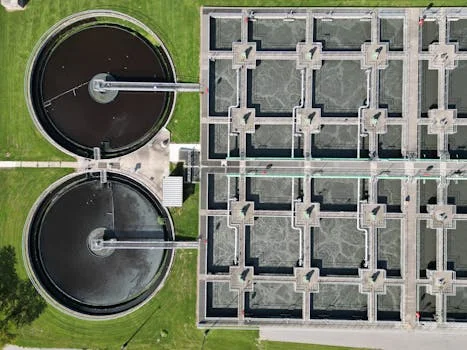
Package-plant permitting in England changes with the discharge start date, on 1 January 2015 and again on 2 October 2023. Wrong sizing or a missed permit is a common route to failed samples and enforcement. Most failed files we see skipped the date test and used the wrong rule set.
General binding rules cover many small discharges in England. Earlier guides treated domestic discharges under 5 m³/day, and commercial discharges under 20 m³/day, as the permit-free bands, with effluent at BOD ≤ 20 mg/L, TSS ≤ 30 mg/L and ammonia ≤ 20 mg/L. According to the Environment Agency surface-water rules, last updated on 2 October 2023, one cap applies: 5 m³ (5,000 litres) a day, and the sewage must be domestic in nature. A hotel, pub or office toilet and kitchen can count as domestic sewage.
Above 5 m³/day to a watercourse, connect to a public foul sewer where that is reasonable, or apply for a permit. The sewage must receive treatment from a sewage treatment plant. A septic tank alone does not qualify for that surface-water route. Most single houses we size at 150 L/person/day stay under the 5 m³/day cap.
For a discharge started on or after 1 January 2015, a single house cannot use the general binding rules if a public foul sewer is within 30 metres of any boundary. Three houses extend that test to 90 metres, because the distance is the house count times 30 metres. Where part of the flow is not domestic, divide the cubic metres per day by 0.75 and multiply by 30. The Agency’s worked example is 1.2 cubic metres, which gives 48 metres.
The same post-2015 discharge cannot sit within 500 metres of a biological SSSI, an SPA, an SAC, a Ramsar site, a designated bathing water, a protected shellfish water, or a freshwater pearl mussel population. It also cannot sit within 200 metres of an aquatic local nature reserve, or within 50 metres of a chalk river or an aquatic local wildlife site. Inside those distances, connect to the foul sewer where reasonable, or apply for a permit. A discharge already running before 1 January 2015, still within 10 metres of its old outfall and still at or below 5 m³/day, does not pick up these extra distance rules.
Two further rules apply when the discharge started on or after 2 October 2023. A new discharge must not share an outlet if the combined volume would exceed 5 m³/day to surface water. It must also sit at least 50 metres from any other exempt small sewage discharge. Partial drainage field, where used, must keep the perforated pipe within 10 metres of the bank, and only after a treatment plant.
The British Water Flows and Loads code sets sizing loads, such as 150 L/person/day for houses and 200 L/person/day for hotels. The Environment Agency points commercial properties, and any plant installed after 1 February 2006, to that code. Undersizing remains a frequent compliance failure. Plants up to 50 PE installed in England are specified with BS EN 12566-3 certification and CE marking.
The Agency also accepts a certificate of compliance, or a place on British Water’s list of certified systems for up to 50 PT. A system installed before 1983 has no British Standard to meet. A retrofit inside an existing septic tank can be used only if it was installed before 2007. Otherwise apply for a permit.
Permitted discharges usually need quarterly BOD, TSS and ammonia tests sent to the EA. GBR sites should still test annually as an operator check. Maintenance must be undertaken by someone who is competent. Poor ventilation, blocked tanker access and skipped servicing are recurring failure modes.
Municipal works sit on a different permit and cost scale from a package plant held at or below 5 m³/day.
Which WTE Package Treatment Plants UK Buyers Spec for Sensitive Discharges?
Buyers asking about wte package treatment plants uk usually mean factory-built trains that can add tertiary polishing when secondary effluent is not enough. Specify guaranteed BOD, TSS and ammonia numbers, not just tank volume. Ask whether sand filtration, UV or disinfection is included when the outfall is a bathing water or a biological SSSI inside the 500 metre post-2015 screen.
Supplier Checklist for Package Wastewater Treatment Plants in England
Package-plant buyers in England should score suppliers on one sheet so price alone does not win the order. Technical proof, commercial cover and compliance support should sit on that sheet. The certificate question is the one that knocks out the most low bids we review.
Technical Criteria:
- Certification: Demand BS EN 12566-3 evidence for the exact model and PE rating under review.
- Removal Efficiencies: Require guaranteed BOD, TSS and ammonia figures with independent or English site data against the permit limits, commonly BOD ≤ 20 mg/L, TSS ≤ 30 mg/L and ammonia ≤ 20 mg/L.
- Power Consumption: Target roughly 0.3–0.7 kWh/m³ treated to keep OPEX predictable.
- Footprint: Check m²/PE against the real plot, including tanker swing room.
- Construction Materials: Confirm GRP, concrete or HDPE durability for buried duty and corrosion risk.
Commercial Criteria:
- Warranty: Expect 2–5 years on the unit and key parts, with servicing conditions stated in writing.
- Lead Time: Plan on 4–12 weeks for manufacture and delivery unless the supplier proves a firmer slot.
- After-Sales Support: Confirm UK spare parts, local service partners and emergency response times.
Compliance Criteria:
- EA Permit Assistance: Ask whether the supplier helps with permit files or with checking the general binding rules.
- British Water Flows & Loads Compliance: Confirm sizing uses that code, not a generic overseas PE table.
- CE Marking: Require a declaration of conformity for the assembled plant, which the Environment Agency accepts as one way to show the British Standard.
Supplier Red Flags: Walk away from vague guarantees, missing English site references, or opaque O&M cost sheets. Ask for influent and effluent data from a similar English site, the average emergency response time, and the operator training scope.
| Category | Checklist Item | Key Questions / Desired Response |
|---|---|---|
| Technical | BS EN 12566-3 Certification | Is the specific model certified? Provide certificate. |
| Guaranteed Removal Efficiencies | What are the guaranteed BOD, TSS, Ammonia effluent levels (mg/L)? Provide test data. | |
| Power Consumption | What is the average kWh/m³ treated? (Target: 0.3–0.7 kWh/m³). | |
| System Footprint | What is the m²/PE requirement? Is it suitable for our site? | |
| Construction & Durability | What materials are used? What is the expected design life? | |
| Commercial | Warranty Period | What is the warranty for the unit and components? (Target: 2–5 years). |
| Lead Time | What is the typical manufacturing and delivery time? (Target: 4–12 weeks). | |
| After-Sales Support | Do you offer 24/7 support? Local service partners? Parts availability? | |
| Compliance | EA Permit/GBR Assistance | Do you assist with regulatory applications? |
| British Water Flows & Loads | Are your sizing calculations based on this code? | |
| CE Marking | Is the system CE marked? Provide declaration of conformity. | |
| Reputation | UK Case Studies | Can you provide references for similar projects in England? |
| Operator Training | Is training for on-site personnel included or available? | |
| O&M Transparency | Are all long-term operational costs clearly itemised? |
Who This Is For
Rural homeowners, hotels, campsites and facility teams in England use this page when a septic tank still discharges to a watercourse. Procurement engineers comparing BS EN 12566-3 options for 6–200 PE can include a compact underground package plant for UK domestic and commercial projects. If the plot cannot take a tanker within about 30 meters, fix access before you order steel.
Who Should Look Elsewhere
City sites already on a public foul sewer do not need an on-site package plant. A single house within 30 metres of that sewer cannot use the general binding rules for a new discharge. Very large municipal works, or a job that only needs a septic tank to a drainage field with no package biology, need a different design brief.
Next Step
Package-plant buyers in England should gather PE, daily flow, the discharge start date, receiving-water status, and the BOD, TSS and ammonia limits before they dig. Match those loads to a certified package train, and keep a watercourse discharge at or below 5 m³/day if you intend to rely on the general binding rules. Send the same sheet when you request a quote with your PE, flow and effluent limits.
Frequently Asked Questions
What is the largest wastewater treatment plant in the UK?
Beckton Sewage Treatment Works in London is the largest works in the UK. Earlier descriptions used a population equivalent of 2.7 million people and about 625,000 m³ per day. The 3 August 2023 Beckton project note, from Thames Water, Laing O’Rourke and AtkinsRealis, reports a population equivalent over 4 million. Flow to full treatment is 27 m³/s, peak storm flow is 32 m³/s, and the £185 million AMP7 extension added capacity for 200,000 PE.
How many sewage treatment plants are there in England?
England has over 1,440 large municipal sewage treatment plants run by water companies. On top of those, an estimated 800,000+ small package plants and septic systems serve rural sites off the main sewer. The Environment Agency has put roughly 200,000+ of those small works in line for upgrades. A package plant is the usual replacement where a septic tank still discharges to a watercourse.
Where does sewage sludge go in the UK?
Earlier UK figures put about 60% of sewage sludge to agricultural land, 20% to incineration, and 20% to landfill or other uses. According to CIWEM (15 August 2025), around 3.5 million tonnes of biosolids are produced each year, and 87% is spread on agricultural land. Package plants typically make 0.2–0.4 L of sludge per person per day. That sludge must leave with a registered waste carrier, and desludging is expected at least once a year.
How much does a package treatment plant cost in England?
Installed prices run from £12,000 for a small 6-person domestic unit to over £120,000 for a large 50 m³/h commercial system. A 6–12 PE plant unit is typically £12,000–£25,000, and installation adds £5,000–£10,000, so total CAPEX is often £17,000–£35,000. Commercial 15–50 PE totals in the cost table run £38,000–£95,000. Annual OPEX for a domestic unit is usually £500–£1,200, covering power, service, sludge and any permit checks.
Can I install a package treatment plant myself?
No, professional installation and commissioning are required for package plants that discharge in England. The Environment Agency requires the plant to be installed and operated to the manufacturer’s specification. Maintenance must be done by a competent person, and sludge must leave with a registered waste carrier. DIY electrics or pipework can miss the BS EN 12566-3 and CE marking evidence expected on plants up to 50 PE.