Checklist Compliance Data England Equipment Municipal Guide for 2026
Municipal sewage treatment plants in England process domestic and trade wastewater through primary, secondary, and often tertiary stages before discharge. England operates over 1,440 works with a 99.8% compliance rate against the Urban Waste Water Treatment Regulations in 2020. This checklist compliance data england equipment municipal guide maps capacity, regulatory drivers, and upgrade options for engineers specifying 2025–2026 plant improvements.
Key works such as Beckton (3.5 million people served) and Mogden (1.6 million) use primary sedimentation, biological oxidation, and tertiary polishing to meet EU Directive 91/271/EEC. Operators now face tighter nutrient limits and climate-resilient upgrades. High-efficiency MBR membrane bioreactor systems for municipal sewage treatment cut footprint by about 60%, while DAF systems for TSS and FOG removal in municipal wastewater deliver 92–97% TSS removal.
The regulatory frame is shifting. GOV.UK reported 99.8% compliance in 2020, yet Environment Agency reports from 2023 increased scrutiny of storm overflows during heavy rain. The UK Water Industry National Environment Programme (WINEP) now drives large resilience investment. Designs must handle extreme weather and the UK Environment Act 2021 target of a 40% cut in storm overflow frequency by 2030.
The Thames Tideway Tunnel illustrates the scale. This 25-kilometer interceptor will capture sewage and rainwater that now overflows to the River Thames. By 2036, East London must serve a projected 4.5 million people, so Beckton and peer works need higher peak-flow capacity without weaker effluent. Rural catchments may use smaller package plants for rural or decentralized applications instead of trunk-grid expansion. Where discharge limits go beyond secondary, compare options for waste water plants uk fitted with more stringent treatment than secondary treatment.
| Metric | Data Point (England) | Regulatory Driver |
|---|---|---|
| Total Treatment Works | 1,440+ | Urban Waste Water Treatment Regulations |
| Compliance Rate (2020) | 99.8% | EU Directive 91/271/EEC |
| Storm Overflow Reduction Target | 40% by 2030 | UK Environment Act 2021 |
| Sensitive Area Requirement | Secondary + Nutrient Removal | WINEP / EU Directive 91/271/EEC |
| Biosolids Recycling | 87% to Agriculture | EA Sludge Strategy 2023 |
Major Municipal Sewage Treatment Plants in England: Engineering Parameters and Capacity
Beckton Sewage Treatment Works serves a population equivalent of 3.5 million and treats up to 625,000 m³/day. Inlet screening, primary sedimentation, and an A/O activated sludge train support biological nutrient removal. The Lee Tunnel stores storm flow for later tertiary filtration and UV disinfection. Peak swings at this scale often justify compact membrane trains rather than larger clarifier fields.
Mogden serves 1.6 million people in West London and processes about 500,000 m³/day. Thermal hydrolysis ahead of anaerobic digestion raises biogas yield and produces a pasteurized biosolid. Lower sludge volume and better dewaterability cut disposal cost. Grease-heavy catchments often add flotation ahead of biology to limit FOG fouling on membranes and diffusers.
Minworth near Birmingham serves 1.1 million people at 300,000 m³/day and must meet TN <10 mg/L and TP <1 mg/L for sensitive inland waters. Chemical dosing plus tertiary sand filtration supports those limits. Blackburn Meadows (444,000 PE) links a biomass power plant to treated effluent cooling and sludge energy recovery. Crossness (564 million litres/day) is upgrading six aeration lanes for enhanced biological phosphorus removal. Satellite catchments that cannot expand a trunk works may specify an Underground Package Sewage Treatment Plant (WSZ Series).
| Facility Name | Population Served | Capacity (m³/day) | Key Engineering Feature |
|---|---|---|---|
| Beckton STW | 3.5 Million | 625,000 | Lee Tunnel integration & A/O Process |
| Mogden STW | 1.6 Million | 500,000 | Thermal Hydrolysis (THP) |
| Minworth STW | 1.1 Million | 300,000 | Advanced Nutrient Removal (TN/TP) |
| Crossness STW | 2.1 Million (equiv) | 564,000 | Large-scale Aeration Lane Upgrades |
| Blackburn Meadows | 444,000 | 136,000 (DWF) | Biomass Power Plant Integration |
Treatment Technologies for UK Municipal Plants: MBR, Activated Sludge, and DAF
Conventional activated sludge remains the UK baseline, typically reaching 85–95% BOD removal and 1–2 mg/L effluent TSS in well-run plants. Clarifier area is large, and cold weather or shock loads can trigger bulking. Engineers comparing settling upgrades often review lamella clarifiers for high-efficiency sedimentation to raise effective area inside the same tank footprint.
MBR is common for 2025 upgrades where land is scarce or permits are strict. HydropureWater MBR series data show 95–99% BOD removal and <1 mg/L TSS, so secondary clarifiers can be omitted. Energy is higher at 0.6–1.2 kWh/m³ versus 0.3–0.6 kWh/m³ for CAS, yet a 60% footprint cut often offsets CAPEX. A parallel view of how US municipal plants compare to UK standards shows similar MBR uptake in nutrient-sensitive basins such as Chesapeake Bay.
DAF is used for tertiary polishing or for municipal influent with a strong industrial FOG load. HydropureWater DAF units reach 92–97% TSS removal with micro-bubble flotation and automatic skimming. Removing FOG before membranes protects pore life on MBR trains. Disinfection residual stability improves with ClO2 generators for municipal water disinfection, and phosphorus precipitation stays tighter with PLC-controlled chemical dosing for pH adjustment and coagulation.
| Parameter | Conventional (CAS) | MBR System | DAF (Tertiary) |
|---|---|---|---|
| BOD Removal | 85–95% | 95–99%+ | 30–50% (as polishing) |
| Effluent TSS | 10–20 mg/L | <1 mg/L | <5 mg/L |
| Footprint | High (100%) | Low (40%) | Medium |
| Energy Use | 0.3–0.6 kWh/m³ | 0.6–1.2 kWh/m³ | 0.1–0.2 kWh/m³ |
| Nutrient Removal | Requires BNR stage | Excellent (Integrated) | Good (with dosing) |
2025 Compliance and Upgrade Costs for UK Municipal Plants
The UK Environment Act 2021 target of a 40% storm-overflow cut by 2030 is lifting 2025 capital plans. Meeting Directive 91/271/EEC and WINEP nutrient limits (TN <10 mg/L, TP <1 mg/L) usually needs process retrofits. A medium works retrofit with MBR membrane bioreactor systems for municipal sewage treatment typically costs £1.2M to £3.5M for 1,000–5,000 m³/day, including modules, aeration, and a membrane replacement reserve every 5–10 years.
Tertiary phosphorus trains can use DAF systems for TSS and FOG removal in municipal wastewater at £200,000 to £800,000 for 100–1,000 m³/day. Pairing with dosing skids at £50,000 to £200,000 covers redundancy and automation needs. High-efficiency filter presses for municipal sludge dewatering cost £150,000 to £500,000 and raise cake dryness, which lowers haul and disposal fees.
Return on upgrade spend comes from energy, chemical use, and avoided enforcement risk. Fines for non-compliance or illegal spills can exceed £250,000 per breach under the UK Environment Act. Moving from CAS to MBR can cut chemical sludge production by up to 20%, which reduces dewatering and transport demand over the asset life.
| Upgrade Component | Estimated Cost (2025) | Throughput/Capacity | Primary ROI Driver |
|---|---|---|---|
| MBR Retrofit | £1.2M – £3.5M | 1,000 – 5,000 m³/day | Compliance & Footprint |
| DAF System (Tertiary) | £200K – £800K | 100 – 1,000 m³/day | TSS/P Removal Efficiency |
| Auto Dosing System | £50K – £200K | Multi-stream | Chemical Savings |
| Plate Filter Press | £150K – £500K | 1 – 10 m³/h | Sludge Disposal Savings |
| UV/ClO2 Disinfection | £80K – £300K | Up to 20,000 g/h | Pathogen Compliance |
Equipment Checklist for UK Municipal Sewage Treatment Plants
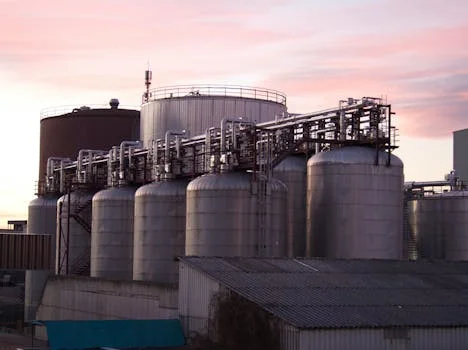
Primary treatment still depends on rotary mechanical bar screens with 6–10 mm spacing to protect pumps and membranes. Vortex or aerated grit chambers remove abrasive sand before dewatering assets wear. Secondary design then chooses 0.1 μm PVDF membrane bioreactors or A/O tanks aerated at 0.2–0.4 m³ air per m³ of wastewater. Procurement teams use the same checklist compliance data england equipment municipal metrics when scoring bids against permit limits.
Tertiary treatment and sludge handling need a defined package for 2025 standards:
- Solids Removal: DAF units for 4–300 m³/h loads, or lamella clarifiers for high-efficiency sedimentation.
- Filtration: multi-media filters for turbidity reduction to reach <3 mg/L effluent quality.
- Disinfection: ClO2 generators rated 50–20,000 g/h.
- Dewatering: filter presses for municipal sludge dewatering with filtration areas up to 500 m².
- Automation: flow-paced chemical dosing with real-time nutrient monitoring.
What is the best chemical dosing equipment for water treatment plants in 2025?
For UK municipal nutrient permits, the practical choice is redundant, PLC-based dosing with flow meters and online feedback on pH and phosphate. Skids in the £50,000–£200,000 band cover multi-stream coagulation and pH trim. Pairing that control layer with flotation or filtration keeps TP <1 mg/L without chronic overdosing.
Which companies supply large municipal wastewater treatment plants?
Large English works are owned and operated by regional water companies, while process equipment comes from specialist OEMs for screens, MBR, DAF, dosing, and dewatering. Buyer teams should match hydraulics, power, and spare parts to Beckton- or Mogden-scale duty, not only catalogue capacity. Cross-check references against works of similar PE before freezing the vendor shortlist.
Frequently Asked Questions
How many sewage treatment plants are there in England?
Over 1,440 wastewater treatment works operate in England, serving 99.8% of the population according to GOV.UK 2020 data. The largest facilities include Beckton in East London (3.5 million people), Mogden in West London (1.6 million), and Minworth in the West Midlands (1.1 million).
Where does London’s sewage go?
London’s sewage is processed at several major regional plants, primarily Beckton (East), Mogden (West), and Crossness (South). The Thames Tideway Tunnel, a 25 km interceptor under construction, will divert storm overflows that now discharge to the Thames into these plants for treatment.
Does sewage get pumped into the sea in the UK?
Sewage reaches coastal waters only after treatment. Directive 91/271/EEC requires at least secondary treatment for coastal discharges from larger agglomerations. In 2020, 99.8% of England’s generated wastewater load met those rules.
Where does sewage sludge go in the UK?
Sludge is treated by anaerobic digestion for biogas, thermal hydrolysis as at Mogden, or mechanical dewatering. About 87% of treated sludge is recycled to agriculture as biosolids; the rest is incinerated for energy or landfilled.
What equipment does a UK municipal sewage treatment plant need in 2025?
Specify rotary bar screens (6–10 mm), MBR or activated sludge aeration at 0.2–0.4 m³ air/m³ wastewater, DAF for 92–97% TSS removal, and UV or ClO2 disinfection. TN <10 mg/L and TP <1 mg/L usually need automated chemical dosing plus tertiary filtration.
Who this is for / Who should look elsewhere / Next step
This guide is for UK municipal operators, consultants, and procurement engineers sizing upgrades against WINEP and Environment Act duties. Industrial pretreatment buyers or overseas plant owners should use region-specific permits instead of England PE and cost bands. If you need a duty-matched equipment shortlist for screens, MBR, DAF, dosing, or dewatering, share flow, influent FOG, and permit limits with the HydropureWater engineering team for a scoped proposal.