Virginia Sewage Treatment Plants: Capacity, Compliance, and Challenges
Virginia sewage treatment plants serve 120+ municipal facilities, with about 60% built before 1990 (VDEQ 2023 data). Combined statewide design capacity is roughly 800 MGD. Fairfax County’s six regional plants treat about 240 MGD, near 30% of that total, including the Noman M. Cole, Jr. Water Recycling Facility.
Northern Virginia growth keeps raising hydraulic and organic loads. Fairfax County has added about 100,000 residents since 2010, which stresses those regional plants. Chesapeake Bay watershed dischargers face the tightest nutrient caps under VDEQ and the Clean Water Act.
Waynesboro’s 6 MGD plant and Wytheville’s 4 MGD plant moved to biological nutrient removal (BNR) and UV disinfection to hit those caps. Smaller towns such as Warrenton still operate mid-century works (the 1958 plant at 0.5 MGD) that struggle with peak storm flows and current effluent standards. Most plants we size for rural Virginia towns still run at the lower end of the 0.5–2 MGD band until growth forces an upgrade.
| Plant Location | Design Capacity (MGD) | Process Type | Year Built/Major Upgrade | Primary Compliance Challenge |
|---|---|---|---|---|
| Fairfax County (Noman Cole) | 67.0 | Advanced BNR + Tertiary | 2005 (Upgrade) | Chesapeake Bay Nutrient Caps |
| Richmond (RVAH2O) | 70.0 | Activated Sludge | 1958 (Original) | Combined Sewer Overflows (CSO) |
| Waynesboro | 6.0 | BNR + UV Disinfection | 2010 (Upgrade) | Total Nitrogen (TN) Limits |
| Wytheville | 4.0 | Class 2 Activated Sludge | Various | Stormwater Hydraulic Overload |
| Warrenton | 0.5 | Advanced Secondary | 1958 (Original) | Aging Infrastructure/Footprint |
VDEQ and EPA Compliance: Permit Requirements for Virginia Plants
VDEQ secondary-treatment floors follow EPA 40 CFR 133.102: BOD₅ ≤ 30 mg/L (30-day average), TSS ≤ 30 mg/L (30-day average), and pH 6.0–9.0. According to US EPA (40 CFR 133.102), those concentration and pH limits remain the federal secondary-treatment baseline for municipal discharges.
Chesapeake Bay watershed plants also carry technology-based nutrient concentration limits under 9VAC25-40-70. Earlier guidance often cited Total Phosphorus (TP) near ≤ 0.18 mg/L for Bay plants. According to 9VAC25-40-70, state-of-the-art annual averages are Total Nitrogen (TN) 3.0 mg/L and TP 0.3 mg/L for qualifying expansions and larger new facilities. Biological nutrient removal technology targets TN 8.0 mg/L and TP 1.0 mg/L as annual averages. Facility-specific wasteload allocations in 9VAC25-720 can still be tighter than those technology floors.
Disinfection standards in Virginia focus on E. coli, typically a monthly geometric mean ≤ 126 CFU/100 mL. Older works such as Richmond’s 1958 facility may still use chlorine. Modern mandates often favor UV or chlorine dioxide disinfection for Virginia’s larger plants to cut chemical residuals that harm aquatic life.
Biosolids must meet Class A or B standards per EPA 40 CFR Part 503. Waynesboro uses land application for Class B biosolids with heavy-metal and pathogen monitoring. Plants submit performance data monthly through VDEQ eDMR. Common citations include hydraulic overloads from inflow and infiltration (I&I) and nutrient exceedances when BNR stages lack enough carbon.
Technical Specifications: Process Design for Virginia’s Sewage Treatment Plants
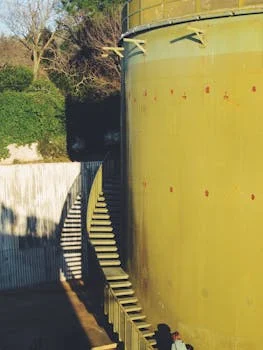
Hydraulic loading rates for secondary clarifiers in Virginia typically range from 0.2 to 0.5 gal/ft²/day according to EPA design manuals, giving solids enough settling time. To meet Bay nutrient limits, most modern plants use a 4-stage BNR sequence: anaerobic, anoxic, aerobic, and second anoxic zones for nitrification and denitrification. Sludge retention time (SRT) of 10 to 20 days is standard so nitrifiers hold through colder Virginia winters.
For smaller towns or new residential developments, an Underground Package Sewage Treatment Plant (WSZ Series) offers a pre-engineered path in the 0.5–2 MGD range versus stick-built concrete. In land-short Northern Virginia corridors, MBR systems for space-constrained Virginia plants (e.g., Northern Virginia) replace secondary clarifiers with membranes. Mixed liquor suspended solids (MLSS) of 8,000–12,000 mg/L cut footprint while holding effluent TN below 3 mg/L when the process is sized correctly.
When choosing disinfection, weigh UV’s small footprint (as at Waynesboro) against chemical residual protection in long networks. Sludge handling usually favors aerobic digestion under 5 MGD (SRT 20–40 days) and anaerobic digestion at larger plants for biogas and volume reduction.
| Parameter | Conventional Activated Sludge | BNR (Biological Nutrient Removal) | MBR (Membrane Bioreactor) |
|---|---|---|---|
| BOD₅ Removal Efficiency | 85–95% | 95–98% | >99% |
| Hydraulic Retention Time (HRT) | 4–8 hours | 8–20 hours | 4–10 hours |
| MLSS Concentration | 1,500–3,500 mg/L | 3,000–5,000 mg/L | 8,000–12,000 mg/L |
| Effluent Total Nitrogen (TN) | 15–25 mg/L | < 3 mg/L | < 3 mg/L |
| Footprint Requirement | High | High | Low (60% reduction) |
How Should Plants Select Aeration Equipment?
Aeration equipment selection for municipal plants starts from oxygen demand at peak month and winter temperature, not from nameplate blower size alone. Fine-bubble diffused air remains the default for BNR basins that need stable dissolved oxygen of about 2.0–3.0 mg/L in aerobic zones. Surface aerators still appear on smaller package plants where basin depth or retrofit access limits diffuser grids.
Design, operation, and procurement should lock three items early: alpha-factor assumptions for the local wastewater, turndown for diurnal and wet-weather swings, and spare capacity for one unit offline. Energy for aeration still takes about 40–50% of O&M budgets in Virginia, so DO control and blower efficiency dominate life-cycle cost. Lead times for specialized blowers and pumps often run 6–12 months, so RFP schedules must start before civil bid packages freeze.
2025 Cost Breakdown by Plant Size and Technology
An Underground Package Sewage Treatment Plant (WSZ Series) in the 0.5–2 MGD range typically costs $1.2M–$4M CapEx in 2025, including installation and startup. Conventional activated sludge plants at 2–10 MGD typically range from $5M to $12M. Advanced BNR systems needed for many Bay permits often cost $10M to $15M for a 6 MGD facility, similar to the Waynesboro model. MBR systems carry higher CapEx ($8M–$20M for 1–20 MGD) but save land and can support non-potable reuse quality.
Operating and maintenance costs in Virginia range from $0.20 to $0.80 per 1,000 gallons treated. Certified operator rates run about $45–$75/hr in Northern Virginia versus $30–$50/hr in Southwest Virginia. Tertiary filtration plus UV often adds $2M to $5M on a 10 MGD plant. VDEQ permitting and environmental studies can add $50,000 to $200,000 by site sensitivity. For a broader pricing view, engineers can review wastewater treatment plant cost benchmarks against Virginia labor and material factors.
| Plant Capacity (MGD) | Technology Type | Estimated CapEx (2025) | O&M Cost ($/1,000 gal) |
|---|---|---|---|
| 0.5 – 2.0 | Package Plant (WSZ) | $1.2M – $4.0M | $0.40 – $0.80 |
| 2.0 – 10.0 | Conv. Activated Sludge | $5.0M – $12.0M | $0.20 – $0.45 |
| 5.0 – 50.0 | Advanced BNR | $10.0M – $15M+ | $0.30 – $0.55 |
| 1.0 – 20.0 | MBR System | $8.0M – $20.0M | $0.50 – $1.00 |
What Do Disinfection Systems Typically Cost?
Disinfection capital for piping, tanks, structures, and equipment usually rides inside the tertiary adders above rather than as a stand-alone line item. On a 10 MGD plant, filtration plus UV commonly adds $2M to $5M in 2025 dollars when channels, power, and backup lamps are included. Chemical systems shift more cost into ongoing chemical feed, contact tanks, and dechlorination if chlorine residual limits apply.
UV suits many plants under 10 MGD that discharge to nutrient-sensitive waters and want no chemical residual. Larger plants or long reuse distribution networks may keep chlorine dioxide or chlorine for residual control. Budget lamp replacement, quartz sleeve cleaning, and chemical storage when you compare life-cycle cost, not only installed CapEx.
Equipment Selection Guide: Matching Technology to Virginia’s Needs
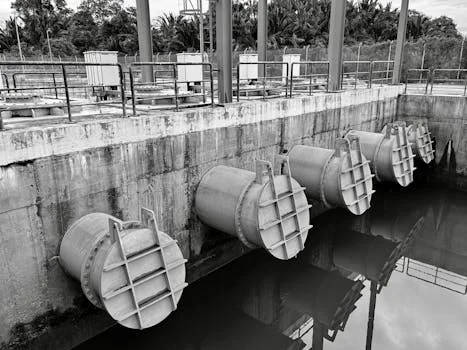
Rotary mechanical bar screens are standard for Virginia municipal plants above 1 MGD. Rotary mechanical bar screens (e.g., GX Series) keep debris from damaging pumps and fouling BNR media. Where influent carries high fats, oils, and grease from commercial or food districts, DAF systems for Virginia plants with high FOG or industrial influent outperform primary clarifiers. That choice matters when reviewing industrial pretreatment requirements for Virginia municipalities, because high-strength waste can upset biological balances.
Secondary process choice follows the VDEQ permit. Nutrient caps push BNR; footprint limits push MBR. For sludge dewatering, plants between 1 and 5 MGD often use belt filter presses for lower energy use. Facilities above 5 MGD often move to centrifuges or a plate and frame filter press to reach 25–35% cake solids and cut hauling cost. When weighing digestion routes, consult choosing between aerobic and anaerobic systems for Virginia plants against local climate and influent strength.
| Requirement | Recommended Equipment | Justification |
|---|---|---|
| Flow > 1 MGD, Municipal | Rotary Mechanical Bar Screen | Automated debris removal; protects pumps |
| High FOG / Food Processing | DAF | Superior grease removal vs. clarifiers |
| Strict TN/TP Limits, Small Site | MBR Integrated System | Highest effluent quality; 60% footprint reduction |
| Class B Biosolids Production | Belt Press or Plate/Frame Press | Reduces hauling costs via high cake dryness |
| Small Town (< 2 MGD) | WSZ Package Plant | Low CapEx; simplified installation |
Procurement Checklist: Steps to Upgrade or Build a Virginia Sewage Treatment Plant
Needs assessment for a 20-year growth horizon is the first procurement step. Define current hydraulic and organic loading, then add planned residential or industrial growth. Pilot testing is expected for plants above 1 MGD under VDEQ practice: run a 3-to-6-month trial (for example MBR versus conventional activated sludge) under local wastewater and winter temperatures.
- Permitting: Submit VDEQ permit applications 12–18 months before construction start. Include engineering reports, environmental assessments, and public comment time.
- Equipment RFP: Issue proposals for BNR, disinfection, aeration, and dewatering. Score compliance history, 6–12 month lead times, and local service—not price alone.
- Construction: Plan 18–36 months for a greenfield plant. Coastal Virginia schedules need hurricane-season contingency.
- Startup & Commissioning: Allow 3–6 months for biology to stabilize, operator training, and a 30-day effluent demonstration before final VDEQ acceptance.
Who this is for: municipal engineers, EPC firms, and procurement managers sizing 0.5–50 MGD upgrades in Virginia, especially Bay watershed dischargers facing TN/TP caps. Who should look elsewhere: buyers seeking only industrial pretreatment without a municipal NPDES path, or projects outside Virginia’s climate and VDEQ framework. Next step: send flow, influent data, and permit limits for a sized equipment package via our request a quote form.
Frequently Asked Questions
What are the three types of sewage treatment plants?
The three types are primary (physical screening and clarification), secondary (biological treatment such as activated sludge), and tertiary (advanced filtration and disinfection). Most Virginia plants operate at secondary or tertiary level to meet VDEQ effluent limits. Package plants, BNR trains, and MBR systems are process packages inside those stages, not a separate legal class under the Clean Water Act.
How much does a municipal sewage treatment plant cost in Virginia?
Costs range from $1.2M for a 0.5 MGD package plant to over $15M for larger advanced BNR systems in the 2025 CapEx bands used here. O&M typically falls between $0.20 and $0.80 per 1,000 gallons, driven by aeration energy and regional labor rates. For comparison, see how package plants compare in arid climates like New Mexico.
What are the VDEQ permit requirements for sewage treatment plants?
Baseline secondary limits are BOD₅ ≤ 30 mg/L, TSS ≤ 30 mg/L, and pH 6.0–9.0 per EPA 40 CFR 133.102. Chesapeake Bay plants also face technology-based nutrient concentration limits: state-of-the-art annual averages of TN 3.0 mg/L and TP 0.3 mg/L under 9VAC25-40-70 for qualifying facilities, with facility wasteload allocations that may be stricter. E. coli monthly geometric means are commonly ≤ 126 CFU/100 mL.
How many municipal sewage treatment plants are in Virginia?
There are over 120 municipal plants in Virginia with total capacity of about 800 MGD. Fairfax County operates the largest regional network in this guide’s dataset, treating about 240 MGD across six facilities. Capacity is concentrated in Northern Virginia and other urban corridors, while many towns still run sub-2 MGD works built before 1990.
What is the best disinfection method for Virginia sewage treatment plants?
UV disinfection is preferred for many plants under 10 MGD because it leaves no chemical residual in Bay-sensitive waters. Larger plants or those with long distribution or reuse networks may use chlorine dioxide to maintain a residual and limit regrowth. Final choice should follow the VDEQ permit, receiving-water limits, and O&M staffing, not a single default technology.