Package Treatment Plants Near Borehole UK Compliance
Package treatment plants near borehole uk compliance in England means the ground discharge sits outside SPZ1 and at least 50 metres from a domestic or food-production well, spring or borehole. An Environment Agency permit is required when that test fails. A discharge into a borehole fails the General Binding Rules. Exemption volumes are 2 m³/day to ground and 5 m³/day.
In England, package treatment plants close to water borehole sites must keep ground discharges outside SPZ1 and ≥50 metres from a domestic or food-production well, spring or borehole, or hold an Environment Agency permit. Discharging into a borehole fails the General Binding Rules. Typical plants treat 1–80 m³/day to 95%+ BOD removal (BS EN 12566-3) at £25,000–£250,000+ capital cost.
A package wastewater treatment plant in the UK is a pre-engineered modular system for on-site sewage treatment. It serves off-mains homes, hotels and industrial sites that cannot reach a public sewer at reasonable cost. For England-wide siting, permits and cost detail, see also this guide to Package Wastewater Treatment Plants in England UK: 2026 Engineering Guide.
package wastewater treatment plant siting rules england
Package wastewater treatment plant siting rules in England start with the discharge point, not the tank model. For a single house, Environment Agency ground and surface-water guidance both block the exemption if a public foul sewer is within 30 metres of any boundary. Several houses use the house count times 30 metres. Three houses therefore give 90 metres.
Where some flow is non-domestic, divide the cubic metres by 0.75 and multiply by 30. The published example is 1.2 cubic metres, which gives 48 metres. On most plots we size, this sewer test decides the scheme before the tank is chosen.
A new discharge started on or after 2 October 2023 must not sit within 50 metres of any other exempt small sewage discharge. It also must not share an outlet where the combined volume would exceed 2 m³/day to ground or 5 m³/day to surface water. According to the statutory general binding rules, those two tests are rules 22 and 23.
For a ground discharge started on or after 1 January 2015, the point must not lie in ancient woodland. It also must not lie in, or within 50 metres of, a SAC, an SPA, a Ramsar site or a biological SSSI. A surface-water discharge has wider buffers under the same Environment Agency guidance.
It cannot sit in, or within 500 metres of, a SAC, an SPA, a Ramsar site, a biological SSSI, a freshwater pearl mussel population, a designated bathing water or a protected shellfish water. The surface-water buffer is 200 metres for an aquatic local nature reserve and 50 metres for a chalk river or an aquatic local wildlife site. These distance rules are the England General Binding Rules. Confirm the plot is in England before you apply them.
Why UK Sites Are Moving from Septic Tanks to Package Plants
UK rules on small sewage discharges tightened after 1 January 2020, when septic tanks in England could no longer make new discharges directly to watercourses. Operators must use a sewage treatment plant for surface-water discharges, or a septic tank or treatment plant with a compliant drainage field for discharges to ground. Connecting to the municipal sewer can cost £15,000–£50,000 depending on distance and ground conditions. Capital outlay for a compliant package plant typically falls between £25,000 for domestic units and £250,000 for larger commercial systems (HydropureWater field data, 2025).
This shift is clearest in rural and tourism sites. For example, a 50-room hotel in Devon facing a non-compliant septic tank or a costly sewer connection chose a package plant. Over a 10-year period the hotel saved an estimated £80,000 by avoiding connection fees and sewerage charges, while cutting energy use versus older aerobic plant and avoiding Environment Agency fines. Approximately 1.5 million UK properties, including hotels, hospitals and industrial sites in off-mains locations, currently rely on independent wastewater systems (Environment Agency 2024 data).
Most plants we size for seasonal hotels run closer to the summer peak than to the annual average. Size the blower and the drainage field on that peak, not on a quiet month.
What Are Package Plants for Wastewater?
Package plants for wastewater are factory-built tanks that combine primary settlement, secondary biological treatment and often optional tertiary polishing in one compact footprint. They differ from septic tanks, which provide primary settlement only. Typical UK units treat domestic-strength sewage with influent BOD about 250–400 mg/L and TSS about 200–500 mg/L, then discharge to a watercourse or a drainage field under Environment Agency rules.

Primary treatment settles heavier solids and floats fats, oils and greases. This stage removes about 50–70% of TSS and prepares the load for biology. Secondary treatment uses Activated Sludge, Submerged Aerated Filters, Moving Bed Biofilm Reactors or Anaerobic/Anoxic/Aerobic (A/O) stages. Aeration grows microbes that consume dissolved BOD and COD.
A/O layouts also cut ammonia, which matters in sensitive UK catchments. These stages consistently achieve 95%+ BOD removal, a core BS EN 12566-3 performance expectation. For a compact UK-ready unit, the Underground Package Sewage Treatment Plant (WSZ Series) integrates these biological stages for variable domestic and light commercial loads.
Primary settlement tanks for UK domestic-strength sewage commonly see influent TSS of 200–500 mg/L and BOD of 250–400 mg/L. Removing 50–70% of TSS at this stage cuts blower duty and protects biofilm media. Secondary biology then targets the dissolved fraction. When ammonia limits apply, an anoxic zone ahead of aeration supports denitrification without a separate tertiary reactor.
Tertiary treatment is added where nutrient or pathogen limits are tighter, such as parts of the Lake District or the Norfolk Broads. Options include sand filtration, ferric dosing for phosphate, and UV disinfection targeting about 99% pathogen reduction. Excess sludge is removed on a set cycle. UK sludge disposal follows routes such as the ADAS Safe Sludge Matrix and PAS 110 for digestate, via licensed contractors to agriculture, incineration or landfill.
Modern package plants typically use 0.3–0.8 kWh/m³, versus about 0.5–1.2 kWh/m³ for older activated-sludge layouts.
On domestic-strength sewage, most plants we size sit at the lower end of 0.3–0.8 kWh/m³ once the diffuser is clean. A blocked inlet screen is the usual reason the figure climbs toward the older 0.5–1.2 kWh/m³ band.
| Treatment Stage | Primary Function | Typical Removal Efficiency (UK Influent) | Key UK Relevance |
|---|---|---|---|
| Primary Sedimentation | TSS & FOG removal | 50-70% TSS, 20-30% BOD | Prepares wastewater for biological treatment, reduces load. |
| Secondary Biological (e.g., MBBR, A/O) | BOD, COD, Ammonia removal | 95%+ BOD, 85%+ COD, 70%+ Ammonia | Meets BS EN 12566-3, Environment Agency GBR discharge limits. |
| Secondary Clarification | Separation of treated water from biomass | Further TSS reduction | Ensures low TSS in effluent. |
| Tertiary Filtration (optional) | Fine TSS, Phosphate polishing | Additional 50-70% TSS, 80%+ Phosphate (with chemical) | Required for nutrient-sensitive areas (e.g., <1 mg/L Phosphate). |
| UV Disinfection (optional) | Pathogen inactivation | 99% pathogen reduction | For sensitive receiving waters, public access areas. |
environment agency general binding rules borehole discharge
Environment Agency general binding rules borehole discharge is not an exempt route. According to Environment Agency ground-discharge guidance, you cannot meet the rules if you discharge through a well or borehole, or through a rainwater soakaway installed after December 2007. If sewage effluent reaches groundwater directly through a borehole, shaft or similar structure, the Environment Agency will not grant a permit. The operator must replace that route.
Earlier guidance told operators to replace those routes with a BS 6297 drainage field, connect to sewer where reasonable, or apply for a permit. That permit option does not cover a direct discharge to groundwater. The failed item on older rural sites is usually a borehole or ring soakaway, not the tank shell.
On 23 July 2026 the Environment Agency added a route for engineered ground that is not a borehole. A discharge can still meet the general binding rules on that ground when three tests are met. The plot is not in a floodplain. The engineered ground has a minimum percolation value (Vp) of 15, and the field follows the rest of BS 6297:2007.
How far from a borehole must the drainage field sit?
The drainage field must sit at least 50 metres from a well, spring or borehole used for domestic or food-production water, and outside SPZ1. Rule 7 of the general binding rules states both tests for a ground discharge. Measure from the drainage field, not from the tank lid. A mapped inner zone can be larger than the 50-metre circle where the 50-day travel time extends further.
UK Compliance: General Binding Rules, BS EN 12566-3 and Permits
Environment Agency General Binding Rules (GBR) for small sewage discharges in England took their current statutory form from 2 October 2023. Under those rules, a ground discharge must be 2 m³/day or less, and a surface-water discharge must be 5 m³/day or less, for the exemption path to apply. Earlier buyer guides often quoted a permit trigger of more than 5 m³/day for commercial sites and more than 20 m³/day for industrial sites.
Those volume figures remain useful for bespoke cases. The 2023 GBR exemption caps are 2 m³/day to ground and 5 m³/day to surface water (Environment Agency, 2023).
Buyer checklists still commonly cite effluent targets of BOD less than 20 mg/L, TSS less than 30 mg/L and ammonia (as N) less than 10 mg/L for small discharges to watercourses. The 2023 statutory GBR text itself does not list those numeric limits. It requires a sewage treatment plant for surface-water discharges, BS EN 12566-era equipment standards, competent maintenance and no pollution of surface water or groundwater. Treat the BOD/TSS/ammonia figures as typical consent or performance targets unless your permit states otherwise.
According to Environment Agency ground-discharge guidance, updated on 23 July 2026, you cannot meet the exemption if you discharge through a well or borehole. The same bar covers a rainwater soakaway installed after December 2007. Replace a non-standard soakaway with a BS 6297 drainage field, or connect to sewer where reasonable. SPZ1 is defined as the larger of a 50-metre radius around a domestic or food-production abstraction and the 50-day travel-time zone (Environment Agency SPZ guidance, updated 1 August 2024).
BS EN 12566-3 covers package plants up to 50 Population Equivalent (PE). Certification usually rests on a multi-week performance trial under varying loads. Request CE or UKCA evidence and the test report, not a verbal claim of meeting standards.
UK Building Regulations Part H covers drainage design and installation. Domestic sizing often uses about 150 L/person/day. Hotels commonly use about 200 L/bed. For a hospital wastewater treatment system for UK compliance, permit thresholds matter because daily volumes and effluent character can exceed domestic GBR assumptions.
Where package treatment plants close to water borehole catchments still need ground discharge, check Magic map for Source Protection Zones and measure the drainage-field setback before ordering civils. In nutrient-sensitive catchments, including some SACs and SPAs, phosphate limits can fall below 1 mg/L. Annual inspection by a competent technician and desludging every 6–12 months remain standard practice, with maintenance logs kept for audit. Environment Agency guidance says desludge at least once a year, or sooner if the manual sets a shorter interval.
| Regulatory Body / Standard | Requirement / Limit | UK Context & Application |
|---|---|---|
| Environment Agency General Binding Rules (GBR) | BOD <20 mg/L, TSS <30 mg/L, Ammonia <10 mg/L | Standard discharge limits for small sewage discharges to watercourses in England. |
| BS EN 12566-3 | CE marking, performance test certificate | Mandatory standard for package plants up to 50 PE, proving efficiency and reliability. |
| UK Building Regulations Part H | Sizing based on flow (e.g., 150 L/person/day, 200 L/bed) | Ensures adequate capacity and proper installation for drainage and waste disposal. |
| Environment Agency Environmental Permit | Required for >5 m³/day (commercial), >20 m³/day (industrial) discharge | Necessary for larger systems or complex effluent, ensures specific conditions are met. |
| Nutrient Neutrality (Sensitive Areas) | e.g., Phosphate <1 mg/L | Additional limits in protected ecological areas to prevent nutrient pollution. |
| Maintenance & Desludging | Annual inspection, desludging every 6-12 months, log keeping | Ensures long-term performance, prevents pollution, and is auditable. |
Note on the permit row above: keep those historic commercial/industrial volume triggers as background. For new England GBR assessments, check the 2 m³/day ground and 5 m³/day surface-water caps first. Apply for a permit if you cannot meet every rule that applies to your start date (Environment Agency, 2023).
drainage field setback from water borehole uk
Drainage field setback from a water borehole in England, for an exempt ground discharge, is 50 metres from any well, spring or borehole used for domestic or food-production water. According to Environment Agency SPZ guidance updated on 1 August 2024, SPZ1 is the larger of a 50-metre radius around that abstraction and the 50-day groundwater travel-time zone. Ground-discharge guidance requires a permit where the point is in SPZ1, except SPZ1c. A private supply within 50 metres is treated as SPZ1 even when Magic map shows no public zone.
Where package treatment plants close to water borehole catchments still need ground discharge, mark the drainage field on the plan before civils start. Measure to the nearest perforation, not to the tank lid. That is the mistake we see most often on tight rural plots. A drainage mound can still meet the rules if it is outside the floodplain and follows BS 6297:2007.
package sewage treatment plant permit threshold england
The package sewage treatment plant permit threshold in England is crossed when a discharge cannot meet the General Binding Rule volume cap for its route. A ground discharge above 2 m³/day, or a surface-water discharge above 5 m³/day, must connect to a public foul sewer where reasonable, or hold a permit. For a new discharge started on or after 2 October 2023, sharing an outlet also needs a permit if the combined volume exceeds 2 m³/day to ground or 5 m³/day to surface water.
When does an England package plant need a permit?
An England package plant needs a permit when any General Binding Rule for its start date is missed, not only when flow is large. SPZ1 (except SPZ1c), a point within 50 metres of a domestic or food-production borehole, and a borehole used as the outlet are all triggers. Buyers often stop at the daily volume and miss the shared-outlet test. Smaller sites that meet every rule for their start date operate without a permit.
Earlier buyer guides quoted more than 5 m³/day for commercial sites and more than 20 m³/day for industrial sites. Those figures remain background for bespoke permits. The exemption caps to check first are still 2 m³/day to ground and 5 m³/day to surface water. Domestic sewage only is a separate rule: trade effluent leaves the exemption path.
What Are WTE Package Treatment Plants in the UK?
WTE package treatment plants in UK buyer searches usually mean packaged sewage treatment units for off-mains properties, not a separate process class. They follow the same BS EN 12566 equipment path, the same GBR volume and siting rules, and the same need for competent installation and desludging. When comparing brands, ask for the test certificate, UK service coverage and a site survey that measures distance to sewers, watercourses and private water supplies.
When a buyer searches for a WTE unit near a borehole, we still ask for the same three distances: sewer, watercourse and private supply. The brand name does not change Rule 7.
bs en 12566-3 package plant cost uk
BS EN 12566-3 package plant cost in the UK is a supply price, not a figure printed in the standard. BS EN 12566-3 covers package plants up to 50 PE and proves performance by test, not by a tariff. Domestic supply in the field file still sits at £25,000–£50,000 for 1–10 PE, before civils. Commercial 10–200 PE plant supply is commonly £80,000–£250,000.
Ask for the test report on the exact model, then price the drainage field and any permit as separate lines.
Most domestic schemes we price land at the lower end of that £25,000–£50,000 band. Rock, a high water table or a long drainage field is what pushes the installed total up.
Package Wastewater Treatment Plant Costs in the UK: Benchmarks and ROI
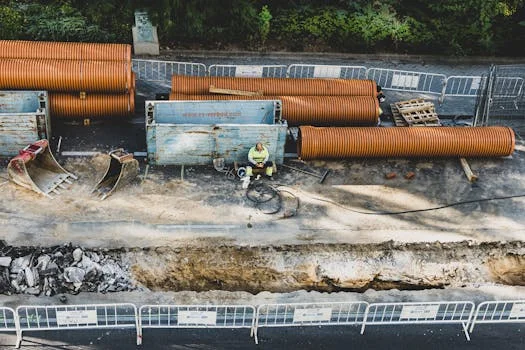
Total spend for a UK package plant, including capital, installation and operation, typically ranges from about £30,000 for small domestic units to over £300,000 for large commercial or industrial schemes.
Capital costs for the plant itself:
- Domestic (1–10 PE): £25,000–£50,000
- Commercial (10–200 PE, e.g., hotels, small communities): £80,000–£250,000
- Industrial (200+ PE, e.g., food processing, large hospitals): £250,000+
These figures usually include the treatment unit, control panel and internal pipework, but exclude external civils.
When you compare bids, separate plant supply from civils, electrics, drainage-field excavation and permit fees. A domestic unit quoted at £25,000–£50,000 can still reach £30,000–£70,000 installed once groundworks are added. Commercial 10–200 PE schemes at £80,000–£250,000 for the plant often need £5,000–£20,000 more for installation, plus £1,000–£5,000 for permit application and subsistence where GBR cannot be met.
Installation often adds £5,000–£20,000. Rock, high water table, poor access and electrical works drive the range. A domestic install can take 3–5 days. Larger commercial systems may take several weeks.
Operating costs generally fall between £0.50 and £1.50 per m³ treated. Energy is often quoted at 0.10–0.30 kWh per m³ in cost models. At about £0.25/kWh this is £0.025–£0.075/m³. Process comparisons also cite 0.3–0.8 kWh/m³ for modern package plant duty.
Chemicals for phosphate polishing can add £0.05–£0.15/m³. Annual service contracts for commercial systems typically run £1,000–£3,000. Desludging visits cost about £200–£500 every 6–12 months.
ROI example (50 PE site at 10 m³/day, 10-year TCO)
Scenario 1: Municipal sewer — connection fee £30,000; sewerage at £3/m³ equals £10,950/year; 10-year TCO = £139,500.
Scenario 2: Package plant — plant £120,000; installation £15,000; permit £2,000; operating cost at £1.00/m³ equals £3,650/year; 10-year TCO = £173,500.
In that example the package plant costs more over 10 years. If the sewer connection rose to £60,000, the package option becomes competitive. Site distance, groundworks and municipal tariffs decide the winner.
Hidden costs include permit application and subsistence fees of about £1,000–£5,000, unforeseen groundworks, and later decommissioning. UK financing routes can include commercial loans, supplier leasing and rural infrastructure grants where eligible.
| Cost Category | Typical UK Range (2025) | Notes |
|---|---|---|
| Capital Cost (Plant) | £25,000 – £250,000+ | Varies by PE, technology (MBBR, SAF, etc.), and manufacturer. |
| Installation Cost | £5,000 – £20,000 | Dependent on site access, ground conditions, and civil works. |
| Environmental Permit | £1,000 – £5,000 (application + annual) | Required for larger discharges; check EA guidance. |
| Annual Maintenance Contract | £1,000 – £3,000 | Includes routine checks, minor repairs, and call-outs. |
| Desludging (per visit) | £200 – £500 | Frequency: 6-12 months, depending on load. |
| Energy Consumption | 0.3 – 0.8 kWh/m³ | Significant operational cost; consider energy-efficient models. |
| Chemicals (for tertiary) | £0.05 – £0.15/m³ | Only if additional nutrient removal or disinfection is required. |
Package Treatment Plant vs. Septic Tank vs. Municipal Sewer
Septic tanks remain the lowest capital option at about £5,000–£15,000 installed, with no mechanical aeration. They only provide primary treatment. In England they cannot make new direct discharges to watercourses. Existing watercourse discharges must upgrade to a treatment plant or move to a compliant drainage field.
Municipal sewer connections offer the highest convenience once fees of about £15,000–£50,000 are paid. Ongoing sewerage charges of about £2–£5 per m³ then apply. Package plants fill the gap for off-mains sites that need secondary or tertiary treatment on a compact footprint at £25,000–£250,000+. They need power, annual service and desludging.
Process selection is covered further in aerobic vs. anaerobic treatment processes, and market-specific packaging practice is compared in this guide to package wastewater treatment plants in New Mexico, USA.
Use-case matching:
- Domestic: Prefer a package plant over a septic tank if you need watercourse discharge or the ground fails a percolation test for a drainage field.
- Commercial (hotels, campsites): Use a package plant when sewer connection is unavailable or costs above about £15,000–£50,000.
- Industrial: Use package plants for full treatment to a watercourse, or as pre-treatment before sewer discharge when municipal capacity is limited.
Decision sequence for UK buyers:
- Is a public foul sewer available at under about £20,000? If yes, sewer is usually simplest.
- Is volume small (under about 10 PE) with land for a compliant drainage field? A septic tank with drainage field may still fit.
- Do you need watercourse discharge, higher treatment, or unsuitable soakaway ground? Choose a package plant.
- Is the drainage field inside SPZ1 or within 50 metres of a private water supply borehole? Budget for a permit or relocate the discharge point.
| Feature | Septic Tank | Municipal Sewer | Package Treatment Plant |
|---|---|---|---|
| Capital Cost | £5k-£15k | £15k-£50k (connection) | £25k-£250k+ |
| Operational Cost | Low (desludging) | High (ongoing charges) | Medium (energy, maintenance, desludging) |
| Treatment Level | Primary only | Full (off-site) | Secondary/Tertiary (on-site) |
| Compliance | Limited (drainage field req.) | High (off-site responsibility) | High (meets EA limits) |
| Maintenance | Desludging (annual) | None (on-site) | Annual service, desludging (6-12 months) |
| Footprint | Small tank + large drainage field | None (on-site) | Compact (tank only) |
| Ideal Use | Small domestic, suitable ground for drainage field | Any site with feasible connection | Off-mains commercial/industrial, domestic with watercourse discharge |
UK Supplier Checklist for Package Plant Buyers
Successfully procuring a compliant package plant in the UK requires checking technical, regulatory and after-sales criteria before award. Vague claims of meeting standards are a red flag. Certificates and test reports are required.
Ask suppliers to mark borehole distance, SPZ status and public-sewer distance on the site plan before manufacture. That single drawing prevents ordering a drainage-field layout that later fails Rule 7 of the General Binding Rules. If the only viable discharge point sits inside SPZ1, budget time for a permit application and possible improvement conditions rather than assuming an exempt package plant can proceed.
Use this selection checklist before you award a contract:
- BS EN 12566 certificate and full performance test report for the exact model.
- Written confirmation of how the design meets GBR volume, SPZ and borehole-distance rules for your plot.
- UK-based commissioning and call-out cover, with spare-parts lead times stated in writing.
- FOG, pharmaceutical or trade-effluent pre-treatment options if the load is not purely domestic.
- Structural tank warranty of at least 10 years and mechanical/electrical cover of at least 2 years.
- Two UK reference sites of similar PE and discharge route.
- Transparent proposal covering civils, electrics, permit support and desludging intervals.
Red flags include no UK references, a claim of being designed to meet standards without certificates, and pressure to buy before a site survey. A professional vendor will survey the site and issue a transparent proposal. Most rejected bids we see fail on a missing test report, not on price.
Who This Is For / Next Step
This guide is for plant engineers, EPC contractors and property owners sizing off-mains treatment in England and the wider UK. Sites with trade effluent, or with flow far above the 2 m³/day ground cap and the 5 m³/day surface-water cap, should look to a bespoke permit rather than a domestic package plant alone. Owners who can reach a public foul sewer inside the 30-metre boundary test should price that connection before buying a plant.
For package treatment plants near borehole uk compliance, send daily flow, the discharge route and the measured distance to the nearest water supply through a request for an engineering review.
Frequently Asked Questions
What is the largest wastewater treatment plant in the UK?
Thames Water’s Beckton Sewage Treatment Works in East London is the largest wastewater treatment plant in the UK, serving a population equivalent of about 2.8 million people. It is a municipal works, not a package plant. Package units serve much smaller PE ranges, typically from single homes up to small communities and commercial sites.
Where does sewage sludge go in the UK?
In the UK, treated sewage sludge (biosolids) is mainly recycled. About 60% goes to agricultural land as a soil improver, about 20% is incinerated, and about 20% goes to landfill or land restoration, according to UK Water Industry Research 2024 data. Package-plant sludge must be removed by a registered waste carrier.
Do I need a permit for a package wastewater treatment plant in the UK?
You need an Environment Agency permit in England when any General Binding Rule for your start date is missed. Common triggers are ground discharges above 2 m³/day, surface-water discharges above 5 m³/day, SPZ1, or a point within 50 metres of a domestic or food-production borehole. A new discharge from 2 October 2023 also needs a permit if it lies within 50 metres of another exempt discharge. Smaller sites that meet every rule operate without a permit.
How often does a package treatment plant need maintenance in the UK?
A UK package treatment plant typically needs an annual inspection and service by a competent technician. Desludging is usually every 6–12 months, or per the manufacturer’s manual and BS EN 12566 operating practice. Environment Agency guidance says remove sludge at least once a year, or sooner if the manual is shorter. Keep written maintenance logs for audits and property sales.
Can I install a package treatment plant myself in the UK?
No, a package treatment plant in the UK should be installed by a competent professional so the works meet Building Regulations Part H, the manufacturer’s specification and the environmental rules for that plot. Incorrect installation can cause system failure, groundwater pollution and enforcement action. DIY excavation also risks voiding structural warranties on the tank and mechanical warranties on blowers and pumps.