A lamella vs conventional clarifier footprint comparison starts with surface loading: 20–40 m/h on inclined plates versus 1–2 m/h in open basins. Plates cut floor space 50–80%; a 10 m² unit can match a 100 m² conventional tank at the same duty.
Lamella vs Conventional Clarifier Footprint Comparison
Inclined plate settlers cut plan area by 50–80% versus open tanks at the same flow. Surface loading runs 20–40 m/h on plates, against about 1–2 m/h in conventional basins. A 10 m² plate unit can match the settling area of a 100 m² open tank on a 500 m³/h duty. Open tanks still suit high-flow, low-TSS sites with spare land.
Plate packs reach 20–40 m/h under typical industrial design conditions (HydropureWater product specifications, 2025), while open tanks commonly operate near 1–2 m/h. That loading gap is why floor space falls by 50–80% at the same hydraulic capacity. For a 500 m³/h duty, a 10 m² plate footprint can match the settling area of a 100 m² open tank. Most plants we size for food and pulp duties run at the lower end of 20–40 m/h when the floc is light.
Plate units typically remove 92–97% TSS, versus about 85–90% for many open tanks under comparable chemical conditioning (industry average data). Plate gaps of 25–50 mm promote laminar capture. Hopper solids often reach 2–5% versus 1–2% in open tanks, which can cut dewatering volume. Shorter retention and tighter mixing can trim coagulant and flocculant use by 20–30% relative to an open-tank baseline (HydropureWater product data). Retention falls from about 2–4 hours in the basin to 30–60 minutes through the pack, so the flocculation step upstream carries more of the chemistry risk.
According to the Ontario Design Guidelines for Sewage Works, secondary clarifiers after conventional activated sludge are sized at surface overflow rates up to 50 m³/(m²·d) (about 2.1 m/h) at design peak hourly flow, which aligns with the 1–2 m/h conventional range used here. Keep plate angle, gap, and inlet distribution on the bid sheet, because those three items set both capacity and cleaning effort. The same duty still needs a solids-loading check, not only a surface-rate check, before plan area is frozen.
| Parameter | Lamella Clarifier | Conventional Clarifier | Notes |
|---|---|---|---|
| Typical Surface Loading Rate | 20–40 m/h | 1–2 m/h | Higher rates mean smaller footprint for same flow (HydropureWater, EPA 2024) |
| Footprint Reduction (vs. Conventional) | 50–80% less space | Baseline (1.00x) | Example: 10 m² vs 100 m² for 500 m³/h |
| TSS Removal Efficiency | 92–97% | 85–90% | Affected by plate spacing (25-50mm for lamella) |
| Sludge Solids Concentration | 2–5% | 1–2% | Higher concentration reduces dewatering volume |
| Chemical Consumption (Coagulant/Flocculant) | 20–30% reduction | Baseline | Due to shorter retention and better mixing (HydropureWater data) |
| Typical Retention Time | 30–60 minutes | 2–4 hours | Impacts reaction kinetics and system size |
How Lamella and Conventional Clarifiers Work
Inclined plates and open basins both remove suspended solids by gravity, but plate loading of 20–40 m/h is up to about 20× the 1–2 m/h open-tank band. At equal flow, lamella footprints are typically 50–80% smaller, retention falls from about 2–4 hours to 30–60 minutes, and TSS removal often rises from about 85–90% to 92–97% when flocculation is controlled. On site, the plates that foul first are the ones nearest a poorly baffled inlet.
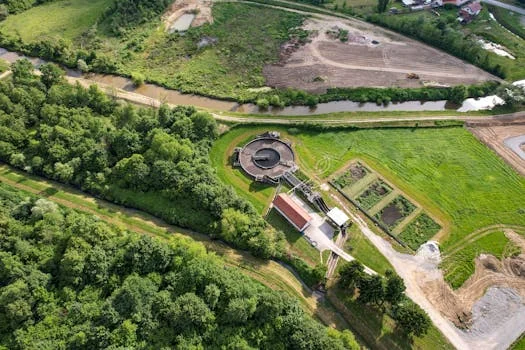
Conventional clarifiers separate solids in large open tanks at low horizontal velocity. Sludge is collected by rotating rakes in circular tanks or by chain-and-flight scrapers in rectangular tanks, and clarified water overflows peripheral weirs. The long water path is why retention sits near 2–4 hours when surface loading stays near 1–2 m/h. Weir loading, not just tank area, often decides whether effluent TSS stays inside the permit band.
Plate settlers drive flow upward between plates typically set near 60 degrees. Solids settle on the plates and slide into a bottom hopper while water rises, so sludge often thickens more densely than in an open tank. The counter-current pattern is the lamella clarifier working principle: water rises between plates while solids slide down. That short settling path is what lets hydraulic retention fall to 30–60 minutes. Hopper angle and sludge withdrawal frequency then carry the thickening duty that a deep open basin would otherwise provide.
What are lamella clarifier space savings on a real plot?
Lamella clarifier space savings are typically 50–80% of open-tank floor area at equal hydraulic capacity. A 10 m² plate footprint can provide the settling area of a 100 m² conventional tank on a 500 m³/h duty. Retention drops from about 2–4 hours in an open tank to 30–60 minutes inside the plate pack. Most retrofit halls we measure gain the floor back as aisle space, not as a new process building.
One textile plant in Vietnam cut clarifier footprint by about 70% after switching to plate packs, freeing floor space for production lines without buying more land. Modular packs also help batch plants, because extra packs can be added when peak flow rises. Designers comparing supplier layouts can set a Lamella Clarifier Manufacturer: High-Efficiency Design & Cost 2026 package against open-tank bids on the same flow sheet. Freight and crane access deserve a place in that comparison too, because plate modules ship assembled or field-stacked depending on the vendor.
When to Choose a Plate Settler
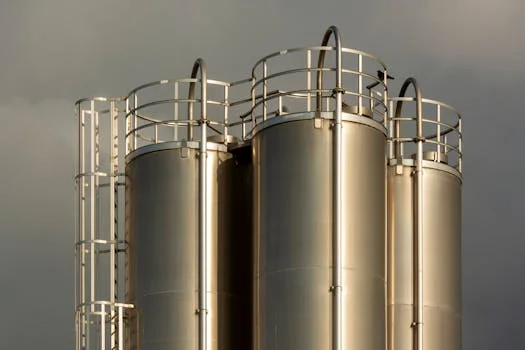
Plate settlers fit industrial wastewater where TSS often exceeds 500 mg/L and the plot is tight. Mining, pulp and paper, and many food plants fall in that band. Most mining and pulp duties we see sit above 500 mg/L TSS, which is where plate area earns its keep. Engineers comparing High-Efficiency Sedimentation Tank (Lamella Clarifier) options usually rank footprint and plate area first. Package skids with a built-in flocculation compartment shorten the hookup further on retrofit jobs.
Urban industrial parks and retrofit halls gain the most from the compact layout. Plate gaps of 25–50 mm promote laminar capture and also set how often the crew washes the pack. Inclined plates raise settling area and limit re-entrainment when solids loading is high. Extra plate modules can be added later if the peak-to-average ratio grows.
Plate units are seldom the cheapest choice when TSS stays below about 100 mg/L and land is inexpensive. Oil, grease, or sticky biological films can foul narrow plate channels and force cleaning every few months. If free oil exceeds a few dozen mg/L, add gravity oil removal or flotation before the plate pack. High TSS removal helps meet secondary-treatment targets, but plate loading of 20–40 m/h is an engineering criterion, not a universal legal cap.
Earlier European practice cited Council Directive 91/271/EEC for secondary-treatment targets. According to the EUR-Lex summary (last update 19 August 2025), Directive (EU) 2024/3019 of 27 November 2024 will replace Directive 91/271/EEC as from 1 August 2027, and Member States must transpose it into national law by 31 July 2027. Collection and secondary treatment now reach agglomerations above 1,000 population equivalent (p.e.), reduced from the threshold of 2,000 set in the previous rules, and the 1,000–2,000 p.e. band must comply by 31 December 2035. Plants exporting to EU markets can expect permit reviews against that recast well before the application date.
When to Choose a Conventional Clarifier
Conventional clarifiers remain cost-effective for steady flows when TSS stays generally below 200 mg/L and land is available. Municipal plants, cooling-tower blowdown, and many industrial streams in that TSS band often favor open tanks when CAPEX per m³/h must stay low. Building a large basin is usually cheaper per unit of hydraulic capacity than packing plate modules, if the plot allows it. Where the plot is already graded and owned, most life-cycle checks we run tilt back to the open tank.
Maintenance access is simpler without plate packs to isolate and wash. Rake arms and hoppers are familiar to most plant crews, and that familiarity can keep OPEX lower on oily refinery waste or sticky chemical solids that would clog 25–50 mm plate gaps. For those waters, open tanks avoid frequent plate scour that can raise labor and energy. Spare-parts lead time for rake drives is another quiet advantage in remote locations.
Open tanks need far more land because surface loading stays near 1–2 m/h. Retention of 2–4 hours also slows the response to sharp flow or quality swings. When the site is tight, TSS is high, or flow is strongly batch-driven, open tanks usually lose to plate settlers on the same duty. Most open-tank layouts we review spread across the plot in parallel trains, which is exactly why constrained sites move to plates.
How does inclined plate settler vs circular clarifier cost compare?
An inclined plate settler vs circular clarifier cost comparison usually shows 20–40% higher CAPEX per m³/h for the plate package. Industry benchmarks place plate units near $500–$1,200/m³/h and open tanks near $400–$900/m³/h for similar flow ratings, mainly because of plate modules and internal baffling. For a line-by-line look at lamella clarifier cost versus open-tank bids, compare installed scope on the same peak-hour flow.
Plate trains often repay the premium through operating cost. Chemical use can fall 20–30% and energy 10–15% versus an open-tank baseline when retention is shorter and mixing is tighter. Footprint cuts of 50–80% also cut land spend, and savings on the order of $100,000 per acre can matter for a 500 m³/h plant in a dense industrial zone. Buyer-side worksheets in the Lamella Clarifier Cost Price: 2026 B2B Buyer's Guide & ROI Analysis help stress-test those land and chemical assumptions.
On a 200 m³/h example, about 30% higher CAPEX with 25% lower OPEX, including land, can show a 3–5 year payback. Open-tank maintenance often runs $0.05–$0.10/m³ for rakes and pumps, while plate maintenance often runs $0.10–$0.20/m³ because plates need washing and later module or gasket replacement. Most bids we normalize swing on whether flocculation volume and sludge pumps sit inside the quoted scope. Always normalize quotes to the same peak m³/h, the same flocculation volume, and the same sludge-pumping scope before calling one option cheaper.
| Cost Category | Lamella Clarifier | Conventional Clarifier | Notes |
|---|---|---|---|
| CAPEX (per m³/h capacity) | $500–$1,200/m³/h | $400–$900/m³/h | Lamella typically 20–40% higher upfront |
| Chemical OPEX Reduction | 20–30% lower | Baseline | Due to shorter retention, better mixing |
| Energy OPEX Reduction | 10–15% lower | Baseline | Less pumping, shorter process time |
| Land Cost Savings | 50–80% reduction | Baseline | Significant for urban/constrained sites (e.g., $100,000/acre for 500 m³/h plant) |
| Maintenance Costs (per m³ treated) | $0.10–$0.20/m³ | $0.05–$0.10/m³ | Lamella higher due to plate cleaning/replacement |
| Typical ROI Payback Period | 3–5 years (with OPEX/land savings) | Longer (lower initial cost, higher ongoing OPEX) | Example for 200 m³/h plant |
How do you select a clarifier for industrial wastewater?
Clarifier selection for industrial wastewater starts with TSS load, available footprint, flow variability, budget horizon, and permit limits. If TSS stays above about 500 mg/L, plate loading of 20–40 m/h usually beats open tanks on size and solids capture. If TSS stays below about 200 mg/L and land is inexpensive, conventional CAPEX is often lower. Most wrong picks we review started from average flow and ignored peak-hour TSS.
Variable batch flows favor the shorter 30–60 minute plate retention. Steady continuous flows favor simpler open-tank operation. Tight capital favors open tanks, while land and chemical savings favor plates. Tight permits that need high TSS removal may push plate settlers, or add pretreatment upstream of any settling stage.
For oily or floatable solids, a parallel path such as DAF systems can protect either clarifier type. After solids capture, compare sludge dewatering options after clarification so hopper concentration assumptions stay realistic. Sludge solids of 2–5% from a plate hopper, versus 1–2% from an open tank, change the downstream machine size, so do not assume the dewatering quote matches the hopper solids on the clarifier data sheet.
| Decision Factor | Choose Lamella Clarifier If... | Choose Conventional Clarifier If... |
|---|---|---|
| TSS Load | > 500 mg/L (high solids) | < 200 mg/L (low solids) |
| Space Availability | Limited / Constrained Footprint | Abundant Space Available |
| Flow Variability | Variable / Batch Processing | Steady / Continuous Flow |
| Budget Priority | Lower OPEX, Land Savings, ROI | Lower CAPEX (upfront cost) |
| Regulatory Standards | Stricter Surface Loading / High TSS Removal Needed | Standard Effluent Quality Requirements |
| Wastewater Characteristics | Non-fouling / Easily Settled Solids | High-fouling (oil/grease) / Sticky Solids |
Selection checklist: (1) measure peak and average TSS in mg/L; (2) fix available plot area in m²; (3) map peak-to-average flow ratio; (4) set CAPEX and OPEX weights; (5) list permit TSS and any local surface-overflow rules; (6) flag oil/grease or sticky solids; (7) confirm sludge handling capacity downstream.
Which clarifier types suit municipal wastewater best?
Municipal plants most often use conventional circular or rectangular secondary clarifiers because average TSS is moderate and plots are large. Design surface overflow rates near 1–2 m/h, with Ontario peak hourly guidance up to about 50 m³/(m²·d) (~2.1 m/h) after conventional activated sludge, match continuous municipal flow. Plate packs show up mainly in constrained urban expansions, primary or tertiary polishing, or industrial sidestreams on a municipal site. Engineers who want the equipment bounds of a lamella clarifier should separate projected plate area from tank plan area before comparing bids.
Other municipal options include dissolved air flotation for light or oily solids and upflow sludge-blanket clarifiers where a stable floc blanket can be held. Primary versus secondary duty still drives tank depth, solids loading, and weir design more than the brand name on the drawing. For storm peaks, verify both surface overflow rate and solids loading rate at the design peak hourly flow, not only at average day flow, because storm-day loading usually sets the tank diameter. Chemical feed with an automated chemical dosing system for clarifier optimization stabilizes floc before either tank style.
Under the recast EU rules, municipal dischargers above 1,000 p.e. face secondary-treatment duties on a 2035 horizon, so clarifier capacity reviews now tend to ride along with permit updates. Return-activated-sludge pumping capacity, blanket instrumentation, and scum handling are the three municipal items that most often lag behind the settling upgrade itself.
Common Problems and Troubleshooting
Plate settlers and conventional clarifiers fail in predictable ways that operators can catch before effluent TSS drifts. Most plate complaints we see start as oil films, not as a wrong surface loading number. Fouling, short-circuiting, and sludge inventory are the three faults that move effluent TSS first.
Inclined Plate Problems
- Plate Fouling: Oil, grease, biofilm, or sticky solids coat plates, cut settling area, and skew flow.
- Solution: Wash with high-pressure water every 3–6 months for typical industrial water; use dilute acid or caustic for stubborn organic films; pretreat free oil and grease upstream.
- Uneven Flow Distribution: Clogged inlets, skewed plates, or weak baffling starve some channels and short-circuit others.
- Solution: Inspect inlet distributors, realign plates, clear blockages, and keep inlet velocity in the design band.
- Sludge Bridging: Viscous sludge bridges between plates and shrinks active volume.
- Solution: Widen plate spacing if the mechanical design allows, dose polymer to improve sludge rheology, and raise withdrawal enough to prevent hopper overload.
Conventional Clarifier Problems
- Short-Circuiting: Flow races from inlet to outlet and skips the settling zone.
- Solution: Add or adjust inlet and outlet baffles and lower inlet velocity to limit turbulence.
- Sludge Blanket Rising: Excess solids loading, slow withdrawal, or gas from denitrification lifts the blanket into the effluent.
- Solution: Increase sludge withdrawal, check upstream for gas generation, and adjust polymer if flocs are weak.
- Rake Arm Failure: High solids or debris overload rake torque and damage the drive.
- Solution: Track blanket depth, use torque alarms on the drive, and keep a preventive mechanical schedule.
Wash plates with high-pressure water every 3–6 months on typical industrial water, and use dilute acid or caustic on stubborn organic films. Pretreat free oil and grease upstream so that interval stays realistic. Keep a spare set of gaskets on site for the plate modules; the wash outage is usually short, but waiting on gaskets is not.
Who this is for: plant engineers, EPC designers, and procurement teams sizing primary or secondary solids separation on industrial or constrained municipal sites. Who should look elsewhere: buyers needing only dissolved-contaminant removal without a settleable solids step. Next step: share peak flow in m³/h, TSS in mg/L, and the open plot area, or request a duty-matched clarifier comparison.
Frequently Asked Questions
What is the purpose of an inclined plate settler?
An inclined plate settler removes suspended solids by gravity in a much smaller plan area than an open tank. Inclined plates multiply settling area so design surface loading can reach 20–40 m/h, and hydraulic retention is often 30–60 minutes. Typical TSS removal is about 92–97% when flocculation is adequate. Plants pick this duty where land is scarce or settleable solids dominate the load.
What are the different types of water clarifiers?
Common water clarifiers include circular or rectangular gravity tanks, inclined plate settlers, dissolved air flotation units, and upflow sludge-blanket clarifiers. Choice depends on particle density, the TSS range, oil content, and the effluent limit. Gravity settlers suit dense settleable solids, while flotation suits floatable fractions. Downstream sludge handling must match the underflow solids each type produces at peak load.
What are the common problems with clarifier tanks?
Shared clarifier problems include short-circuiting, a rising sludge blanket, weak floc from poor chemical dosing, and mechanical drive faults. Plate-specific faults are fouling and sludge bridging between plates. Open tanks more often suffer slow sludge removal and a footprint that no longer fits the site. Blanket checks, chemical control, and a mechanical schedule stop most carryover before a permit limit is breached.
What is the loading rate of an inclined plate settler?
Inclined-plate surface loading typically falls between 20 and 40 m/h under industrial design conditions, versus about 1–2 m/h for conventional clarifiers at similar temperature and floc strength. The higher rate comes from plate area packed into a small plan footprint. Final loading still depends on influent TSS, particle settleability, and the effluent target, so pilot data or a manufacturer curve should lock the value before purchase.
How do primary, secondary, lamella, and DAF duties differ?
Primary clarifiers take raw or screened wastewater, and secondary clarifiers polish biologically treated mixed liquor near 1–2 m/h. Lamella packs compress either duty into less land when solids settle on inclined surfaces. Dissolved air flotation is preferred when solids are light, oily, or slow to settle by gravity alone. Many industrial flow sheets combine one gravity step with flotation or chemical pretreatment rather than forcing a single unit to catch every fraction.