

What Chemical Dosing Design Criteria Specify on a Skid
Chemical dosing design criteria define how a skid stores, meters, injects, and controls treatment chemicals. Dose follows kg/day = flow (m³/day) × dose (mg/L) ÷ 1000. Pumps sit at 0.1–2,000 ml/min with ≥10:1 turndown. Rapid-mix G is 300–1,000 s⁻¹ for 30–60 s, with pH, ORP, flow, and turbidity closed-loop trim.
For a 2026 datasheet, design criteria are a nine-category checklist. Procurement can verify influent characterization, dose, pump turndown, materials, tank sizing, piping, mixing, I&C, and safety line by line. Hahn's Springer (1992) boundary-condition theory puts the hierarchy in order. Homogeneous chemical distribution in time and space is the physical gate that governs coagulant formation. Meet that gate and the in-situ coagulant reaches the colloid. Miss it and restabilization follows even when the pump is accurate. That is why rapid-mix design ranks above pump sizing on every chemical dosing design criteria sheet we issue.
Chemicals typically represent 30–50% of a wastewater-treatment plant's operating budget. Overdosing both restabilizes colloids and pushes residual past consent limits (per HydroChemix, 2026-08). Regulation is tightening in parallel. EU Council Directive 91/271/EEC requires that by 2040 plants serving ≥100,000 PE remove pharmaceuticals, pesticides, antibiotics, and manufacturing chemicals. The US EPA Safe Drinking Water Act sets legal limits on 90+ contaminants and adds new entries over time. Both trends push dosing accuracy from ±5–10% on solenoid diaphragm pumps toward ±1–2% on peristaltic or plunger units. A 2026 Automatic Chemical Dosing System consolidates those nine categories into one factory-tested package. For the mechanical layout behind the skid, see our guide to chemical dosing system design.
Step 1: Characterize the Feed and Define the Dose
Every downstream equipment choice rests on feed characterization. Record average and peak flow (m³/day), pH, temperature, TSS, turbidity, COD/BOD, alkalinity, and the target contaminant before you size a pump or tank. With those numbers the daily mass balance collapses to one line: kg/day = flow (m³/day) × dose (mg/L) ÷ 1000. A plant treating 5,000 m³/day at 15 mg/L PAC needs 75 kg/day of coagulant. Storage, pump capacity, and delivery all flow from that figure.
Starting dose ranges by application, drawn from HydroChemix (2026-08), are tight enough to bracket a jar test. Drinking-water PAC sits at 5–20 mg/L on low-turbidity raw water. Municipal primary clarification typically needs 50–150 mg/L. Textile reactive dyes run higher and need color-removal jar confirmation. Industrial pH adjustment targets 8.0–10.0 ahead of metal-hydroxide precipitation. The jar test itself is a six-beaker matrix across 5–20 mg/L: 200 rpm rapid mix for 1 min, 40 rpm slow mix for 20 min, settle 30 min, then measure supernatant turbidity and residual contaminant. If raw pH swings, add a pH-adjustment leg. PAC solubility collapses below pH 5 and above pH 9 (per HydroChemix, 2026-08).
For industrial effluents, multi-criteria decision-making literature now supports defensible selections. Al Jobair et al., Sci Rep 2026-03 applied AHP, TOPSIS, and PROMETHEE II to a Bangladesh dairy ETP. Lime + FeSO₄ at 100 mg/L + 100 mg/L was the consistent optimum. Removals reached 93.51% BOD, 85.50% COD, 51.71% TDS, and 93.95% TSS. That peer-reviewed dose is worth attaching to a procurement datasheet because it shows a measured optimum rather than a vendor default.
| Application | Chemical | Starting dose (mg/L) | Target pH | Notes |
|---|---|---|---|---|
| Drinking water, low turbidity | PAC | 5–20 | 6.0–8.0 | Jar-test 5/10/15/20 mg/L (HydroChemix, 2026-08) |
| Drinking water, flood/high turbidity | PAC + pre-sed | 20–50+ | 6.0–8.0 | Pre-sediment above 1000 NTU raw (HydroChemix, 2026-08) |
| Municipal primary clarification | PAC or FeCl₃ + PAM | 50–150 (PAC) | 6.5–7.5 | Anionic PAM as primary floc aid (HydroChemix, 2026-08) |
| Industrial pH adjustment | NaOH or lime | To pH 8.0–10.0 | 8.0–10.0 | Precedes metal-hydroxide precipitation (HydroChemix, 2026-08) |
| Dairy ETP (peer-reviewed optimum) | Lime + FeSO₄ | 100 + 100 | 8.0–10.0 | 93.51% BOD, 93.95% TSS (Al Jobair et al., Sci Rep 2026-03) |
| Polymer flocculation | Anionic/cationic PAM | 0.5–5 | Application-specific | 0.05–0.2% stock, 30–60 min maturation (HydroChemix, 2026-08) |
What Is the Best Chemical Dosing Equipment for Plants?
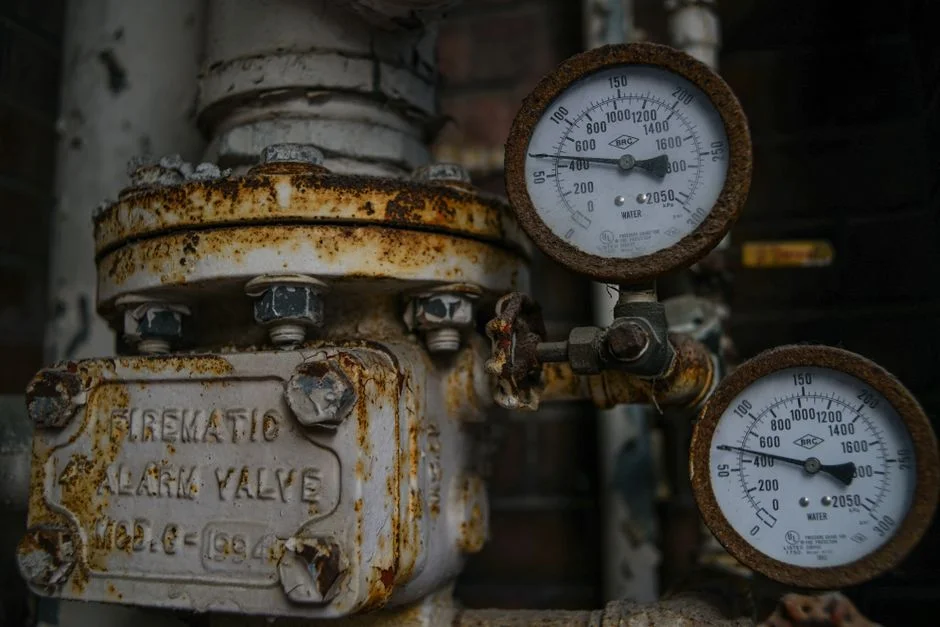
The best chemical dosing equipment for water treatment plants matches pump type, turndown, and wetted materials to the chemical and the operating band. Diaphragm units deliver 0.5–10% flow accuracy on clean liquids at moderate pressure. Peristaltic pumps cover a linear 0.1–2,000 ml/min range, handle abrasive and viscous slurries, and have no internal seals (per WMFTS Qdos specifications). Plunger metering pumps give the highest accuracy at elevated pressure for sodium hypochlorite, mineral acids, and polymer injection. Most plants we size for PAC and polymer service land on peristaltic or diaphragm skids; hypochlorite and strong acids usually need diaphragm or plunger heads with PTFE/PVDF.
WMFTS (2023) documents peristaltic pumpheads that swap without tools, which cuts operator chemical contact during maintenance. Target the operating point in the upper 30–70% of the pump curve and require turndown ≥10:1. Never select a pump where normal flow sits below 10% of nominal. Large pumps at very low capacity lose accuracy; the failure mode is unstable dose the controller cannot trim (per Morvolous). On the suction side specify flooded suction, a foot valve with strainer, and a pulsation dampener on diaphragm pumps. Peristaltic pumps do not need degassing or back-pressure valves (per WMFTS, 2023), which simplifies the skid.
Material defaults that survive 2026 audits are clear. PAC and PAM pair with peristaltic EPDM or reinforced hose. Sodium hypochlorite needs diaphragm heads in PTFE/PVDF. H₂SO₄ and HCl use diaphragm or plunger with PVDF. FeCl₃ uses PP/PVDF diaphragm. Emulsions and viscous polymers prefer progressive-cavity or peristaltic. Accurate linear dosing also allows more concentrated chemicals and smaller tanks, cutting energy and transport OPEX (per WMFTS, 2023).
| Chemical | Recommended pump | Wetted material | Key accessory |
|---|---|---|---|
| PAC (liquid) | Peristaltic or diaphragm | EPDM hose / PP head | Strainer, flooded suction |
| PAM (emulsion/manufactured solution) | Peristaltic or progressive-cavity | EPDM / SS316 | Static mixer, 30–60 min maturation |
| NaClO (12–15%) | Diaphragm | PTFE / PVDF | Pulsation dampener, degassing valve |
| H₂SO₄ / HCl | Diaphragm or plunger | PVDF / SS316 (H₂SO₄ ≤ 70%) | Pressure-relief, secondary containment |
| FeCl₃ | Diaphragm | PP / PVDF | Flushed calibration, leak detection |
| NaOH (≤ 40%) | Diaphragm | PP / PVDF | Pulsation dampener |
| Lime slurry | Peristaltic | Reinforced hose | Agitated feed tank, large-bore piping |
How Do You Select a Chemical Dosing System?
Selecting a chemical dosing system starts with the mass-balance dose, then locks pump architecture, tank days of storage, injection hydraulics, and closed-loop sensors before materials and codes. Size the dosing tank for 3–7 days of average consumption and verify 1.5× peak-day capacity. Install a four-level switch (high-high, high, low, low-low) tied to pump start/stop and the SCADA alarm stack. Bunding must hold 110% of the largest tank volume, with chemical-resistant PE, PP, or FRP matched to the stored chemical (per Morvolous). For sodium hypochlorite and polymers, shaded storage is mandatory. UV and heat degrade concentration within 1–2 weeks even in covered tanks.
Pipe velocity is the next audit finding. Specify 1–2 m/s in chemical lines: low enough to keep PAC slurries suspended and high enough to prevent air lock in polymer lines. Material defaults that survive cross-compatibility checks include PE/PP for most acids and coagulants, SS316 for ferric chloride at high concentration, PVC-U for sodium hydroxide below 40%, and FRP for hot sodium hypochlorite service. Secondary containment, mechanical ventilation for chlorine rooms, and an eye-wash/safety shower within 10 m are required by US OSHA 29 CFR 1910 and EU equivalents.
Injection-point geometry is where plants pay for sloppy hydraulics. Locate injection in fully turbulent flow at least 5 pipe diameters downstream of any bend or fitting. Morvolous documents a food-factory case where chemicals were injected immediately before a 90° elbow; relocating the point downstream of the bend stabilized pH within a single shift. The same rule applies to a DAF unit downstream of coagulant dosing — the floc must reach the bubble-cloud zone fully formed. Teams comparing clarifier hydraulics to dosing skids should keep the mass-balance and injection geometry on the dosing datasheet, not bury them in the clarifier rating sheet.
Step 4: Mixing and Reaction Hydraulic Design

Hahn (Springer, 1992) frames the engineering requirement directly: homogeneous chemical distribution in time and space is the controlling physical boundary condition. Once that is met, in-situ formed coagulants (Fe³⁺, Al³⁺ salts) attach to the colloid and destabilization is irreversible. If mixing is weak, metal-ion coagulant does not distribute evenly. The result is partially destabilized floc beside untouched colloid — the restabilization failure mode HydroChemix (2026-08) flags behind bad jar-test results.
The 2026 mixing numbers are established. Rapid mix G = 300–1,000 s⁻¹ for 30–60 s. Flocculation G = 20–80 s⁻¹ for 15–30 min. Total hydraulic residence time follows the downstream separator. Pre-activated polymers only need the transport step because the polymer is already active; metal salts need both distribution and transport control. That is why a polyaluminum chloride (PACl) skid is more forgiving on rapid-mix intensity than a ferric sulphate one.
Full-scale data confirms matched mixing. The Al Jobair et al. (Sci Rep 2026-03) dairy ETP, run with matched Lime + FeSO₄ dosing and mechanical flash mixing, achieved 98.3% BOD and 97.1% COD at the full ETP. Specify static mixers for turbulent-flow injection lines (≥1.5 m/s) and mechanical flash mixers for batch or equalization-tank dosing. Do not rely on pipe turbulence alone for high-viscosity polymers. Most plants we size for metal-salt coagulation run at the lower end of the rapid-mix G band when residence time already exceeds 45 s.
Step 5: Instrumentation and Closed-Loop Control
The I&C layer turns a passive dosing skid into an automatic system. The 2026 sensor stack on the main line is magnetic flow, pH, ORP, conductivity, turbidity, and — for nutrient-removal plants — a nitrate or phosphate analyzer. On the chemical skid, a tank level switch, a calibration column or stroke-count feedback on the pump, and a leak sensor with auto-shutoff complete the picture.
Three control architectures are in use, and the choice tracks influent variability. Flow-paced dosing (proportional to influent flow) fits steady plants. Feedback trim (pH or residual-corrected) handles slow disturbances. Feed-forward plus feedback trim handles variable influent and is the architecture HydroChemix (2026-08) recommends for large municipal plants. Specify the PLC with PID loops, trending of every analog input, alarms on sensor and pump faults, and SCADA integration via Modbus TCP or Ethernet/IP. UPS-backed data retention is required for any claim of regulatory traceability.
The accuracy benefit is quantifiable. Peristaltic pumps at 0.1–2,000 ml/min enable 10–15% chemical savings through tighter trim versus ±5–10% on solenoid diaphragm pumps (per WMFTS, 2023). Hessisch-Lichtenau WWTP documented a 97.5% phosphorus-load cut in year one of accurate ferric chloride sulphate dosing. That case helps when an EPC lead asks whether ±1–2% pump accuracy justifies the capex premium. A modern skid-mounted automatic chemical dosing system ships with this I&C layer pre-wired and factory-tested.
| Architecture | Sensor inputs | Trim mechanism | Best fit |
|---|---|---|---|
| Flow-paced (proportional) | Mag flow on main line | Dose = k × flow | Steady industrial influent |
| Feedback trim | pH, ORP, residual | PID to setpoint | Slow-changing load, simple plants |
| Feed-forward + feedback | Flow + pH/turbidity/residual | FF proportional + FB trim | Variable influent, large municipal plants (HydroChemix, 2026-08) |
| Batch/sequence | Tank level + timer | Volumetric dispense | Equalization basins, jar-test replication |
Step 6: Safety, Codes, and Documentation
Safety is the layer auditors and EPC clients check first. Vendor overviews often gloss over it. A 2026 dosing skid needs leak detection with auto-shutoff (documented on WMFTS Qdos units, 2023) and bunding at 110% of the largest tank. Place an eye-wash and safety shower within 10 m, keep an MSDS folder at the skid, and ventilate acid and chlorine rooms at 6–12 air changes/hour. Use ATEX 2014/34/EU-rated gear where flammable vapors are present.
Applicable standards cover water quality, pretreatment, and manufacturing. Cite EU Drinking Water Directive 98/83/EC and EU Urban Waste Water Directive 91/271/EEC by clause. Add US EPA 40 CFR Part 403 for POTW pretreatment and WHO Guidelines for Drinking-water Quality (4th ed., 2017, with 2022 addenda). Manufacturing quality sits under ISO 9001; hazardous areas need ATEX 2014/34/EU. Auditors reject generic "complies with EU standards" claims.
Redundancy separates a 2026 spec from a 2010s package. For critical service (disinfection, phosphorus trim) specify duty/standby pumps with auto-changeover, dual level switches, secondary containment, and a UPS on the PLC for data retention through power loss. Documentation should include a spare-parts list (pumpheads, diaphragms, sensor probes, calibration standards), recommended PM intervals with hours-on-service triggers, a sensor calibration schedule, and an operator training plan. WMFTS (2023) notes that tool-free pumphead replacement reduces both mean-time-to-repair and operator chemical contact.
2026 Procurement Checklist for Dosing Skids
Chemical dosing design criteria collapse into the table below as a copy-paste block for a 2026 procurement datasheet. Attach it to a chemical dosing RFQ with project-specific flow, dose, and materials. For related work, see our RO water purification design criteria for 2026 and sludge dewatering design criteria for 2026 guides.
| Parameter | Value / range | Source | Design intent |
|---|---|---|---|
| Dose mass balance | kg/day = flow (m³/day) × dose (mg/L) ÷ 1000 | HydroChemix, 2026-08 | Daily chemical consumption |
| PAC dose — drinking water | 5–20 mg/L | HydroChemix, 2026-08 | Low-turbidity raw |
| PAC dose — municipal primary | 50–150 mg/L | HydroChemix, 2026-08 | Primary clarification |
| Pump turndown | ≥ 10:1 | WMFTS, 2023 | Avoid large-pump-at-low-capacity |
| Operating point on curve | Upper 30–70% | Morvolous | Maintain accuracy |
| Pump flow range | 0.1–2,000 ml/min | WMFTS Qdos, 2023 | Linear, repeatable dose |
| Pump accuracy (peristaltic/plunger) | ±1–2% | WMFTS, 2023 | 10–15% chemical savings vs solenoid |
| Pipe velocity (chemical lines) | 1–2 m/s | Engineering practice | Prevent settling/air lock |
| Rapid-mix G value | 300–1,000 s⁻¹ for 30–60 s | Hahn, Springer 1992 | Homogeneous distribution |
| Flocculation G value | 20–80 s⁻¹ for 15–30 min | Engineering practice | Gentle floc growth |
| Tank residence | 3–7 days average, 1.5× peak | Morvolous | Supply security |
| Bunding | 110% of largest tank | EPA / EU practice | Secondary containment |
| Sensor loop (minimum) | pH, ORP, flow, turbidity | Engineering practice | Closed-loop trim |
| Eye-wash / shower | Within 10 m | OSHA 29 CFR 1910 | Operator safety |
| Accuracy-upgrade ROI | 10–15% chemical savings × 30–50% OPEX | HydroChemix, 2026-08; WMFTS, 2023 | Typical payback < 12 months |
The ROI line deserves a short read. With chemicals at 30–50% of plant OPEX, a 10–15% accuracy upgrade recovers 3–7.5% of total plant OPEX as recurring savings. On a mid-size WWTP with a $4M annual OPEX, that is $120,000–$300,000 per year against a one-time skid upgrade that is typically a low-single-digit percentage of plant capex. Payback under 12 months is common, so the 2026 procurement case for accurate dosing no longer rests on regulatory grounds alone.
Selection checklist before you freeze the RFQ:
- Lock average and peak flow (m³/day) plus jar-tested dose (mg/L).
- Require ≥10:1 turndown with duty point in the upper 30–70% of the curve.
- Match wetted materials to each chemical (PE/PP, PVDF, SS316, EPDM hose).
- Size tanks for 3–7 days average use and 1.5× peak day; bund at 110%.
- Specify rapid-mix G = 300–1,000 s⁻¹ for 30–60 s at the injection point.
- Wire pH, ORP, flow, and turbidity into a feed-forward + feedback trim loop where influent varies.
- Document spare parts, PM intervals, and operator training in the bid package.
Who This Is For and Next Step
Plant engineers, EPC contractors, and procurement leads writing a dosing-skid RFQ or auditing a vendor datasheet are the primary audience. Teams that only need a clarifier hydraulic rating without chemical metering should use a different equipment brief. When flow, dose, and chemical list are ready, request a factory-tested package through our chemical dosing inquiry form so the skid can be sized against the mass-balance and turndown rules above.
Frequently Asked Questions
What is the standard formula for sizing a chemical dosing system?
The standard formula is kg/day = flow (m³/day) × dose (mg/L) ÷ 1000. For a 5,000 m³/day plant dosing 15 mg/L PAC, the daily requirement is 75 kg/day. This figure drives storage tank sizing, pump capacity, and delivery logistics (per HydroChemix, 2026-08). For phosphorus removal design context, see our phosphorus removal methods and dosing data guide.
What turndown ratio should a metering pump have?
Specify a minimum 10:1 turndown ratio, with the normal operating point in the upper 30–70% of the pump curve. Operating below 10% of nominal capacity on a large pump costs accuracy and produces unstable dose that the controller cannot trim (per Morvolous). Most plants we size keep the duty point inside that upper band.
What G-value is required for rapid mix?
Rapid mix requires G = 300–1,000 s⁻¹ for 30–60 s. Hahn (Springer, 1992) identifies homogeneous chemical distribution in time and space as the controlling physical boundary condition for coagulant formation. Without that distribution, the in-situ formed coagulant cannot attach to the colloid and restabilization follows.
How much of WWTP OPEX is chemical cost?
Chemicals typically represent 30–50% of a wastewater-treatment plant's operating budget (per HydroChemix, 2026-08). A 10–15% accuracy upgrade from solenoid diaphragm (±5–10%) to peristaltic or plunger (±1–2%) therefore typically pays back in under 12 months on mid-size plants with chemical-heavy OPEX.
Which pump type is best for polymer dosing?
Peristaltic or progressive-cavity pumps are the standard for polymer dosing, paired with a 0.05–0.2% stock solution matured 30–60 minutes before use. The maturation step is non-negotiable — adding dry PAM directly to a treatment tank produces "fisheye" gel particles that clog pumps and waste chemical (per HydroChemix, 2026-08). For related post-dosing processes, see our brackish water RO system design criteria for 2026 guide.